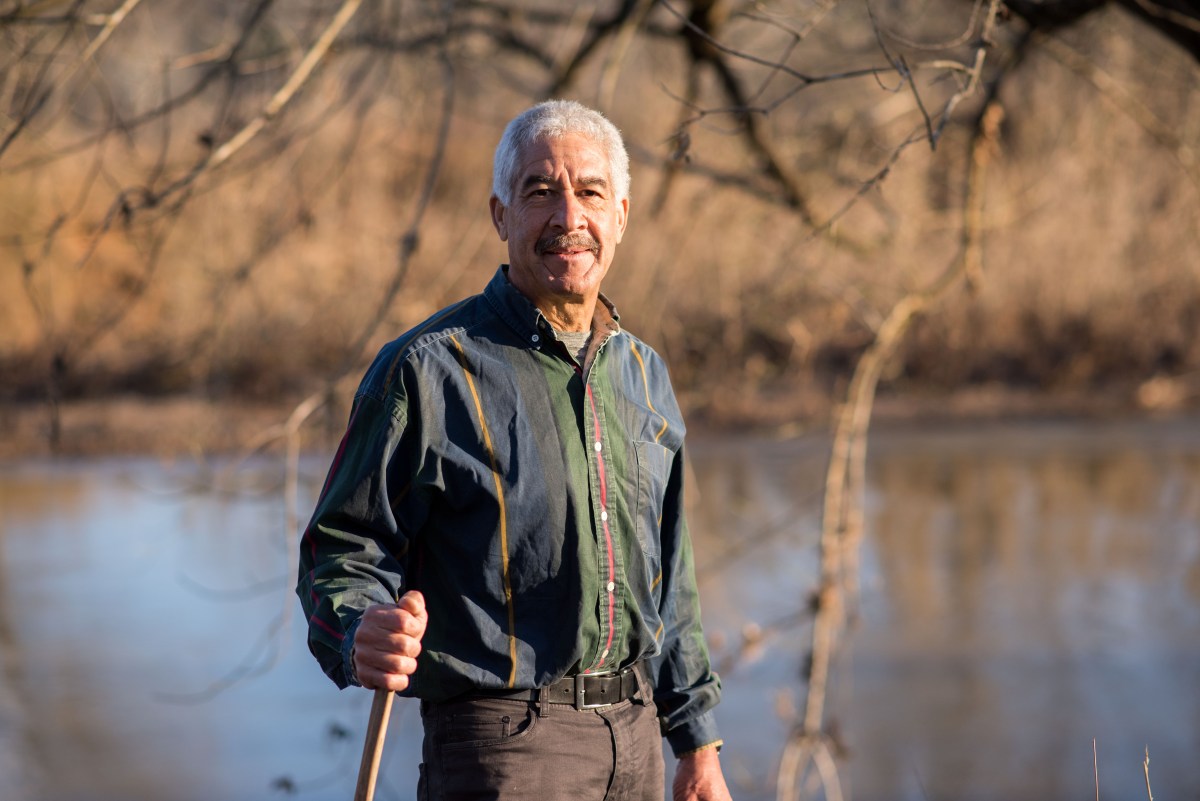
There was a time when I would have perceived being told, “Stay in your place” as insulting.
But the descendants of ancestral land carry the burden of trying to understand its true value. For African Americans, this can lead to a deeper appreciation for who they are and why.
Only by staying in my place could I have experienced and learned what I did. It has given me a perspective I would not have if I had spent my life someplace else. I fortunately was given the opportunity to write about my place, Buck Island, and it opened a window of understanding I never expected.
The community of Buck Island, 10 miles southeast of Charlottesville in Albemarle County, is where I grew up in the 1960s. It now only exists in the minds of its descendants. It is a vague memory of those who knew it. Those of us who remember can reminisce about past times and confirm whether those memories are real or figments of our imagination. For me embarking on that journey of confirming has been eye opening.
Last October, I visited my only brother, Peter Cobbs III, in Los Angeles. We recollected what growing up was like for each of us, and we had some similar memories of Buck Island but our five year age gap made our experiences quite different. On that trip, we connected with our cousin, Barry Jones, who grew up in New York and visited Buck Island in the summer as a child in the 1950s. He recalled an experience that remains etched in his memory. An Elder took him to a “special place” on the property, near the Rivanna River. Barry described the spot as being shady and removed. There, this Elder showed him what remained of enslaved quarters. In the center stood a whipping post. Barry still remembers touching it and how eerie it felt.
That confirmed my understanding of the land was real. I had written that the “low grounds” of Buck Island, in the fertile floodplain of the river, had once been the realm of slaves.

Why did the Elder feel it was important to show Barry the enslaved dwellings?
I don’t think it was to frighten him. Rather, I believe it was to connect him to the past.
The Buck Island community had preserved the whipping post and the memories of this spot, for a reason. I believe it was a part of the past the family recognized as being important, important enough to not be forgotten. While those quarters may not have housed any of our family members, there were enslaved people held there. Our family has roots that are entangled in slavery. We experienced what it was like to witness our people being beaten and whipped and that has left a deep impression etched in our conscience.
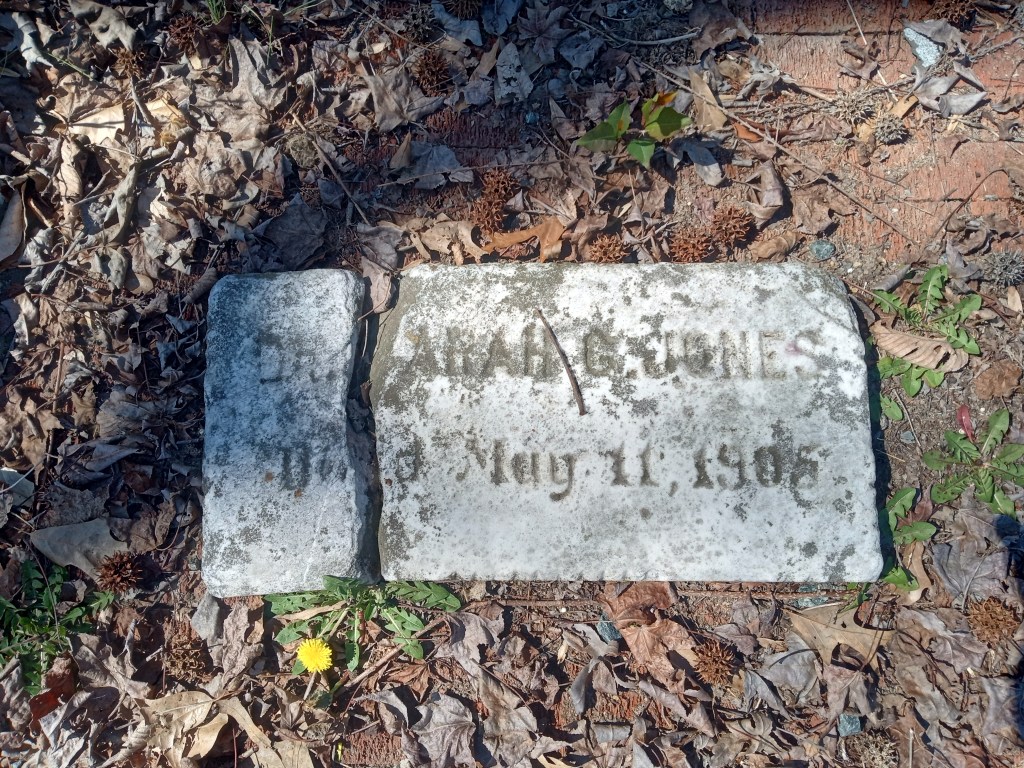
Dr. Sarah Garland Boyd Jones, who was born at Buck Island and became the first African American female doctor in Virginia, worked tirelessly to care for people in Richmond. She was driven harder than the horses that pulled her carriage on daily rounds. There are conflicting accounts on the cause of her untimely death in 1905, before she turned 40. But her descendants might surmise that the gruelling work might have been the real cause.
We understand the cost of laboring to achieve a goal that is not obtainable within our lifetime. Still we must strive to carry on the legacy that we inherited.
The place in Richmond where Sarah was laid to rest is now denoted by a simple grave marker in the long neglected Evergreen Cemetery. Fortunately she is well remembered, not only because of the statue of her that was put up in the Virginia Women’s Monument in 2022, but throughout Richmond. Last year, there was a successful campaign to save the building that once housed the Richmond Community Hospital, which she helped found on the campus of Virginia Union University. I think Sarah would have been pleased to know her labor was not in vain.
Take Action
Philip Cobbs will be telling “The Story of Buck Island” at the Rivanna Riverfest on Saturday, May 10 at 2:30 p.m. Charlottesville Tomorrow will be there, too, and you can find out more about how you can tell your stories about the land for First Person Charlottesville.
Here’s more about the festival, which runs all afternoon into the evening at Rivanna River Company, 1520 E High St, Charlottesville, VA 22902.
I knew my mother gave birth to me at Buck Island. A Charlottesville Black physician, Dr. Garrett was there, but doctors who looked like him could not practice at the University of Virginia hospital. He made a house call early in the morning to attend to my mother’s delivery. During my visit to Los Angeles, I asked my brother Peter what he remembered of that day. He recalled it as one of his happiest and saddest days. He was happy to have a new baby brother and he was sad to lose a baby sister.
I knew my twin sister had died at birth, but I’d never talked with him about it before. He described accompanying our father to the family cemetery on top of a nearby hill, where they buried my sister. I pictured my 5-year-old brother watching the sister he had only known about for hours, being buried. That was the first time I knew where she was interred and it was comforting to know she was resting in the same place as our mother and father.
I didn’t attend Spring Hill Baptist Church, but I knew it was once the center of Buck Island community life, where joyous homecomings and ruckus revivals were held. My mother was born across Thomas Jefferson Parkway from the church in 1920, and was the secretary there in her youth. The church still owns an acre of land that my grandfather gave them. Albemarle County currently taxes the church more for that acre than the total it taxes for the adjacent 13 acres, according to county records. The beleaguered trustees and leaders of the historic church of which I am a part of, recognize the building is in dire need of repair and are considering selling that acre because otherwise they will have to continue paying the county real estate tax.
Buck Island was once a thriving Black community and it’s an example of countless Black communities throughout the county and country. I recently attended a gathering in Brown’s Cove, a community in the western part of Albemarle County, and there I met Eursaline Inge. I found out her father, Pete Jones, a former leader of that Black community, was a relative who came from Buck Island.
Why is it important for me to remember Buck Island?
Looking back at my life, I now see how my appreciation for my own history developed. It was, in some ways, through the times I did leave Buck Island. I fortunately had parents who valued travel. One of the earliest trips I remember is driving through the deep south to New Orleans. I still recollect pulling into gas stations and being refused service. It was the summer of 1963, the year of the March on Washington for Jobs and Freedom, where Dr. Martin Luther King Jr. gave his famous “I Have a Dream” speech.
From New Orleans we flew to Mérida, Mexico. Traveling by bus and train, we visited many places including Mexico City, Acapulco and even Cancún which was still a small fishing village. My mother later reminded me that during the trip I talked about how much I missed Buck Island. Don’t get me wrong, I loved the experience, but it made me appreciate my home even more than I had before.
Within the boundaries of the place I call Buck Island, an important part of American history unfolded. There, people attempted to live out the creed of freedom upon which this country was created. While those attempts were not perfect — and could be viewed as failures because the Buck Island I remember no longer exists — I am a product of those efforts.
Every community is unique and recognizing what makes it so can take time. It took me most of my life to understand what was unique about Buck Island. Thomas Jefferson penned eloquent words about equality, and from my home in Buck Island today, I can see Monticello. But I experienced a different version of equality, Dr. King’s dream of equality, at Buck Island.
Unfortunately, the Buck Island I knew as a child is gone, but I am determined to keep that memory alive on all the land where it once was.
Editors note: We’ve updated this piece on May 13 to correct the location of Buck Island, which is southeast of Charlottesville.