

I’m curious about who is paying attention.
Not specifically to the art I created and installed as a part of the Paramount Theater’s Third Street Box Office project, but to our community and our collective history in Charlottesville. How often do we disrupt our daily hustle to the next meeting, to the next dinner, to the next event to be present in the spaces we pass through and the spaces we occupy?
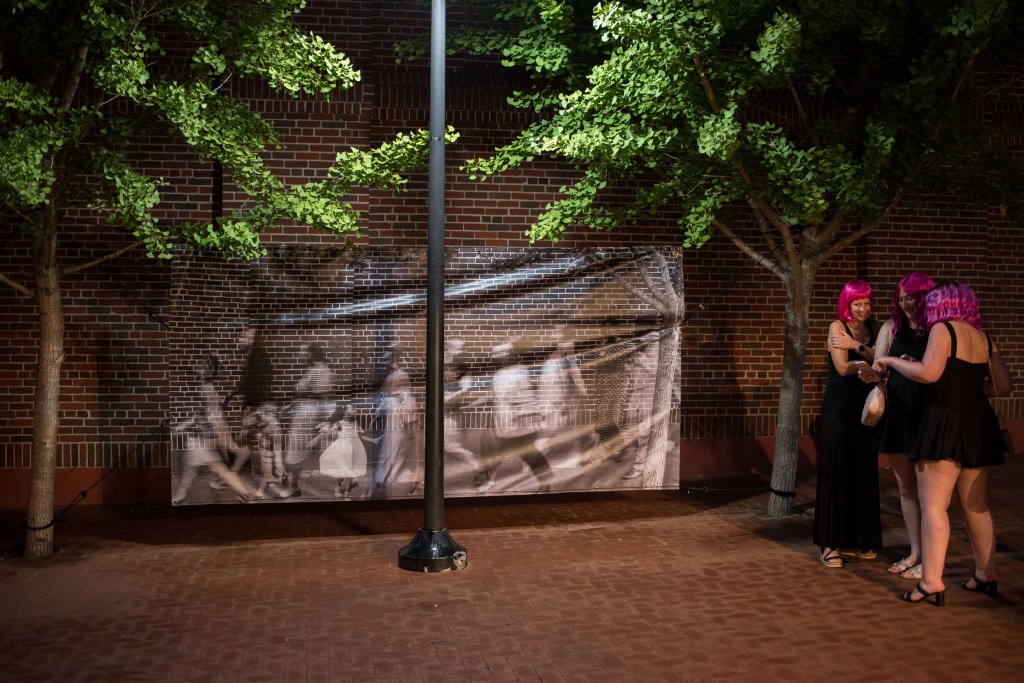
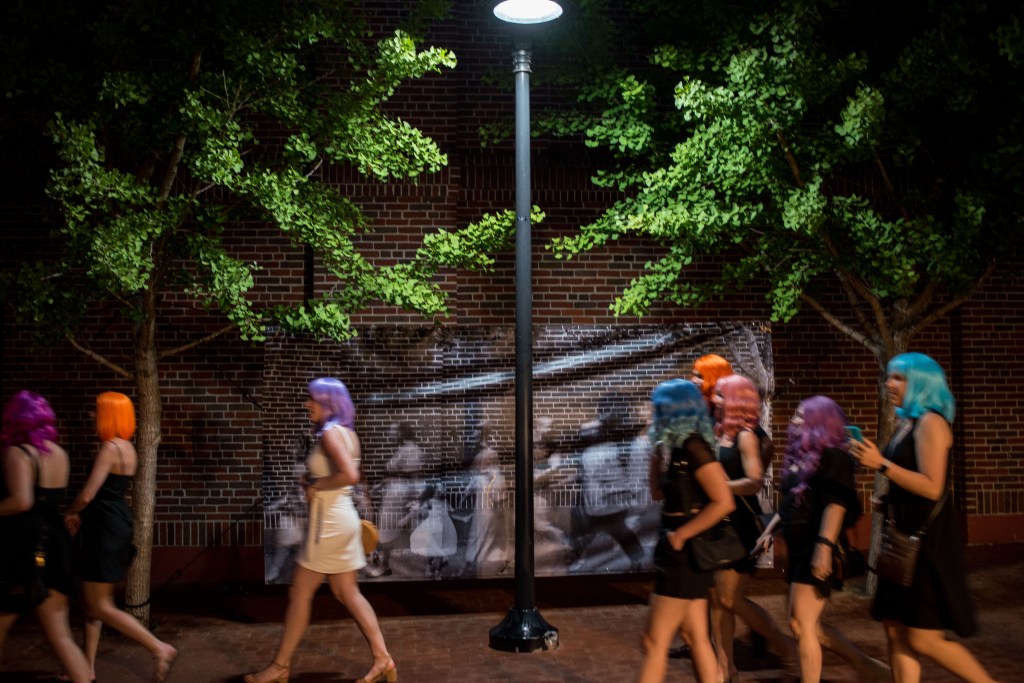
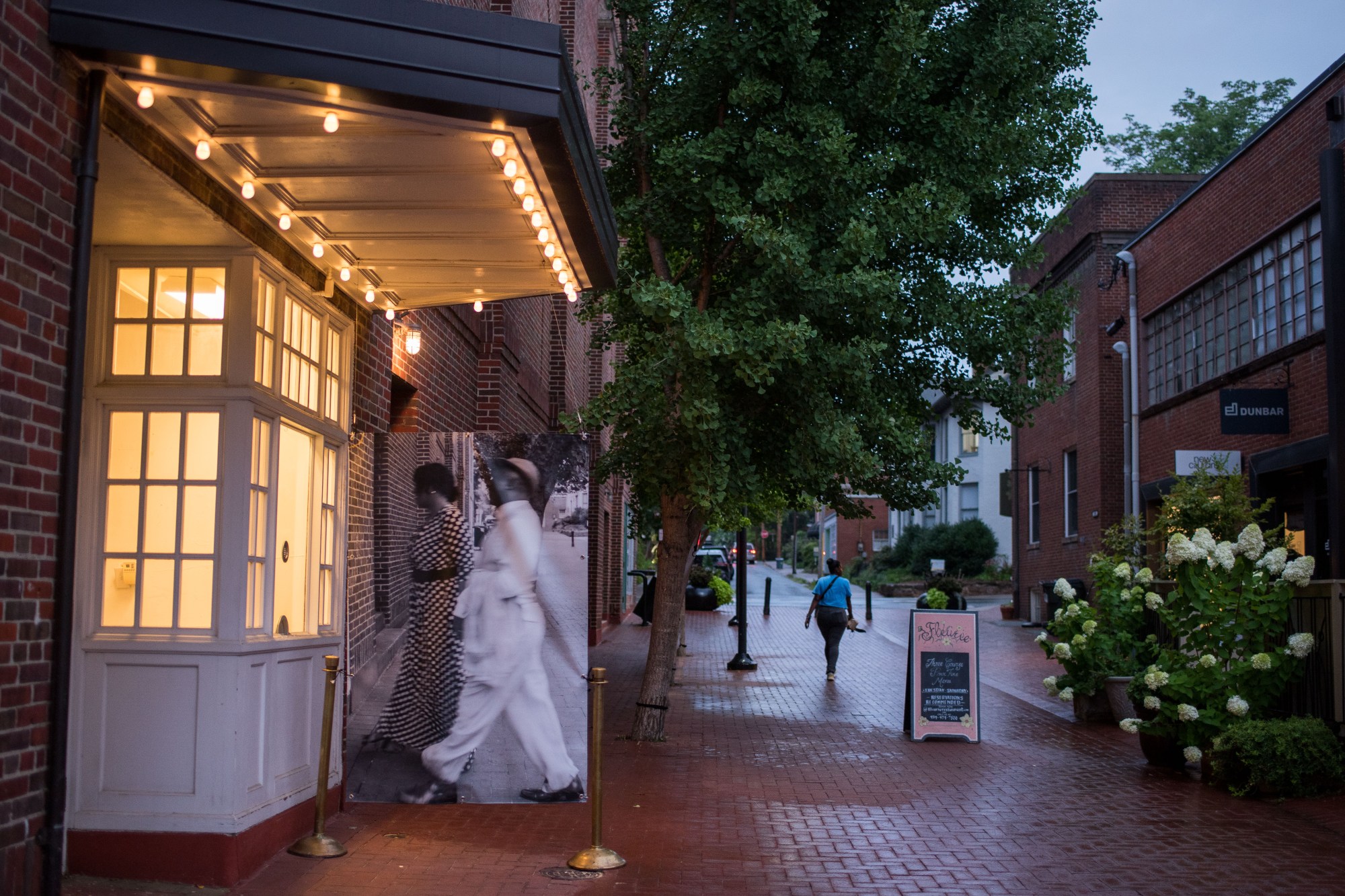
“Walking Dualities” is a set of four life-size photographs printed on vinyl banners. By using a longer shutter speed and capturing motion blur, Black people from our present become apparitions representing Black folks from the past, walking to go see a movie or a show. I composed two of the photographs by combining pieces of over 25 different images and placed two in-motion photographs at the box office to draw passerbys’ attention and direct it toward the Third Street Box Office.
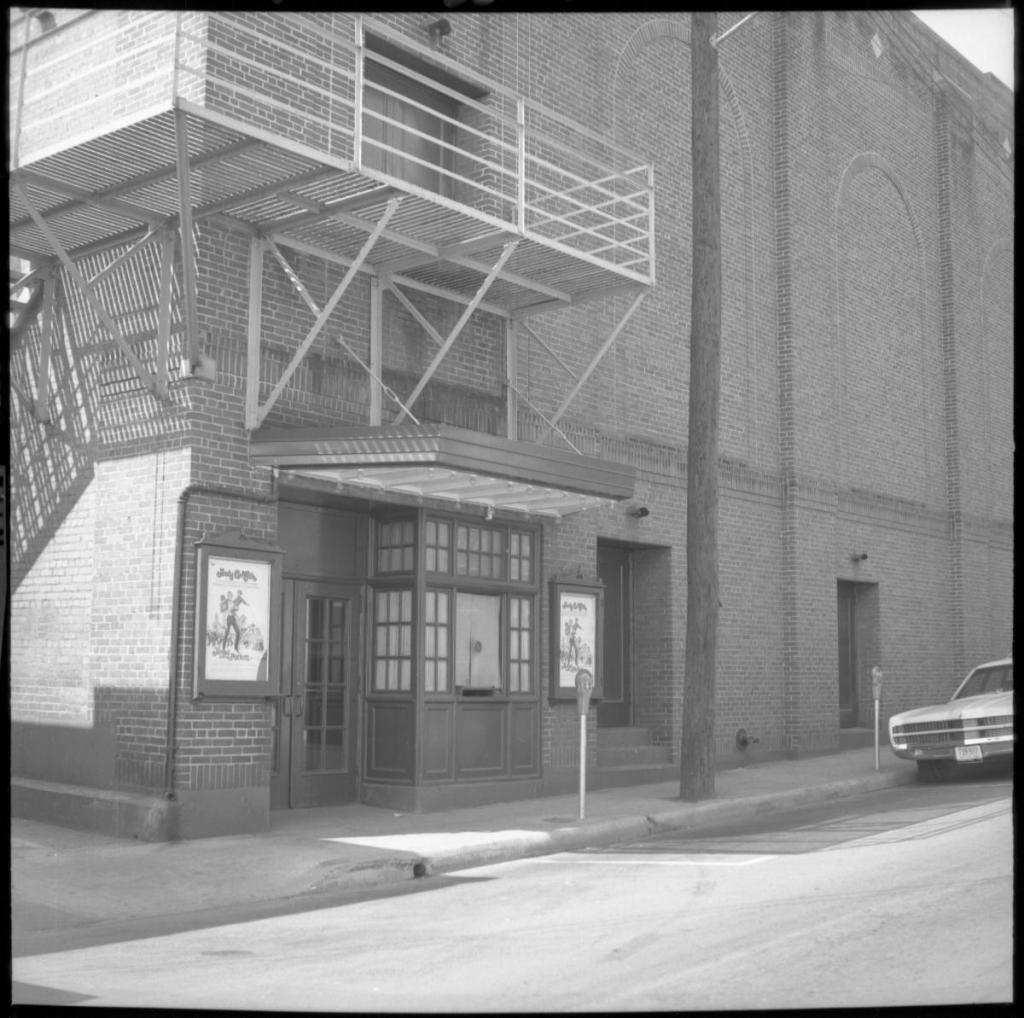
From the 1930s until the Civil Rights Act of 1964, that box office, around the corner from the grand marquee and lobby, served as the “Coloreds Only” ticket office and entrance to the Paramount Theater. After purchasing their tickets, Black patrons would have to use a separate, outdoor staircase that led to seating in the balcony.
While they might have had the best seats in the house, the intent was to keep them as invisible members of society.
More often than we might be aware of, we enter and exit physical spaces where land was stolen and where gentrification forced community members out and denied them the opportunity to build wealth. We inhabit institutions and spaces where acts of racial violence occurred and where enslavement was hidden in basements and behind tall brick walls. While the ruling class of our past kept many people “out of sight, out of mind,” this practice is no longer serving us nor the society that we are creating together.
This fervor that I have for understanding legacy and history was the driving force for creating “Walking Dualities.” It was important to draw attention to this history and bring it into the light.
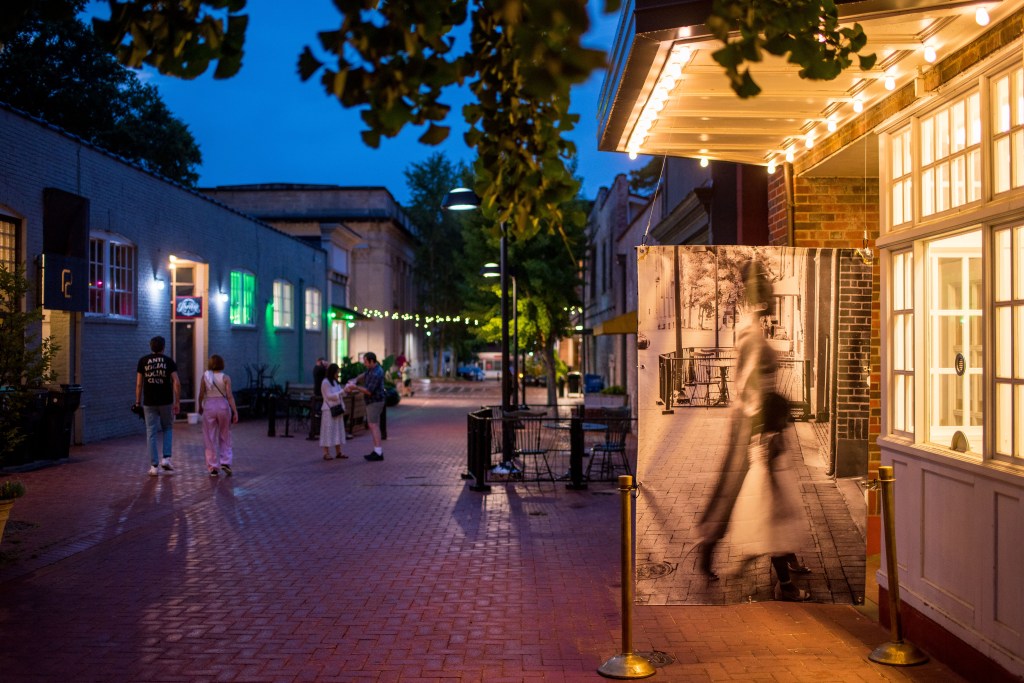
Unfortunately, being seen is not always the same as being accepted or understood.
The impact of being visible is now physically a part of my artwork. “Walking Dualities” was installed on July 2 and four days later, it was vandalized. The vandal cut the photographs at their top corners and cut through a person in the pictures. While the motivation behind the crime is still unknown, the harm done to the photographs is now a part of their history.
Instead of hiding the damage or having the banners reprinted, I chose to repair them. Inspired by the Japanese art tradition of kintsugi, a method of repairing ceramics with gold or silver, I used gold leaf to both show where the damage occurred and that we, as a society, are capable of healing while acknowledging the harm that was done.
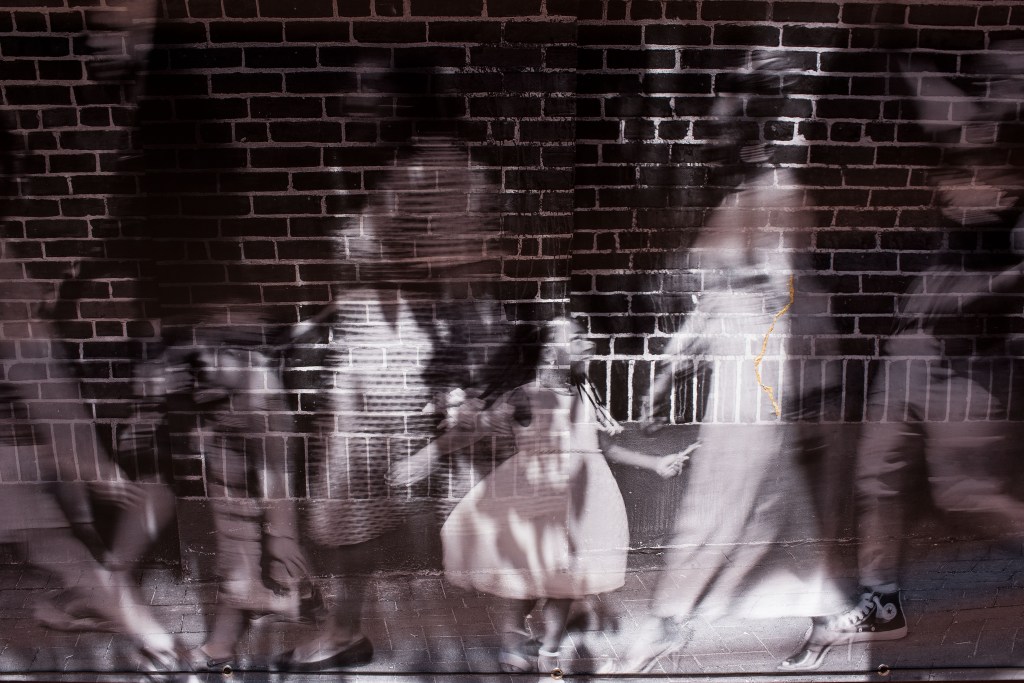
The Paramount Theater chose to preserve the Third Street Box Office during their renovations that were finished in 2004, and I chose to preserve the vandalism of “Walking Dualities.”
But, not every marker or record of history is kept or survives the passage of time. What of the unseen and unknown histories that we also walk alongside? How can we pay attention to something that we can’t physically see?
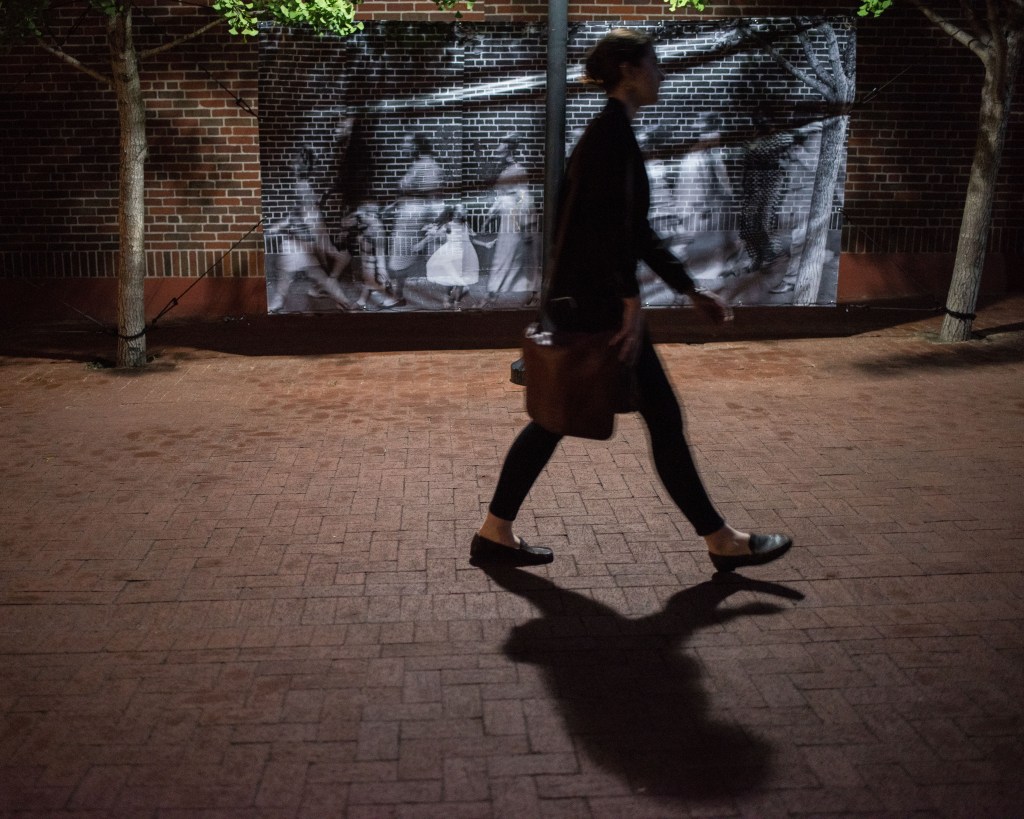
Sometimes I like to think of physical space from the perspective of a single unit of time. If we could collapse the layers of the past, our present and the future we’re creating into a singularity we would see a perspective that told the full rich legacy of a place and of a people.
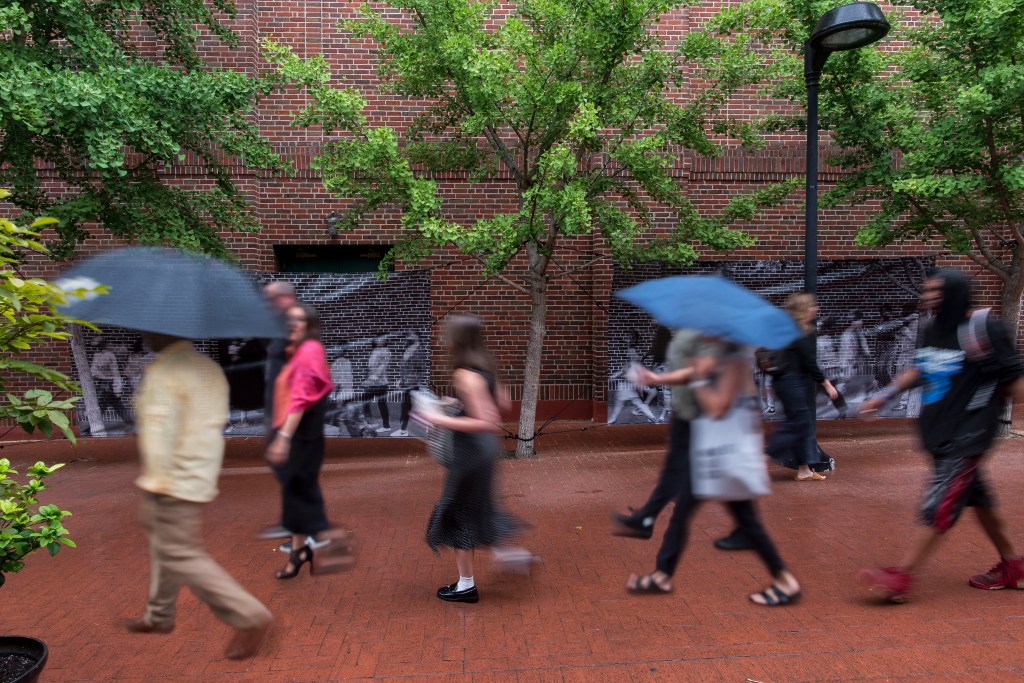
While compression of time may be science fiction, we are capable of including multiple perspectives into our thinking. We can research what occurred. We can infer what might have been. We can dream up what could happen and create what will happen.
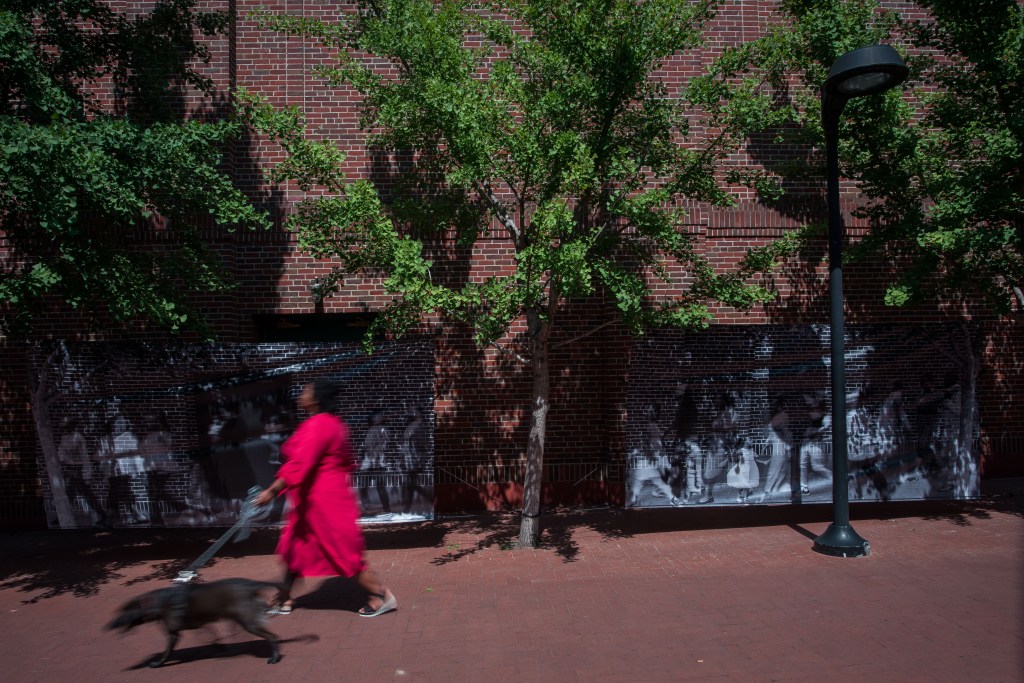
“Walking Dualities” has evolved past my original purpose of providing a means to draw attention to history. It has become a historical record. It’s a record of what someone did to an art installation depicting Black people. It’s a record of what healing can look like.
Most importantly, it is a record of fortitude, resilience and perseverance.
It’s a gut punch to have something you care deeply about and spent 40 hours creating cut down. I’m so appreciative of the many folks who checked in on me, supported me and applauded me on my resilience and strength.
Finding a path forward was instinct. Black people have always needed to be strong, work twice as hard, and compartmentalize emotions in order to survive in our society. And making visible the stories of those who had the double consciousness of enjoying a film or show while being treated as a second class citizen helps make my struggle more visible, too.
“Walking Dualities” is on display on the 3rd St. side of The Paramount in Charlottesville through July 23. Two more artists’ works will be on display over the summer.