


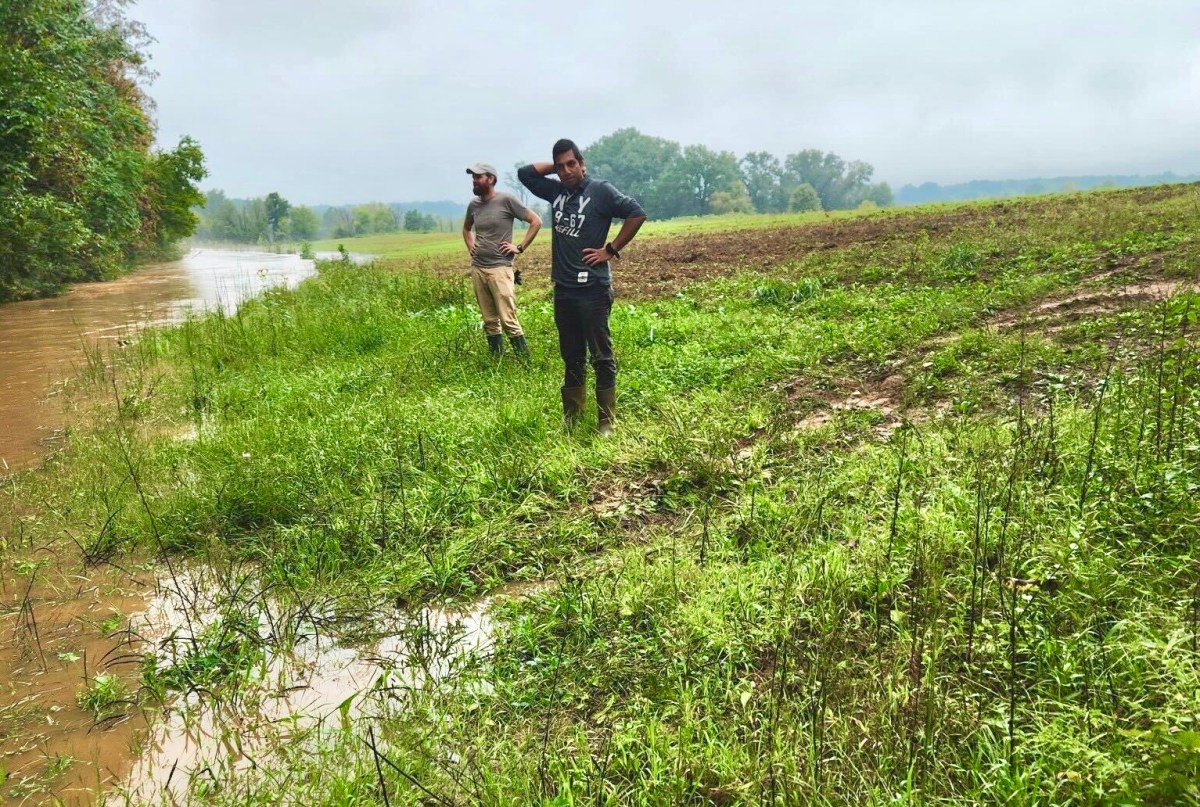
For most of you reading this in central Virginia, the worst of the flooding from Hurricane Helene is likely behind you. The storm came ashore in Florida as a major hurricane and tore through much of the southeast United States before arriving in Virginia as a tropical depression on Friday.
“Today will be the last day of occasional rain and drizzle,” said Luis Rosa, a meteorologist at the National Weather Service on Tuesday. “The water has begun to recede, especially in the Charlottesville area.”
(That’s not the case for our neighbors to the west along the Shenandoah River. Augusta County has had around nine inches of rain in the last five days, Rosa said. For reference, that area typically sees about 36 inches of rain over the course of an entire year. All that water continues draining into the Shenandoah River. You can read the latest flood warnings here.)

In Albemarle County “the flooding has impacted the western portion of the county more than the rest, but flooding has absolutely impacted the entire area,” said Abbey Stumpf, a county spokesperson.
The rains affected at least some of the local farms. Bellair Farm lost $17,000 worth of sweet potatoes and one of its tractors was fully submerged in the water when the nearby Hardware River flooded Thursday, Michelle McKenzie, one of the farm’s managers, said in a call on Tuesday.
The tractor should be recoverable, but it will require a lot of repair, she said. One of the farm’s pigs is missing, presumed dead. Farm workers moved all their animals to higher grounds to avoid further loss. The butternut squash patch was flooded and lost, too.
Bellair doesn’t expect any further damages and wants people to know that the farm still has plenty of produce for purchase.
“We’re still operational, open in all locations. Nothing changed about our distribution,” McKenzie said.

Charlottesville Emergency Management Coordinator Jeremy Evans reported no major damage or concerns within the city limits on a brief call Monday afternoon.
But the water was high in some places in town.
Onlookers on Monday night gawked at the raging Rivanna River where it passes beneath Long Street (which is U.S. Route 250) on Pantops. As darkness fell, multiple unhoused folks camping under that bridge left as the water approached their tents.
“It’s not safe,” said one man, as he hauled some of his possessions away. He said he was heading toward downtown Charlottesville. “The Pavillion is the only place left to go.”

About five miles west of the Rt. 250 bridge, New Roots Farm was also facing rising water from nearby Moores Creek. The farm is the largest of six urban farms and gardens managed by the International Rescue Committee. These sites primarily serve refugees and immigrant residents and their families, allowing them to grow crops for personal use or to sell at local markets.
The creek didn’t quite reach the vegetables, said Cecilia Lapp Stoltzfus, the food and agriculture programs manager. But that doesn’t mean New Roots avoided damages — the tomato and pepper plants are currently drowning in the standing water, threatening their survival. This puts the farm at the risk for significant losses, said Lapp Stoltzfus.
Take Action
Were you or someone you know affected by floods in Central Virginia? Were you displaced or did you experience property damage? We’d like to hear from you. Hit this link and tell us what happened.
Finally, a quick PSA: Don’t go in the water.
The Virginia Health Department issued a warning on Monday advising everyone to avoid any natural water bodies for a while, until everything returns to normal. Why? The flooding has washed contaminated materials into it.
“Pet, livestock and wildlife wastes, and untreated wastewater from sewage treatment plants that are overloaded by an excess of rainwater can all end up in natural waters used for recreation and pose risks to human health,” the statement reads.
Remember the E. coli outbreak at Lake Anna this summer that caused several children to lose kidney function? Health officials never determined the cause, but it could have been from rainwaters washing fecal matter into the river just before Memorial Day weekend. Read more about that here:
From August: Warmer temperatures mean devastating E. coli outbreaks like the one at Lake Anna could become more common
I hope you’re staying safe and dry!
Jessie Higgins, Managing Editor

We need you! Take a 5-minute survey to help us build local news that serves you.
Our Sponsor

Do you want to support local news?
+
Tell your friends about our newsletter! We have three options to choose from.
+
Are you a business owner or part of a nonprofit organization? Want to reach our readers while supporting local news? Here’s how.
+
Did you know that you can donate on our website? Every dollar counts!