

Virginia’s lieutenant governor serves a four‑year term, presides over the state Senate, and stands next in line for the governorship — stepping in if the governor is absent, incapacitated, or the office becomes vacant. The lieutenant governor can also break ties in the state Senate.
It’s a largely ceremonial position, but because it is independently elected, the winner can be a different political party than the governor.
This year, John J. Reid II is the Republican candidate, and Ghazala F. Hashmi is the Democratic candidate. Neither candidate is incumbent, but Hashmi currently represents District 15 in the Virginia State Senate.
Charlottesville Tomorrow designed a questionnaire for the candidates based on more than 160 responses we received to a voter survey. We’ve listed the candidates’ responses in the order we received them.
The federal government is changing Medicaid rules — restarting eligibility checks, adding work and reporting requirements and increasing oversight. These changes may affect how many Virginians stay enrolled, depending on how the state handles things like paperwork, renewals and support for local offices. What role do you think the state should play in responding to these changes? And how would you use your role as lieutenant governor to influence this issue?
John J. Reid II: Virginia should administer Medicaid responsibly, ensuring truly eligible families keep access while reducing fraud and misuse. That means simplifying paperwork, giving local offices the tools to process renewals efficiently, and connecting able-bodied adults to work opportunities. As lieutenant governor, I would work with both chambers to balance compassion with accountability. We should protect the most vulnerable while making sure taxpayer dollars are sustainable. I’ll champion reforms that streamline processes, strengthen work requirements, and ensure local offices aren’t overwhelmed.
Ghazala F. Hashmi: Republicans in Washington have passed a bill, which my opponent supports, that will rip away health care coverage from over 300,000 Virginians* and has already forced three health care clinics in Southwest to close**. These federal cuts to Medicaid will leave vulnerable Virginians without access to critical health care. Virginia needs new leaders who take these cuts seriously and act to ensure all Virginians have access to affordable and quality health care. As the Chair of the Senate Education and Health Committee and as the Vice Chair of the Joint Commission on Health Care, I am fully aware of the devastating effects these cuts will have, especially on our rural communities. That’s why, in 2025, I wrote the budget amendment to protect Medicaid in Virginia***. I will continue to be focused on responding to this crisis as lieutenant governor.
*Editor’s note: On July 4, 2025, President Donald Trump signed into law a budget reconciliation package that he referred to as the “big, beautiful bill.” Among other things, the bill made major changes to Medicaid and the Affordable Care Act Marketplace. KFF — an independent health policy research, polling and news organization — conducted a study of the potential impact of the bill, using data from the Congressional Budget Office. KFF concluded that approximately 310,000 Virginians would lose Medicaid coverage as a result of the bill.
**On Sept. 4, 2025, Augusta Medical Group announced it was closing three health clinics in Virginia, partly in response to the “big beautiful bill.” Read more from Virginia Mercury here.
***Hashmi introduced a budget amendment in the 2025 session “to preserve health care access to as many Medicaid members as possible,” but the measure failed to pass. Read more from VPM here.
Federal funding is changing in areas like health care, education, public broadcasting and environmental programs. What is your view on how Virginia should respond to these changes, and what role should the state play in supporting or adjusting local services? And how would you use your role as lieutenant governor to influence this issue?
Reid: Virginia cannot build its future on shifting federal dollars. We need to budget responsibly and maintain state-level priorities like education, workforce training, and infrastructure regardless of federal trends. I believe in an “all of the above” approach: seek federal support where appropriate, but not rely on Washington to fund core services. As lieutenant governor, I’ll advocate for predictable, conservative budgeting that shields Virginians from sudden cuts. Virginia should be proactive, not reactive, ensuring we meet essential needs while keeping taxes low and government accountable.
Hashmi: The Trump administration’s actions have a direct impact on Virginians. The loss of federal funding to Medicaid and the dismantling of the U.S. Department of Education affect everyone, most especially seniors in nursing homes, rural hospitals and clinics* and students in Title I schools.** State leadership is required to respond to this growing crisis; we need effective legislative and budget decisions that will protect all Virginians. The loss of federal funds that support and protect the common good erodes our opportunities to improve lives, and expand opportunity and access. As lieutenant governor, I will do everything I can to protect health care services, funding for public education, environmental protections, and more.
*Editor’s note: KFF (Kaiser Family Foundation) analyzed the budget reconciliation package passed in July and says it would greatly reduce federal Medicaid spending in rural areas. Beyond individuals and families losing Medicaid coverage, KFF warns the cuts would increase financial pressure on rural hospitals and other providers and “could lead to layoffs of staff, more limited investments in quality improvements, fewer services, or additional rural hospital closures.” KFF also notes that Medicaid is the primary payer for more than 60% of nursing home residents nationwide. The organization says the cuts could undermine efforts to increase staffing levels in nursing homes, which is tied to better patient outcomes and quality of care.
**According to U.S. News and World Report and the National Education Association, some of the proposed changes to Title I funding could hurt test scores, attendance and graduation rates.
Many central Virginian residents who responded to our voter survey said they are concerned about federal overreach and a lack of checks on presidential power. Do you see this as a problem? And what role should Virginia play when it comes to responding to changes made by the Trump administration, particularly when they are challenged in the courts?
Reid: Yes — federal overreach is a problem no matter who is in the White House. Virginia must stand up for state authority and constitutional balance. When federal agencies exceed their authority, Virginians deserve leaders who will defend our rights in court and in policy. My role as lieutenant governor would be to ensure Virginia always prioritizes liberty, local control, and adherence to the Constitution. That means not blindly opposing or rubber-stamping any administration, but holding Washington accountable and keeping Virginia’s decision-making in Richmond, not D.C.
Hashmi: Donald Trump’s sweeping efforts to bend institutions to serve his own agenda are having a direct impact on Virginians all across the board. We need to respond with effective legislation to protect our most vulnerable citizens and defend Virginians’ rights and freedoms. Throughout my time in the State Senate, I have fought back against the Trump administration’s harmful impacts on the Commonwealth. When Trump came after reproductive rights, I wrote the bill protecting contraception* and helped to draft language for our constitutional amendment protecting abortion and reproductive health care*. When Trump came after our health care, I wrote the plan to protect Medicaid in Virginia**. In the face of attacks on public education, I crafted the historic budget plan to increase funding for our schools.
*Editor’s note: Hashmi introduced a bill in the 2025 session establishing the right to “obtain and engage in contraception.” The bill passed the General Assembly but was vetoed by Gov. Glenn Youngkin. Hashmi was also a co-chief patron on a constitutional amendment to provide individuals a “fundamental right to reproductive freedom.” The amendment passed the General Assembly and will need to pass again in 2026 before it appears on the ballot for voters later that year, the ACLU explains.
**Hashmi introduced a budget amendment in the 2025 session “to preserve health care access to as many Medicaid members as possible,” but the measure failed to pass. Read more from VPM here.
With public school funding facing uncertainty at both the state and federal levels, what do you believe is the best way for Virginia to ensure a stable and adequate K–12 education system? And how would you use your role as lieutenant governor to influence this issue?
Reid: We need stable, predictable funding for public education that doesn’t depend on federal politics. Virginia should focus on directing resources into classrooms, empowering parents, and restoring rigor. That means prioritizing teacher pay, modern school infrastructure, and career-prep pathways like apprenticeships and vocational training. As lieutenant governor, I would use my tie-breaking vote and influence to protect education funding while championing reforms like transparency in curricula and expanded parental choice. Strong schools are the backbone of opportunity — and Virginia can provide that without federal strings attached.
Hashmi: As an educator for nearly three decades, as the Chair of the Senate Committee on Education and Health, and as a mom of two daughters, I know that we must prioritize fully funding public education to ensure all children in Virginia have access to quality education that prepares them for well-paying jobs or higher education. My opponent, John Reid, wants to close public schools and touts plans to funnel taxpayer dollars into expensive private schools instead*. I have led efforts in the General Assembly to secure historic increases in public education funding and give our teachers a raise. However, more needs to be done to strengthen Virginia’s education system, both K-12 and post-secondary opportunities. My focus has been and always will be fighting to ensure the Commonwealth has the best K-12 schools in the nation and that every student is set up for success.
Editor’s note: *Reid has expressed support for policies that allow public funds to be used for private education, including school voucher programs. In a recent interview with Cville Right Now, Reid stated his interests in offering “alternatives” to public schools he described as “failing.”
Virginia is the only southern state that hasn’t passed new abortion laws since the Dobbs ruling. What is your position on abortion policy in Virginia and how would you use the role of lieutenant governor to influence this issue?
Reid: I suspect that I’m in the minority in Virginia, because I am pro-life. Virginia’s current law is more extreme than almost every other developed nation, allowing abortion late into pregnancy* — it goes too far. Day-of-birth abortion is wrong, and most Virginians agree we should protect unborn children once they can feel pain, while still showing compassion for mothers who feel this is their only choice. If elected, I would work to end painful late-term abortions and bring Virginia’s laws in line with common sense, decency, and compassion. My focus includes expanding support for mothers and strengthening adoption and childcare resources, so women are empowered with real choices. Virginia should not be the most extreme state — we can and must do better.
*Editor’s note: Under Virginia law, abortions may be performed by licensed physicians during the first trimester (approximately the first 12 weeks of pregnancy), and in the second trimester (up to approximately 27 weeks) if done at a licensed hospital. In the third trimester, abortion is permitted only if a physician, along with two consulting physicians, certifies that continuing the pregnancy would likely result in the woman’s death or substantially and irremediably impair her mental or physical health. In such cases, the law requires that physicians have life support measures ready and use them if there is any clearly visible evidence of fetal viability.
Internationally, many countries set earlier gestational limits for abortion upon request. A 2024 report from the Charlotte Lozier Institute, an anti-abortion group, an organization that opposes abortion, outlines abortion laws across United Nations member countries and notes that most restrict elective abortions to the first 15 weeks. A 2024 report from Reuters lists out gestational limits specifically for European countries, with other information about their respective abortion laws.
Hashmi: Thanks to the disastrous Dobbs Supreme Court decision, my daughters and yours have fewer rights than their mothers did. I will never stop fighting for reproductive health care, including access to abortion and to contraception. I wrote the bill protecting contraception access and helped to draft language for our constitutional amendment protecting reproductive health care*. My opponent, John Reid, said he would not have voted to protect abortion rights and does not care that Virginians do not agree with his extreme support for stricter abortion laws. As the last Southern state that has not severely restricted abortion access, we have a responsibility to ensure that all people have access to the safe and legal health care they need and deserve.
*Editor’s note: Hashmi introduced a bill in the 2025 session establishing “a right to obtain contraceptives and engage in contraception.” The bill passed the General Assembly and was then vetoed by Gov. Glenn Youngkin. Hashmi was also a co-chief patron on a constitutional amendment to provide individuals the “fundamental right to reproductive freedom.” The amendment passed the General Assembly and will need to pass again in 2026 before it appears on the ballot for voters later that year, according to the American Civil Liberties Union.
Many central Virginians who responded to our voter survey expressed concern with accessing affordable housing. What do you see as the state’s role in addressing housing challenges in our region?
Reid: The state must address supply and affordability head-on. That means cutting red tape, reforming zoning that blocks growth, and streamlining permits for new housing development. Virginia should also expand workforce housing near job centers and invest in infrastructure to support growth. As lieutenant governor, I’d press for policies that encourage private sector building, reduce unnecessary costs, and expand pathways to homeownership. Our goal should be a Virginia where families can afford to live, work, and raise children in the communities they love.
Hashmi: All Virginians deserve housing that they can afford without having to sacrifice putting food on the table or paying for lifesaving medication. I have served for six years on the Virginia Housing Commission and will continue my work to find solutions that make housing more affordable, such as increasing higher density housing development, supporting financial products that help first-time homebuyers, and decreasing eviction rates. I was a leader in the General Assembly in finding solutions to ensure people can afford clean, safe and decent housing, including my Faith in Housing Act to allow faith-based institutions and nonprofits to build affordable housing on land they own*.
*Editor’s note: Hashmi introduced two bills in the 2024 and 2025 sessions to allow and encourage religious organizations “to construct affordable housing” on property they own. Both failed; one did not advance past the General Laws and Technology committee, and the other did not advance past the Finance and Appropriations committee.
Immigrations and Customs Enforcement arrests have surged across Virginia in 2025, with more than 2,500 arrests by early summer and over 4,000 by late July, according to analyses of ICE data. What should Virginia’s role be in immigration enforcement? Should the state encourage local cooperation with ICE, limit it to what federal law requires, or formally restrict it? And how would you use your role as lieutenant governor to influence this issue?
Reid: We all must obey the law and America’s immigration laws are more than fair. I’ve lived overseas and worked or traveled in over 100 countries; I know what it’s like to have a work visa and to be required to obey foreign rules. Virginia must uphold the rule of law and stop allowing the abuse of workers. All officials must cooperate with ICE especially to remove dangerous criminals, while ensuring local resources remain focused on community safety. Sanctuary policies are illegal and reckless — they weaken enforcement and put families at risk. I support legislation requiring cooperation with federal authorities. Our priority should be keeping Virginia’s citizens safe, housed, and fully employed, not providing cover for those who break our laws.
Hashmi: As an immigrant myself, I know immigrant communities are too often denigrated and made to feel unwelcome. I oppose mandates that compel local law enforcement to do the work of federal immigration officials. When we take our police officers and sheriffs away from their responsibilities for public safety, we divert resources from the important work of responding to crime and protecting the public. Such steps also erode the necessary trust between local law enforcement and the communities they serve, making everyone less safe. As lieutenant governor, I will strive to ensure Virginia is a place where all people are treated with dignity, respect, and fairness under the rule of law.
Virginia’s energy demand is rising rapidly due to the growth of data centers. At the same time, some localities have raised concerns about large-scale solar development. What approach should the state take to meeting growing energy needs, and what role — if any — should clean energy play in that strategy?
Reid: Virginia needs an all-of-the-above energy strategy — reliable baseload power from natural gas and nuclear, complemented by solar, wind, and emerging technologies. We can’t gamble our grid on intermittent sources alone, but we also shouldn’t ignore innovation. As lieutenant governor, I’ll support policies that keep energy affordable, reliable, and resilient, while respecting local concerns on siting. A balanced approach protects families and businesses while positioning Virginia as a leader in next-generation energy solutions.
Hashmi: The next administration will be tasked with moving Virginia forward in our transition to cleaner and more affordable energy. As lieutenant governor, I will have conversations with leaders across the state to identify innovative solutions that allow Virginia to reduce carbon emissions and transition to renewable energy while simultaneously lowering costs. Last year, I passed legislation to create Virginia’s first virtual power plant pilot program* which will reduce energy costs for families and strengthen the electric grid. This effort is an example of the kinds of innovative solutions we need to ensure access to clean and affordable energy. As we look towards solutions to address our rapidly growing energy needs, I will continue to use my position to protect the health and well-being of every community and ensure the concerns and needs of all Virginians are fairly addressed.
*Editor’s note: Hashmi introduced a bill in the 2025 session that requires Virginia Dominion Energy “to conduct a pilot program to evaluate methods to optimize demand through various technologies, including the establishment of virtual power plants.” The bill passed and was signed into law in May 2025. Learn more about virtual power plants from MIT Technology Review.
Virginia is considering regulations on artificial intelligence chatbots. As AI rapidly becomes a part of everyday life, it has led to consumer protection and privacy concerns. Do you think AI needs to be regulated? If so, how, if not, why?
Reid: Yes, AI should be guided by smart, limited regulation — not heavy-handed mandates. We need guardrails on consumer privacy, fraud prevention, and transparency when people interact with AI. Virginia should also avoid overregulation that stifles innovation and drives jobs elsewhere. As lieutenant governor, I would support common-sense protections while fostering an environment that attracts tech investment. Virginia can be both a leader in innovation and a model for protecting individual rights.
Hashmi: For six years, I have served on the Joint Commission on Technology and Science, and have examined policies addressing the rapid rise of AI and its impacts on every facet of our lives. I understand the significant power of AI and also its challenges. As state leaders, we have to balance the capabilities of AI with the needs for consumer protection and privacy by placing guard rails to ensure everyone can use it safely and ethically. Over my two terms in the State Senate, I have built critical relationships across state agencies and insights that especially help me to understand the technology infrastructure within state government, the role of diverse technologies in various sectors (both public and private), and the emerging policy concerns for AI. I will bring that significant level of expertise and critical insights to address the issues facing Virginia, including AI regulation.
Virginia is the only state where people with felony convictions must be individually approved by the governor to regain their right to vote. A proposed constitutional amendment would change that by automatically restoring voting rights after a person completes their sentence. What is your position on this amendment?
Reid: I support second chances, but also believe accountability matters, which is why I do not support this amendment. Automatic restoration without distinction between violent and nonviolent crimes goes too far. I support a system that allows nonviolent offenders to regain their rights on a case-by-case basis after completing their sentence, while ensuring victims’ voices are heard in cases of violent crime. As lieutenant governor, I would encourage a system that promotes redemption while maintaining respect for the seriousness of certain offenses and the restitution that must be paid by offenders.
Hashmi: In the past General Assembly session, state legislators passed three constitutional amendments that will enshrine abortion rights and access to reproductive health care into the state constitution, restore civil rights to convicted felons after they have served their time, and protect marriage equality by ensuring a right to same-sex marriage. I voted for all three*, including the amendment to restore voting rights because I believe that the right to vote is the cornerstone of our democracy. My opponent, John Reid, has said he would have voted no on all three amendments**, which makes it clear he will not fight for Virginia’s values or freedoms.
*Editor’s note: During the 2025 session, Hashmi voted in favor of three constitutional amendments: one repealing the provision that defines marriage as only a union between a man and a woman; one establishing “a fundamental right to reproductive freedom,” and one restoring voting rights to felons after they are released from incarceration.
**Reid has said publicly that he would not have supported the three amendments. Read more, including why Reid opposed them, in this report from Virginia Mercury.
Are there any other pressing issues facing the state of Virginia you would like voters to know about?
Reid: Yes. Virginia families are being crushed by rising costs — from groceries to health care to housing*. My focus as lieutenant governor is building a Virginia where working families can thrive: restoring excellence in education, cutting red tape for small businesses, investing in workforce training, and making sure government works for the people — not against them. Voters deserve a voice and a fighter who will stand up for families, protect our values, and put Virginia back on the path to opportunity and growth.
Hashmi: Affordability is top of mind for far too many families that are struggling to keep up with costs rising on everything from housing, child care, groceries and more*. In the past year, Virginia’s economy has been directly harmed by [Department of Government Efficiency] cuts and Trump’s reckless tariffs** that have only made life harder for families, workers, and business owners. I ran for office the first time to stand up to the Trump administration. I have delivered for Virginians and developed the legislative experience and critical relationships to improve the lives of Virginians, especially in key areas such as housing, education, health care, and environmental and energy concerns. I’m running for lieutenant governor because Virginia needs new leaders who are not only ready to respond effectively to the Trump administration but also ready to chart the next four years of policy that will decisively cast Virginia as an exemplar for other states.
*Editor’s note: According to a December 2024 report from Republicans on the U.S. Congress Joint Economic Committee (JEC), costs of living are increasing, and an average Virginia household is paying $1,192 more per month to purchase the same goods and services it did in January 2021.
**According to a Virginia Business report, DOGE-led federal layoffs have been the top driver of job-cut announcements this year, and experts say the effects are hitting Virginia disproportionately. The report also cites tariffs, inflation, weaker consumer spending, and economic uncertainty among the factors behind retail store closures and job losses.
More about the candidate and issues
- Campaign finance report for John Reid II from the Virginia Public Access Project
- Campaign finance report for Ghazala Hashmi from the Virginia Public Access Project
- Interview with Hashmi (VPM, Sept. 16, 2025)
- Candidate questionnaire with Reid (Virginia Mercury, June 16, 2025)
- Candidate questionnaire with Hashmi (Virginia Mercury, June 16, 2025)
- Interview with both candidates (Cville Right Now, Sept. 5, 2025)
- Both candidates discuss education issues (CBS19, Sept. 11, 2025)

Here are key dates and deadlines in the 2025 elections
| Friday, May 2, 2025 | Early voting for primaries begins weekdays at local registrar’s offices. |
| Tuesday, May 27, 2025 | Deadline to register to vote or update an existing registration for the primary election. You can still vote in the primary if you miss this deadline by registering at the polling place and casting a provisional ballot. You do not have to be a member of a political party to vote in that party’s primary election. However, you can only vote in one party’s primary election each year. |
| Friday, June 6, 2025, 5:00 p.m. | Deadline to apply for your ballot to be mailed to you. Requests must be received by your local registrar’s offices by 5 p.m. |
| Friday, June 6, 2025, 5:00 p.m. | Deadline to apply online for an absentee ballot using the Citizen Portal. |
| Saturday, June 7, 2025 | Local voter registration offices open on Saturdays for early voting for primaries. |
| Saturday, June 14, 2025, 5:00 p.m. | Early voting for primaries ends at local registrar’s offices. |
| Tuesday, June 17, 2025 | Primary Election Day! |
| Friday, Sept. 19 to Saturday, Nov. 1, 2025 5:00 p.m. | Check with your local registrar’s office for early in-person voting. |
| Friday, Oct. 24, 2025, 5:00 p.m. | Deadline to apply with your local registrar’s office for a ballot to be mailed to you. |
| Tuesday, Nov. 4, 2025 | Election Day! |
We will update this list periodically as deadlines approach or we receive new information.
Register to vote, check your registration, find your polling places and apply to vote absentee at the Virginia Department of Elections here. Remember, even if you miss registration deadlines, you can register through Election Day and vote using a provisional ballot.
Need to know if you’re eligible to vote? Here are resources from the Virginia Department of Elections.

Subscribe for Voter Guide updates
Take a survey to help us continue to build this voter guide!
The latest from the 2025 Voter Guide
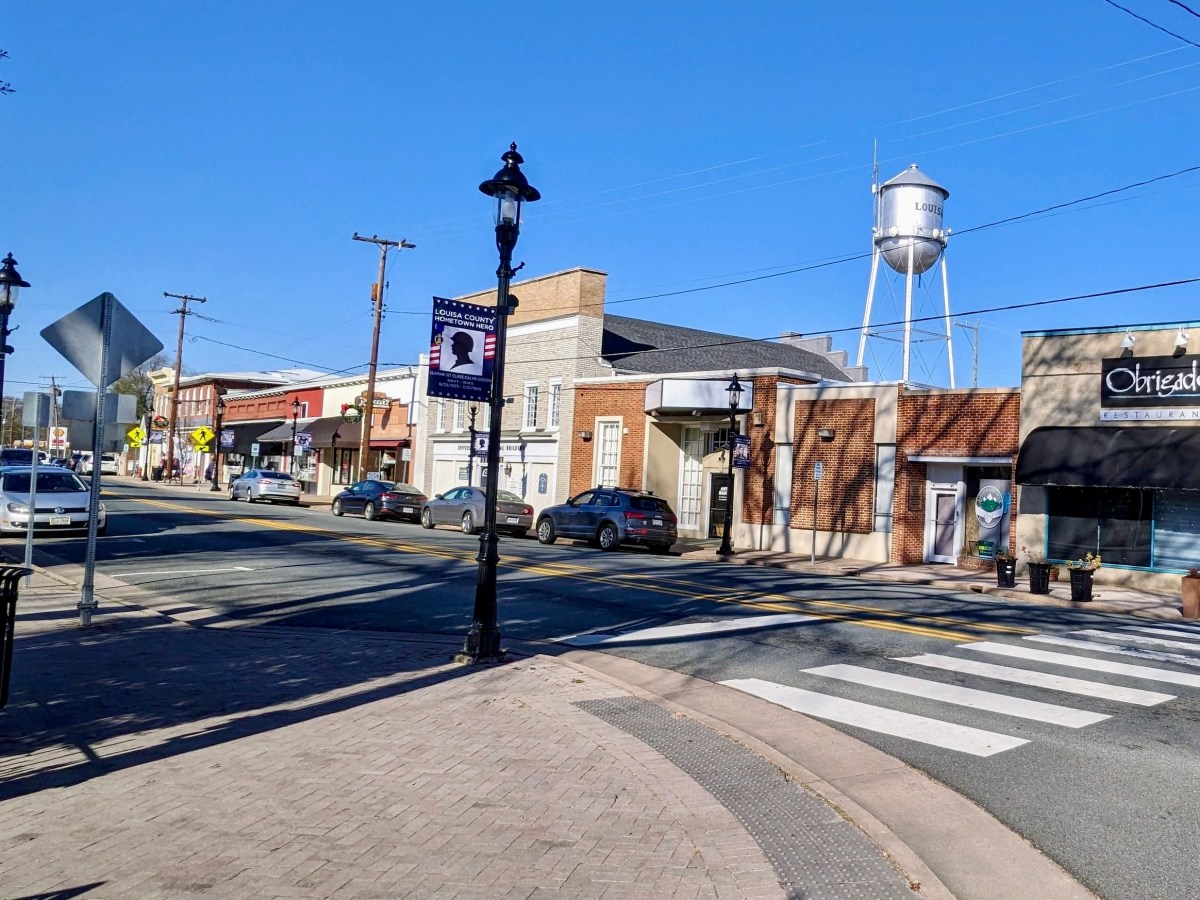
The Town of Louisa faced five resignations in less than a year. Now it’s trying to rebuild
During staffing shortages and months without meeting minutes, residents felt left in the dark. The town is trying to improve its communication.
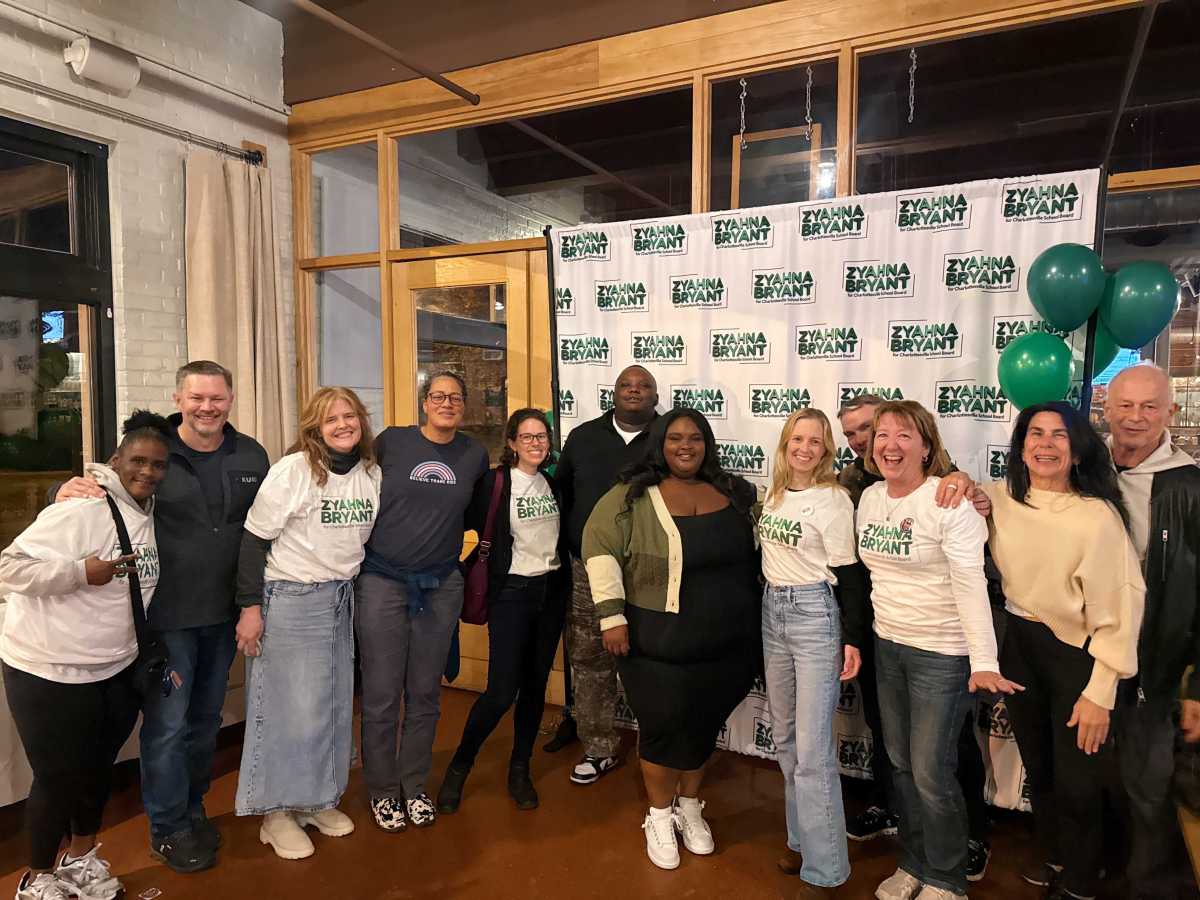
Longtime activist, first-time Charlottesville City School Board member Zyahna Bryant wants to elevate youth voices
“I believe that the community is ready for something new, and so that just makes me so excited to be on the cusp of that and to see a new wave of leadership,” Bryant told Charlottesville Tomorrow.

Matthew Kersey is being challenged by Ashley Michael for Louisa town mayor
Kersey was appointed mayor in July after both the elected mayor and his appointed replacement stepped down in quick succession.