

Clicks, subscribes, shares.
Tracking web traffic and social media data is common across news organizations — this kind of data helps us better understand our reach, after all. But Charlottesville Tomorrow prioritizes tracking something else: community impact.
We are part of a growing movement of newsrooms committed to reporting that addresses diverse communities’ needs. Charlottesville Tomorrow is sharing what we’ve accomplished in central Virginia and learning from other mission-driven news organizations around the country. In June, we presented at multiple national conferences.
CEO and Editor-in-Chief Angilee Shah demonstrated how we evaluate the impact of our work at the annual Institute for Nonprofit News conference, INN Days. It’s not just about getting as many eyes as possible on high quality news and information.
“Going big on Google Search is never going to be the thing that gives us sustainability, or the thing that makes us useful to the communities we’re serving,” Shah said to a standing-room audience. Nieman Journalism Lab, a Harvard University-based publication on the future of news, reported on the event. The panel discussed new metrics for local news outlets, and also featured the Tiny News Collective, Baltimore Beat, Open Campus and the Invisible Institute.
At Charlottesville Tomorrow, we believe understanding how our coverage impacts the lives of the communities we serve can help us build local news that makes our region stronger and more engaged. We want to know how our reporting affects readers, or makes them think differently about issues. Our newsroom also wants to understand if our reporting helps give more people access to the information they need to make change, from updates about our shared resources (like parks, roads and water) to how to participate in local government.
Take action
What’s important to you in local news? One way we decide what to cover and how to provide information is through hearing directly from you. Here’s where you can find a time to get to know Community Editor Atlee Webber and tell us what you think.
We’ve been gathering community feedback for years. Now, we’re building new tools to be more responsive to what you tell us.
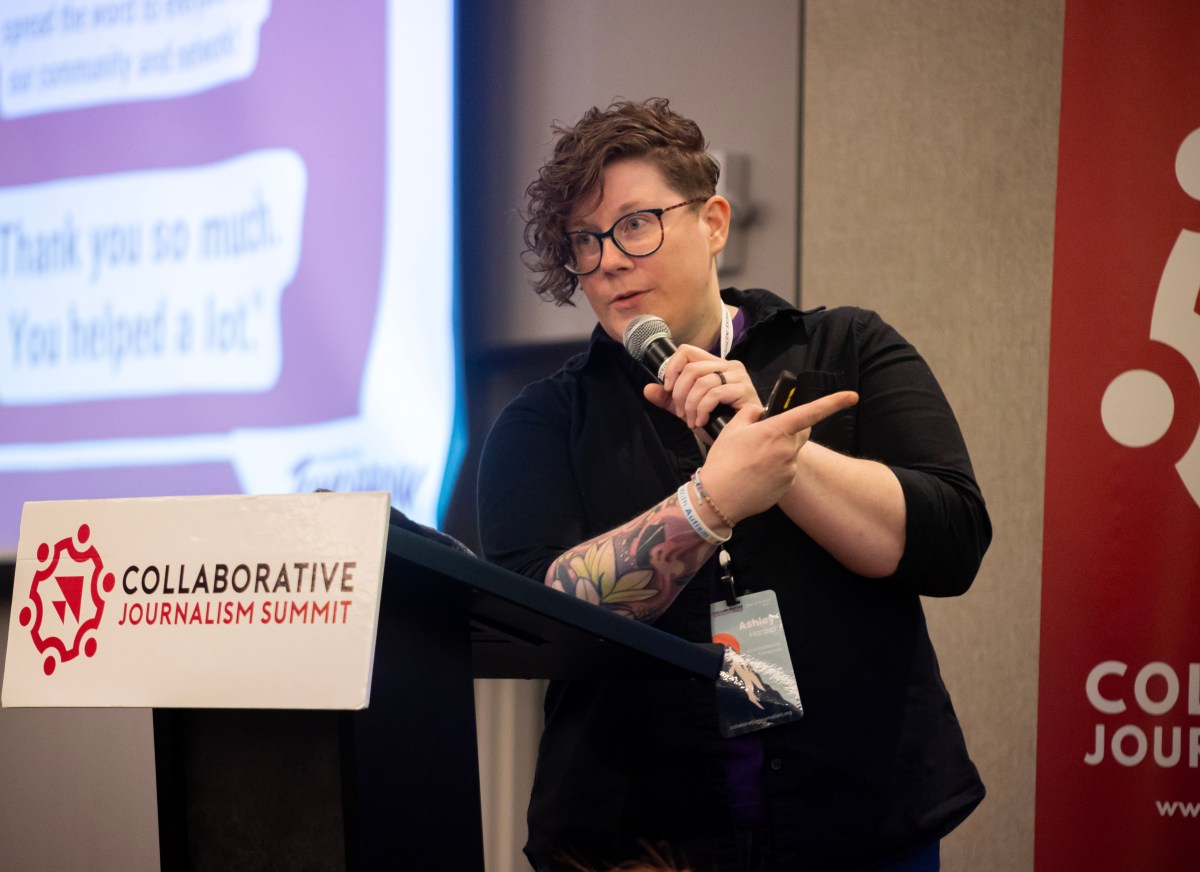
Product and Technology Officer Ashley Harper integrated our current community feedback tools into our website. She is working with the team to track trends, so that instead of focusing on the number of clicks on a link, we can consider the impact of those clicks.
Our Housing Resources Guide, for example, was developed in response to community feedback about housing insecurity. The Guide is a periodically updated directory of services used by nonprofit agencies and individuals who struggle with housing issues.
Harper presented the Housing Resources Guide to media professionals at the national Collaborative Journalism Summit in June, on a panel with the Jersey Bee. She described how Charlottesville Tomorrow collaborated with local housing organizations in Charlottesville and Albemarle County to develop, fact-check and improve the Guide. In an interview with the Institute for Nonprofit News, Harper said these kinds of projects are the most rewarding part of her work.
“As technology changes and our world changes, products are going to become more important for newsrooms to integrate,” Harper told INN. “If we want to reach people, we have to think like that.”
Since the June conferences, many other newsrooms around the country have asked for coaching about how they can create similar tools and projects for their communities. We’re sharing what we’ve learned while also learning from our colleagues. While each community’s needs are different — and each outlet’s mission should drive the metrics they follow — we hope that sharing our tools and methods for tracking impact will help local news organizations reimagine the roles they can play in the health of their communities.