

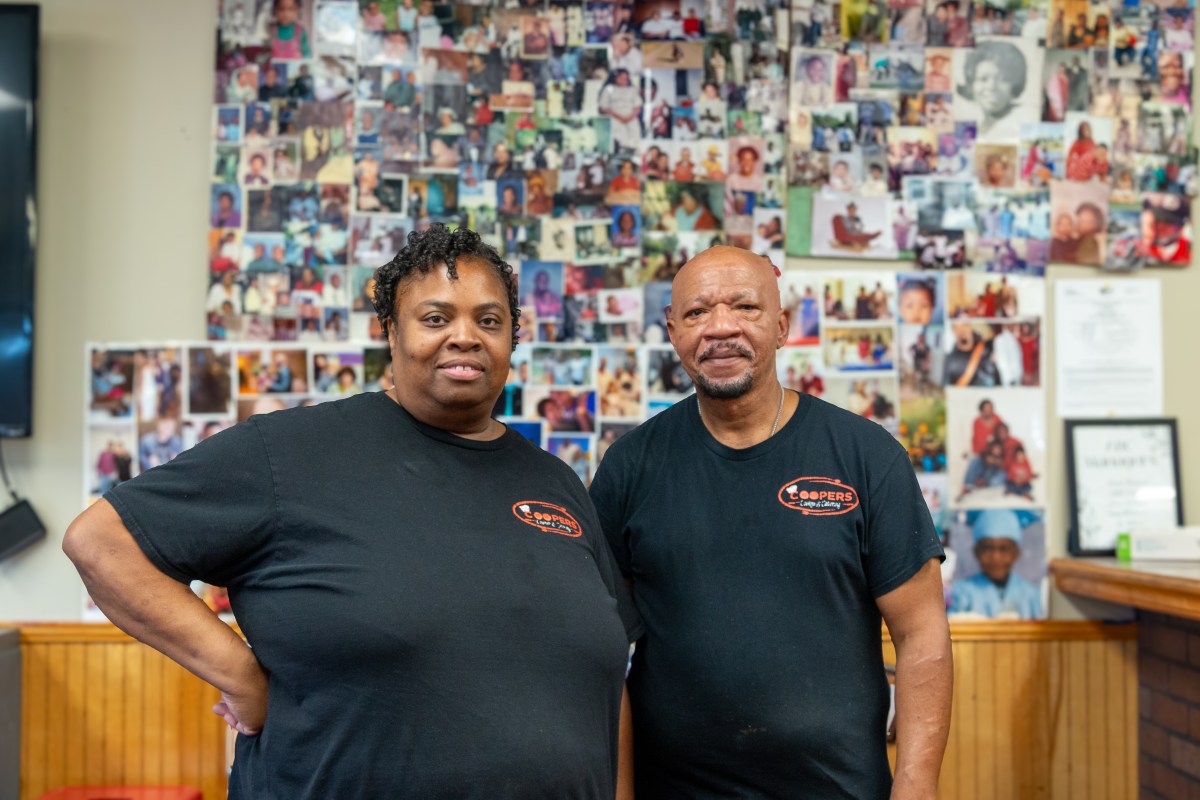
For many of those who live in Orange County, the name Cooper has long been synonymous with homestyle Southern cuisine. However, Denise Thompson, owner of Coopers Cookin and Catering, says one particular secret ingredient, passed down through generations, has led to her success — a love for serving the community.
Underneath the made-from-scratch cakes and award-winning chicken, a deeper dive into the Cooper family legacy uncovers a larger history of a Black community in the South fighting discrimination and building resilience through entrepreneurism and community care — a strategy that has evolved over time, but never disappeared.
Growing success and a new location
For anyone who has had the opportunity to sit down for a meal at Coopers Cookin and Catering on a packed Sunday afternoon, it’s clear that the restaurant has quickly gained quite a following. In September 2021, Denise Thompson (formerly Cooper) opened her first restaurant in an inconspicuous spot on Byrd Street in Orange with just enough room to squeeze in about a dozen customers. By early 2023, Coopers had attracted enough business to move into a 40-person facility on James Madison Highway.
Today, for the second time since opening, Coopers is welcoming diners into a new, larger location.
On Jan. 22, Coopers reopens at a newly renovated building at 141 Caroline Street, the site of the former Earl’s Glass Shop, in downtown Orange. The new restaurant features a full bar, deck, and enough indoor and outdoor space to seat 125 diners. On Friday, Jan. 23, Coopers will celebrate the restaurant reopening with a karaoke night from 8 p.m. to 10:30 p.m.
When Charlottesville Tomorrow visited Coopers recently to speak with diners, they unsurprisingly noted the menu as a main draw, but another theme emerged that kept customers coming back for more: Thompson herself, and her ongoing efforts to make sure everyone in her community is welcomed and well-fed.
‘The most giving person I think I have ever met’
On Christmas morning 2025, community members filtering into Coopers were greeted by friendly faces and the familiar scents of some of the restaurant’s signature dishes. Trays of crispy fried chicken, scrambled eggs, baked apples and pastries filled two buffet tables where volunteers served hungry customers.
The free Christmas brunch, taking place for the fourth time in 2025, is just one of the ways Thompson has earned a reputation for giving back. Thompson started the annual tradition to ensure that unhoused community members and others facing hardship would have a warm meal and a place to socialize during the holidays, but since then, the meal has grown to include approximately 100 guests each year from all walks of life.

“We just like to spread love, and I think food is the way to do it,” Thompson said.
Bradley Toombs and his partner John, owners of Finders Keepers antique store on Main St. in Orange, volunteered at the brunch, serving up biscuits and gravy and keeping beverages stocked. Toombs said that while it was his first time attending, he has known Denise and her reputation for service for years.
Without children at home, the couple didn’t have any big plans for Christmas morning and thought that the free meal was a good opportunity to celebrate what Christmas means to them: “family, togetherness and doing for others.”
“Denise is probably the most giving person I think I have ever met,” Toombs shared. “She does so many wonderful things for the community. She is the leader, and we are just here as helpers. We’re so glad to help give back because that’s what it’s all about, right?”
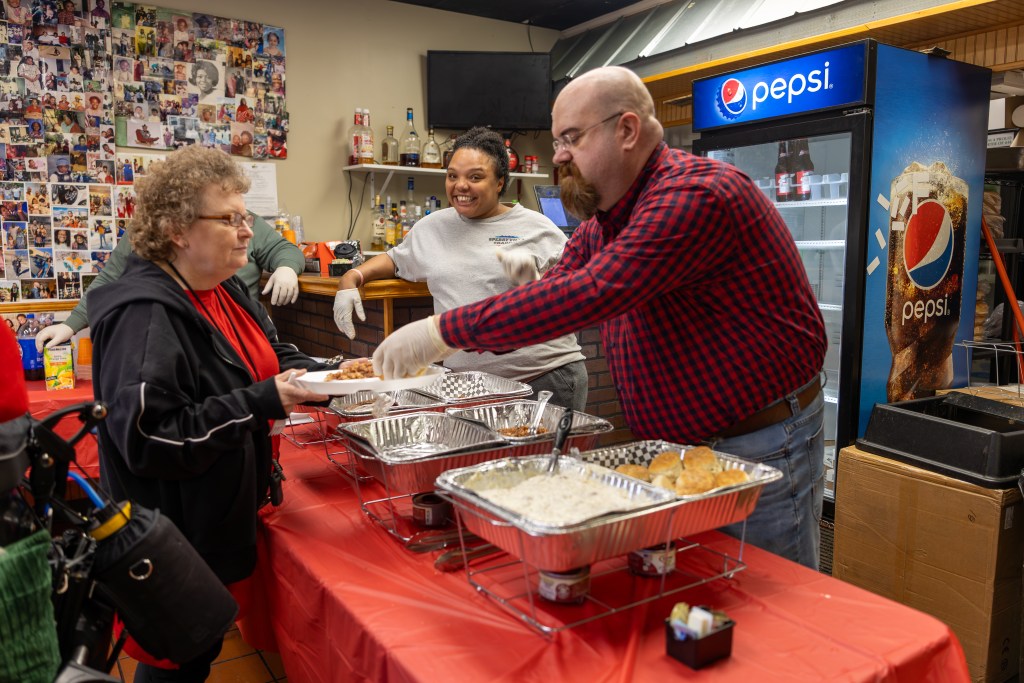
Angelia Tibbs has visited Coopers several times as a customer, but like Toombs, this was her first time attending the Christmas brunch. A North Carolina transplant, Tibbs said that in addition to the opportunity to meet new friends, she appreciated Thompson’s efforts to feed her neighbors at a time when many Americans are facing food insecurity and financial stress.
“In this society and economy, them not charging us makes me want to dig in this pocketbook and find something,” Tibbs said. “But actually, I don’t even think they would take it, because that’s who they are.”
Giving so much might seem counterintuitive for a business that started in 2021 amid the financial devastation of the COVID-19 pandemic, but according to Thompson, it’s at the heart of everything she does and the key to the success of Coopers.
“I’m a true believer that once you give back to the community, and they see you giving back, they’re going to visit you, they’re going to spend there, they’re going to help you wherever you need it,” Thompson said. “For me and my partner, we started five years ago without getting any loans, just something out of our pocket. So, I can’t see the struggle. I’m not saying that there won’t be, but like I’ve always been taught — my mama said, ‘Once you give back, you’ll get in abundance.’ And that’s been true for us.”
Black women in Gordonsville showed ‘strategic entrepreneurship’ after the Civil War
For the Cooper family, utilizing their culinary skills to make the community a better place is a tradition that goes back generations, connecting to the history of nearby Gordonsville.
In the late 1800s, Gordonsville was a significant hub for travel and commerce, where two major railroads intersected, and produce from the Shenandoah Valley was sent to be distributed widely along the East coast. Following the Civil War, newly freed Black citizens in the post-war South still faced extremely limited opportunities for education and employment, but an enterprising group of Black women in Gordonsville forged their own path to provide for their families and achieve financial success, according to local historians and reporting from NPR.

Known as “waiter carriers,” women including Lucy Washington, Maria Wallace and Wallace’s daughter Isabella “Bella” Winston, carried large platters of food to the train depot, where they would sell their wares from the platform to hungry passengers through the open windows of the wooden coaches, as well as to travelers staying at the nearby Exchange Hotel.
Word spread throughout the region about the waiter carriers’ fried chicken, pies, biscuits and more, leading many passengers to go out of their way to make sure they passed through Gordonsville for a meal at the “Fried Chicken Capital of the World.” Business continued to boom through the early 20th century, until a combination of factors including the advent of steel trains with closed windows, changes to train routes and the introduction of vendor fees caused a decline in business, according to Shannah Mort, executive director of the James Madison Museum of Orange County Heritage.
As celebrated as the waiter carriers of Gordonsville have become in the present day, they had to overcome tremendous obstacles to achieve their success, Mort noted. Serving food through the windows of train cars was a way to get food to customers quickly, but it also was an important workaround due to racial discrimination, which would have forbidden the women from entering the train cars with white passengers.
The work was also physically demanding and often precarious, as the businesswomen carried heavy trays while navigating crowded platforms. Despite the rigorous conditions, business ownership offered an avenue to economic independence in an era when recently emancipated Black residents’ severely restricted job options might otherwise mean working for former enslavers for low wages.

Together with organizations such as the Orange County African American Historical Society and input from community members with historical ties to the area, Mort is working to develop a more complete history of Orange County, including Gordonsville’s famous waiter carriers. Mort hopes that the work that is being done will help tourists and community members alike gain a new appreciation for how much the waiter carriers were able to accomplish under restrictive conditions.
“They knew train schedules by heart, they managed inventory, pricing and quality, and they supported entire households with that income,” Mort said. “This wasn’t casual cooking — it was skilled labor and strategic entrepreneurship.”
Mort said that beyond providing for themselves and their families, Gordonsville’s waiter carriers concerned themselves with the wellbeing of their entire community, providing for those who may have otherwise gone without. Just one example was Hattie Edwards, a waiter carrier who would later open her own brick-and-mortar restaurant, Hattie’s Inn.
Take action
Learn more about Gordonsville’s history of ‘waiter carriers’
The annual meeting of the Orange County African American Historical Society will feature an exhibit and presentation by Shannah Mort titled “Carrying Freedom Forward: Gordonsville Women Waiter Carriers,” with a sampling of Gordonsville fare provided by Denise Thompson. The meeting will take place Sunday, Feb. 15, from 2 p.m. to 4 p.m. at The Arts Center In Orange, located at 129 E. Main Street, Orange. To RSVP, email ocaahs[at]gmail[dot]com, or register to attend remotely via Zoom.
Edwards knew that many of her fellow community members would run short on funds by midweek — even post-emancipation, Black men and women were often severely underpaid for their labor and had few options for demanding better working conditions — and so she could frequently be found giving away free sandwiches to help her neighbors bridge the gap until the next payday.
“They were kind of their own network,” Mort said. “While they might have been competitive against each other because they were all selling their food, they also supported each other.”
‘We based everything we do here on how she treated people and what she stood for’
Denise Thompson’s mother, Mildred “Millie” Cooper, was too young at the time to be a waiter carrier herself, but she had a habit of tagging along with the older women, and in doing so, learned many of the tricks of the trade.
“She used to say, ‘Well, I was down there with them when I should have been at home,'” Thompson shared with a laugh.
Thompson’s older cousin and business partner, Phillip Cooper, specifically remembers Bella Winston, who was part of a younger generation of waiter carriers and continued her business later than many others. Phillip described Winston as a “sweet” woman who could nevertheless be strict when necessary.
“The little kids thought she was mean because when she went to church and they’d mess up, she had this eye she’d give to tell them to straighten up,” Cooper said.
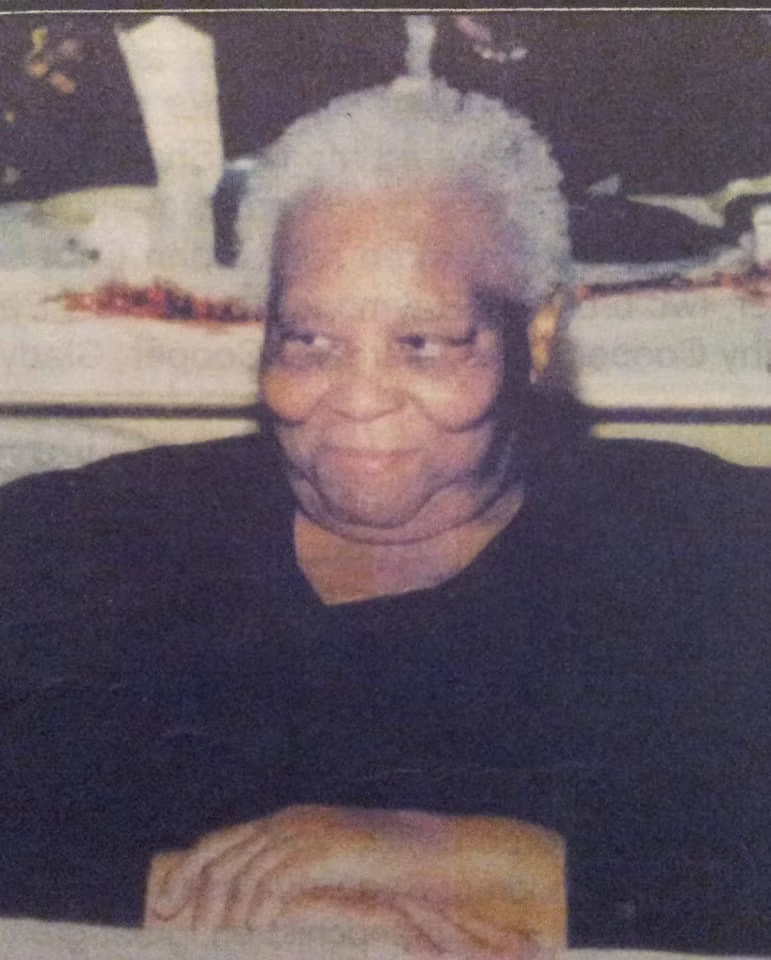
Winston was just one of the Gordonsville businesswomen who left a lasting impact on Mildred Cooper. As Mildred grew older and began raising a family of her own, she earned a reputation for not only her cooking skills, but for welcoming anybody who needed a place to stay or a good meal.
“My mom was somebody that everybody knew,” Thompson recalled. “I would wake up some mornings and somebody’s there laying in the spare bedroom or on the sofa, because she was somebody that took in any strangers. She would feed anybody in the community, and she would not have anybody going hungry.”
Making sure that nobody went hungry was no small task for Mildred Cooper, who would frequently welcome others to join her and her 15 children for meals. In addition to extended family — Thompson’s aunt lived next door, and her older sister’s house was down the street — dinner guests might include farm workers passing through in need of a place to stay, or a neighbor without a family of their own.
“It was always a house full of different people,” said Thompson, the youngest daughter of Mildred Cooper. “So, it was 15 of us, plus 10 of somebody else’s kids.”
As Mildred Cooper perfected her recipes, she started doing business outside of her home, catering for dinners at Union Baptist and other local churches, selling dinners at factories like Liberty Fabric and guiding the Cooper family to a string of wins at the annual Fried Chicken Festival. As both women grew older, Thompson dreamed that her mother would one day have a restaurant of her own, but unfortunately, Cooper passed away in 2010 before that goal could be realized. Still, the dream lived on, and 11 years later in 2021, Denise opened her own restaurant in honor of her mother.
“We based everything we do here on how she treated people and what she stood for,” said Thompson.
For Thompson, basing her business on what Mildred Cooper stood for meant two things. First, Coopers Cookin and Catering was going to be a family business.
Around the same time that Thompson was looking into starting a restaurant, her cousin Phillip, an experienced chef who had worked in New York and at well-known Charlottesville dining spots like The Boar’s Head, was looking for a new challenge. He had recently ended a long stint as a private chef for the Anheuser Busch family after an unfortunate death in the family. That event, although difficult, proved to be serendipitous in its timing, and before long, Phillip offered his services as a business partner and head chef to Thompson.
Together, they developed a menu based on the recipes that had been passed on by Mildred Cooper, Phillip’s mother Helen Dickerson, and other family matriarchs, like their aunt Gladys’ famous carrot cake. Another family member, Thompson’s 28-year-old son Malik, has since joined the team, and Cooper and Thompson are training him to bring their recipes to the next generation of diners.
“[Malik] is coming along, and every day, I show him something a little different so that he can get things going,” Phillip shared.
They also have continued Mildred Cooper’s legacy of stacking up wins at the Fried Chicken Festival. In early October, the Coopers Cookin and Catering team, including Denise, Phillip and Malik, took home first place at the 2025 cookoff, and crowds of attendees waited patiently at the festival’s most popular vendor to get a taste of the closely guarded Cooper family recipe.

The other part of her family tradition that Thompson is working hard to embody is the welcoming spirit and community service her mother was known for. Thompson emphasized how she wants her restaurant, like her old family home, to be a place where everyone feels welcome.
“I want this to be a place where you can come and have a good time,” Thompson said. “You don’t have to worry about the color of your skin, your political background, because we want you to feel at home.”
In addition to the annual Christmas meal, Coopers organizes a free community day each year. In mid-September, attendees enjoyed a free lunch and ice cream, games, a bounce house for children, karaoke and live music and dance performances. Community members and local businesses pitched in with homemade cakes for cakewalk winners and raffle items. Thompson said that in their first year, Coopers had to reach into their pockets to cover some expenses, but since then, they’ve been overwhelmed with support.
“We’ve been getting a lot of volunteers that say, ‘Hey, what you need me to do?'” Thompson said. “A lot of the businesses can’t close, you know; it’s hard for them to find people to come out, but they donate. The abundance for the past few years — it’s been wonderful.”

When she isn’t hosting free events at her restaurant, Thompson can often be found behind the scenes performing other, less obvious acts of kindness. Deidra Turner, who coaches football, basketball and track at Prospect Heights Middle School, shared that Thompson regularly provides meals for the young athletes.
“Every time I need food for our athletes, she delivers,” Turner said.
In 2025, after being awarded by the Orange County African American Historical Society (OCAAHS) the previous year for her contributions to the community, Thompson set out on another mission, joining the historical society’s board in its efforts to preserve stories like those of Mildred Cooper and the waiter carriers of Gordonsville for posterity.
“She brings the Gordonsville connection to the county,” said Bruce Monroe, past OCAAHS president and a lifelong resident of Orange County. “Gordonsville is such an important part of Orange County history and now with Denise and Emily [Winkey, vice-mayor of Gordonsville] on the board, hopefully we’ll be able to tell more of those stories.”
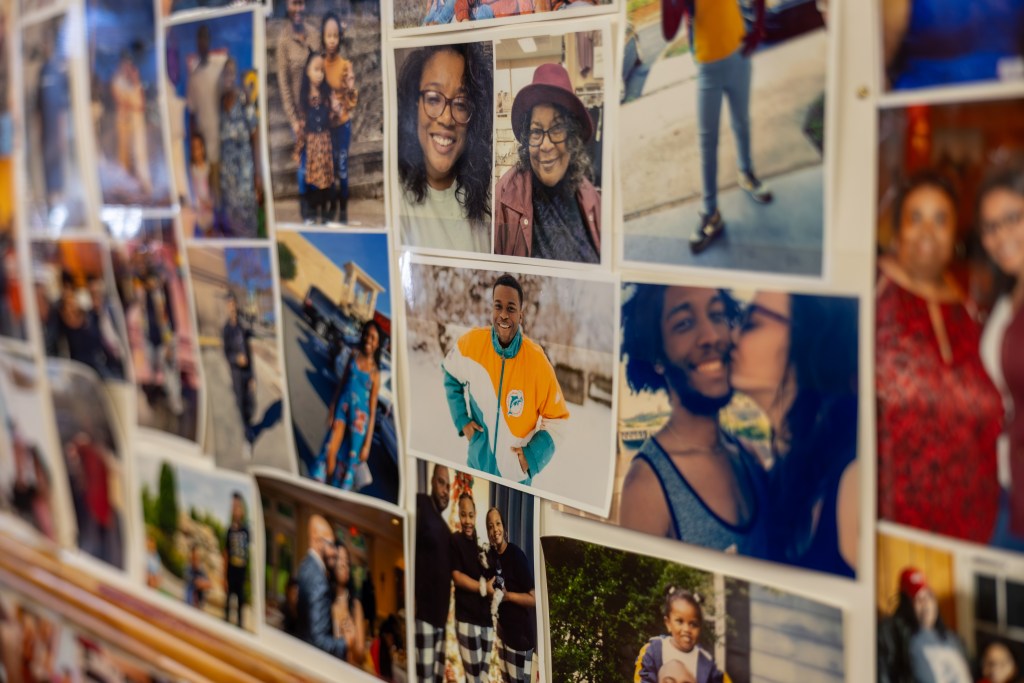
In doing so, Thompson and Shannah Mort have had the opportunity to build a budding friendship and professional relationship as they both work on building a more complete Orange County history. Mort said that learning from Thompson about her family history has been invaluable in connecting the dots between the past and present.
“When we talk about things like women supporting their families, labor that’s not always acknowledged, those stories feel familiar because those dynamics are still existing today, right? This is still happening today within our community,” Mort said.
“She’s the physical result of what these women started,” Mort added. “From the women that gave sandwiches out when it was a couple of days before pay, who allowed you to come and eat if you didn’t have the money, to feeding their children and each other’s children — just having to support each other in the community. And she’s taken that even farther.”