
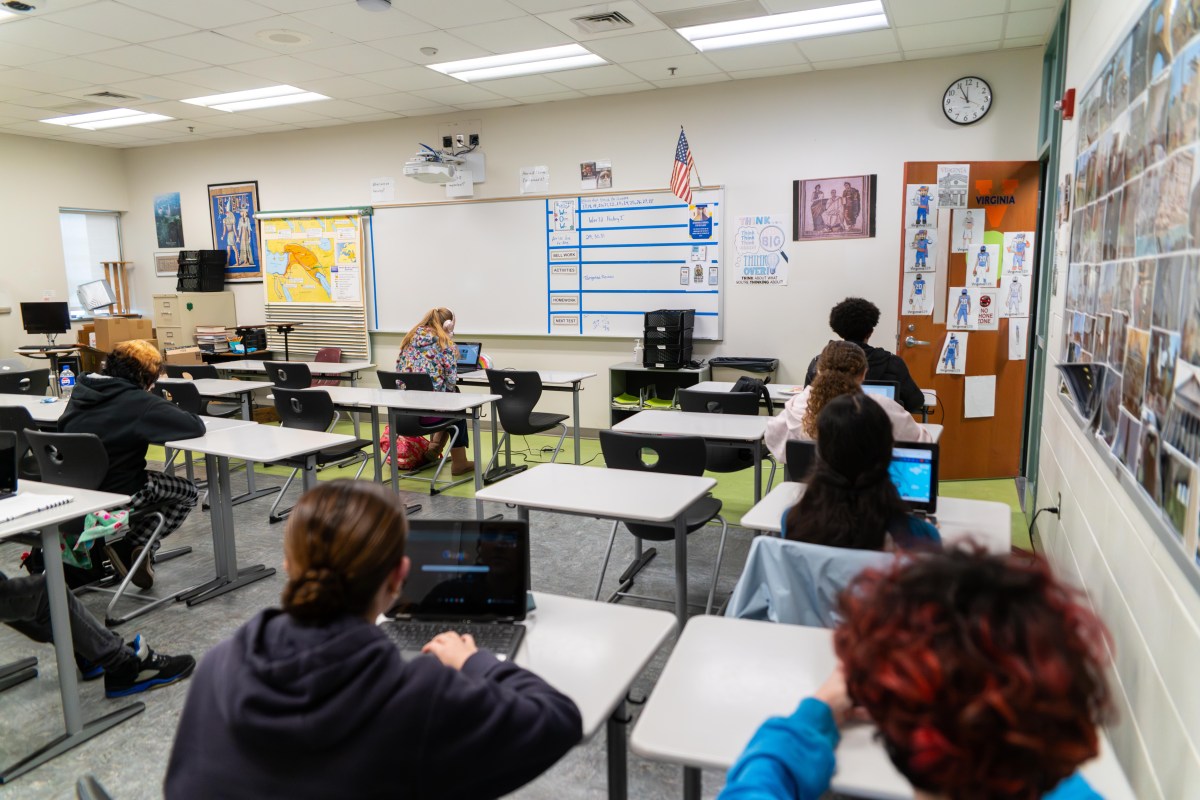
Chronic absenteeism numbers are improving across the state, and for some central Virginia schools, bringing these numbers down meant thinking outside the box — and beyond school grounds — to get students back to class and learning.
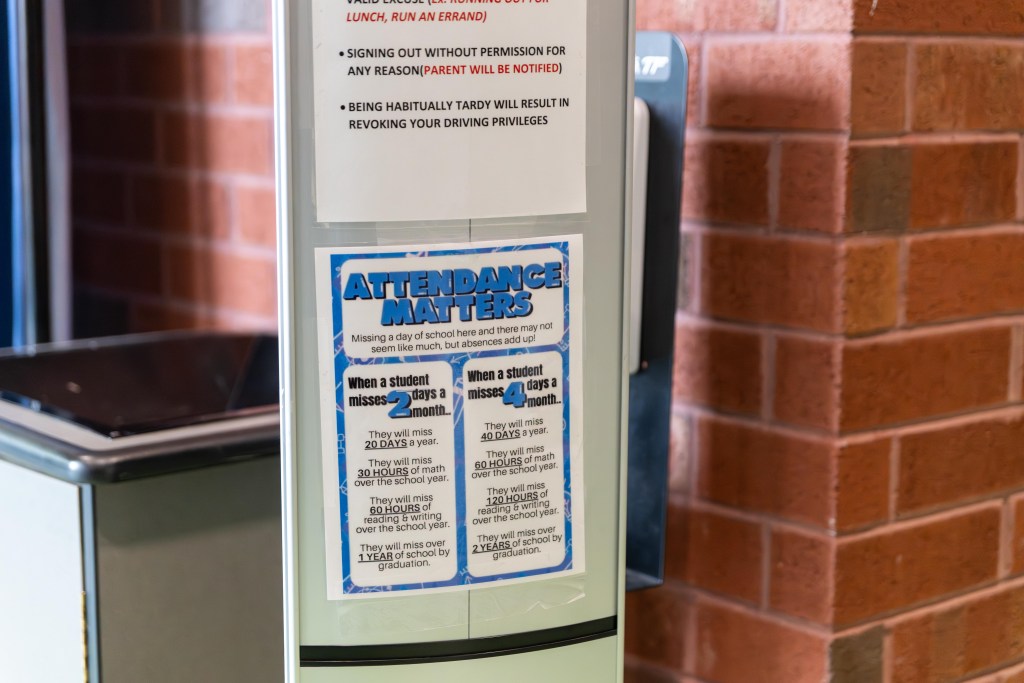
Chronic absenteeism is defined by the Virginia Department of Education as missing 10% or more of the school year, or about two days or more every month. This includes both excused and unexcused absences. The VDOE website states that, according to 2023-2024 data, chronically absent students did not perform at the same academic level as their peers across the state. Students who were chronically absent scored 19 percentage points lower in reading and 26 percentage points lower in math, VDOE said.
And the longer-term effects of chronic absenteeism can go well beyond test scores. In 2018, the University of Virginia’s School of Medicine released a report that shows that chronically absent students are more likely to develop social issues, earn lower income, experience poor health as adults and even have a shorter life expectancy.
School districts in central Virginia have tackled the problem in different ways, starting with examining the causes. Administrators with Fluvanna County Public Schools, for example, found that many families had misconceptions about the importance of getting an education.
Fluvanna schools see different ‘generational understanding’ of education
“We are in a very rural area,” Kaitlyn Harlow-Burner, the coordinator for mental health services for FCPS, told Charlottesville Tomorrow. “It is really difficult for some kids to come to school because of generational understanding of the importance of attendance.”
Harlow-Burner said that some families in the area have first-time high school students or first-time high school graduates. Some of those students are the first in their family to attend college.
“I think that there are some families that do not value education in the same way as other families, and I say that to say it’s generational,” she said. “Kids that go to college sometimes come from families where everyone went to college, and sometimes come from families where they’re the first-generation college.”
Harlow-Burner said that since the COVID-19 pandemic, FCPS officials have seen how absenteeism can impact students in multiple ways.
“We have seen how chronic absenteeism and truancy can dramatically impact graduation rates, successful careers after high school, declining mental health,” she said. “I think that we can make a correlation from poor school attendance, where you lose that socialization, that social emotional learning, that ability to be in a classroom and focus and absorb information.”
Students miss school for different reasons. Harlow-Bruner said that some families are struggling with mental health issues, or students may avoid going to school because of anxiety or depression. Other families are struggling for basic needs such as clothing and food, while others don’t have access to running water.
“Some of these things really impact families in our community, and coming to school can sometimes be the very last thing on a family’s mind,” she said.
According to the 2023 U.S. Census, the median household income in Fluvanna County is $91,959, and 7.7% of the county’s 27,764 population lives below poverty level. About 9% of children 18 years or younger live below the poverty level, according to census data. (The U.S. Census Bureau’s measure of poverty changes based on the size of the family and age of family members. The numbers do not change based on geography, but they are adjusted for inflation.)
Absenteeism rates are higher in Fluvanna relative to other counties in central Virginia. For example, for the 2022-2023 school year, about 37.1% of the county’s public school students were considered chronically absent, compared to 8% in Louisa County, 17.7% in Albemarle County and 21.3% in Charlottesville City Schools.
However, Fluvanna has also made the biggest improvement over the past couple of years, with rates dropping to 25.3% for the 2024-2025 school year.
While other school districts, such as Louisa and Albemarle, have dedicated teams for attendance tracking, Fluvanna does not. That left Harlow-Burner and her colleagues — Jessica Lavin, the student services coordinator, and Melanie Whitlow, the social worker at FCPS — to monitor student attendance and work with families to get students back to school.
The trio worked on several initiatives at the start of the 2024-25 school year, one of which included personally delivering “goodie bags” to each parent during morning drop offs.
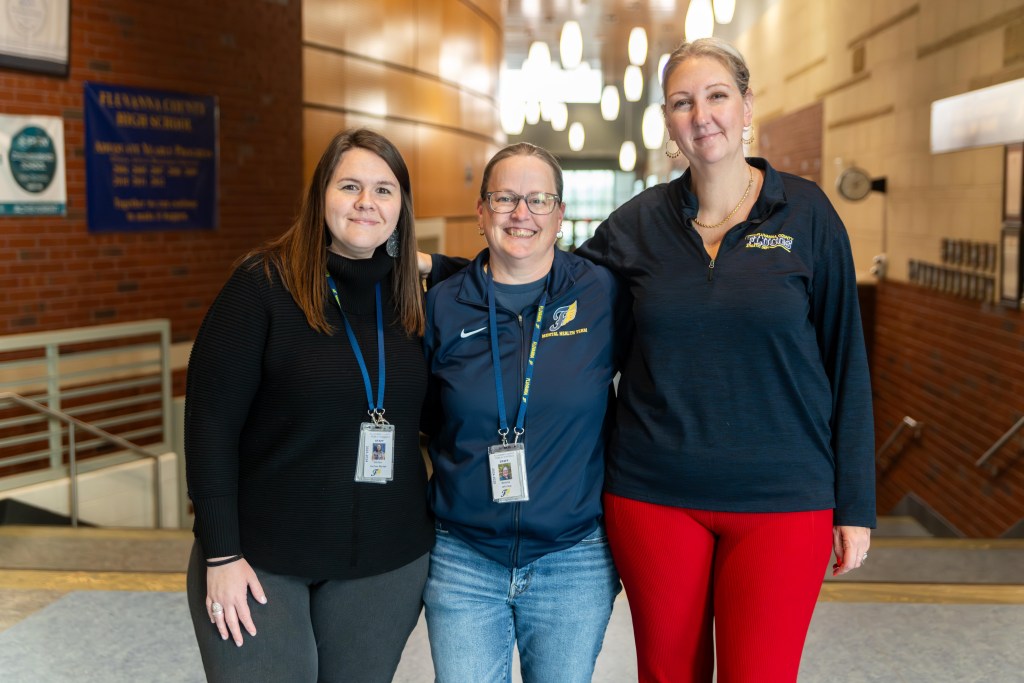
“When parents were dropping off kids in the bus loop, we were running to every car giving them breakfast,” Harlow-Burner said. “We had baskets of breakfast bags that have our FLUCO logo on them with our core values.” Inside the baskets were resources for families experiencing food insecurity, information on how to access mental health or primary care services and information on free community activities.
The packets also included magnets with telephone numbers for families to notify school officials when their child cannot attend school, something that some parents weren’t aware they should do, Harlow-Burner said.
“We want to work with families. We want to help them get their kiddos to school, and it’s not always easy,” Harlow-Burner said. “We want to be supportive and know that every situation looks different, and so every family might need something different, and that’s OK. It’s really about communication.”
For high school students who are responsible for getting themselves to school but struggle to do so, FCPS offers to help them make up for time lost through its “buy back” program.
“If a kid is missing five or six days, they can ‘buy’ that time back by working with the principal and doing work after school and gaining that time back,” Harlow-Burner said.
Currently, the buy back program is geared toward high schoolers who are more independent.
Despite the school district’s efforts to prevent student truancy, there are a “small number” of students who become truant, Harlow-Burner said. When students stay home from school without leave or explanation, they must be referred to the juvenile court after 18 absences per school year, or two to three days per month, according to Virginia law.
The former state regulation, 8 VAC 20-730-20 — which was repealed on Nov. 6, 2025, after state officials determined it was a duplicate of an already existing law — outlined steps schools should take as a response to chronic absenteeism.
Those steps included trying to make direct contact with parents or caretakers in the event of five unexcused absences, and, if a student had 10 or more unexcused absences, the schools may involve an attendance officer. That officer may then decide to file a complaint with the juvenile and domestic relations district court.
The remaining statute, §22.1-258 of the Code of Virginia, requires schools to pursue other interventions before considering referring a student to juvenile court.
Harlow-Burner added that truancy cases are only referred to the magistrate when all other methods of communication — letters, texts, emails, home visits — have been exhausted.
“We want that to be the absolute last resort, because we want kids to come to school,” she said. “But we also have a duty to these children, to educate them and to provide them a safe learning environment and a consistent learning environment.”
With the understanding that going through the juvenile court may be damaging for children and their families, Harlow-Burner said the schools continue to provide support throughout the process.
“Unfortunately, the process of truancy feels very punitive to families, and what I always tell families is, ‘when we’re at that point where we’re doing attendance improvement plans, we are very clear that Virginia code requires us to alert the court services unit if a child becomes chronically absent,”’ she said. “‘However, we don’t want to get there, so let’s do a buy back. Let’s buy back some of those days that you’ve missed. If you’re struggling with your mental health, let’s get you mental health services at the school. We bring our partners to our schools to meet those needs.'”
In Louisa County, tackling absenteeism required a ‘change of mindset’
Students’ ability to buy back lost time is also a strategy that neighboring Louisa County Public Schools uses for its chronically absent students.
“If you’re not here, you’re going to be making up time,” LCPS Superintendent Douglas Straley told Charlottesville Tomorrow. “You’re going to have to stay after school, or you’re going to have to come in on Saturdays, because we feel it’s important for you to be here.”
He added that for students who are struggling with transportation, their schools will make arrangements for them to make up for the time lost.
But for LCPS, it wasn’t just about decreasing student absenteeism while also improving test scores. It also redefined school officials’ approach to getting students to attend their classes.
Before the pandemic hit, LCPS reported 7.8% in chronic absenteeism, according to Straley. When absenteeism increased during the 2021-2022 school year — it went up to 33.7% — he was alarmed.
“And at that point we realized, you know, we’ve got to do something to change, a change of mindset,” he said.
Straley and his staff went to work. They examined their own motivators to get kids back in class. As they brainstormed about their goals and purpose as educators, a common objective emerged: a desire to prepare students for life beyond their classrooms.
As those efforts to get students back into classrooms unfolded, Straley also had to ensure the well-being of teachers.
“Poor student attendance really places a tremendous amount of stress on our teachers,” he said, noting the work it takes to help 30 missing students catch up once they return to school.
“So you’re working two, three, four, five times harder than you had to, only to maintain what you were doing before. You want to be getting better,” he said.
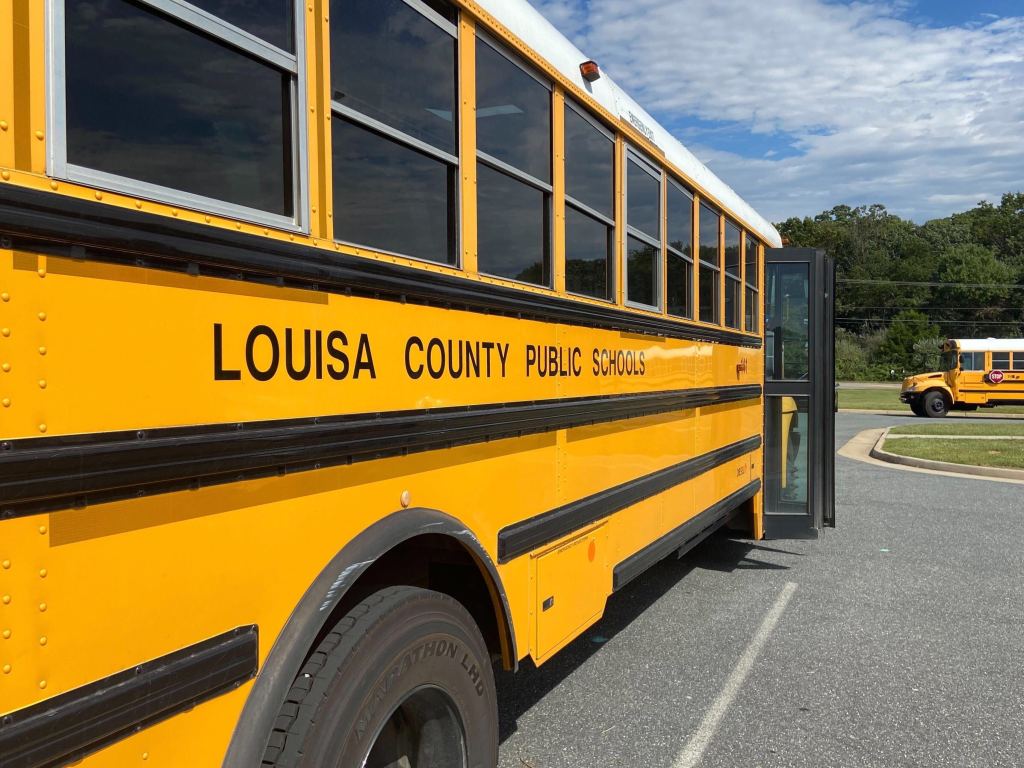
Attendance specialists not only monitor students’ attendance daily, but make personalized phone calls when they notice a student’s constant absence.
The calls can help identify barriers to a student’s regular attendance, such as little or no access to transportation, food insecurity or chronic health problems.
Schools then step in to help families navigate community services to make it easier for their children to attend school. Straley also began providing more free meals for students to eat before and after school, and on weekends.
There are also “kindness closets” across all of LCPS’ schools, where students and their families who are in need can obtain new items of clothing, personal hygiene products, shoes and coats.
When it comes to mental health, Straley hired more counselors for students, and launched a program where students can support one another.
“We added a program called Sources of Strength, which is really a student-led mental health program where students lift each other up and students look out for each other,” he said.
As a result, LCPS showed noticeable improvements between the 2022-2025 school years.
Absenteeism rates for LCPS in recent years are lower relative to Charlottesville, Albemarle and Fluvanna, and from 2022-2025, the rates in Louisa continued to improve. For the 2024-2025 school year, about 7% of LCPS’s students were chronically absent (missing 10% or more school days), compared to the 2022-2023 year when 8% of the county’s 5,173 public school students missed 10% or more school days.
In Charlottesville and Albemarle County, communication was key after COVID
The COVID-19 pandemic left many districts struggling with attendance. For example, Albemarle County wrestled with the uncertainty of when to send students to school as COVID restrictions loosened.
“In recent years, school closings due to the pandemic led to confusion about expectations for school attendance, and in some cases a loss of trust between families and schools,” Russell “Rusty” Carlock, a data scientist for Albemarle County Public Schools (ACPS), told Charlottesville Tomorrow. Communication was key to getting students back on track, he said.
Carlock believes that the best way to improve chronic absenteeism is to maintain clear, regular and personal communication with families about their child’s attendance, along with setting clear expectations and addressing any barriers a student may be facing.
Similar to steps taken by other Central Virginia districts, Carlock also sought ways to pinpoint obstacles to regular student attendance.
Reasons for absences varied from students missing their school bus, not feeling engaged in class, or children who must get to school on their own because a parent or caregiver leaves for work before buses arrive or schools open.
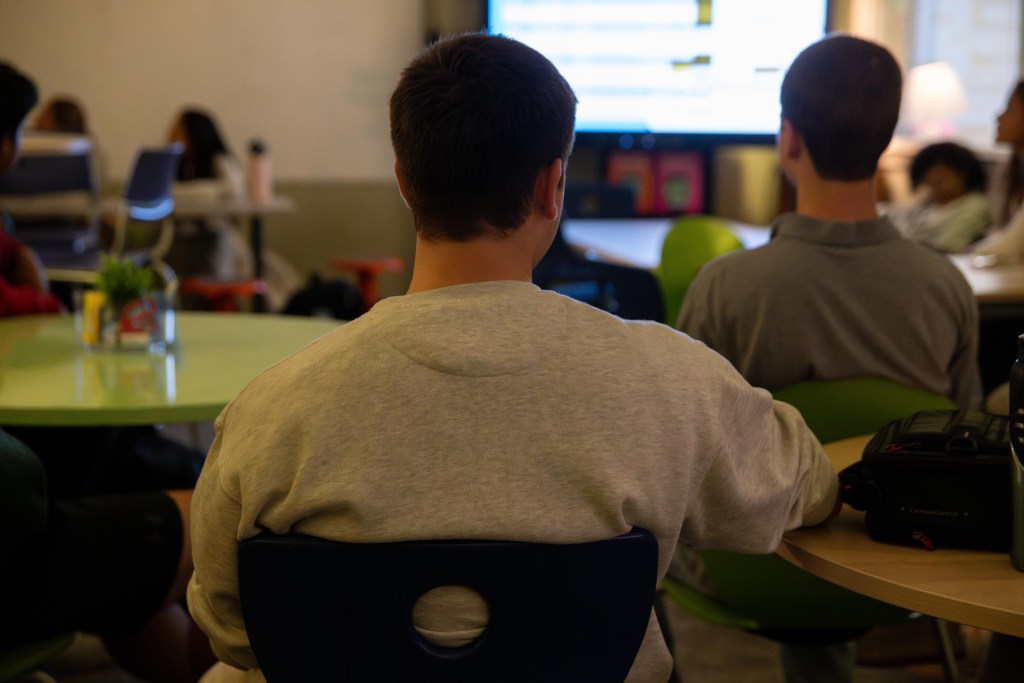
ACPS took several steps to help address those issues, which included having counselors provide alarm clocks to students who were chronically absent or tardy. Support also was provided to families of students who have chronic medical issues.
School nurses and counselors work with families to help them access health care to address underlying medical conditions that may cause a student’s absenteeism, said Carlock.
Carlock added that ACPS also focused on the socio-economic levels of families whose children struggled to attend school.
“We know that families struggling with poverty have a lot of issues that they’re dealing with simultaneously that can often lead to it being harder for kids to come to school,” he said. “It’s really important to take an individualized approach, to build relationships and trust, and try to understand at a really deep level what are the barriers to attendance in school.”
Clear language and new strategies helped improve attendance for Charlottesville City Schools
When COVID restrictions started to ease, Charlottesville City Schools officials decided the time was right to increase its communications with parents about school attendance policies, while also taking a different approach to bringing students back to school once all restrictions were lifted.
One example is how students were marked as absent. Now, a full day of missed classes is counted as an absence instead of counting individual missed classes.
“We needed that clarity and that opportunity to focus on it before we could make any measurable change,” Rachel Rasnake, director of student services at CCS, told Charlottesville Tomorrow.
Rasnake also said it was important for parents to understand that an absence is still an absence, even if it’s excused. A student who is not in school is missing quality education time, she noted.
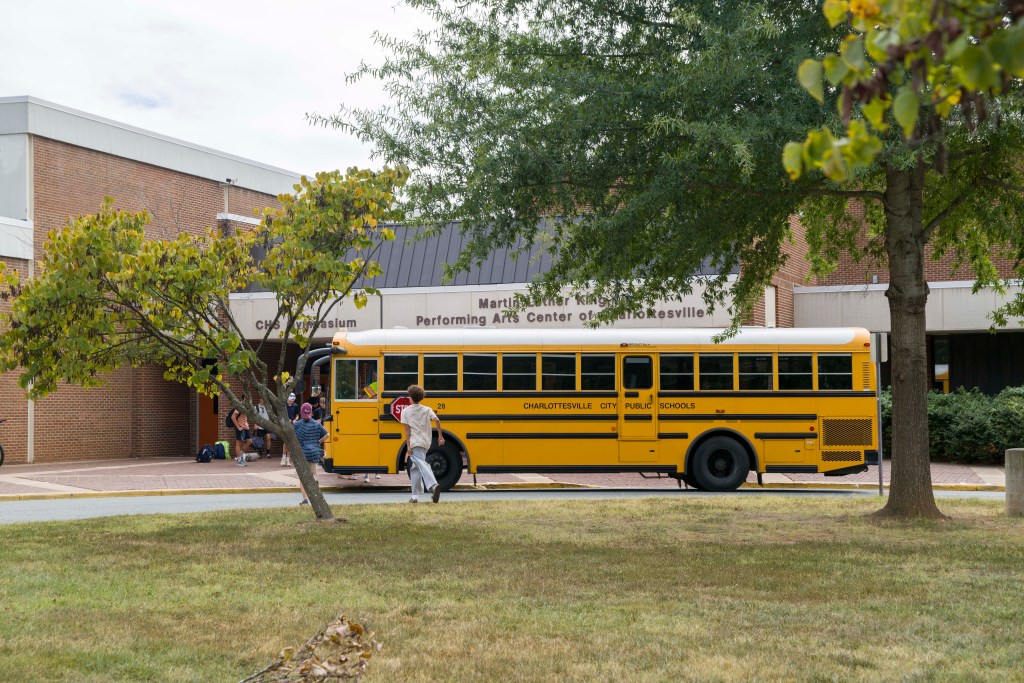
CCS’ strategy to reduce absenteeism has shown progress: student absences declined during the 2024-2025 school year to 21.4%, compared to the 2023-2024 school year when 26.1% of students were reported absent.
“So it started with some of that changing — some of that language and communication once it was safe to do so,” said Rasnake. “I think the other piece that really shifted our focus and required planning and coordination was the move away from this idea that an excused absence is fine.”
CCS’ website provides helpful tips for parents that can prevent their child from being chronically absent. Suggestions include maintaining a regular bedtime and morning routine, making sure that students go to school every day unless they are truly sick, and notifying the school when the child will be absent.
Peer support, trust in teachers help reduce absenteeism rates, data shows
As local school districts continue their efforts to increase attendance, data shows that building strong relationships between schools and families is the way toward reducing chronic absenteeism.
Attendance Works, a nonprofit school attendance advocacy organization that looks at absenteeism at a national level, shared survey-based research findings from Chicago that showed that community engagement led to more attendance. The findings also showed that peer support and trust in teachers contributed to low absenteeism pre- and post-pandemic, regardless of the socioeconomic status of the surveyed areas.
“By taking a relationship-building approach that really connected with families, they were actually able to have huge reductions in chronic absence,” said Hedy Chang, the founder and executive director of Attendance Works. “It even matters more sometimes, when there’s a disaster, because then people feel like school is a place where they want to be.”