


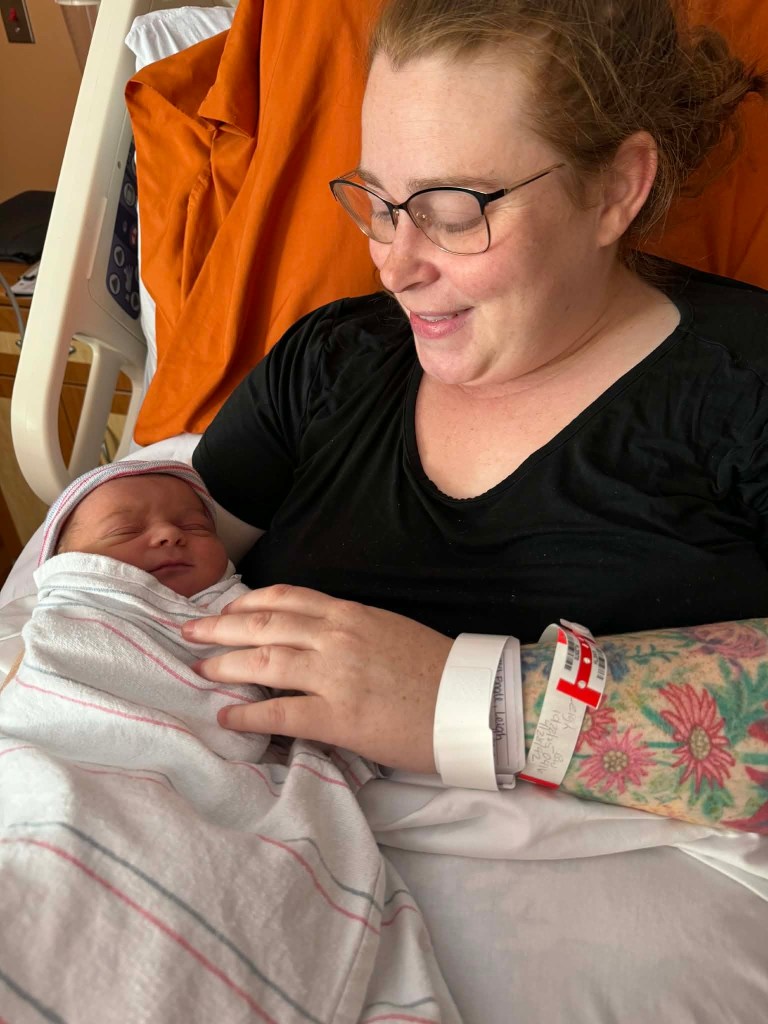
Leigh Erin Engle always wanted four children. Both of her parents came from families with three siblings, and they always said that one of the kids was left out.
“Four always felt right,” said Engle, 33. She just had her third child in October and was planning the fourth one sometime next year to keep the children’s ages evenly spaced apart.
But when the Centra Southside Community Hospital in Farmville closed its labor and delivery unit and its obstetrics and gynecology services in December, the closest place to deliver moved to an hour away, making Engle and her husband make a difficult decision — no more kids.
Now three has to be enough because the risk of not having a qualified hospital nearby in case of complications, as well as the financial and time burdens of going for regular check-ups prior to a birth, are too much. They are considering a vasectomy for her husband, she said.
“I traveled an hour to deliver my first child and I never want to do that again,” said Engle. “If I wanted prenatal care I would use up too much PTO going to appointments an hour away and wouldn’t have close local support to feel safe continuing to grow my family. This is part of many cuts and a gross lack of resources in the area to support families.”
Engle is not alone. Several families near Farmville told Charlottesville Tomorrow that now that Southside cut its services they are concerned about having kids without obstetric care nearby and are either deciding not to have more children or delaying it.
The concerns are the same — long drives and time commitments, especially for those who already have kids to make arrangements for. The increased cost that comes with the drives, possible hotel stays and, in a worst-case scenario, ambulance or helicopter rides to a qualified hospital if there is an emergency. And, of course, there is also a risk to mothers and children’s health.
Katy Kozhimannil, a co-director of University of Minnesota Rural Health Research Center and one of the leading authorities on maternal healthcare in rural areas, said she didn’t know of any studies that measured how the lack of resources affects family planning and whether or not women want to have kids. Still, she wasn’t surprised to hear about women in Virginia who have reservations in response to disappearing care.
“Women are very smart,” said Kozhimannil. “I can imagine for mothers, when the level of risk changes, that changes their decisions about whether or not they are willing and feeling supported enough in their community, in their environment, in their health care system, to have the number of children they want to have.”
There is a lot of data to prove that there are reasons for concern.
Multiple studies, including Kozhimannil’s own, have found that when rural areas lose access to obstetric care they experience higher rates of premature births, which is the leading cause of infant mortality, she said. It also means more out of hospital births, whether planned or unplanned, as well as a higher number of births in the emergency departments, and not every emergency clinician is comfortable handling obstetric emergencies.
On its web page about the closure, Centra said that its Southside Emergency Department staff was prepared to handle active labor and obstetrical emergencies, and that it had transport protocols.
Charlottesville Tomorrow repeatedly tried to get more details from Centra but received no response.
There are still some obstetric services left in Farmville — Central Virginia Health Services (CVHS), a non-profit classified as a Federally Qualified Health Center, offers a variety of medical services regardless of patients’ ability to pay. There, nurse midwives see patients for prenatal care three days a week. They don’t deal with emergencies or deliver. Historically, it’s something they transferred patients to Centra for. Now they are working with other hospitals to make such arrangements, said Paula Tomko, CVHS chief executive officer.
But its services can’t be a full substitute. Midwives cannot be there when someone has an emergency in the middle of the night.
“Infant mortality is higher the more rural you are, so that is definitely a key health risk that is important to moms and to babies,” said Kozhimannil.
A 2022 study published in the American Journal of Public Health found that women in rural areas are at higher risk of maternal mortality or intensive care unit admission in comparison to urban areas.
The absence of obstetric services also means that women don’t have easy access to postpartum care to address any mental or physical concerns, which is a problem because more than half of maternal deaths happen in a year after giving birth, Kozhimannil said.
“There are many different scenarios, all those are challenges that rural families could encounter,” said Kozhimannil.
Why Centra cut its labor and delivery services
Centra gave three reasons for its decision to close its obstetric services, all reflecting national trends for rural healthcare. There were too few births to justify the service — fewer than 275 babies last year, according to Stephanie McBride, Centra’s director of communications.
Then there was difficulty recruiting and retaining physicians for full on-call coverage. There is a national shortage of obstetricians that’s only projected to worsen.
Lastly, there were federal funding changes to healthcare.
“We are facing significant financial headwinds, especially from recently enacted cuts in federal healthcare funding. These realities mean we must reassess and reallocate services for our community,” McBride wrote in an email in November.
Though she didn’t name Medicaid specifically, national experts have warned about its potential cuts’ harms to mothers and children. Medicaid covers 40% of U.S. births, as well as children’s healthcare and up to a year of postpartum care in states that expanded coverage beyond the original 60 days.
All of these reasons echo through the closures of other labor and delivery units across the country. Since the end of 2020, 130 rural hospitals have either stopped delivering babies or announced plans to end those services by the end of this year, according to a report from the Center for Healthcare Quality and Payment Reform, a national health policy center.
Today, only 41% of rural hospitals in the U.S. still provide labor and delivery services — and in a dozen states, that share drops below one-third, according to the report.
In Virginia, 63% of counties don’t have an OB-GYN, and 22% of rural residents travel over 40 minutes to reach a labor and delivery unit, according to a news release from former Virginia Gov. Glenn Youngkin’s office about requesting $1 billion in federal funding to improve rural healthcare. Improving the pipeline of people into healthcare professions is among the priorities Youngkin listed as a purpose for the funds.
In Kozhimannil’s experience, rural hospitals provide obstetric care as long as they can — closing only when financial or quality-of-care risks become too high.
“However, after an obstetric unit closure, those risks do not disappear. The hospital stops holding the risks, and risk remains with the families in our communities. It remains with any local clinic or clinicians, and it remains with the EMTs, the first responders, the volunteer EMTs, the volunteer fire fighters, the county sheriff who are figuring out how pregnant women get help when they need care urgently or when something goes wrong,” she said.
It’s a change that could have rippling effects for the community.
“It’s a disincentive for folks to want to move here, and to have families here,” said Susie Thomas, a lead pastor at Farmville United Methodist Church. And it comes at the time as the community has been investing into improving the school system to make it more attractive to families.
“It’s really a blow to try to attract people to come here and share their lives with us in Farmville.”
The ripple effects continue spreading
Just like Engle, Dana Freeman Walker feels that the risk of having more kids without obstetric care nearby is too high.
Walker, a Charlotte County mother of three, also always wanted an even number of kids. She and her husband had planned on two, but her last pregnancy was twins. So, they decided they wanted a fourth child.
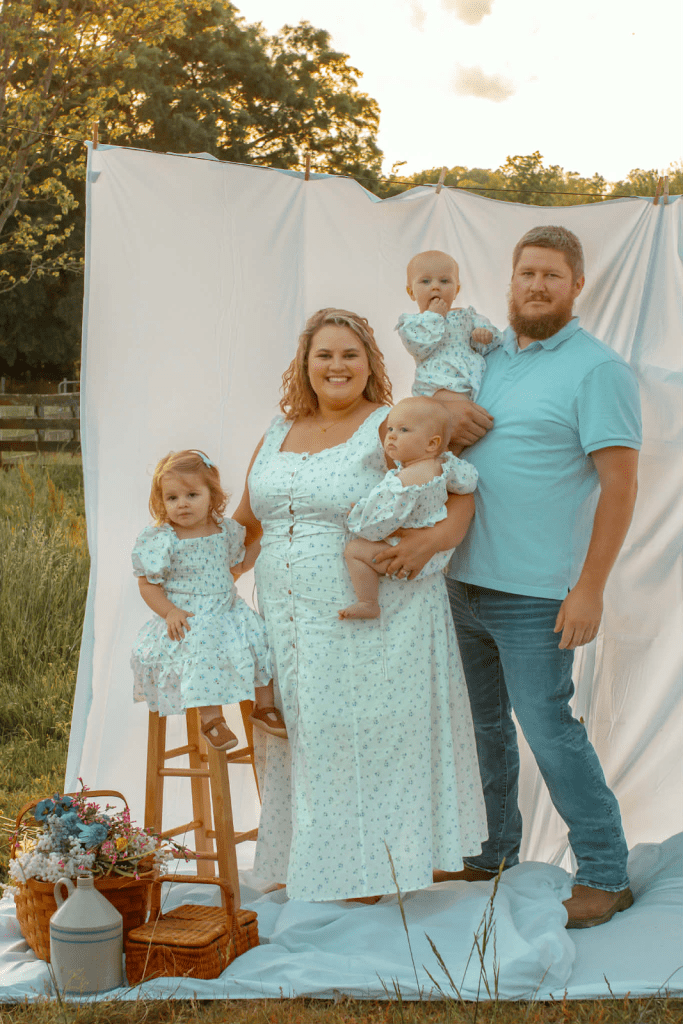
Then Centra closed its obstetric services in Farmville, putting the plan on pause.
Southside, the closest hospital to her home, is 40 minutes away. Now, if she were to get pregnant again, the drive to see a doctor and deliver would be two hours one way. They worry about what might happen if her next pregnancy turns out to be another high-risk one.
When she was pregnant with twins, she developed Twin-to-Twin Transfusion Syndrome, a dangerous complication causing uneven blood sharing between twins. To manage the risks, she was seen weekly in Farmville, getting ultrasounds and making sure everything looked good and the babies were developing appropriately.
“Now, if something like that happens, it means an almost two-hour commute once a week, every week. And it’s almost two hours one way. That’s just something that weighs heavily on us, because, as you know, gas prices are $4 a gallon now,” she said. And there is a question of who would watch the kids while she is gone — the day care is in Farmville, out of the way. So there would be an additional expense to hire a sitter.
Like many who spoke with Charlottesville Tomorrow, Walker hopes Centra will reverse course and bring back obstetric services. In the meantime, she and her husband are putting off having another child.
“It’s a pause to think, recalibrate, pray that they change their minds.”