

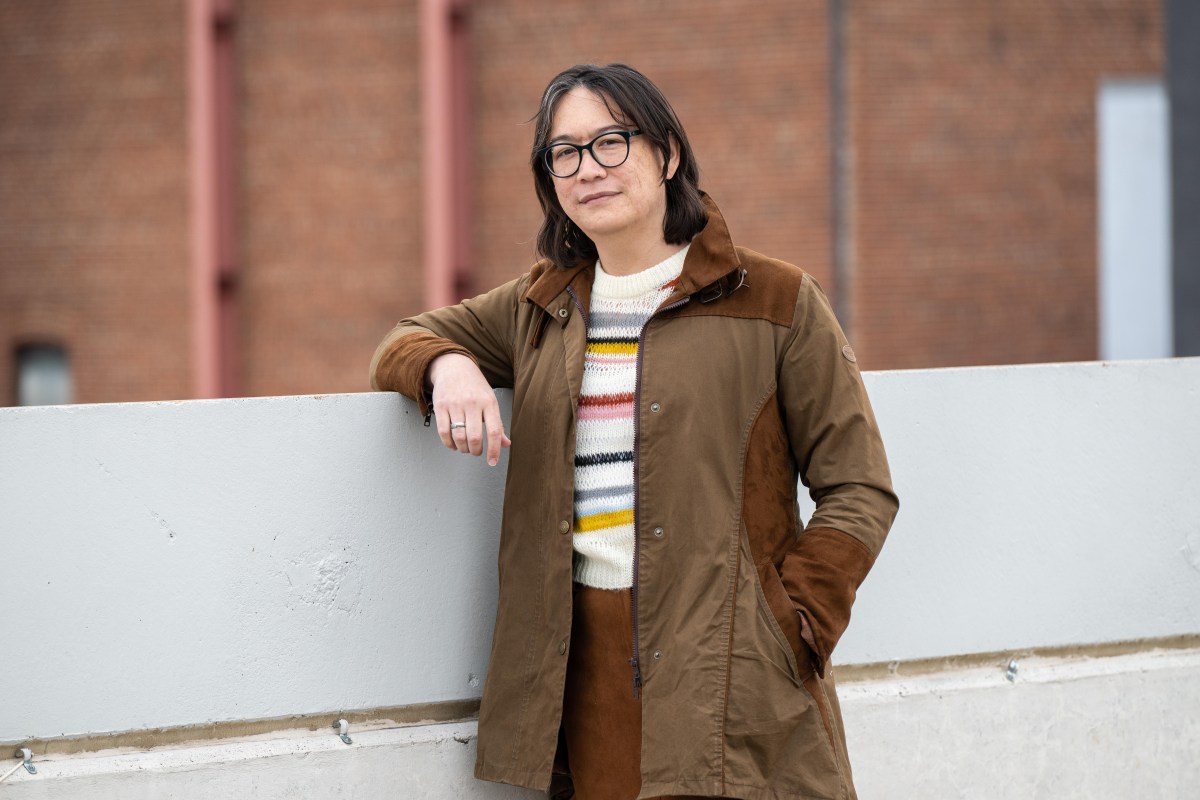
Since moving back to Charlottesville after seven years living abroad, I’ve had many occasions to joke that I’m the one person trying to move back to the United States right now.
Friends and peers have questioned why I would walk away from German citizenship to return home in this political climate, especially as a trans person and as someone who was very much in the midst of the violence Charlottesville saw in 2017 when the Klu Klux Klan and Unite the Right marched.
My wife, Christine, born and raised here, knows no other home. It’s simple (and true!) to say that family brought me back. The deeper answer, one which I hope to explain here, is that I believe that Charlottesville is on the leading edge of what will be a generational shift in how Americans understand community, belonging and civic virtue. I’ve been around the world in the last few years, and I can say with confidence there’s no place else I’d rather be today.
Having had the privilege to travel around Europe, I was fortunate to witness a lot of innovative urban and community planning ideas emerge from the complexities of the political landscape there. What surprised me about European politics were the constant tensions between tradition and advancement, legacy and sustainability, and identity and innovation, and how these patterns unfolded from the European Parliament to local neighborhood councils. Cities in Europe are constantly holding past, present and future in tension, forever seeking a dynamic balance in the face of changes in migration, climate and even language.
From this push and pull, I was lucky to witness innovative ideas put into practice. For example, the superilla, or superblocks, in Barcelona that open neighborhood streets for social interaction, or the Wohnbaugenossenschäfte, housing co-ops in Germany that do things like convert old parking garages into housing (this link, in German, goes to the project’s homepage and shows images of what the project looks like). These ideas felt refreshing and creative compared to much of what I’ve witnessed in various cities across the U.S., many of which seem stuck in bland iterations on uninspired five-year plans. Europe gets a lot wrong, but when they get it right, the result is a communal ecosystem teeming with both opportunity and challenge.
These kinds of community-centered innovations aren’t limited to the great metropoles like Paris, London and Madrid, but are in Gdansk, Vilnius and Cluj-Napoca, less-traveled cities that emerged from the horrors of World War II, endured decades of stagnation under the controlling hand of Soviet rule, and yet have managed to develop rich and unique urban identities in the 30-plus years since the Iron Curtain fell.
Charlottesville is in a rare position to have this exact sort of longitudinal thinking. We’re a city where in 200 years, people will still be talking about 200 years ago. When I think about the next 20 years of Charlottesville’s future, I’m also looking at our present as a midpoint in a much longer quest. How do we honor our ancestors? How do we honor our descendants?
The city I’m returning to is very different from the one I left. When I first started transitioning in 2014, there were few, if any, local therapists trained in transgender care, and very little by way of community support. Today, we have the recently opened Rivanna Area Queer Center providing a safe space for LGBTQ+ folks of all identities and a newly-established Queer Therapy Fund that helps queer folks access queer-supportive mental health services.
And there are places where diverse groups intersect and help each other too. The Charlottesville Tool Library is a fantastic mutual aid resource that enables people to make their living spaces healthier and more comfortable. I recently gave a digital safety training for political activists to dozens of attendees of all ages and backgrounds, a crowd at least five times as many people as attended when I hosted similar sessions in Berlin — a city of almost 4 million people!
Charlottesville has always been a city that punches above its weight class in the national conversation. I want to see us embrace that with intention. I want us to pride ourselves on being leaders in innovating how to build an inclusive community.
—Emily Gorcenski on her vision for the next 20 years
Someone asked me at that training, did I really move back because I have hope that despite all the news and all the politics that things can be put back the way they were before? I told them no. I don’t believe that the toothpaste can go back in the tube. I came back because I believe that there is a vibe shift happening in how we perceive civic engagement.
In Charlottesville, I see a growing rejection of that feeling of hopelessness in one’s inability to influence national issues. It’s being replaced by active learning and participation in local issues that a community can actually impact. I’m seeing more community spaces opening and thriving. I’m seeing more networks and alliances forming and a change in mindset from, “Somebody should do something about this,” to, “We should do something about this.”
So how does this color my perception of the next 20 years? Charlottesville has always been a city that punches above its weight class in the national conversation. I want to see us embrace that with intention. I want us to pride ourselves on being leaders in innovating how to build an inclusive community. I want us to become a place where people of all backgrounds choose to come because it’s the most likely place in America where they’ll be successful at finding or forming a community that meets their needs.
I don’t think 20 years will suffice for us to meet all the challenges around race and class and migration that we’re facing, but I want us to act today in a way that does not embarrass the future. I envision a city where cooks and poets and engineers are all in community with one another and a city working toward that point, where long after our names are forgotten, people will stand in awe at what we were able to achieve. I know this is possible because I spent the last seven years in places that have done just that, and I’m ready to help make it happen here.

The first step to creating our shared future is imagining it.
For Charlottesville Tomorrow’s 20th anniversary, we are inviting central Virginians to share their visions for the next 20 years.