
Do I really need to start up a new nonprofit for this program?
I hovered my mouse over the “submit” button on my 501(c)(3) nonprofit status application to the IRS. Before I clicked submit, I found myself asking one question: “Does this need to be a nonprofit?”
I’m sure many community leaders ask themselves this. They run a successful community program and wonder how to take it to the next level — which logically could be starting a new nonprofit organization.
Over the next 20 years, my vision is that central Virginia nonprofits will focus on collaboration rather than competition. They will prioritize working within existing structures, rather than creating new ones. Grantmakers — public and private foundations, governments and other institutions — will prioritize collaboration between nonprofits as well, and join together with other funders to more holistically address the problems we all want to solve.
In 2021, the Charlottesville area began to crawl out of the first phase of the COVID-19 pandemic; vaccines were widely offered to non-healthcare workers that January. At the same time, an unsettling number of shootings was devastating our community.
I was the youth opportunity coordinator focused on Black male achievement for the City of Charlottesville and president of the 100 Black Men of Central Virginia. People came to me asking questions like, “What are we going to do to support these kids?” and, “My son is afraid to go back to school. How do I make him excited to learn?”
With vaccines in place, school systems announced plans to open with in-person classes for the fall semester. On the eve of my wedding, as I sat in Fernando “FerCuts” Garay’s barber chair preparing for one of the biggest days of my life, the idea came to me. Why don’t we offer kids back-to-school haircuts to mark this momentous occasion and get them excited to return to school after the pandemic?
As a kid, nothing feels better than going back to school with a fresh haircut and a new pair of sneakers. But not everyone has that opportunity or can afford it for each of their children. Thus, the #100CutsInitiative was born.
It started as one-off events in 2021 and 2022 and grew into an official program of the 100 Black Men of Central Virginia in partnership with House of Cuts Barber Studio in the fall of 2022. With the help of people like Amanda Burns, a current Charlottesville school board member, the initiative grew. We offered free haircuts for students before every school year as well as during the holidays, homecoming, basketball games and even Valentine’s Day.
Seeing the success of these events — including the many businesses that offered to sponsor them — we began asking ourselves, “Have we outgrown our role as a program of the 100 Black Men of Central Virginia? Could we be our own nonprofit?”
We looked into what it would take to raise thousands in startup costs, build a budget and a Board of Directors, write a mission statement and fill out required state and federal paperwork. We would need to learn how to apply for grants, hold an annual meeting to update our stakeholders, build a fundraising campaign and base, file taxes every year and write our bylaws.
We quickly realized that while we had a great idea, that is not enough of a reason to start a nonprofit, especially in a climate of limited resources. We decided to remain a collaborative program. In 2025, we celebrated our fourth “Better Together Back-to-School Bash,” serving nearly 1,000 children and families; featuring Brooks running shoes from Prolyfyck Run Creww plus free physicals and vaccinations from UVA Hospital and Martha Jefferson Hospital.
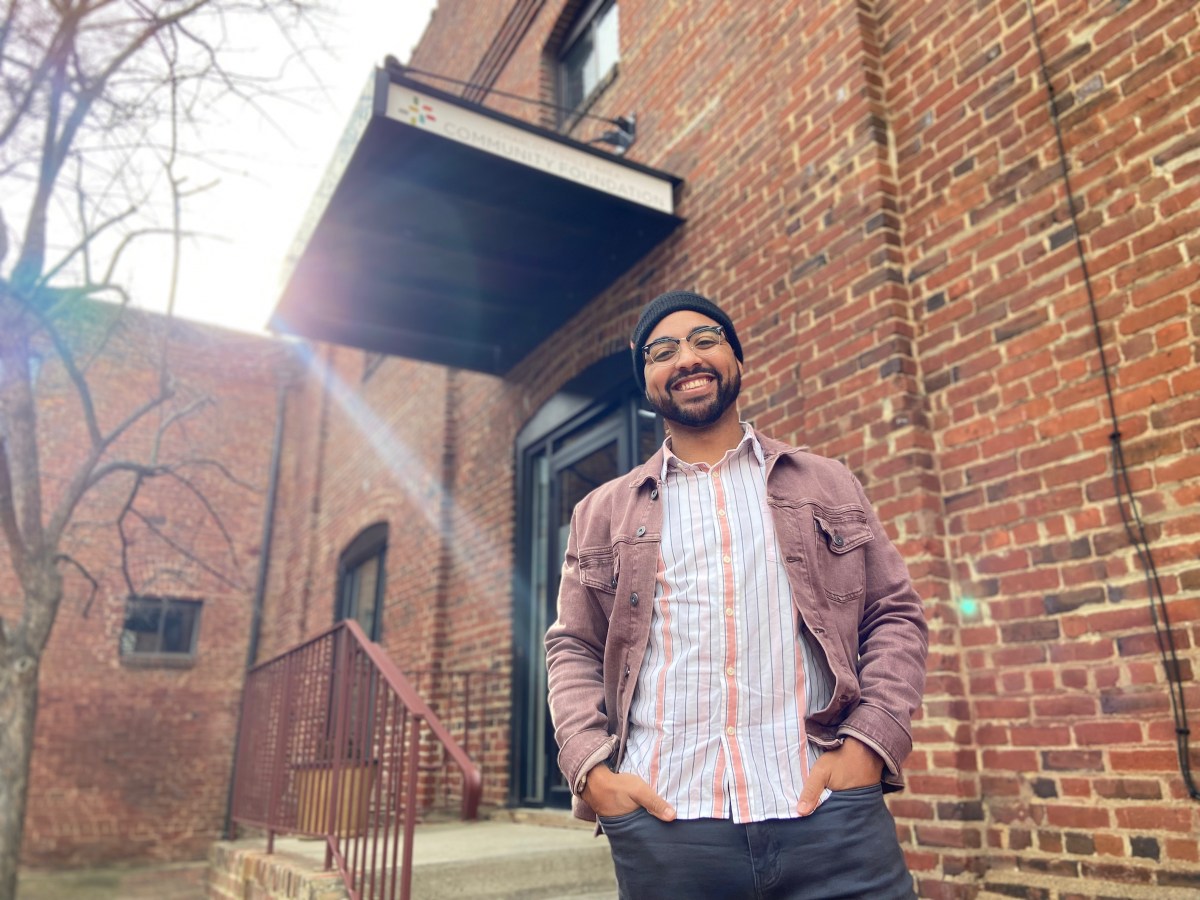
I recently transitioned into my new role as a grantmaking professional with the Charlottesville Area Community Foundation, where I review hundreds of proposals each year. During some of my feedback meetings with applicants, I find myself asking them the same question I faced myself: “Did this idea need to turn into a new nonprofit?”
In my position, I have also become intimately aware of how funders are shifting to address social safety net programs. Even the older nonprofits I’ve spoken with find it hard to raise funds, with increasingly competitive application pools and resources that have been reallocated to fill the gaps of a neutered federal government.
Federal funding previously provided a larger social safety net for essential programs for our most vulnerable community members. Restrictions are increasing on the Supplemental Nutrition Assistance Program, also known as SNAP, EBT or food stamps, and Medicaid eligibility is also changing. Funders and nonprofit leaders expect that our communities will more heavily rely on nonprofits to fill those gaps. Our essential needs nonprofits will require more funding than ever. This leaves much less for organizations focused on arts, culture, historical preservation, youth development and other “nonessential needs” that I believe make life worth living.
At the Foundation, we are starting to hold funder talks and series to connect groups funding similar things to avoid duplicative programs.
Over the next 20 years, my vision is for nonprofits to focus on collective impact.
Programs like the CIC Social Entrepreneur Bootcamp will help future nonprofits with crucial startup decisions.
Public and private grantmakers and philanthropists will ask themselves, “Am I prioritizing collaboration between nonprofits or creating competition?” They will create open grant processes where nonprofits can apply jointly — and apply once — to share resources and reduce administrative bloat. They will join together with other funders, rather than “making it sprinkle” across 100 nonprofits all surviving one grant at a time.
While I think it is likely that philanthropists and foundations will increase the amounts they give, they also can look to a future where their giving is more effective.
The ideas in this piece are those of Daniel Fairley, not of the Charlottesville Area Community Foundation, where the author works. Charlottesville Tomorrow is a recipient of grants administered through the Charlottesville Area Community Foundation. Charlottesville Tomorrow is also a partner in Charlottesville Inclusive Media, which is part of the Foundation’s Solidarity Grant program. Fairley’s contribution to Next 20 is made through the open pitching process, separate from considerations of grant support.

The first step to creating our shared future is imagining it.
For Charlottesville Tomorrow’s 20th anniversary, we are inviting central Virginians to share their visions for the next 20 years.