

About 80 community members gathered in the First Baptist Church fellowship hall last Monday evening. With plates of pizza in their laps, they sipped sodas and seltzers while listening to community leaders and property developers discuss the possibility of a grocery store and low-cost housing in Charlottesville’s Fifeville neighborhood.
A palpable sense of curiosity and concern hung in the air, as everyone present seemed to share the same thoughts: They want a grocery store and more affordable housing for their neighborhood, but they’re afraid it won’t happen.
“My hope is that we are able to give the community what they ask for,” Carmelita Wood, president of the Fifeville Neighborhood Association, told the audience. “My fear is that we will fail.”
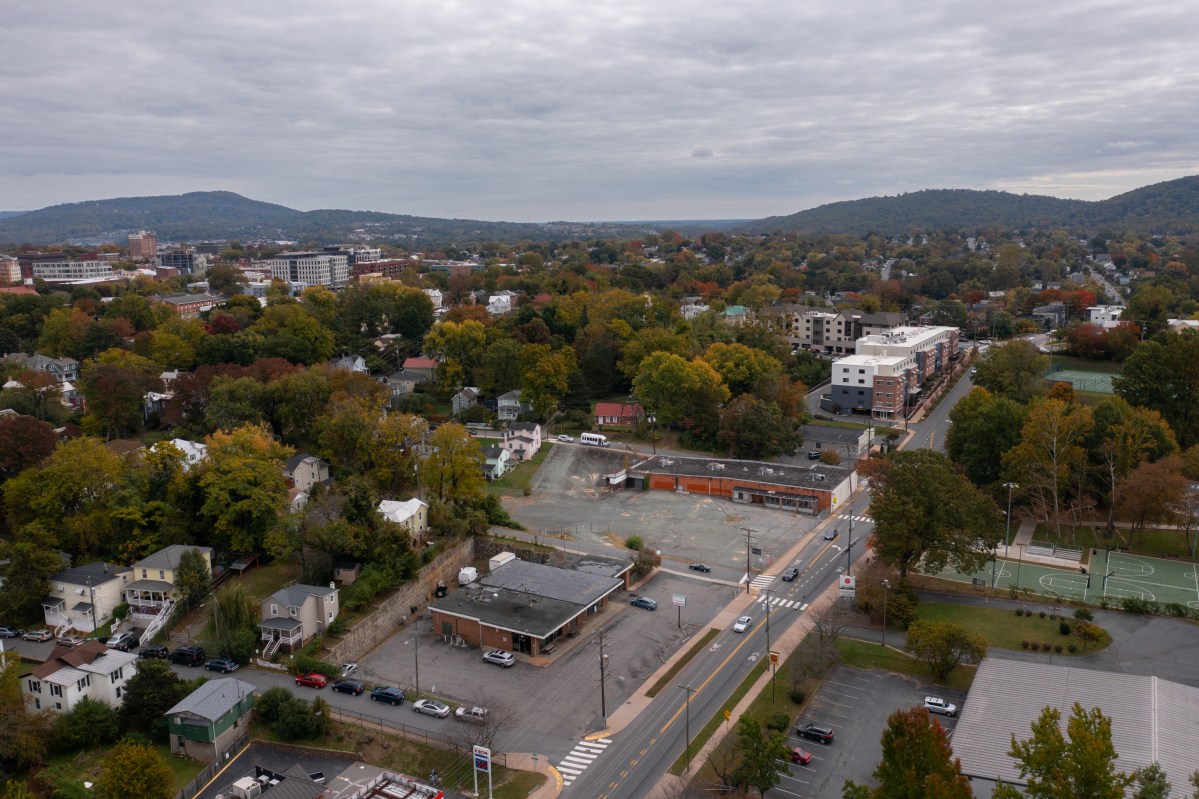
A local real estate company has reserved space for both a grocery store and low-cost housing in a new development at 501 Cherry Ave. The overall estimated cost for the development is between $45 and $50 million.
But several key steps, such as funding and a grocery store operator, are needed for it to actually happen. Because neither component has been locked down, both residents and the project’s developers are trying to remain optimistic while feeling squeezed by time. If they wait too long, construction costs could increase, which could make funding more difficult.
“It’s always this chicken and egg [situation], and trying to adapt on the fly,” said Sunshine Mathon, executive director of Piedmont Housing Alliance and one of the developers for the project, about paying for these types of projects.
My hope is that we are able to give the community what they ask for. My fear is that we will fail.
Carmelita Wood, president of the Fifeville Neighborhood Association
This wouldn’t be the first grocery store at 501 Cherry Ave. From the mid-1950s until 2002, it was the location of the Estes IGA Foodliner, where people from the neighborhood shopped and worked. When Estes closed, Kim’s Market moved in. But it wasn’t the same, neighbors said. Kim’s closed about five years ago.
About two years ago, Woodard Properties bought the property, and when it did, the Fifeville Neighborhood Association asked to have a say in what Woodard developed there. Woodard agreed, and together they brought in a local housing nonprofit, Piedmont Housing Alliance, to add a low-cost housing component to the development.
In addition to building dozens of low-cost units, the commitment to include a grocery store and space for the Music Resource Center, a local youth music nonprofit, prompted the Charlottesville Planning Commission, and then the City Council, to greenlight the development.
(Another community nonprofit, Twice is Nice, initially planned to have space in the development, too, but it is no longer involved with the project.)
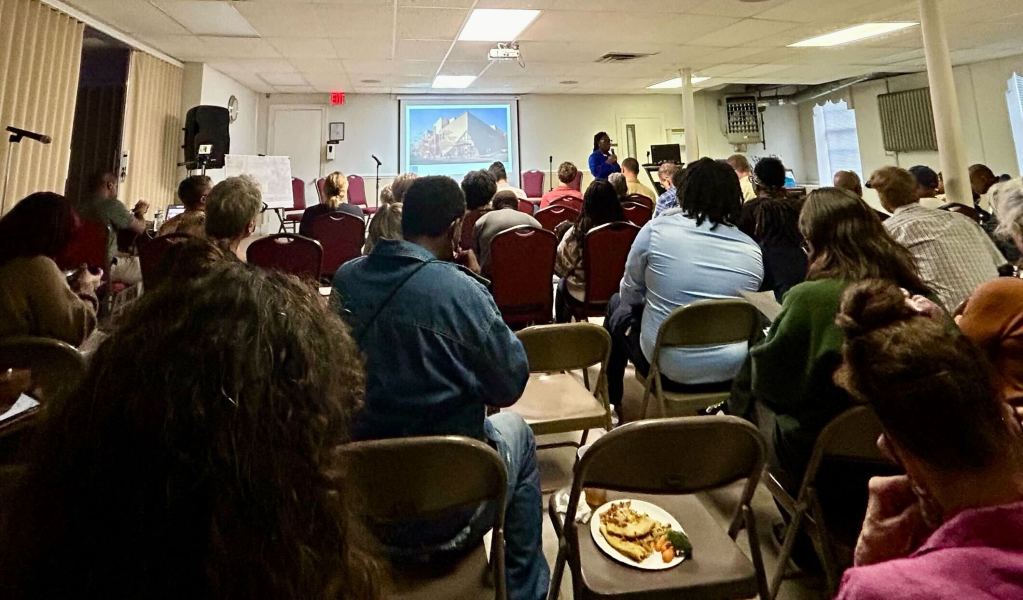
Over the past two years, the neighborhood association, Woodard Properties and PHA have held many community listening sessions and neighborhood meetings about the 501 Cherry Ave. project. During the meetings, some well-attended and some not, residents have discussed everything from concerns about traffic patterns, to the height of the buildings and what materials would be used to construct the buildings. Developers also heard what residents want out of a grocery store. Recurring responses include healthy, nutritious and affordable food options.
But they can’t get started without the money to pay for it.
The housing component of the project will have 71 apartments of varying sizes, from studio to three bedrooms, and structured parking. For 99 years, those units will be affordable to households that earn 60% or less of the area median income (AMI). There are no set prices for the units. The households that qualify for the apartments simply pay 30% of their income to housing costs, which include rent and utilities according to PHA’s Mathon.
Thirty five of the apartments will be for households earning 60% AMI or below; 18 will be for households earning 50% AMI or below; 8 for 40% AMI or below; and 10 for 30% AMI or below. (Area Median Income is calculated by the U.S. Office of Housing and Urban Development annually, so it is a changing number. In 2024, a family of four earning 60% AMI makes $73,260 a year.)
Altogether, the housing part of the project is estimated to cost a little over $40 million, said Mathon of PHA.
When a developer proposes to build housing units, the firm usually requests a bank loan. That loan creates debt for the developer, who then pays back that loan by selling or renting the homes.
However, with affordable or low-cost housing like the kind Piedmont Housing Alliance wants to build at 501 Cherry Ave., the developer’s debt also must remain low. Which means applying for government subsidies from federal, state, and local sources. The developers explained this to the audience Monday.
All told, Mathon expects between 15 and 20 different sources of funding for the housing component of the project. Charlottesville City Council has already committed $3 million to it.
Mathon and PHA staff have applied for some of these subsidies, all of which have different deadlines and application processes. Most applications require a thorough plan before allocating money to a project. Mathon expects to hear about the first round in November.
Piedmont Housing Alliance’s track record for applying and receiving government subsidies for housing is “pretty good,” Mathon told the audience during Monday’s meeting, and referenced other recent projects such as Kindlewood and Hickory Hope at Southwood.
But it’s not guaranteed.
The goal is to have secured enough funding to break ground on the project in mid-2025, with an estimated 20 months of construction to follow. That would put the completion date sometime in early 2027, the developers said Monday.
Another important date on the projected timeline is looming. The developers want to have a grocery store operator pinned down by November of this year, but the developers and the Fifeville Neighborhood Association haven’t had much success yet.
The main requirement they have for the grocery store is that it must be relevant to the community, both in product selection and price.

During the Monday meeting’s Q&A portion, community members offered several suggestions including Reid’s Super Save Market; Trader Joe’s; Foods of All Nations; Crozet Market; the local farmer’s market; and Joe Hale, who was the last proprietor of Estes IGA and now lives in Scottsville. Wood said they had reached out to most of these folks and many others, and received largely the same response: We’re not interested.
Wood said some of the grocery retailers aren’t interested because they’re not financially capable of opening a second location. Others have said “the math doesn’t work.”
One of the challenges that the space poses is that it is relatively small for a grocery store. At around 7,000 square feet, it’s about twice the size of Market Street Market, and half the size of Reid’s, Anthony Woodard told the audience.
And with an estimated $3 million budget for the grocery store shell space — not including the cost to outfit the interior with store fixtures — that’s a lot of money for a small space. And for an industry with already low margins, they’re hearing that it’s not a risk most companies are willing to take.
“Without subsidy, we are dead in the water,” on the grocery store, Mathon said.
So, they’re looking into subsidies for the grocery store, too — they exist, and the programs are eager to fund these kinds of projects, said Mathon. They just need to get someone to commit before they can apply. But it’s hard to get someone to commit without the subsidy.
With that November deadline for finding a grocery store operator looming, community members asked what if the deadline isn’t met? Will that mean no grocery store?
Not necessarily, said Woodard. In that case, Woodard Properties, PHA, and the Fifeville Neighborhood Association would “circle up and come up with the best path forward,” he said.
Another community member asked about a contingency plan. If not a grocery store, then what?
Woodard said he wasn’t sure, because right now, there is no contingency plan.
It all feels very uncertain right now because it is, said Mathon. If funding comes through in November, that will firm up the plans a bit, and they could have a little more patience with finding a grocery operator, he said.
Some community members asked about the possibility of a cooperative, rather than corporate, grocery store.
Cooperative, or co-op, groceries are community-owned stores. Anyone can shop there, but only the member-owners of the store are involved in the decision-making. Those member-owners also receive a cut of the store’s profits.
“I might have a dollar. You might have a dollar. If we put it all together, we can build a bank,” said one community member who appeared excited about the co-op idea.
Wood, the neighborhood association president, acknowledged that is something to consider, but noted that project leaders haven’t had serious conversations about it yet. She believes the community, as a whole, needs more education about what a co-op grocery store is, and how it works, before deciding if that’s something the community can feasibly support.
Take Action
An upcoming community meeting about Fifeville will include information about the co-op grocery model at the next Buy Back the Block event. It will take place at 11:30 a.m. on Saturday, Oct. 5, at the Jefferson School African American Heritage Center, 233 Fourth St. NW. The event speakers will be Michael Carter Jr., a professor and owner of Carter Farms in Orange County, Virginia, and amaha sellassie, a professor and co-founder of Gem City Food Co-Op in Dayton, Ohio. Register for that event here.
Missed the Sept. 23 conversation? Watch it on the In My Humble Opinion YouTube page.