

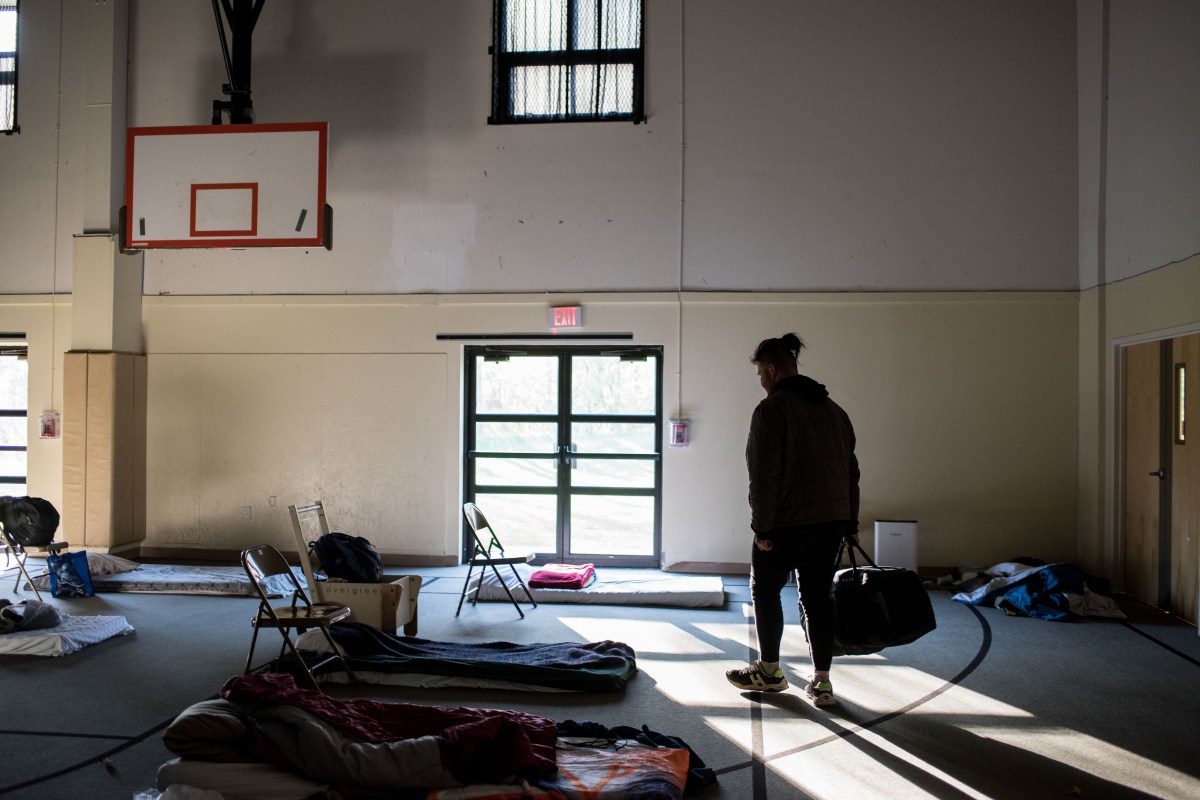
This year’s update on the state of homelessness in the broader Charlottesville community felt like déjà vu to some City Councilors.
During the afternoon of Monday, May 19, the Council heard from five different homelessness services agencies, all of whom said that, despite their best efforts, the number of unhoused people in the Charlottesville area continues to rise.
On any given night, an estimated 220 people in the community are experiencing homelessness — up from about 200 last year.
The agencies are successfully helping people off the streets and into shelter or permanent housing. They have also been able to keep individuals and families who were on the brink of eviction stay in their homes. But they say that the lack of low-cost and market-rate housing in the area is making all of that increasingly difficult.
The Councilors, who were shocked by last year’s numbers, seemed less surprised this time around.
“Every year we get an update that the [unhoused] population increased during COVID, and it’s stayed there,” said Councilor Michael Payne at the end of the agencies’ presentation, which took nearly an hour and a half.

Payne was clear that he was not blaming the agencies for that.
“You all are working incredibly hard to fill in the gap as best you can and making a huge difference,” he said. He thinks the city government, however, could be doing more.
Data, while challenging to collect, says unhoused population is increasing
Council heard from five different organizations during the presentation — the Blue Ridge Area Coalition for the Homeless (BRACH), The Haven, the Shelter for Help in Emergency (SHE), The Salvation Army, and People and Congregations Engaged in Ministry (PACEM). All of them serve people experiencing homelessness in the Charlottesville area, just in different ways. They often work together, as they help many of the same clients.
For instance, someone who goes to The Haven day shelter for a shower and laundry service might also stay in PACEM’s seasonal overnight shelter in the winter and work with a PACEM case manager.
It can be difficult to get an accurate count of just how many people in the community are experiencing homelessness, service providers have said in the past. It’s hard to keep track of who is living outside, either on the streets, in tents near the river, or encampments out in the woods. And not everyone who needs help asks for it.
Still, there is some data they can use to get a sense of what homelessness looks like in the area, and that’s part of what the agencies presented to Council.
Every fourth Wednesday in January, homelessness services agencies across the United States conduct what is called the Point-in-Time Count, or PIT Count. It’s an effort coordinated by the U.S. Office of Housing and Urban Development (HUD) that is meant to give a snapshot of how many people are experiencing homelessness that night throughout the country. It includes people who are staying outside or in structures not fit for long-term human habitation (like garages, tents, etc.), in emergency shelters, and in transitional housing.
BRACH coordinates that effort in Charlottesville and the surrounding counties, because it is what is known as the “continuum of care lead,” meaning it helps coordinate resources and efforts among the different homelessness services agencies.
This year’s PIT Count took place on Jan. 22, which was a very cold day with a high of about 24 degrees Fahrenheit and a low of around 10 degrees, according to weather reports.
That night, the agencies counted 165 people experiencing homelessness, Shayla Washington, BRACH executive director, told the Council. That number includes 41 unsheltered people, 116 in emergency shelter, and 8 in transitional housing.
That was up from last year’s 159. Washington pointed out that the number of unsheltered folks spiked to 41, up from 14 in 2024. There could be a few reasons for that, she said.
One is that in 2025, the agencies had more volunteers helping out, so they were able to count more people. Another is that they had input from other counties as well.
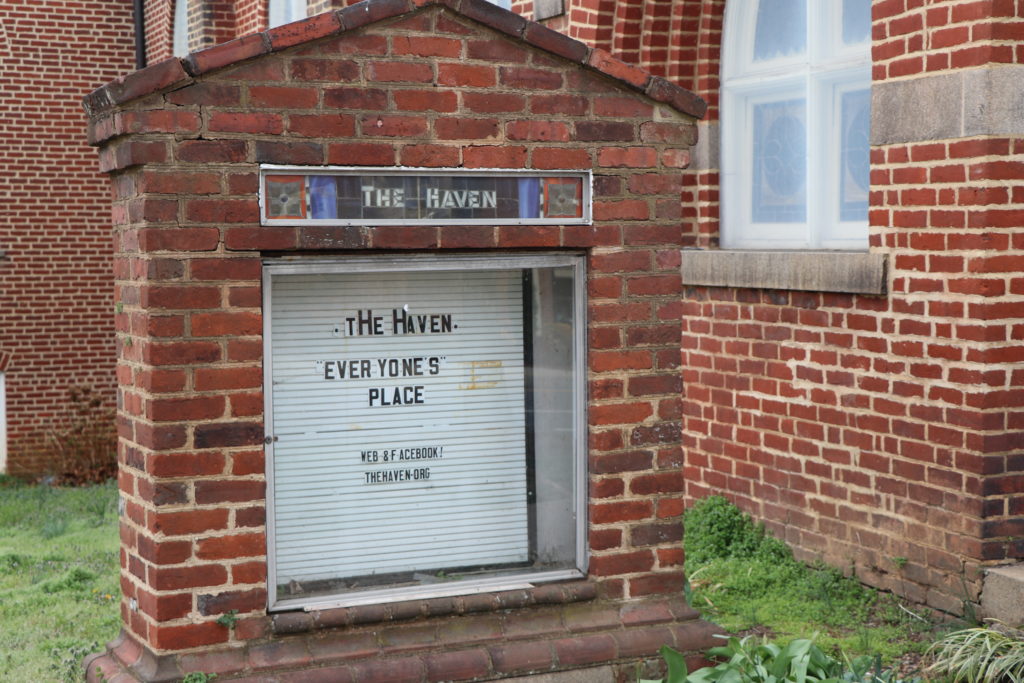
Another tool that local homelessness service agencies use to gauge the scope of the issue is what they call the “by-name list,” a list of every person that the agencies know to be experiencing homelessness at any given time, and the number is always in flux.
“We try to keep this up to date in real time, as much as possible,” Washington said, with agency staff updating the database whenever they know that someone has either fallen into homelessness, or transitioned out of it. But they keep track of how many individuals end up on the list each year.
Over the course of the past year, 571 unique individuals had been on the by-name list, Washington said. That’s up from 498 the previous year.
On May 19, there were 241 people on the list.
“Again, we’re seeing the increase going up,” Washington said.
Homelessness service agencies providing help, but can’t keep up with demand for services
Though together the agencies were able to help hundreds of people access shelter, meals, case management services, and more, they reported that demand for their services exceeds their capabilities.
For instance, The Haven, a day shelter that is open 365 days per year offering services like meals, shower, laundry, and a place for people to receive mail, served 412 individuals between July 1, 2024 and March 30, 2025.
The organization is on track to serve 441 guests by July 2025, according to data that Owen Brennan, executive director of The Haven, later shared in an email to Charlottesville Tomorrow.
In addition to those services, The Haven also operates a couple of homeless intervention programs. Those programs help people who are on the verge of homelessness, avoid it, and help others find stable housing so that they can exit homelessness. The Haven helped nearly 150 households through those programs during that same nine-month period, Brennan said.
But they couldn’t help everyone who needed it, Brennan told the Council.
“There is more demand for our homeless prevention subsidies than we can meet,” Brennan told Council.
During a similar presentation in June 2024, City Manager Sam Sanders asked the agencies what the city could do to help.
Agency leaders were clear: A permanent, overnight, low-barrier emergency shelter with at least 100 beds; more transitional housing; and more permanent supportive housing.
Some of those things are in the pipeline.
Sanders has proposed opening a permanent low-barrier shelter with about 50 beds. The Salvation Army has offered to convert its thrift store at 604 Cherry Avenue into one, but there are no definite plans yet.
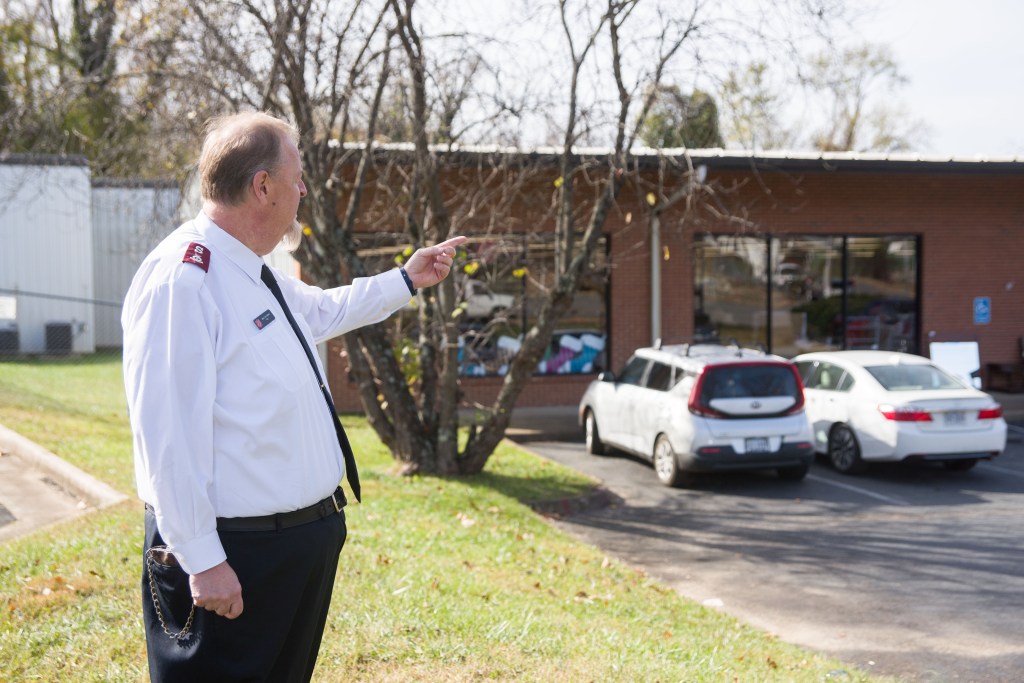
The Salvation Army’s Charlottesville Corps Officer Major Mark Van Meter told the Council that he’s heartened by local service providers’ willingness to work together on that project.
“This is now my sixth community I’ve served for the Salvation Army, and in all honesty, I’ve never found a more cohesive group of service providers who want to work together,” Van Meter said.
The Salvation Army is also planning to expand its current shelter on Ridge Street to help meet the need for transitional housing for families.
Additionally, SupportWorks Housing, a nonprofit organization, is working on the permanent supportive housing component. Permanent supportive housing is a type of housing for people, usually single adults, who have experienced chronic homelessness. It gives them a place to live as well as supportive services — like case management, addiction counseling and mental health counseling — to stay housed permanently.
SupportWorks is currently building Vista29, a 77-unit apartment building on Route 29, at the site of the old Red Carpet Inn. Both the City of Charlottesville and Albemarle County have contributed money to the project, which faced some delays due to rising construction costs. Initially, SupportWorks anticipated breaking ground in summer 2024 and finishing construction in early 2026. Now, the organization is aiming to finish construction in late 2026, SupportWorks Housing Director of Mission Advancement Chris Edwards said Tuesday in an email to Charlottesville Tomorrow.
While these projects should make a difference when they come online, none of them can help the growing unhoused population right now. This year, the agencies reiterated the need for affordable housing — and emphasized that programs that help people on the verge of homelessness stay in their homes, need more funding.
Lack of affordable housing a leading cause of homelessness in the area
Vice Mayor Brian Pinkston asked Brennan what is on his “wishlist” for services. If Brennan could wave a magic wand and make a change in how the community serves unhoused people, Pinkston wanted to know, what would he do?
Stabilize the rental market to keep people from falling into homelessness in the first place, Brennan replied.
“Right now, to some extent, our housing model is dependent on folks being evicted from places and new folks moving into those units,” Brennan said. “The easiest thing to do is keep someone housed. We don’t have to navigate them, we just pay their rental arrears and keep in touch with them to see how they are doing.”
Councilor Natalie Oschrin had a follow-up question.
“So wouldn’t another option be, we have more housing available, full stop?”
Yes, Brennan said.
“I know you all know this, but what we ultimately need is more affordable housing,” Brennan said.
The lack of affordable housing in the area came up in nearly every agency’s presentation. It’s one of the main reasons why people fall into homelessness, and why people struggle to get out of it, the service providers said.
It’s why stays at the Shelter for Help in Emergency (SHE), a shelter for people who have experienced intimate partner violence, are getting longer, said that organization’s executive director Ana Mendez. People might be ready to leave the shelter, “but there is just no place for them to go,” she said.
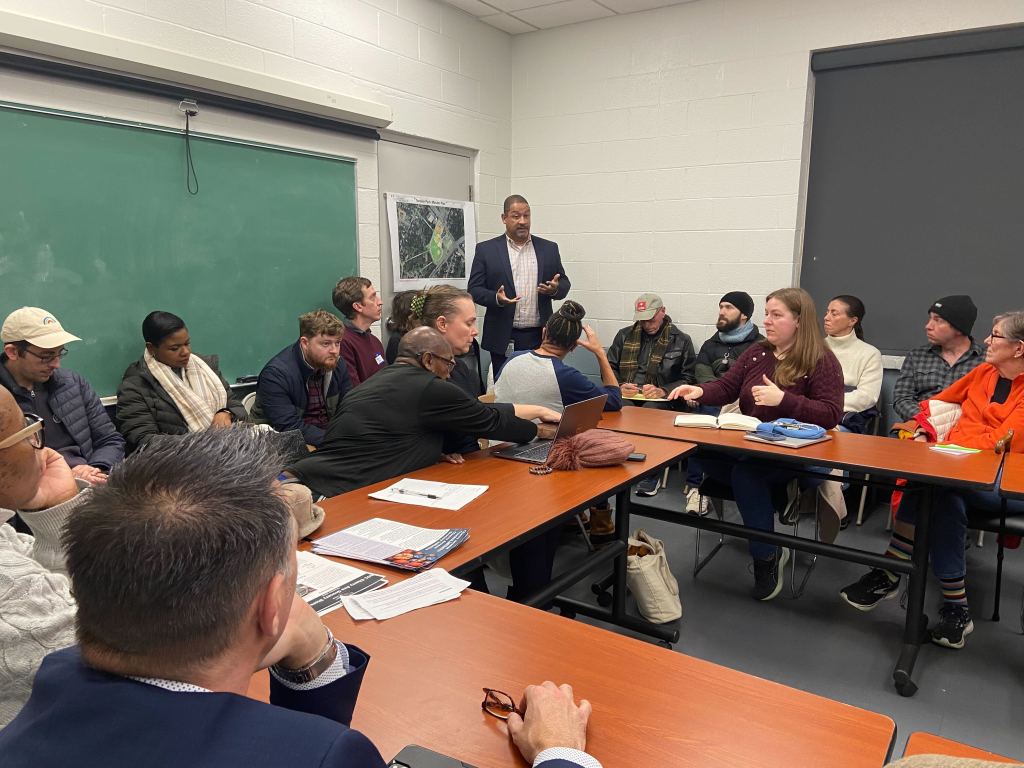
Cindy Chambers, executive director of PACEM, said something similar. It’s been harder and harder to house PACEM’s clients, many of whom are seniors, many of whom have no income, and many of whom have serious physical and mental health needs.
Relationships with landlords “are kind of the only way you’re getting people inside,” Chambers told the Council.
Another common thread among the presentations was where people experiencing homelessness in the Charlottesville area are coming from.
“There’s a narrative out there — I’m not sure how true it is — that Charlottesville has a reputation for being hospitable, which I hope is true,” Pinkston said after Washington gave her BRACH presentation. “There’s a notion out there that we end up pulling in folks who might go to other places.”
“There’s a common misconception that people are being bussed here from other communities,” Washington replied. “I don’t see that happening.”
Brennan said something similar.
“As someone who works with the folks who are entering homelessness for the first time, I can pretty emphatically say that the folks who are experiencing homelessness in Charlottesville are very local,” Brennan said. “They’re from Charlottesville, they’re from Albemarle. Folks experiencing homelessness don’t have the resources to move around and shop for other resources.”
The vast majority of PACEM’s guests are local, too, Chambers said. Of the 298 guests PACEM helped between October 2024 and April 2025, 174 of them — more than half — said they were from either Charlottesville or Albemarle County. Another 29 were from either Fluvanna, Greene, Louisa, or Nelson Counties, and 35 were from other places in Virginia. Additionally, 21 people were from out of state, and 2 were from another country. These numbers may not be entirely accurate, Chambers said, because 37 guests declined to give their previous address, but even still, the majority of the people PACEM served in its most recent season were local.
Another part of that conversation has to be people being discharged to the shelters from UVA hospital, said Major Mark Van Meter, commanding officer of the Charlottesville Salvation Army. On average, the Salvation Army receives 13 calls from hospitals and healthcare institutions asking if the shelter has space for a patient ready for discharge.
“There might be an individual from Lynchburg who’s having some treatment at UVA,” Van Meter said. “That does not necessarily mean they are permanently homeless in our community. But nonetheless, they are homeless [here] for a period of time.”
When the presentations were over, the Councilors thanked the service providers before asking questions and making comments.
Mayor Juandiego Wade wanted answers to some of the questions he hears from his constituents. He asked about the people who stand at intersections asking for money — what are the agencies doing to help those folks?
Ashley Marshall, City manager for racial equity, diversity, and inclusion, addressed that question.
“The first thing I want to make sure everyone knows is that what they’re doing is legal,” she said. “It might be a source of income for them, but it does not mean they are unsheltered.”
Wade also asked about shelter options for families.
“At this particular moment, this community, including the county, does not have an official family shelter,” but it is something The Salvation Army’s shelter expansion will add, Marshall said.
Washington added that the agencies typically shelter families in hotel rooms.
Wade then asked about people who don’t want to go to shelters.
Most of them want a place to live, they just don’t want to follow shelter guidelines like having to wake up and be out at a certain time, said Washington.
“I think folks who are currently choosing to remain unhoused do want housing, it’s just a matter of finding it,” Washington said.
Once Wade was done with his questions, Oschrin again emphasized the importance of creating more affordable housing.
“The city is investing in various programs to try to ameliorate some of these scenarios, but, one of the things we can also do is to allow and be enthusiastic about housing abundance, not just from the city but from private partners who can create more units,” Oschrin said.
“As we heard, there’s only so many units available. We could give people vouchers all day long, but if there’s nowhere for them to spend it,” it’s moot, she added.
Commenting on how discouraging it is to see the numbers go up every year, Payne said that for him, the point is that the city needs to do more to help.
“I think it just continues to come down that, as a city government, we have to invest in a permanent year-round shelter, and also invest in more permanent supportive housing so people can move out of shelter into permanent housing,” he said, referencing things agency leaders have previously said will help.
“Until we make those investments,” Payne said, “we’re just going to get the same presentations.”
Editors’ note: This article was updated on June 11, 2025, to correct a quote from City Councilor Natalie Oschrin.