

In a corner of an art gallery in Los Angeles sit dozens of bronze ingots stacked on pallets. Next to the ingots are two bright blue hazardous waste drums. A jar filled with slag, waste matter that separates from metal during the smelting process, sits atop one of the drums.
This is what remains of the 10,000-pound statue of Confederate Gen. Robert E. Lee that once stood in Market Street Park (formerly Lee Park) in downtown Charlottesville.
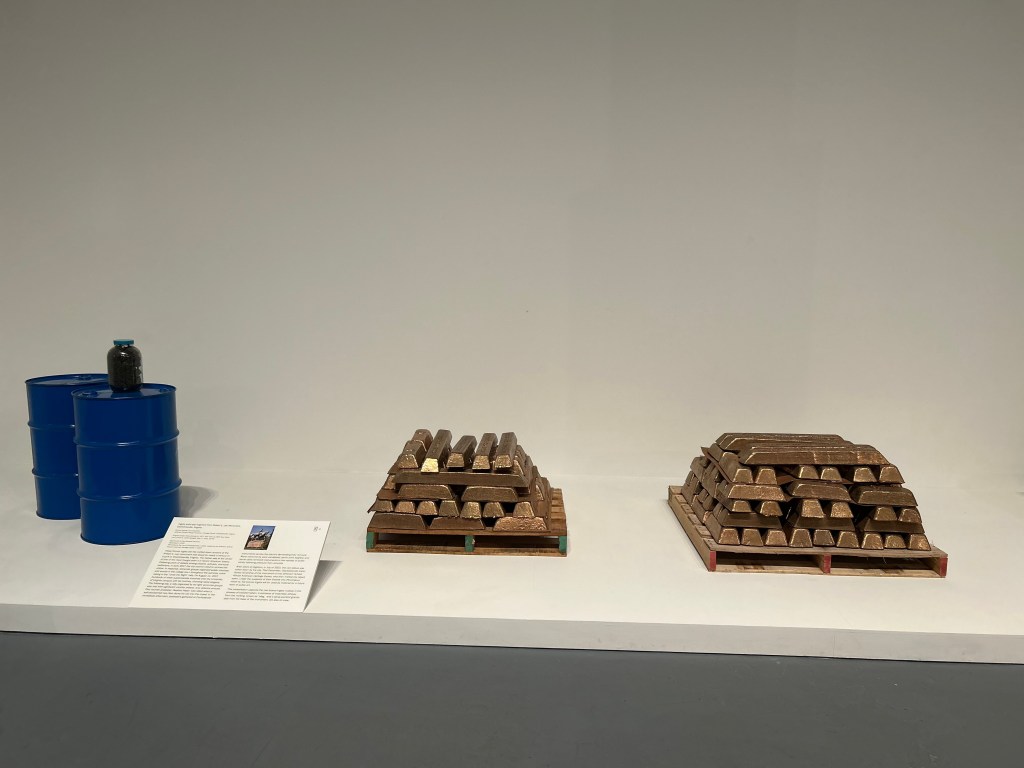
The Jefferson School African American Heritage Center (JSAAHC) acquired the Lee statue from the city in 2021; it was melted in a secret location and later shipped 2,500 miles west to become part of the “Monuments” exhibition, currently on display in the Museum of Contemporary Art (MOCA) in Los Angeles.
“Monuments” is presented in partnership with another Los Angeles visual arts space, The Brick. Both spaces tell the stories of Charlottesville’s Confederate statues by reimagining or repositioning them into something else. The City of Charlottesville transferred the Thomas Jackson statue that stood in what is now Court Square Park to The Brick, where artist Kara Walker’s reconstruction of the Confederate general and his horse is on view.
When the exhibition opened, Hamza Walker, director of The Brick, said that its themes encompass United States history from 1619 to yesterday.
“This gave us wide latitude in the selection of both pre-existing and commissioned contemporary artwork,” Walker said in a news release. “In both cases, the works in this exhibition address the questions of who we want to be as a nation, and who and what is worth remembering, let alone celebrating.”
When the MOCA exhibition closes on May 3, the ingots will return to Charlottesville to be integrated into new public artwork, said Andrea Douglas, JSAAHC’s executive director. The “Recast and Reclaim” transformation is part of the community art project Swords into Plowshares, stewarded by JSAAHC.
Swords into Plowshares draws inspiration from the prophetic vision described in the Hebrew Bible’s Book of Isaiah, which celebrates turning tools of violence into ones of peace and community-building, according to its website.
The JSAAHC’s “Recast/Reclaim” exhibit, on display through May 30, includes original never-before-seen photographs that document the dismantling and melting of the Lee statue. The exhibit also includes renderings presented by three design teams that are competing to create new public artwork from the bronze ingots.
Read a Charlottesville Tomorrow report about “Recast and Reclaim,” and how Charlottesville’s Lee statue is being transformed into new public artwork.
Douglas visited MOCA in 2024 to see how the objects would be displayed. In October 2025, she joined several artists, educators and scholars from Charlottesville and other parts of Virginia to preview the works at MOCA and The Brick.
She told Charlottesville Tomorrow then that the exhibit was striking.
“Seeing them (the ingots) was just as much an experience for me because I had not seen them in their final stage. I knew it had been polished because we paid for it. But, you know, it’s an interesting impression,” said Douglas, “knowing that it’s actual bronze, but they really do reflect like gold.”
The exhibition upends traditional notions of historic value by placing “seemingly precious metal” alongside barrels of slag, which resembles dirt, Douglas said.
“Once you’ve melted it down, what comes up on top are the impurities. So, it’s a really interesting metaphorical contrast.”
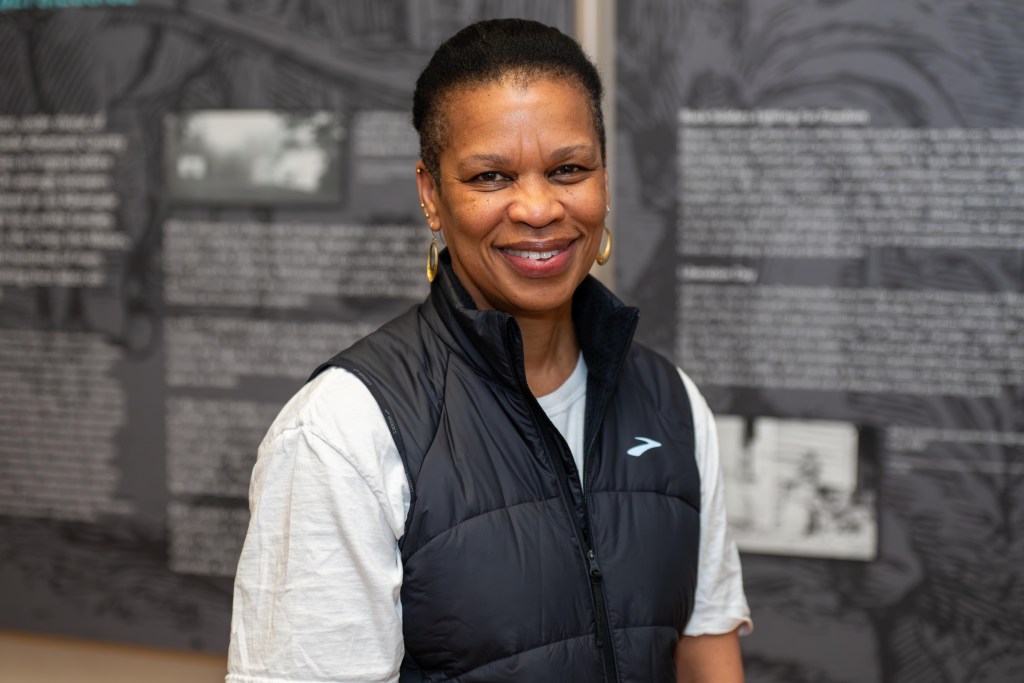
But Douglas says that the challenge of historical narratives has limits.
“I think that we can’t say that there’s a demise of white supremacy. We have been living in this conversation for years,” she said.
The ‘Monuments” exhibit is a step toward permanent artwork in Charlottesville, said Jalane Schmidt.
Schmidt is a religious studies professor at the University of Virginia who helped organize the Lee statue’s removal and is working with the JSAAHC’s Swords Into Plowshares project to create the new public artwork. She joined Douglas and others from Virginia who attended the “Monuments” preview last October.
Take action
Provide your input on the “Recast/Reclaim” proposals
Community members can view the Recast/Reclaim exhibition and cast their vote on the proposed designs that will remake the melted Robert E. Lee statue into new public art. See the full Recast/Reclaim exhibition at the Jefferson School African American Heritage Center, 233 4th St NW, Charlottesville through May 30.
View digital proposals from the finalists here and watch their presentations here. Cast your vote in person at JSAAHC or online here.
“It felt like it was a moment,” Schmidt told Charlottesville Tomorrow. “We’re not done yet. Until that art is in public, we’re not done, and that’s going to be several more years, probably. But it was gratifying to have made it this far and to have public recognition.”
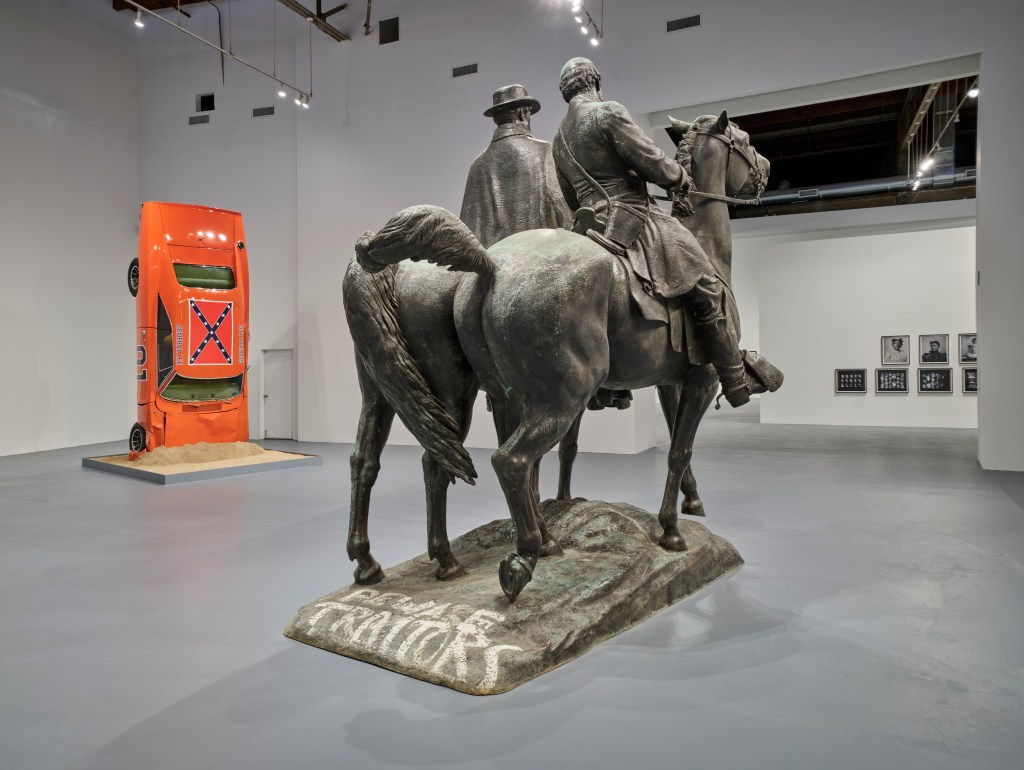
Besides the torched remnants of the Charlottesville Lee statue, “Monuments” includes other decommissioned Confederate statues and artifacts recreated by 19 contemporary artists. “Monuments” offers a space for reflection, dialogue with contemporary art, and critical engagement with some of the most urgent issues of our time, according to the exhibition’s organizers.
At The Brick in East Hollywood, visitors can see a retrospective detailing Zyahna Bryant’s role in the removal of Charlottesville’s Confederate statues. Bryant, who is now an elected official on the Charlottesville City School Board, wrote a petition in 2016 to the City Council requesting the removal of Confederate Gen. Robert E. Lee statue and renaming of the park where it stood for nearly a century. She was a student at Charlottesville High School at the time.
Although Bryant hasn’t seen the exhibition, she is pleased to be included and hopes to see it before it ends.
“What excites me most is that we’re continuing to have this discussion,” Bryant said, “and ensuring the main points are conveyed thoughtfully and effectively.”
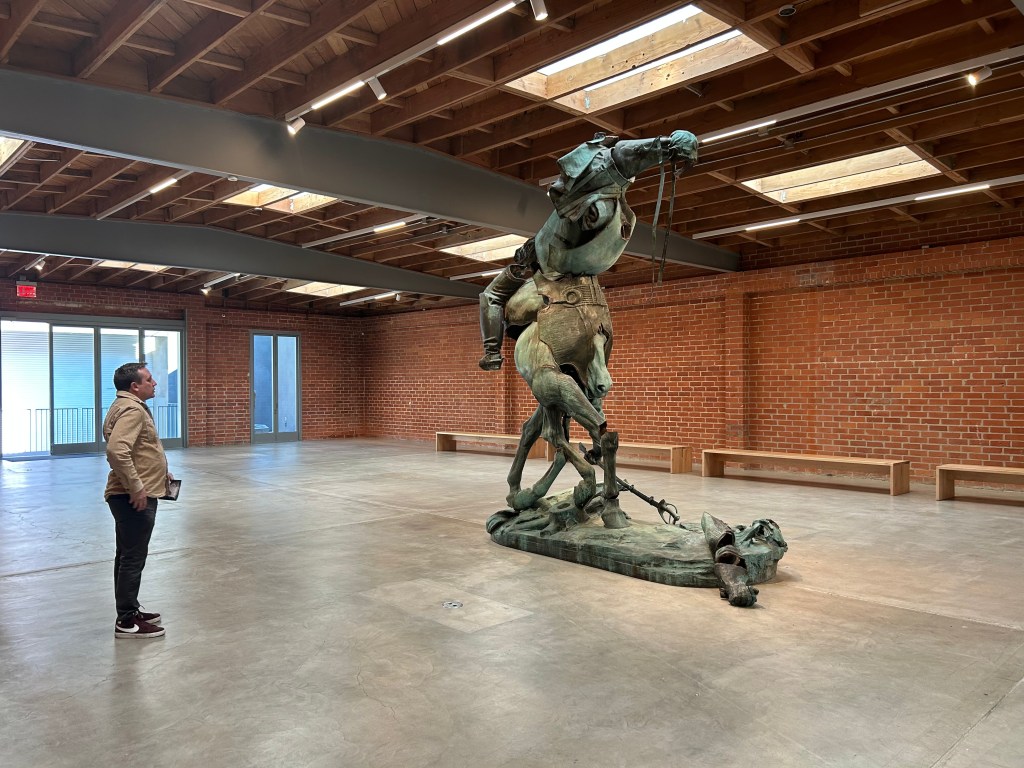
The Brick, formerly known as LAXART, is much smaller than the 40,000-square-foot MOCA, but its centerpiece, the decommissioned equestrian monument of Confederate Gen. Jackson from Charlottesville, looms large.
The original bronze statue showed Jackson leading his horse, Little Sorrel, into battle. In “Monuments,” Kara Walker dissected and reassembled the statue of the general into what the news release about the exhibition describes as a “Hieronymous Bosch-like horseman,” — alluding to the Dutch painter known for his detailed and dream-like style — wandering into Civil War hell on a ruined battlefield. It is titled “Unmanned Drone.” “It seemed fitting somehow as a weapon of war,” Kara Walker told the New York Times.
Walker also compares her sculpture to a “haint,” a Southern concept with roots in Gullah Geechee culture that designates a spirit that has slipped its human form and roams about making mischief and exacting vengeance. Her sculpture, she told The Times, “exists as a sort of haint of itself — the imagination of the Lost Cause having to recognize itself for what it is.”
Debbie Walker (no relation to Hamza Walker or Kara Walker) moved to the Los Angeles area from Maryland about 20 years ago. She grew up in South Carolina where Confederate statues prevailed. Visiting The Brick last December, she encountered memories long buried.
“You just have so much of it growing up in the South and, you know, just that whole pride in the Confederate flag,” said Debbie Walker. “And then, you just want it gone. Like, I don’t want to see any symbols.”
While Debbie Walker doesn’t deny the Confederate objects’ role in history, she sees no need for them to be glorified.
“So, I think being able to repurpose the statue and reimagine it kind of keeps the history, but it also demystifies it,” Debbie Walker said. “Some people would have us believe that the entire country at the time revered those Confederate generals when in fact people — especially the Union and some moderate Southerners — recognized them for the immoral criminals that they were.”
Taking in “Monuments” at The Brick, Neha Choski carefully studied each of the exhibit’s objects, including remnants of the Jackson statue’s steel base splattered with Lithichrome, a paint that’s often used on headstones and monuments.
Choski, whose artistry includes performance, sculpture, painting, video and installation, lives between Los Angeles and Mumbai, India. Her initial reaction after seeing the exhibition at Geffen-MOCA and The Brick was the representation of “so much violence.”
Choski views violence in the United States — then and now — as “a wound that’s gaping over.”
“It is still in our country. The division, oppression, everything.”
But she is inspired to see the objects — or symbols of violence — detached and displayed in a cultural institution. To her, the museum’s approach of containing and examining monuments within an institutional framework offers a powerful way to move forward.
“There was something very empowering where it made me feel like there’s a problem in our deepest, you know, cultural anatomy that is so impossible to solve,” Choski surmised. “But if we can hold it and we can examine it and actually sit with it, then maybe we can get somewhere.”
A simple song reflects key moments during the height of Black America’s struggle for equal rights
Back at MOCA, Davóne Tines’ commanding bass-baritone delivers an a cappella rendition of “This Little Light of Mine.” Its simple, steady rhythm and repeated refrain —”let it shine, let it shine, let it shine”— is a deliberate anthem and backdrop for Black Southerners who, in the face of segregation, violence, and systemic exclusion, packed churches, gathered in mass meetings, and marched for justice during key moments in America’s civil rights movement.
Tines performs the operatic spiritual in “Homegoing,” Julie Dash’s short film created to honor the 10th anniversary of the 2015 massacre at Mother Emanuel AME Church in Charleston, South Carolina. The song and film are powerful preludes to both of the exhibition’s monuments, the reimagined statues of Lee and Jackson, that are intricately tied to trauma and tragedy in Charlottesville.
Hamza Walker, director of The Brick, recalls 1963 and 2015 as pivotal years for civil rights — and violence against Black people. The violence that ended in the deaths of nine church members at Mother Emanuel on June 17, 2015, was the catalyst for “Monuments.”
Among the worshippers killed was Rev. Clementa C. Pinckney, Emanuel’s pastor and a South Carolina state senator who was shot while leading Bible study. Dylann Roof, a white supremacist, was convicted for the racially motivated massacre.
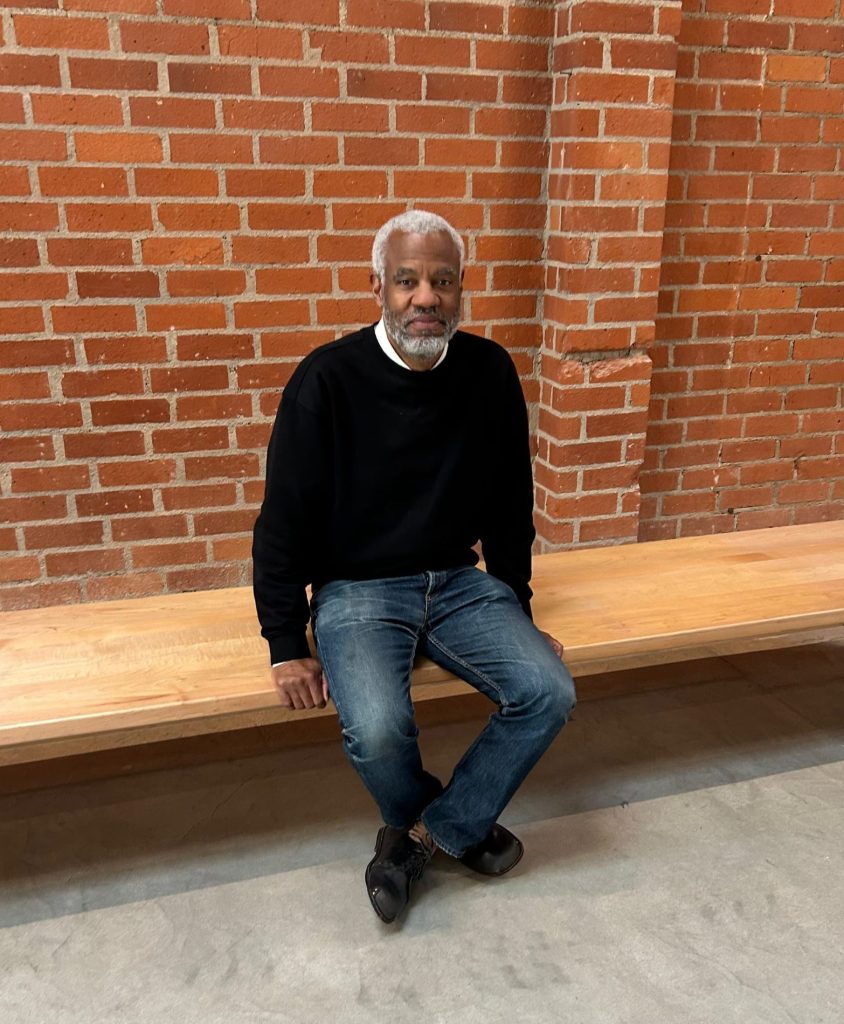
Hamza Walker grew up in Baltimore and describes himself as a “post-civil rights child.” Yet, he was shocked by the Mother Emanuel Church shooting. It rekindled memories of the 1963 bombing at 16th Street Baptist Church in Birmingham, Alabama that resulted in the deaths of four Black girls.
“It’s still a living memory,” he said. “But it’s not something that should be happening again.”
As the violence and police brutality against Black men and women in cities such as Baltimore, Cleveland, Minneapolis, Louisville, Kentucky and Brunswick, Georgia continued, so did plans for the exhibition. After the murder of George Floyd, who was killed by a Minneapolis police officer in 2000, efforts to remove Confederate monuments and symbols in public spaces became a national movement. On April 24, 2025, CBS News reported that more than 2,000 Confederate symbols still stand across the U.S. A map included in the Southern Poverty Law Center’s 2025 “Whose Heritage” report shows that 478 confederate monuments have been removed in the U.S. since 2015.
“Monuments'” curators contacted 68 municipalities and institutions, and received about 25 responses. Ultimately, 10 monuments, objects and artifacts were selected for the “Monuments” exhibition for MOCA and The Brick, according to the curators.
The objects come from Charlottesville and Richmond, but also Baltimore, Montgomery, Alabama and Raleigh, North Carolina.
When Confederate monuments fell, one curator and UVA graduate felt a ‘now moment’
Richmond’s 21-foot statue of Robert E. Lee stood for 131 years on the city’s acclaimed Monument Avenue. After its removal, the statue was acquired by Richmond’s Black History Museum and Cultural Center of Virginia. Today, its granite base is marked with the graffiti and spray paint when activists repurposed it for protest and play during the COVID-plagued summer of 2020. Pieces of the base now greet visitors who enter MOCA’s “Monuments” exhibit.
Around noon on a Friday in early December, Bennett Simpson, senior curator at MOCA, spoke with several of the anticipated 1,000 visitors who were reserved spots to visit the museum that day. He listened to their observations and questions, and explained some of the features of the exhibition, such as Hugh Mangrum’s black-and-white photographs of people in post-Reconstruction North Carolina, Virginia and West Virginia.
Simpson, who graduated from UVA in 1994 with a degree in English, has worked at MOCA in Los Angeles since 2007. From the exhibition’s conception to now, he worked closely with Hamza Walker, Kara Walker and other curators to shape the project.
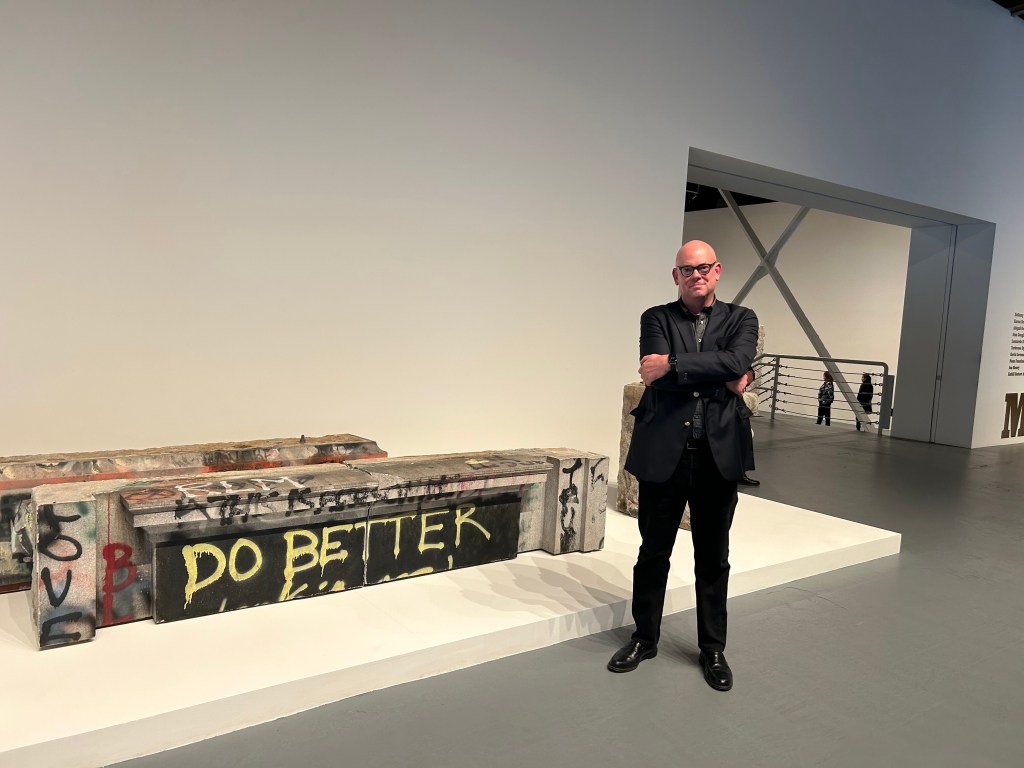
In the museum’s courtyard, he explained why “Monuments” is being staged in Los Angeles.
Part of the answer came down to logistics. Besides the fact that he and Hamza Walker live and work in Los Angeles, MOCA could accommodate the large-scale artifacts and objects.
“We could drive the cranes and the trucks directly out onto the museum floor through our loading dock. In most places, you can’t do that,” said Simpson.
Part of the answer also came down to perspective. Both men are from the mid-Atlantic, which gave them insight on how to stage the exhibit’s objects and artifacts as contemporary rather than historical curators. Simpson said that aligns with the MOCA’s mission to interpret current art while questioning and adapting to the changing definitions of art.
“We work with living artists and think about the current moment,” he said. The monuments seemed to be a permanent part of the Southern landscape, but once they started to come down, they had a chance to challenge that view. “We thought, ‘Oh my God. This is all new. This is really something happening today.'”
The next question the curators confronted was how to incorporate the voices of contemporary artists in an exhibition that represents deep history. The fact that so much was happening in June 2020 — or “now” as Simpson recalled saying back then — made the project even more appealing. “What could contemporary artists say about it? How could we work with contemporary artists to kind of frame it and talk about it?”
The “Monuments” exhibition is now in its sixth month, and many of Bennett’s questions appear to be answered. Indeed, the Los Angeles Times described the exhibit as “thrilling.”
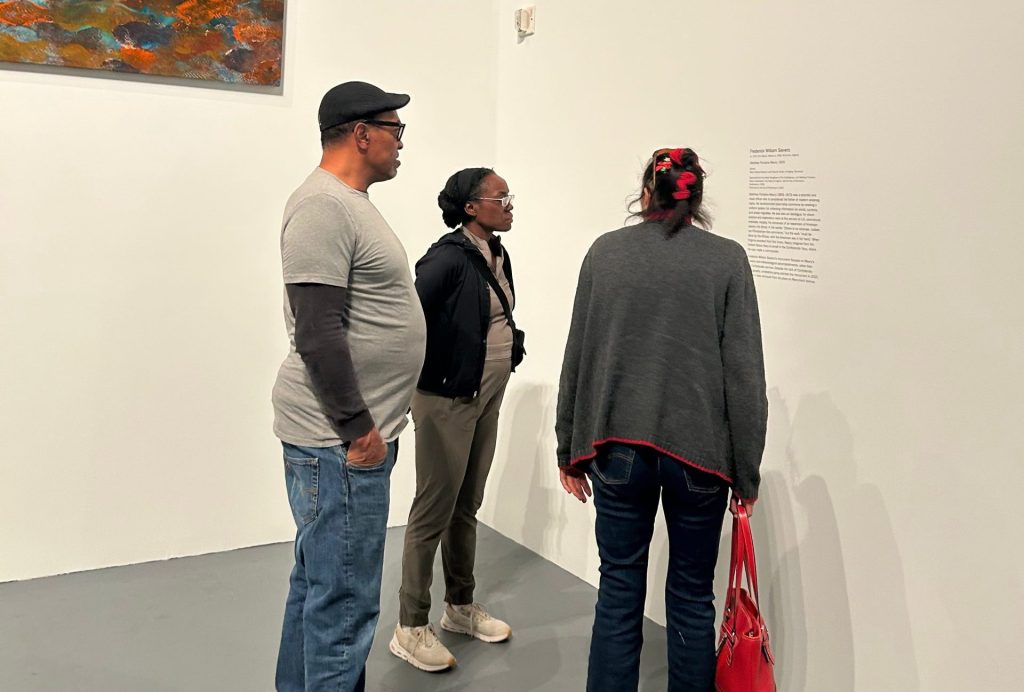
Yet, for Chiquita Flowers, one of the visitors that Friday in early December, the issue of slavery, the Confederacy and the monuments debate remains “a complex, unresolved American dilemma” with many layers.
“I feel like the monument [controversy] was some outcry in the context of George Floyd, and obviously the killings in Charleston, South Carolina,” said Flowers, a retired physician who was raised in Georgia and now lives in Santa Monica, California. “But I also feel like it’s only just a tip of the iceberg — an unexplored, unidentified feeling.”