

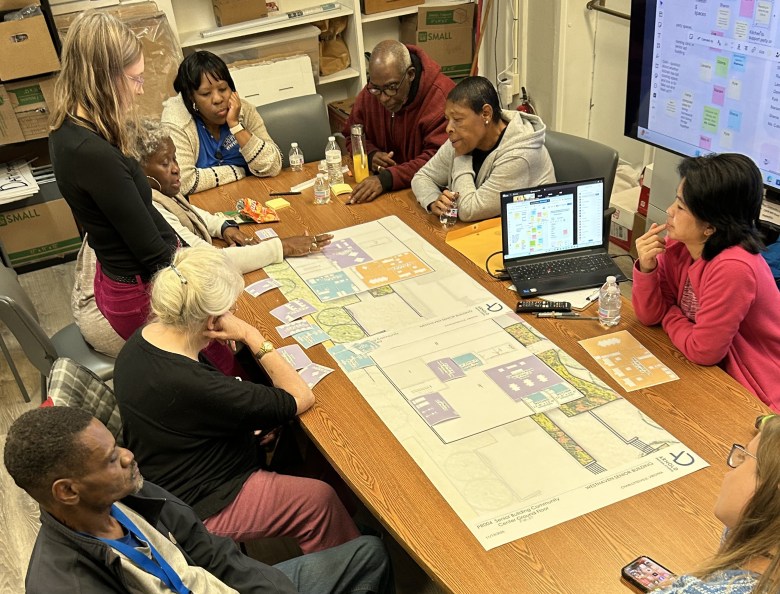
For the past three years, Joy Johnson and her Westhaven neighbors have met every other week to plan their community’s redevelopment. They’ve decided on the pitch of their porch roofs and where plants and playgrounds will go. They’ve added more units, and a building specifically for seniors, so that more people can live in their neighborhood.
Johnson and her neighbors have dreamed of this for years. Westhaven is the city’s oldest public housing community, built in the 1960s, and it hasn’t had any major renovations or upgrades since, despite residents’ pleadings.
In 1998, Johnson founded the Public Housing Association of Residents with the goal of amplifying the voices of the people living in publicly subsidized housing.
More than two decades later, in 2019, the local housing authority started planning to redevelop its communities, including Westhaven. Residents asked for a say in that process. And they got it.
Filled with a sense of accomplishment, residents submitted their site plan to the City of Charlottesville for approval in spring 2025.
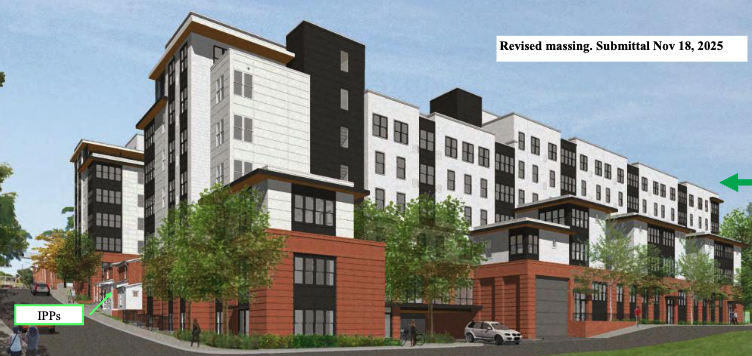
Their excitement was overshadowed — literally — a few weeks later by some unexpected news. Employees from LV Collective, a Texas-based developer, attended a Westhaven resident planning meeting and told residents about the company’s plan to build an 11-story building of luxury student housing on West Main Street. Right behind Westhaven.
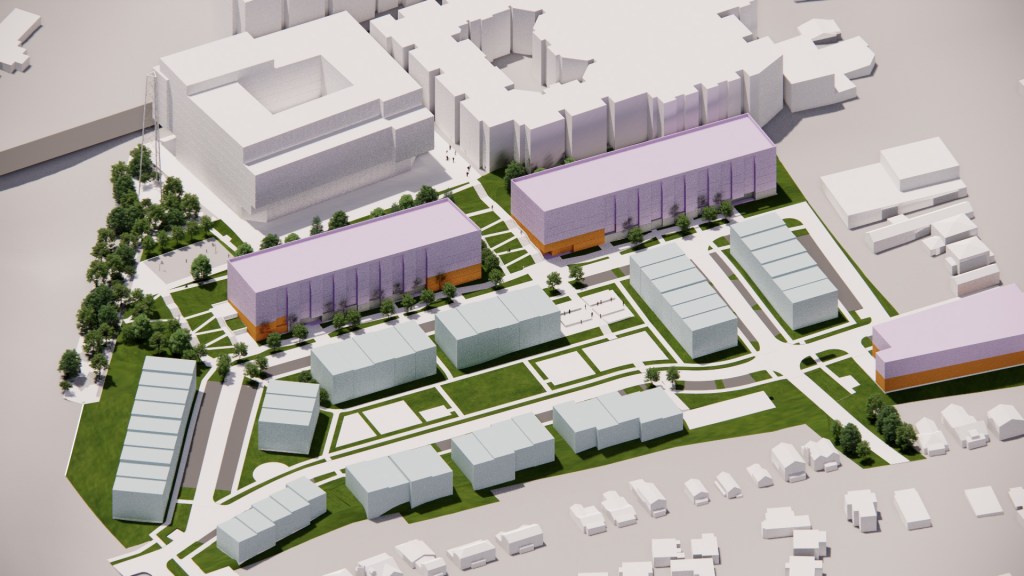
The developer has since lowered the height to 8 stories, stepped down to 6 in the back, next to Westhaven. Still, it would loom over the community and block sunlight from reaching parts of the development, completely altering what residents envisioned for their community’s future. It all but dashed residents’ plans for a walkway up to West Main, one of the city’s main roads.
“I was angry. I felt disrespected and hurt,” said Johnson.
She wasn’t the only one.
“They came and talked to us, and it wasn’t a talk,” said longtime Westhaven resident Earl Hicks who, like Johnson, has been closely involved in the redevelopment planning process. “It was, ‘this is where we’ll build at.’ No thinking about the people, about us, the Westhaven community. When you do something like that, you really tell us that we don’t exist.”
This has happened before, say Westhaven residents, who are part of the 10th and Page neighborhood, citing a similar situation with The Dairy Market developer in summer 2023.
Still, they say they were blindsided by LV Collective’s proposal. They didn’t expect such a massive building to go up in their neighborhood.
That’s because city officials and the consultants they hired said they would try to shield historically Black neighborhoods throughout the city, including theirs, from ongoing displacement due to development and rising real estate prices. When the city overhauled its zoning ordinance, it claimed it was prioritizing equity. With a new Affordable Housing Plan to guide that work, the city stated two of its primary goals were to create more affordable housing and slow displacement of longtime residents throughout the city.
The new ordinance, adopted in December 2023, even includes a special zoning district meant to protect historically Black and low-income neighborhoods from development pressures that might come from the new rules, which broadly allow for more density and height throughout the city.
Now, residents say that feels like an empty promise.
Two tall luxury student housing buildings — the 8-story one on West Main Street in the 10th and Page community, and a 7-story one in the nearby Fifeville neighborhood — have been proposed for properties right on the edges of that special zoning district. While they may be on the edges according to the zoning map, residents say that in reality, they’re very much in the neighborhoods.
This has residents questioning the city’s priorities. They’ve shown up to public meetings for months, warning the city that it is on the path toward fast-tracking gentrification and displacement, further harming these neighborhoods’ Black and low-income residents.
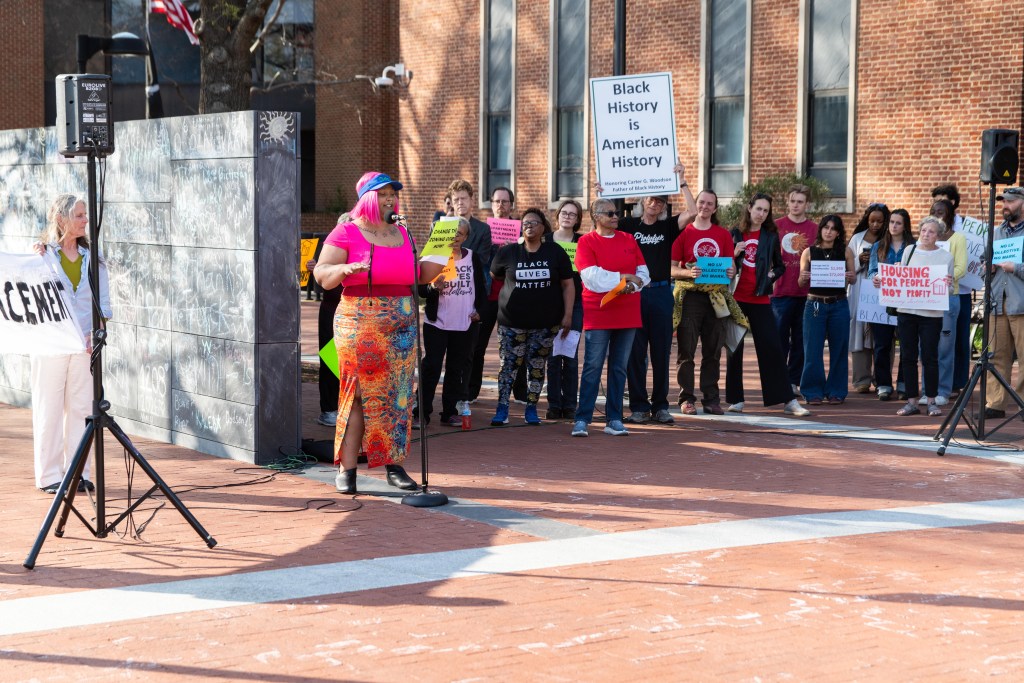
“These neighborhoods are more than locations on a map,” Terry Tyree said during a March 30 anti-displacement rally outside of City Hall. “They hold our history, our families, our relationships and our sense of belonging. We need our leaders to take this seriously. Development should not come at the cost of pushing people out who helped shape and sustain this city for generations.”
Developer ignored Westhaven community’s plans for a path to West Main Street, residents say
In the 10th and Page neighborhood, residents say that LV Collective’s proposal disregards not only the plans that Johnson and her Westhaven neighbors have worked on for years, but the history that those plans were meant to honor.
LV Collective has proposed its 8-story luxury student housing building for 835, 843 and 847 West Main St., three adjacent parcels of land next to Drewary Brown Bridge that currently hold a parking lot and a small building. The Texas-based company specializes in student housing and has $6 billion in assets across 11 states, according to a presentation by the company at an August 2025 Board of Architectural Review meeting.
During the meeting, residents told the Board and the developer that the building will block sunlight from the Westhaven community. They’re also concerned about their long-awaited access to West Main Street.
Currently, Westhaven residents do not have direct access to West Main, despite being relatively close to it. They have two options: turn from Hardy Drive onto Page Street, then from Page onto 10th Street, which leads to West Main; or follow Hardy Drive to the railroad trestle at 8th Street, which leads to West Main.
This map shows the two routes Westhaven residents currently have up to West Main St., shown in yellow and red. The route highlighted in black is where residents hoped to have a safe and wide walkway up to West Main Street, lined with images and information about the history of their community. Map data: Google Maps/Leela Prasad Gullapalli/Charlottesville Tomorrow
In their redevelopment plans, residents planned for a “memory walk,” a walkway leading from Westhaven straight up to West Main. It would include an exhibit telling the story of Westhaven and Cox’s Row, a Black community at the site of present-day Westhaven that was razed by city officials in the 1960s as part of the city’s urban renewal efforts.
Despite seeing Westhaven’s site plan before presenting their own, LV Collective did not include such a walk in its plan, and Eugene Ryang, a landscape architect working on both projects, has said that LV Collective didn’t give them space to work on one.
Residents aren’t just insulted. They’re concerned that they will be policed on the walkway, or that the walkway will be closed off if an incident occurs on or near it.
Young people from Westhaven and 10th and Page feel unwelcome in the corridor that is increasingly dedicated to student housing, Zyahna Bryant, whose family has deep roots in 10th and Page, told the Board of Architectural Review in August 2025.
“It’s important to think about how that space will be navigated,” Bryant said. “What it means, what it looks like, when students who have wealth, access, privilege are put into a neighborhood where folks do not have as much wealth, access, and privilege.”
Ryang, who spoke right after Bryant at that meeting, echoed those concerns.
“Security for white students, for white people, usually means violence for Black, brown, and low-income people,” he said. “That’s something to consider as well.”
Charlottesville Tomorrow reached out to LV Collective to ask about any progress toward working with residents on a memory walk, but did not hear back by publication time.
Fifeville residents say more student housing contradicts Cherry Avenue plan
In Fifeville, residents share similar concerns about the developer disregarding community-led planning efforts in their neighborhood. They also worry that as more University of Virginia students move into the community, subsequent changes might drive out longtime Black and low-income residents altogether.
LCD Acquisitions LLC, a Georgia-based student housing developer, has proposed its luxury student housing building, called The Mark, on 7th Street in Fifeville. If built, it would be behind First Baptist Church, along the railroad tracks, and stretch almost to 5th Street.
The company is part of Landmark Properties, which currently has more than $15 billion in assets, according to its website.
Residents are already familiar with Landmark’s work. The company also built The Standard, a 7-story student housing building on West Main Street. However, the company recently sold the building as part of a $1 billion deal, according to a Dec. 2025 report from C-VILLE Weekly.
The Standard — recently rebranded “Yugo Crestline” by the new owner — casts a shadow on some of the homes in Westhaven, Johnson said, rattling off the building numbers it towers over.
“No one wanted The Standard,” she said, calling it “disrespectful” to the 10th and Page neighborhood.
The Mark, residents say, would be similarly disrespectful to Fifeville.
The company plans on marketing The Mark to UVA students, but data shows that not many students currently live in Fifeville.

At least 319 students currently live in Fifeville, according to self-reported student housing data collected by UVA and shared by Bethanie Glover, a spokesperson for UVA. The Mark would have space for more than 700, meaning it could actually draw more students into the neighborhood.
This is exactly what residents said they did not want — tall buildings and more UVA students — in the Cherry Avenue Small Area Plan, an official city planning document adopted by Charlottesville City Council in 2021.
Led by the Fifeville Neighborhood Association, the neighborhood collaborated with city planners on the document starting in 2016.
The plan was needed because “this part of Charlottesville is poised for rapid change because of its location between the University of Virginia and downtown,” Fifeville Neighborhood Association president Carmelita Wood said at the time.
For the past few years, Fifeville residents have worked with local developers on the 501 Cherry Ave. Project, which would bring 70 units of low-cost housing, space for the teen-focused Music Resource Center and a grocery store to the neighborhood. That project embodies what residents said in the Small Area Plan that they wanted: neighborhood involvement in a development that serves the neighborhood with relevant amenities and affordable housing.
But there was nothing to stop Landmark Properties from proposing The Mark, which would be built across five consecutive parcels of land, without regard for Fifeville residents’ priorities listed in the Cherry Avenue Small Area Plan.
Those properties are within the area covered by the Cherry Avenue Small Area Plan, very close to the “primary focus area,” but they are open to proposed development due to the city’s new zoning map and development code.
The zoning map designates sections of the Fifeville neighborhood as “Core Neighborhoods Corridor Overlay District.” That means developers and city officials are required to get input from neighbors about the project. Many of those properties are zoned “Residential Core Neighborhood A,” a zoning district that generally maintains a lower density than other residential zoning districts throughout the city.
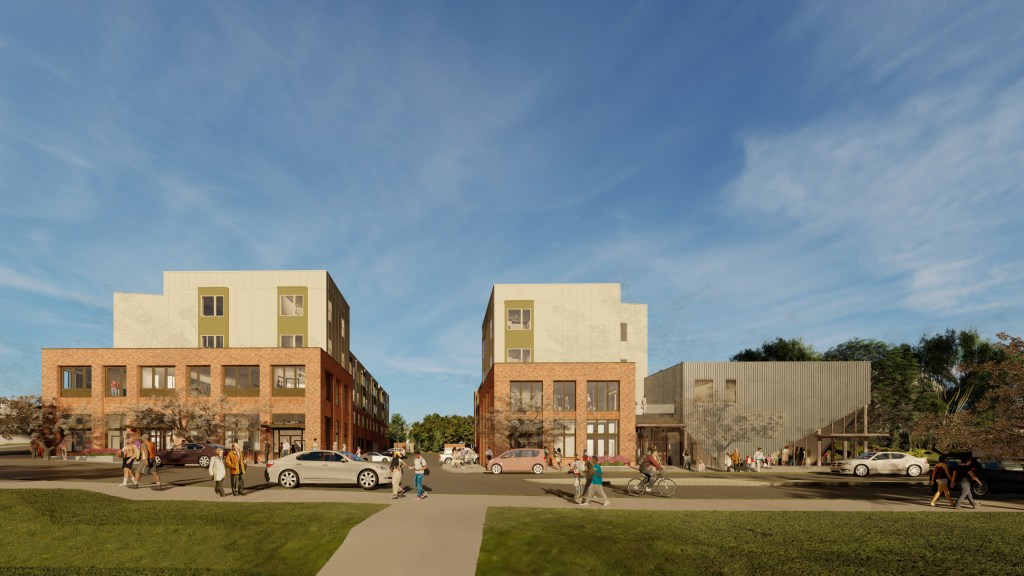
However, the parcels Landmark Properties wants to build The Mark on are not part of those areas, despite being within the Fifeville neighborhood and the Cherry Avenue Small Area Plan. Those properties are zoned for high-density residential buildings that, if they meet all of the development code’s requirements, can be built “by-right,” without input from residents.
Residents have said, over and over again, that that’s not what they want.
“Fifeville is not anti-development,” Sarah Malpass, vice president of the Fifeville Neighborhood Association, told the Board of Architectural Review in March. “Fifeville is anti-displacement. We welcome working with developers who want to work with us on our anti-displacement and affordable housing goals.”
Residents worry that The Mark could re-make Cherry Avenue, in the heart of Fifeville, in the image of the Corner, the student-centered business district across from UVA grounds. Already, chain restaurants are popping up further down West Main St. as housing for UVA students moves closer to Downtown Charlottesville — Potbelly Kitchen sandwich shop, Kung Fu Tea boba tea, Domoishi ramen, Iso Iso Ramen & Boba, Starbucks. These chains are popular in other college towns, and residents feel that they exist to serve UVA students, not the surrounding community.
“A large influx of students into a specific geographic area will, well, make it a place students want to be,” City Councilor Michael Payne said. That’s an economic phenomenon called “agglomeration.”
“Flowing from that, businesses that cater to student preferences will also want to be near there. Student-related businesses quickly become the highest and best commercial uses” for a property, Payne said. That’s called the “amenity effect.”
Payne has stood behind residents of both Fifeville and 10th and Page/Westhaven, sharing their concerns about further displacement and gentrification. For the past few months, he has joined residents in speaking up at public meetings. In his capacity as a city councilor, he has advocated for changing the zoning ordinance in a way that would extend real protections to these neighborhoods and give residents a say on neighborhood-altering construction.
He wants to make those changes quickly, but during an April 20, 2026 work session, the four other councilors said they want more information before making any changes.
“In the context of LV Collective and 7th Street projects, we should expect, if built, that within a few years, both Cherry Ave. and the entirety of West Main Street will look a lot more like the Corner in terms of businesses operating there,” Payne told Charlottesville Tomorrow. That would probably lead to more hotels and properties used as short-term vacation rentals “as investors take advantage of agglomeration and amenity effects to target hotels and rentals for alumni returning for graduation, sports games, etc.”
Some city officials have said during public meetings that The Mark bringing more people into the neighborhood would translate into more customers for local businesses, including the grocery store planned for Cherry Avenue.
Residents argue that at some point, the grocery store would be for students and not the neighborhood.
Study shows what residents already know — Fifeville and Westhaven are vulnerable to gentrification
Additionally, one of the city’s own studies echoes residents’ concerns that these neighborhoods continue to be vulnerable to gentrification pressures.
Parcels in historically Black neighborhoods — including 10th and Page and Fifeville — have some of the lowest average home values throughout the city, according to the Charlottesville Inclusionary Zoning Feasibility Analysis and Zoning Rate of Change Analysis, conducted for the city during the zoning re-write process by RKG Associates Inc.
“This means these parcels are more likely to be purchased for infill/redevelopment into market-rate rental/ownership housing” than other areas of the city, the report concluded. Meaning, it is not likely to be developed into low-cost housing. And yet, that is what many of these neighborhoods’ residents need.
But residents don’t need data and reports to tell them what they already know.
Angela Carr is a member of the Public Housing Association of Residents. She grew up in the Garrett Street area and has family who live across the street from the proposed Fifeville development.
“I feel like every place in Charlottesville that is predominantly Black, literally is being snatched up,” Carr said during a December 2025 Board of Architectural Review meeting.
“Out of all spaces in Charlottesville, Virginia, out of all areas that do need that building, or that could utilize that size of a building, why choose that spot?” Carr asked The Mark architects and developers that night. She didn’t get a response.
Charlottesville Tomorrow reached out to Landmark with that same question.
“We selected this location because it aligns directly with where the City of Charlottesville has planned for this type of development,” Landmark wrote in a statement that a public relations firm sent to Charlottesville Tomorrow via email Wednesday.
Take action
Charlottesville City Council to hear developer’s appeal for proposed luxury student housing in Fifeville
Charlottesville City Council will hear the developer’s appeal on The Mark, a 700-bed luxury student housing development proposed for Fifeville, during its May 4 general business meeting at 6:30 p.m. See the full meeting agenda on the city website.
The meeting is in-person in City Council chambers, located in City Hall, at 605 W. Main St. Those who wish to participate electronically can sign up for the Zoom stream at www.charlottesville.gov/zoom.
There will not be a public hearing on the appeal, but community members can request to speak during the “community matters” session at the beginning of the meeting. There are 16 slots available, half of which are for people who sign up in advance. The mayor will call on people at the meeting to fill the remaining eight slots. Each speaker will have three minutes.Sign up to speak by filling out a form on the city website, or by contacting the Clerk of Council via email or phone at 434-970-3113.
“We’ve been intentional about how the building meets the surrounding neighborhood. Along Delevan Street, the building steps down to just three stories and incorporates setbacks and stepbacks that go well beyond what the City’s new Development Code requires, with similar height and massing reductions designed to fit in with the existing character of the neighborhood and minimize visual impact.”
The company also said that it is contributing more than $4 million into the city’s Affordable Housing Fund, as is required by the city’s inclusionary zoning policy, and will “thoughtfully incorporate into the project two individually protected cottage home structures on the site. We’re committed to Charlottesville and to being a responsible partner in the community.”
Residents, meanwhile, are worried that their voices won’t be heard.
Carr, a Black woman, told the BAR that she thinks these developments are happening in these neighborhoods because people like her aren’t showing up to city meetings to speak up. It’s not because they don’t care, she said. They do care, deeply.
“They don’t believe that if they show up, the BAR is going to listen,” she said.
And why should they believe that, Johnson, Carr and others have said, when it seems like the city hasn’t been listening to them?
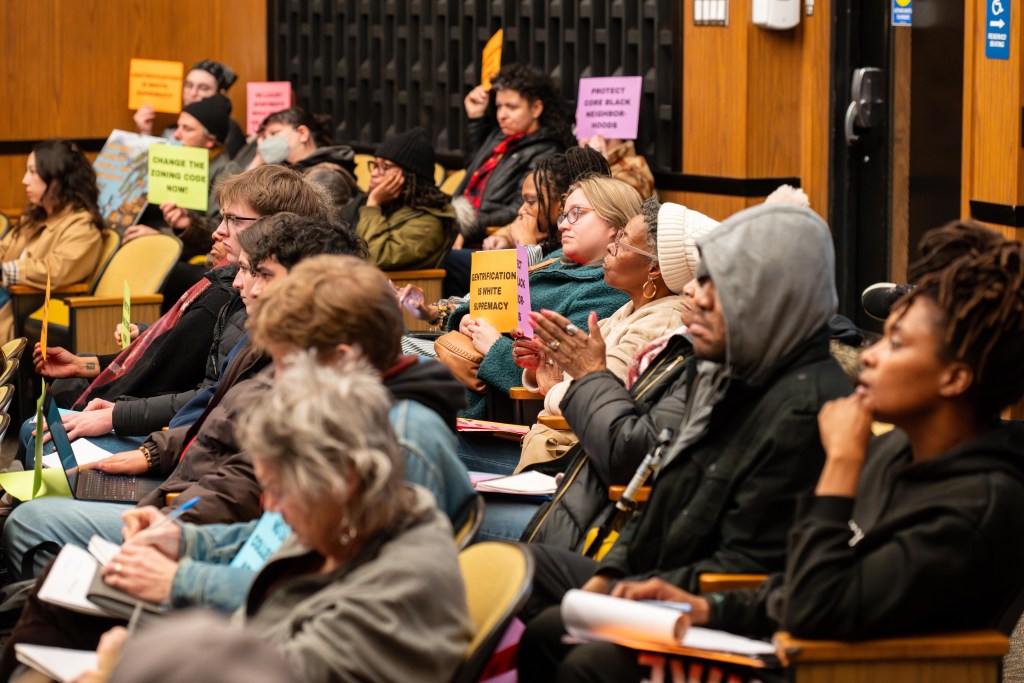
Still, residents have shown up to speak at nearly every opportunity since the student housing projects were proposed, from City Council to Board of Zoning Appeals meetings.
They hold up signs that say “No LV Collective No Mark,” “Change the Zoning Code Now!,” “Protect Core Black Neighborhoods,” “Don’t Erase Westhaven” and “Stop Gentrifying Fifeville.”
All five city councilors have told Charlottesville Tomorrow that they’ve heard residents’ concerns about the projects proposed for Fifeville and 10th and Page. A few said they’ve heard some support for the buildings as well, mostly via email.
In December, the Board of Architectural Review determined that The Mark was not consistent with the character of the neighborhood and did not issue a certificate of appropriateness for the project, meaning it could not move forward to the next phase.
The developer appealed that decision to City Council, who will hear the appeal at its Monday, May 4 meeting at 6:30 p.m. There will not be a public hearing on the appeal. However, community members can request to speak during one of 16 “community matters” spots at the beginning of the meeting. .
Residents hope that their voices — and their years of advocacy — will be taken into consideration just as much as the revenue the city stands to make from these developments and others.
“For the life of me, I don’t want to believe what people have been saying,” Johnson said with a sigh. “I don’t really want to believe that this city doesn’t care or give a damn about indigent people, that they just care about the money. I don’t want to believe it, but that’s what it looks like.”
Editor’s note: This article was updated Thursday, May 7, 2026 to correct the proposed height of the LV Collective building.