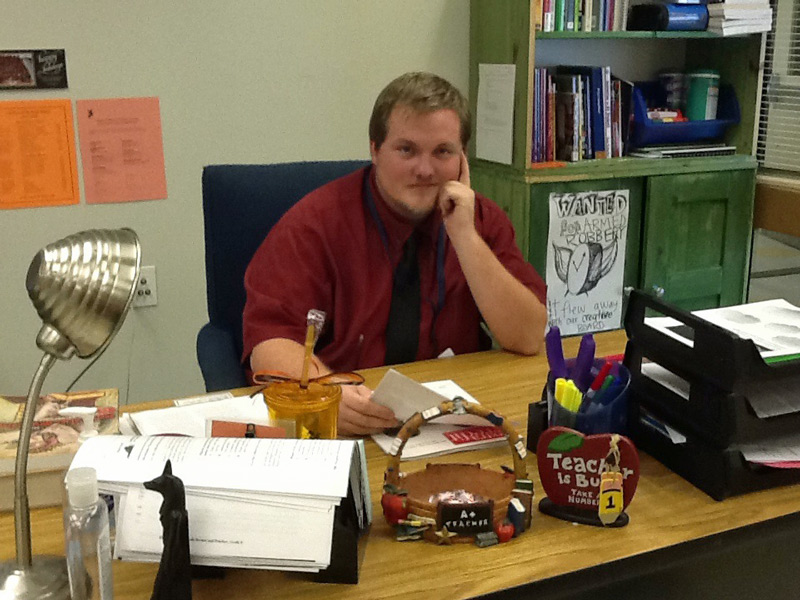
Mark Cubbage, History Teacher, Charlottesville High School
What has your classroom experience taught you that studying education could not have prepared you for?
It was senior year and I was just about to start student teaching along with my peers. We would gather in Dr. David Coffman’s education capstone class feeling prepared, well educated, and ready to take on this thing called teaching. He would tell us Bridgewater College seniors time and time again that what we learned in college would be so small to what our student teaching and first year of teaching experience would teach us. How right he was!
It was senior year and I was just about to start student teaching along with my peers. We would gather in Dr. David Coffman’s education capstone class feeling prepared, well educated, and ready to take on this thing called teaching. He would tell us Bridgewater College seniors time and time again that what we learned in college would be so small to what our student teaching and first year of teaching experience would teach us. How right he was!
The number one lesson I learned, and am learning, is that education is not a journey. There is no “end result.” It’s more of a walk, a process, which will look different for each and every person. Students enter the classroom from varied backgrounds and experiences, with different educational gifts and challenges. My role isn’t to get them to meet me, but to meet them where they are and walk with them. That is easier said than done. It’s not about strategy, it’s about relationships.
What teaching adjustments do you plan to make moving forward?
Since the root of all teaching is based in the relationships we make with our students, I intend to show students that they matter beyond a test score and by attending more of their games, plays, concerts, special community events, etc. I plan to inquire more about their interests and abilities and less about forcing them to conform to mine, the state’s, or any other agency that says “fit in my box.” I also plan to promote more freedom of thought and advancement of thoughts through reflection and discussion.
Since the root of all teaching is based in the relationships we make with our students, I intend to show students that they matter beyond a test score and by attending more of their games, plays, concerts, special community events, etc. I plan to inquire more about their interests and abilities and less about forcing them to conform to mine, the state’s, or any other agency that says “fit in my box.” I also plan to promote more freedom of thought and advancement of thoughts through reflection and discussion.
In your eyes, what is the biggest challenge facing education currently?
How can you convince a student that they are a gift, that they matter, and that they can create within this world great things when they are defined by a standardized test score? How can their creativity, innovations, and varied thoughts be embraced when standardized testing suffocates anything but rote learning? The challenge isn’t the test, but our apathy to do anything about it. The challenge is finding the motivation and courage to stand up and say, “I beg to differ,” to stand up and represent our students, in a world that does not often embrace change.
How can you convince a student that they are a gift, that they matter, and that they can create within this world great things when they are defined by a standardized test score? How can their creativity, innovations, and varied thoughts be embraced when standardized testing suffocates anything but rote learning? The challenge isn’t the test, but our apathy to do anything about it. The challenge is finding the motivation and courage to stand up and say, “I beg to differ,” to stand up and represent our students, in a world that does not often embrace change.
For the next few weeks, to gain insight on what important lessons our young teachers learn early in their careers, Charlottesville Tomorrow’s Meet Your Educator profiles will feature first- and second-year teachers.