


In early 2026, life was going well for Nicholas Lohr. He had a job he loved, working in his hometown with people he had known his whole life. With the financial stability from his work, he and his wife of six years were starting to build their life together, with a home of their own, a young daughter, and another baby on the way.
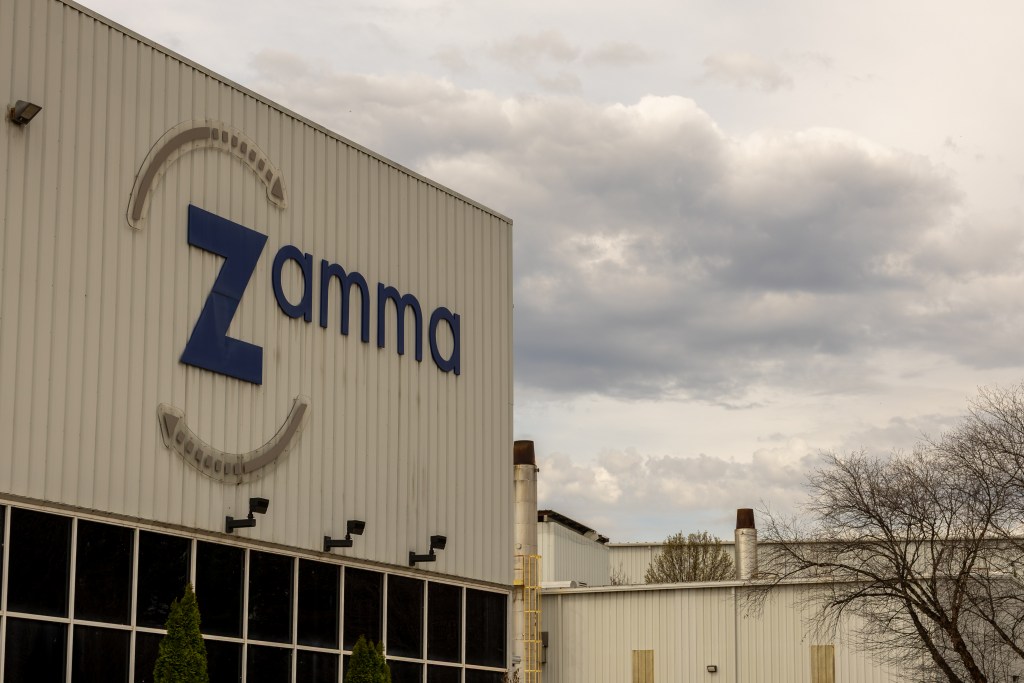
That all changed on Monday, March 2, when Orange-based molding manufacturer Zamma Corporation closed without warning, leaving Lohr and approximately 130 of his fellow coworkers suddenly jobless.
Zamma Corporation was originally founded in 1970, manufacturing pre-finished molding for home construction and renovation. In the decades that followed, the company became known for its “Cap-A-Tread” products, a patented vinyl “stair renewal system” that could be installed with less time and expense than traditional hardwood or carpet stair replacements.
In the years leading up to the closure, Zamma’s plant on Litchfield Drive was one of the county’s largest overall employers, according to data from Orange County’s yearly comprehensive financial reports. At the time of Orange County Department of Economic Development’s most recent annual report for 2024, Zamma Corporation was one of just a dozen businesses and organizations in the county that employed more than 100 people, and a Virginia Works Local Area Profile report based on data from the second quarter of 2025 lists Zamma Corporation as Orange County’s 12th largest employer.
Several former employees told Charlottesville Tomorrow that they were instructed to attend a companywide meeting in Zamma’s warehouse at 8:30 a.m. on March 2. Most employees only learned of the meeting via a mass email at approximately 8 a.m. the same day; a few, like Lohr, who weren’t normally at work in the early morning, were told several days in advance to attend the meeting, but not what it would be about.
By Monday, Lohr, who worked as a systems administrator in the IT department, suspected that something was amiss, as he had noticed employees’ access to several systems being revoked, including his own.
At the warehouse, CEO Mike Shelton informed employees that the company was shutting down, effective immediately, and instructed employees to see Zamma’s human resources director for unemployment information.
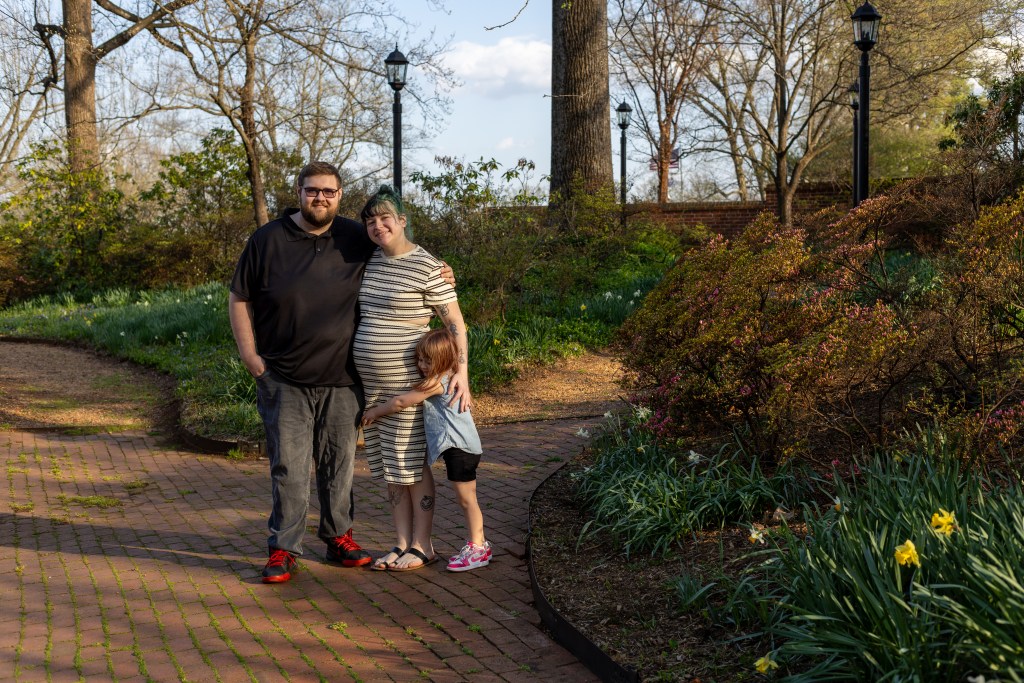
It was a difficult blow for Lohr, who had grown up in Orange and said he felt at home with his colleagues. At lunchtime, he would often stop by his parents’ house just a few minutes down the road from Zamma.
“I loved my job. I loved my coworkers. A lot of people that worked there are people that I’ve been around for a good portion of my life,” Lohr said, adding that he had initially met some of his coworkers as a teenager working at the former Dairy Korner Restaurant at the intersection of routes 15 and 20, which was owned by his family.
Lohr spent the minutes immediately following the announcement hugging and saying goodbye to his coworkers. Others’ reactions to the news differed.
“There was definitely a variety of responses,” Lohr said. “There were a few people who were angry, you know. One of them mentioned out loud, like, why weren’t we given any notice about this so that we could have prepared?”
Zamma’s employees weren’t the only ones who were taken by surprise. In an email written on behalf of the county in cooperation with Board of Supervisors Chair J. Bryan Nicol, Orange County Economic Development Director Julie Perry said that county officials were not previously aware of any business issues with the company, and “did not receive the normal and required WARN (Worker Adjustment and Retraining Notification) from Zamma.”
The WARN Act is a federal regulation that protects workers by requiring employers to provide a 60-day notice to public officials and employees in the event of a closure or mass layoffs. The notifications also help state and local employment organizations like Virginia’s Rapid Response program assist displaced workers efficiently in order to minimize the impact of job losses on employees, their families and communities.
The act applies to companies with 100 or more full-time employees or those whose employees, both full-time and part-time, collectively complete at least 4,000 hours of work per week. Zamma appears to fall within this category, although the WARN Act strongly encourages even businesses who don’t meet the criteria to provide employees and local governing boards with as much notice as possible.
Under the act, “Employees, their representatives and units of local government may initiate civil actions against employers believed to be in violation” by failing to give advance notice. A few exemptions exist, including those for natural disasters, and for “faltering businesses” and “unforeseeable business circumstances,” although the latter two must fall within the extremely narrow guidelines included in the act.
According to the U.S. Department of Labor, “An employer that violates the WARN Act notice requirement is liable to each affected employee for an amount equal to back pay and benefits for the period of violation up to 60 days,” which must be litigated by employees or a union through the federal court system. Additional repercussions include a civil penalty of up to $500 per day for failing to notify local government.
According to Perry, county officials learned of the closure on the same day that employees were let go, finding out from Virginia Career Works, a workforce development agency that provides resources to connect job seekers and employers.
Sarah Morton, Virginia Career Works Piedmont Region Executive Director, and Malissa Short, Virginia Rapid Response Program Manager, confirmed that Rapid Response did not receive a WARN Act notice from Zamma Corporation, and that they also had learned of the closure on March 2 after a former employee visited Virginia Career Works’ Culpeper Center seeking assistance.
In an email, Short wrote that approximately 130 total employees were impacted by the shutdown.
Perry said that according to current labor force data, that number accounts for about 10% of Orange County’s total manufacturing workforce.
Despite the significant upset to the local economy, Zamma’s corporate leadership has been silent since the closure. As of Monday, April 13 — more than a month after employees were sent home — Zamma had not made any public announcement, and Charlotteville Tomorrow’s repeated attempts to reach CEO Michael Shelton and CFO Becca Feild by phone and email went unanswered. Feild also declined to meet with a reporter during an in-person visit to Zamma Corporation in early March.
Several employees named Jeff Juzaitis as the company’s president at the time of the closure. Although his name does not appear on the company’s most recent annual report filed with the State Corporation Commission, Juzaitis is listed as president on a prior report from January 2025. Charlottesville Tomorrow reached out to Juzaitis for comment but did not receive a response.
The silence from Zamma leadership stands in contrast to how Orange County’s last major manufacturing job loss was handled. In 2025, when cabinet manufacturer American Woodmark closed its Orange location, the company notified local officials in January for the late March closure in compliance with the WARN Act. American Woodmark HR Director Eric Miller also publicly provided details in advance of the plant’s closure, including in a Jan. 28, 2025, report by The Rapidan Register.
The lack of communication from the company has left employees struggling to piece together what actually happened to Zamma, how long those in leadership knew the company was at risk of closing, or how they could have handled the shutdown differently.
In the years since former owners Peter and Liz Spielman sold the company in 2017, public information about Zamma’s ownership and leadership structure has become increasingly sparse. The company’s profile on the Virginia State Corporation Commission website lists Shelton and Feild along with two individuals affiliated with Prudential’s asset management arm PGIM Investments, Stephen F. Szejner and Mark A Hoffmeister.
A fifth individual listed on the State Corporation Commission website is Brad Davis, a managing partner at Ridge Capital Partners, a Middleburg, Va.-based private equity firm that specializes in buyouts and debt restructuring for manufacturing and distribution companies. Zamma Corporation is listed in Ridge Capital Partners’ portfolio on their website.
Sjezner and Hoffmeister did not respond to requests for comment. During a brief phone call on Thursday, April 9, Davis initially said he was “not very much involved” with Zamma Corporation. Upon further inquiry, Davis only confirmed he was a director for Zamma and said of Ridge Capital Partners, “We were an investor. We closed the company down,” but declined to comment further. Davis originally offered to connect Charlottesville Tomorrow with Shelton, but neither Davis nor Shelton responded to a follow-up request.
Several sources who asked to remain anonymous due to potential professional and financial repercussions suggested that Zamma had been in significant financial trouble for years. Two of those sources, including one familiar with the company’s finances, said that Zamma had been forced to close after failing to come to an agreement with Fifth Third Bank over its debt.
Fifth Third Bank Senior Public Relations Manager Adrienne Gutbier confirmed that Zamma Corporation was a client, but could not provide further details due to privacy restrictions.
Those anonymous sources also noted a number of unforeseen events that had put an additional strain on the company in recent months. They said that tariffs on raw materials and rising fuel costs had lowered profit margins and made some of Zamma’s contracts with big-box stores such as Lowe’s unsustainable. They also reported that a major piece of machinery broke down last fall, costing the company hundreds of thousands of dollars in repairs and creating a backlog of orders.
While Zamma’s shutdown has certainly been impactful, its story is unfortunately not a unique one, as manufacturing has been on the decline in recent years in Virginia and across the country. According to Virginia Works, manufacturing experienced the second largest decline in jobs out of all industries in the state from June 2024 to June 2025. U.S. Bureau of Labor Statistics data shows a further decline in Virginia manufacturing jobs in the second half of 2025, from 239,000 in July to 235,500 in December.
Despite those statistics and the shuttering of two major manufacturing businesses in the county in less than a year, Perry said that county officials see Zamma’s shutdown as “an isolated event pertaining to that particular company and not a broader trend in Orange County.”
She noted gains such as defense technology company L3Harris investing more than $41 million in 2024 to expand its Orange County operations, and strong performances from indoor agriculture businesses like Battlefield Farms and American Color, as positive developments in Orange County’s overall economic outlook.
Regardless of why Zamma ultimately closed, what is known is that the abrupt shutdown has left Lohr and many of his colleagues struggling to find new work in a challenging job market.
For Lohr, losing his position at Zamma presented some particular difficulties, as his wife, Elizabeth, was approximately three months pregnant at the time of the closure. The health insurance and income provided by Nicholas’ job at Zamma had given Elizabeth the flexibility to take on a less lucrative but meaningful job working at the local free clinic.
With Nicholas suddenly jobless, Elizabeth had to make the difficult decision to leave her job for another position that offered health benefits, working the night shift at a nursing facility.
That’s given the Lohr family some leeway, but they’re still working out other important details, like figuring out a new childcare schedule and how to pay for healthcare until Elizabeth’s new insurance plan kicks in. Right now, the couple is keeping their fingers crossed that they won’t have any unexpected doctor’s visits before then, and that Nicholas will be able to secure a job soon.
“It’s definitely been a struggle,” Nicholas said during a follow-up interview in late March. “I think I’ve gotten over the initial hurt of being laid off, but then it’s kind of turned into, ‘How are we going to do XYZ? How are we going to make the house payment?’ That sort of thing. I’m okay for the house payment that comes out in April, but I don’t know about May.”
Other former Zamma employees reported their own difficulties caused by the abrupt shutdown. Sam Green worked for the company for nearly two decades, performing a wide range of duties from sales to setting up Cap-A-Tread products at new store locations. Green said that he was approaching retirement before the closure, but will now have to change his plans and look for work since he “can’t afford to do that.”
“They just shut us off — no salary, no severance, no nothing,” said Green.
Green was one of several employees who said they were surprised to find out Zamma was closing after what had seemed like a positive trend in sales in early 2026.
“At the end, I felt like we were kind of coming out of a hole,” he said. “We were in probably 500 Lowe’s stores, and the rumor was that we were supposed to get back into 300 or 400 of Home Depot, so you’re really pumped for that.”
Green isn’t the only one who is planning to put off retirement due to the shutdown. One employee who asked not to be named said that she had recently bought a house with the expectation that her income from Zamma Corporation would cover renovation expenses. Now, she’s spending her days submitting applications through Indeed, a website that helps users search and apply for jobs, without any luck thus far.
“I never thought I’d have to do another resumé, you know?” she said.
She added that while she’s more worried about some of her colleagues who were in worse financial predicaments, the job loss has put a significant strain on her emergency savings.
Take action
Find a job through Orange County Workforce Services
Orange County Workforce Services is available to help community members in search of employment, including those displaced by the shutdown of Zamma Corporation. Mobile resource specialists are available every week to assist job seekers and prospective employers at each of the Orange County Public Library branches from 8:30 a.m. to 4 p.m. on the following days:
Tuesday: Orange County Main Library, 146 N. Madison Road, Orange
Wednesday: Gordonsville Library, 319 N. Main St., Gordonsville
Thursday: Wilderness Library, 6421 Flat Run Road, Locust Grove
Services are free of charge. For more information, call (540) 212-4570, option 3, or visit the Orange County Economic Development website.
“Everybody talks about having a six-month rock. Well, I’m not at a six-month rock anymore,” she said.
Both Perry and Morton said that county officials and Virginia Career Works are currently working to connect displaced employees with opportunities in the region. Perry encouraged those who have lost their jobs due to the Zamma Corporation closure to reach out to Orange County Workforce Services, a partnership between the Virginia Career Works – Piedmont Region and the county’s economic development department and public library system.
Morton added that displaced workers are also welcome to utilize Virginia Career Works’ other locations, including the Culpeper Center at 210 E. Stevens St., Suite 200, or the Albemarle Center, located at 1600 5th St. Ext., Charlottesville. Specialists at any of the locations can provide those in need of work with resources including interview preparation, career switching and job match services for those with an existing skill set such as manufacturing.
“As a regional workforce board, we have relationships with many other businesses and organizations, so oftentimes, when one company shuts down, another company will find skills in those employees very translatable,” Morton said.