
Heat waves like the one we’re all experiencing today in central Virginia are considered extreme weather events by the National Weather Service. This heat is relentless, overwhelming — and downright dangerous.
If you have to be out today — or you don’t have easy access to air conditioning — reporter Erin O’Hare has compiled a list of the region’s cooling centers and some safety tips:
It’s hot. Here’s where you can go to cool off
Every time we face a stretch of severe weather like this, I tend to revisit some of our past extremes and think about what they might tell us about what’s ahead.
Today, I want to bring you along for that look back.

From May 2025: Rescue crews locate body of missing Albemarle boy after flooding in area
It was less than two months ago when severe flooding from a spring storm claimed the life of a boy in Albemarle County. Flooding like this is common in the spring and fall, and climate scientists say it’ll keep getting worse in the coming years. More on that in a bit.

From January 2025: This is how some of Charlottesville’s unhoused folks are living through the Arctic blast
Six months ago, central Virginia was in the grips of an Arctic blast that blanketed the area in ice and snow — and dropped temperatures to unusual lows.
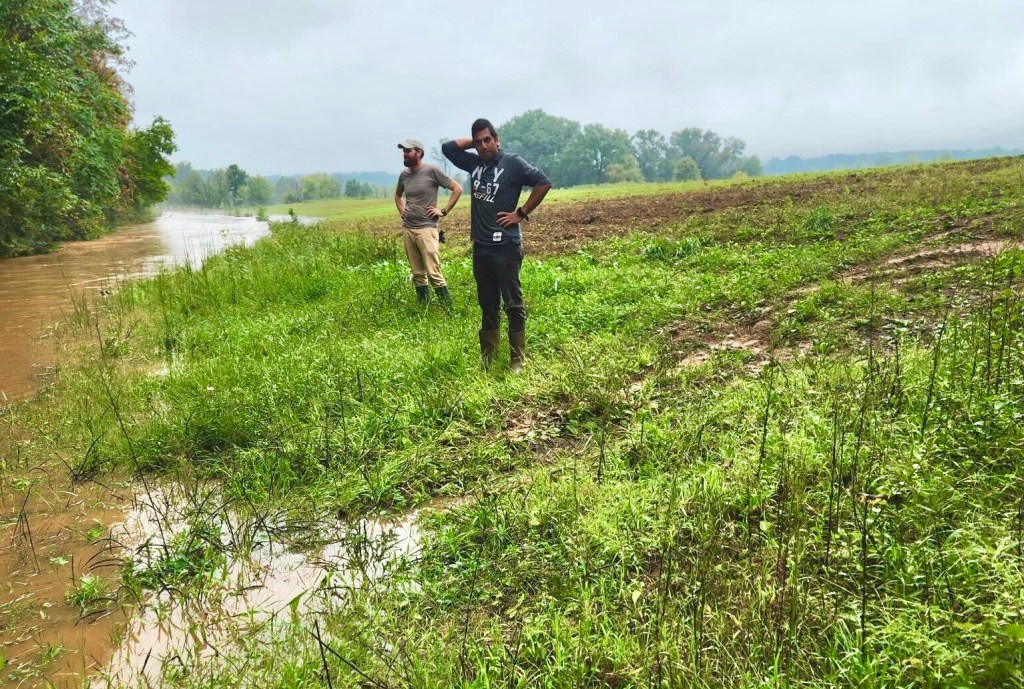
From October 2024: As Helene passes, central Virginia assesses the damage
Nine months ago, we endured yet another flood. This time, it was remnants of Hurricane Helene that came up from the Gulf of Mexico. Central Virginia wasn’t hit as hard as many of our neighbors to the south — but the water here still wiped out crops, roads, and even entire highways.

From June 2024: We know we’re stating the obvious here, but… it’s hot
And, almost exactly one year ago this week, we were experiencing a heat wave.
These kinds of weather events are not new to central Virginia. But, what is changing about them is their frequency — and severity.
And this is where my mind often turns during weather like this: To what’s ahead.
This afternoon, I read through a few reports from climate scientists at universities and government agencies that lay out the predictions in stark detail.
The Virginia Cooperative Extension, a university-run agricultural education service, put out this report detailing climate change predictions for central Virginia in 2021. More recently, in 2023, the federal government published The Fifth National Climate Assessment, a sweeping report on how climate change is affecting communities in the United States. (If you’d like to read a summary of what the report said about our region, Virginia Public Media wrote up a good one you can access here.)
I don’t have space in this newsletter to get into all the details from these thorough (and valuable) reports. But here’s a very basic rundown of some of what they predict is coming to our communities in central Virginia:
- Summers will be hot, and they’ll keep getting hotter. Some models predict long and intense periods of drought that communities will need to brace for.
- On the flip side, scientists predict both fall and spring will see more frequent — and intense — flooding events as storms during these seasons become more severe.
- Winters will also get warmer. Though, that doesn’t mean we won’t experience occasional freezing temperatures from time to time.
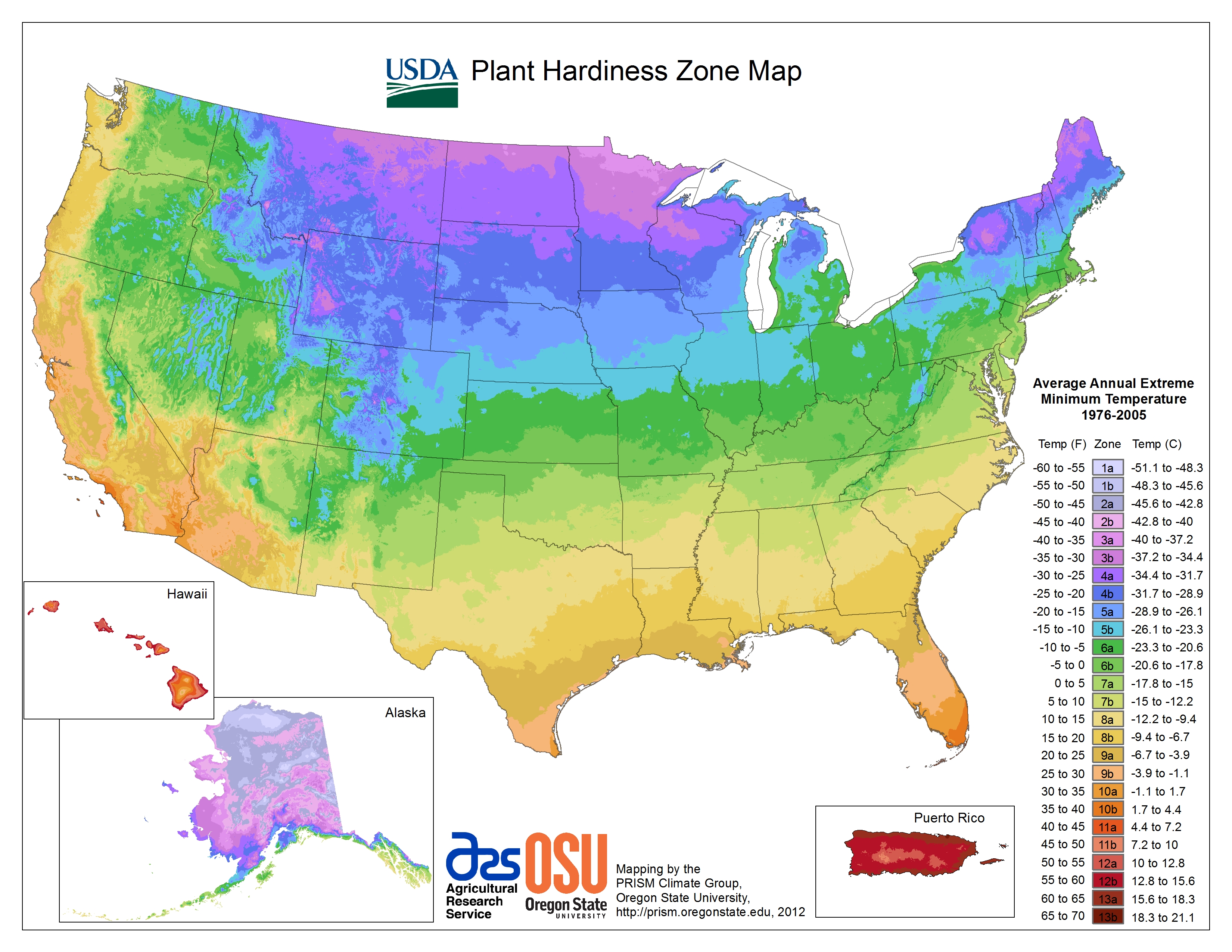
The shift is already happening. According to the U.S. Department of Agriculture’s most recent Plant Hardiness Map published in 2023, much of central Virginia has officially moved into a warmer growing zone since the agency’s prior map, published in 2012.
Governments are beginning to respond. Locally, Albemarle County has adopted emissions targets and a Climate Action Plan. Charlottesville also has a Climate Action Plan, and reports a notable drop in local greenhouse gas emissions. Both localities are also investing in efficiency programs, public education, and early resilience planning.
I think about this work on days like today, and what it means to plan for an uncertain future. It’s a topic we’ll continue reporting on as the seasons progress.
But for now, I hope you all stay safe in the heat,
Jessie Higgins, Democracy Editor

Event sponsored by