

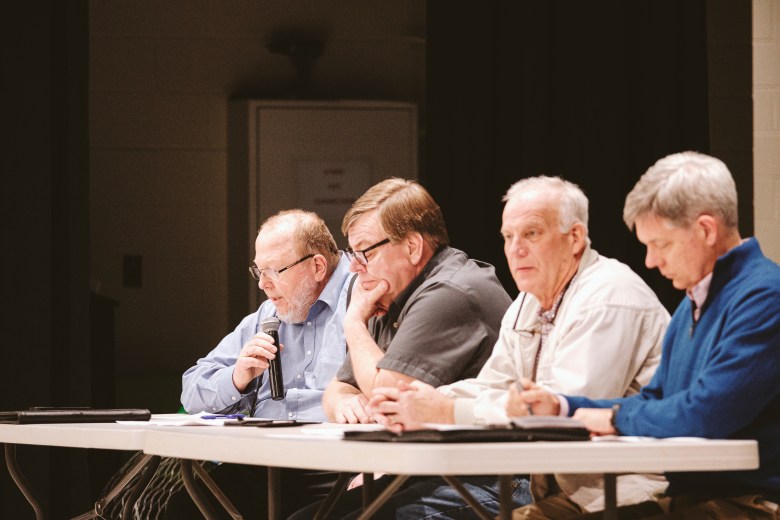
The Board of the Rapidan Service Authority (RSA), the water and sewer provider for Orange and Madison counties, voted to increase rates for customers.
Residents are already seeing their bills go up — some more than others.
After months of discussions, a rate study, and four required public hearings, the RSA Board voted during its February and March meetings to increase sewer and water rates to cover rising operational costs and fund infrastructure improvements, according to RSA.
Madison residents saw their first increase on the bill due March 20, while everyone else — Route 15, Route 20, and the Wilderness service areas — saw higher rates reflected in their most recent bill due April 21, according to the RSA website.
The timing difference is because Madison’s public hearing took place as planned in January, while hearings for the other three service areas were postponed to February because of inclement weather.
This also affected when the Board voted on the rate increase — for Madison, the vote took place during the February 20 meeting, while for the other areas, the decision was made at the March 20 meeting.
As a result of the votes, RSA customers will see gradual rate increases every year until 2029.
Lake of the Woods, a subdivision in Locust Grove in Orange County, is going to see additional increases, as their rather unique 13 vacuum sewer pump stations were found to be outdated and in need of replacement, according to an engineering study shared by RSA.
Because of this, Lake of the Woods residents will see a monthly “LOW Vac Sewer Upgrade Fee” of $23.50 added to their bills to fund upgrades to the sewer pump stations. Additionally, their monthly sewer collection system maintenance fee will increase from $7 to $10.
Due to these increases, Lake of the Woods residents could see monthly bills increase by more than 60%.
RSA has published a bill calculator on its website, allowing residents to check how their costs have changed based on their neighborhood and water and sewer usage.
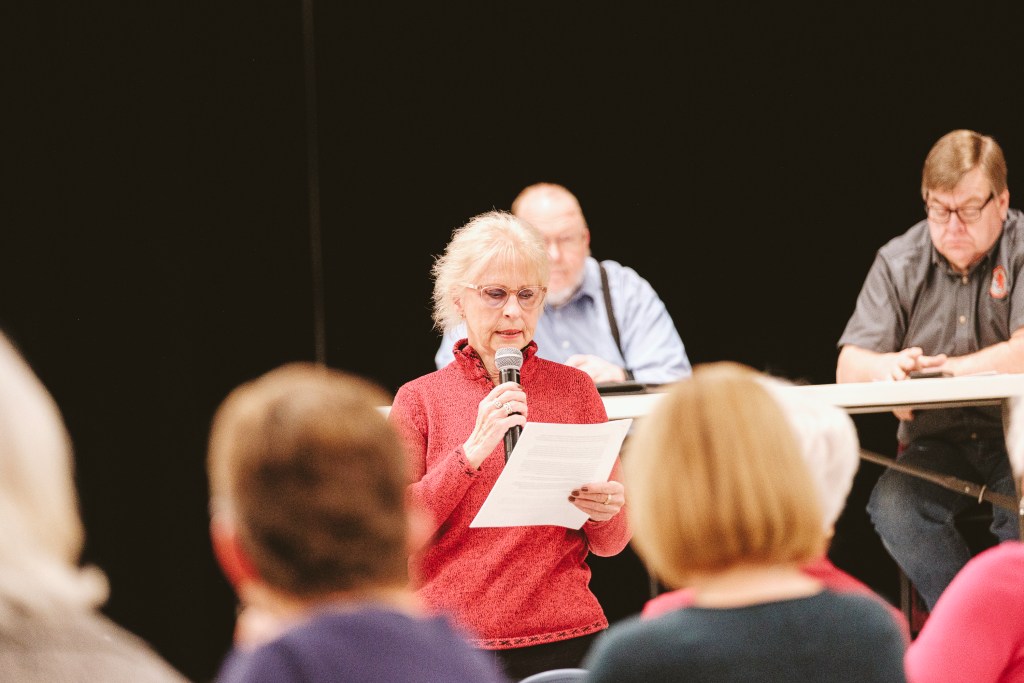
During one of the public hearings, residents expressed their frustration with the proposed increases. Between the August 2024 water crisis — which left Locust Grove without safe water for almost a week due to a “catastrophic” water pump failure — and the Virginia Health Department’s investigation accusing RSA of failing to recognize the issue sooner, trust in RSA was low among residents.
“We, the people of Orange County, Virginia, have — for a long time — been cooking, drinking, and washing our clothes in contaminated water. This is not the customer’s fault. This is unacceptable,” said Lake of the Woods resident Barbara Constantino during the Feb. 6, 2025, public hearing.
RSA General Manager Tim Clemons explained that the rate increases will help cover rising operational costs and fund infrastructure improvements, but they won’t be enough to fully meet RSA’s financial needs for the planned projects.
For example, the Locust Grove sewer pump replacement project is expected to cost $23 million, while the new $23.50 fee will generate just over $1 million per year.
“We will be able to make debt service payments with the rate increases, but that will not raise enough money to pay cash for a project,” he told Charlottesville Tomorrow.
“These rate increases will help pay for engineering, design services, construction, and then the debt service to repay however much we borrow. If we’re fortunate enough to come up with any kind of grant money or low-interest loans, or if, for some reason, the projects were to come in less expensive than we think — which is not likely — then, once debt service was completed, we we could look at reducing that [fee], going away with it,” Clemons said.
RSA also needs additional funding beyond the rate increases for water treatment improvements.
One major planned upgrade — the addition of a granular activated carbon (GAC) treatment process, commonly used to improve water quality by removing unpleasant taste and odor — is expected to cost RSA about $40 million. The project also requires the purchase of new land to house the system.
Experts told Charlottesville Tomorrow that this treatment process could have helped mitigate the water crisis in August 2024 and related contamination issues.
Additionally, GAC treatment can help lower haloacetic acid levels in the water — a byproduct of excessive sanitation — to ensure compliance with EPA drinking water standards, Clemons said in the past.
Currently, RSA is seeking funding for the project, either through a Virginia Health Department grant or a loan from the Virginia’s Drinking Water State Revolving Fund, Clemons said.
Both the Locust Grove pump replacement and the GAC treatment installation are expected to take several years to complete.
RSA is preparing to issue a request for engineering services proposals, a necessary step to complete the designs for the Locust Grove pump replacement and rehabilitation. Construction will follow once the designs are finalized.
“We advise everybody that this will likely take about five years to complete,” Clemons said.
RSA is currently evaluating multiple properties for the new system and hopes to secure a site this summer. After selecting a location, engineers will assess the land, a design phase will take about a year, and construction will follow — provided RSA can secure funding.
“We want to move these forward as expeditiously and quickly as possible. Our goal is to … be able to get them accomplished as soon as we can, and yet not waste our rate payers’ money,” said Clemons.
“They’re the ones ultimately paying for this, so we want to make sure that, when it’s all said and done, they get a quality product for what they’re paying for.”