

Editor’s note: This article was produced by Charlottesville Tomorrow with support from the Pulitzer Center.
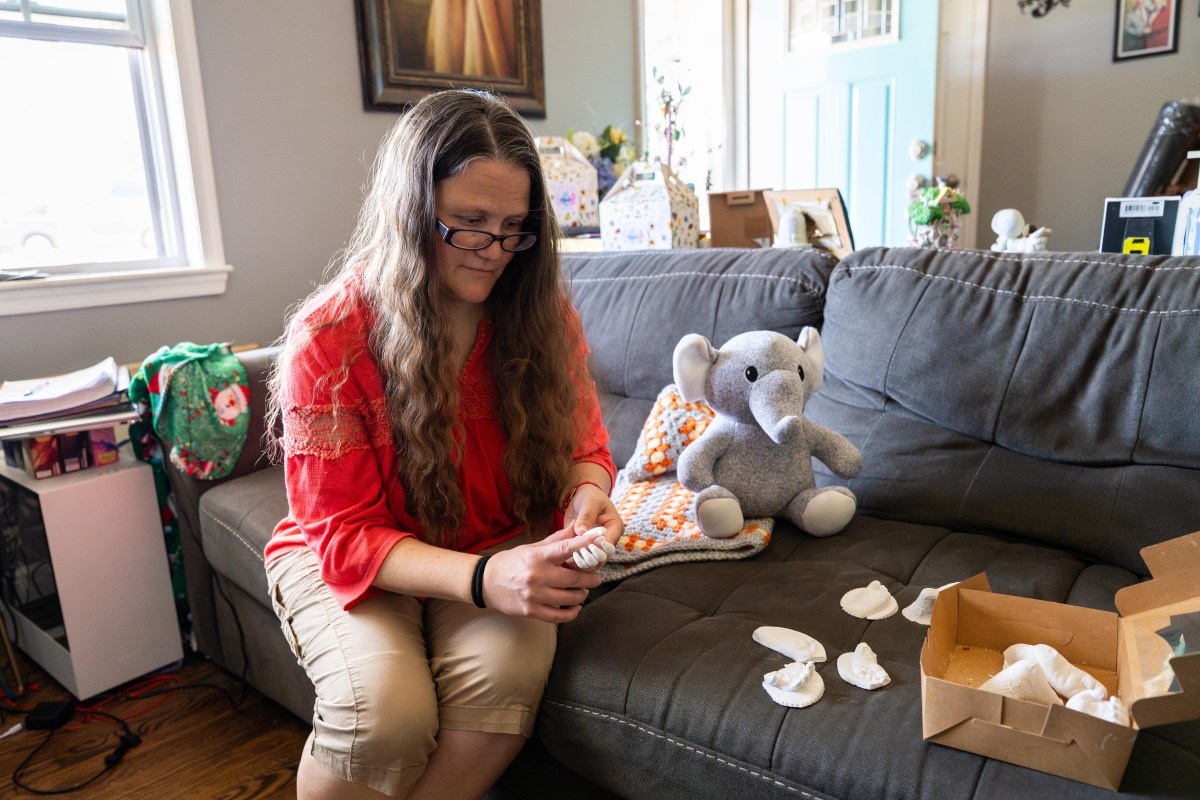
Tami Jaynes woke up in the middle of the night on Jan. 6. It was 3 a.m., and her husband was peacefully asleep next to her. Nothing was out of the ordinary. Yet, something felt wrong.
She laid her palms on her belly. When was the last time she felt her baby kick? She couldn’t quite remember.
It was her eighth child and so far the pregnancy, almost full term, had been going smoothly. With her past pregnancies, there were times when she rushed to a doctor whenever something felt wrong, but it was always nothing.
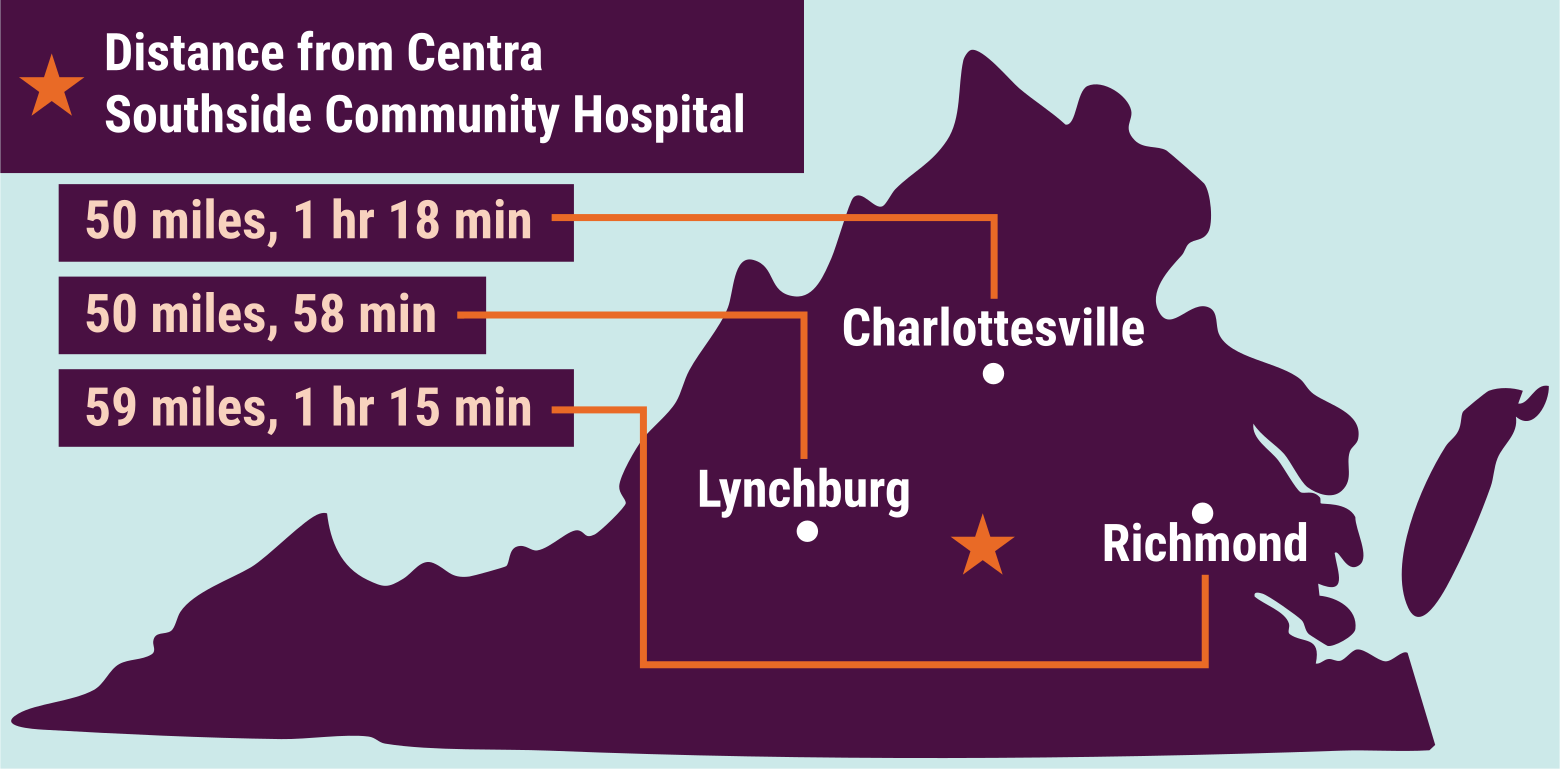
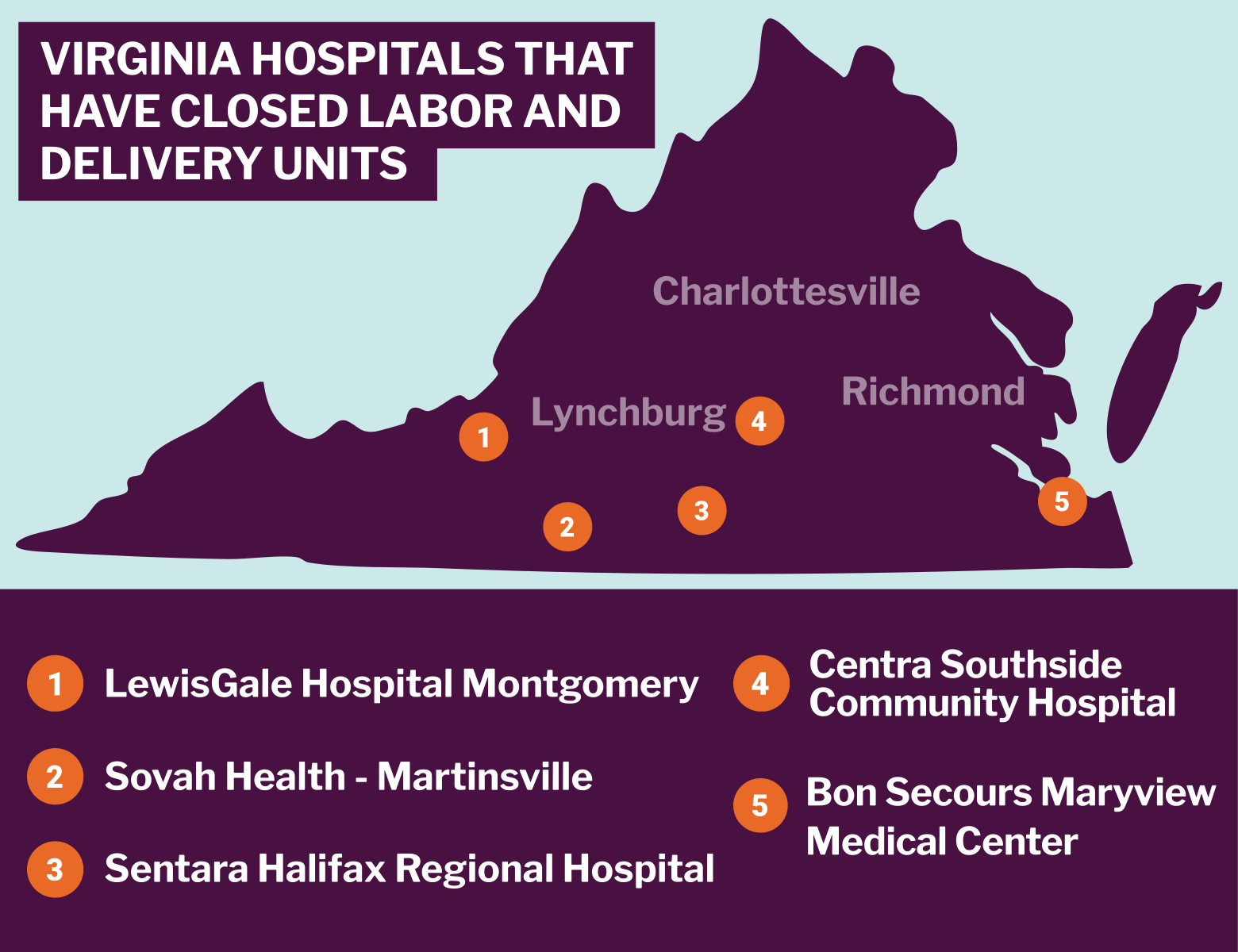
She considered going to the emergency room, but Centra Southside Community Hospital in Farmville, her regular provider just a half an hour away, had closed its obstetric services just weeks earlier on Dec. 19, 2025, leaving Jaynes and other expectant mothers to find care elsewhere.
Many had chosen to go to Lynchburg, Richmond, or Charlottesville, sometimes more than an hour-long drive away. But Jaynes switched to Central Virginia Health Services (CVHS), a nonprofit healthcare organization in Farmville. Its services were limited, but close to home. It wasn’t open until the morning, so Jaynes would have to go to Lynchburg. That was an hour-long drive just one way in the middle of the night.
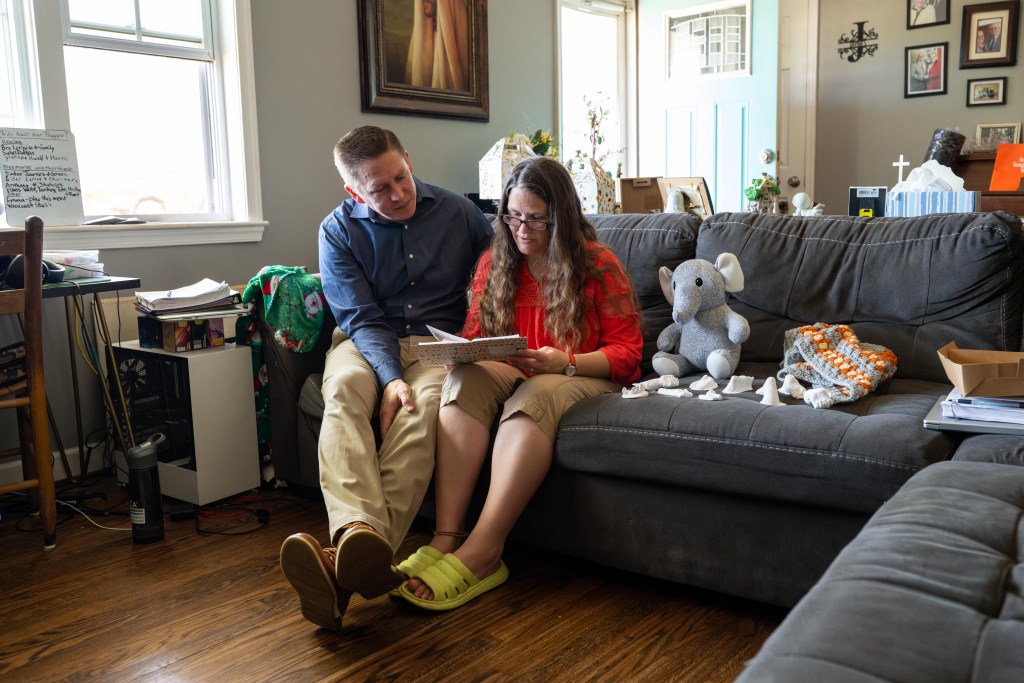
Tami and her husband, Adam, keep an album of photos to remember their son Jacob, who was stillborn. It includes photos from the hospital in which the family members say goodbye to Jacob and photos of his funeral. Credit: Kori Price/Charlottesville Tomorrow 
Credit: Kori Price/Charlottesville Tomorrow 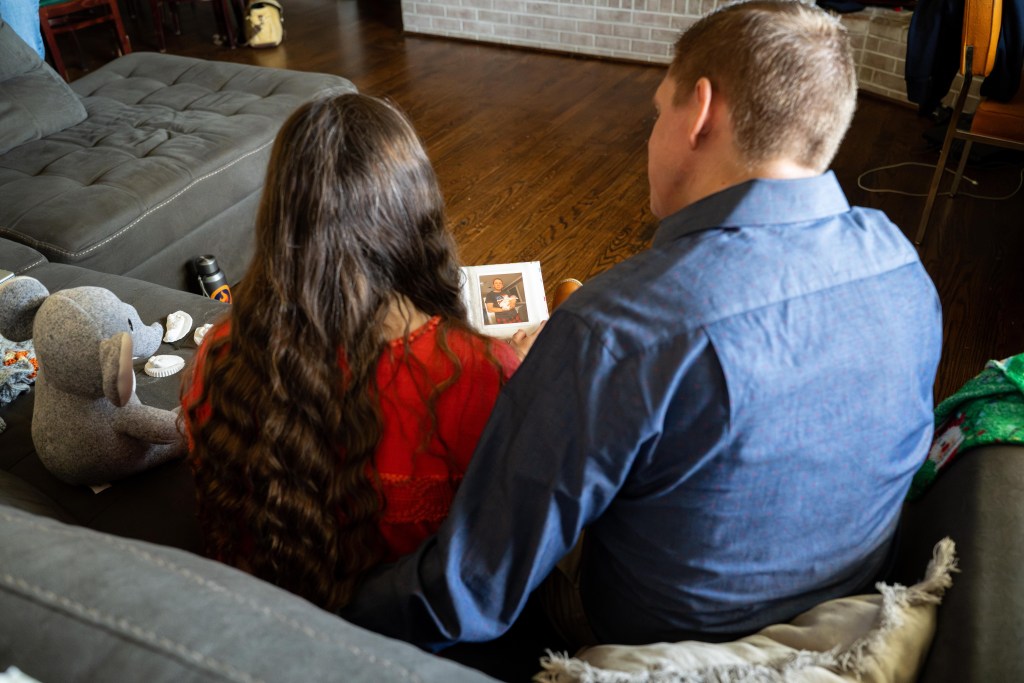
Credit: Kori Price/Charlottesville Tomorrow 
Credit: Kori Price/Charlottesville Tomorrow 
Credit: Kori Price/Charlottesville Tomorrow 
Credit: Kori Price/Charlottesville Tomorrow 
Credit: Kori Price/Charlottesville Tomorrow 
Credit: Kori Price/Charlottesville Tomorrow
So, Jaynes decided to go to CVHS in the morning and consult its nurses instead — she already had an appointment scheduled for 8 a.m. After all, the situation didn’t feel any more concerning than all the other times doctors told her not to worry.
But in the morning it was already too late. The ultrasound showed no heartbeat. Later that day in Lynchburg, Jaynes delivered her eighth child, Jacob. He was dead.
The period that followed was a blur. Her husband barely spoke for two weeks. Her youngest children realized that death could come after anyone at any point. Jaynes said she found peace in her faith, but she was still grieving — for her lost child, and for the effect the death had on her other children.
“Last week, I had a day where I had so many emotions that my whole body ached,” Jaynes said in April.
It’s impossible to know what could have been.
When a rural area like Farmville and its surroundings loses its obstetric services, the effects might develop slowly, but they linger and accumulate. With the increase in travel time to the nearest specialized services comes a higher risk of negative health outcomes — from preterm births to death.
There is also a quieter, less visible but no less important consequence: maternal mental health. It’s closely tied to mothers’ sense of safety, to accessibility of care, and to their children’s well-being. Undiagnosed and untreated maternal mental health conditions can be deadly, increasing a mother’s risk of suicide, chronic depression, and substance use, and setting off effects that ripple through families and communities for generations.
“Postpartum depression is one of, if not the most common complication of childbirth, and the leading cause of maternal mortality in the United States,” said Jennifer Payne, an expert in reproductive psychiatry at the University of Virginia (UVA). “If we really paid great attention to maternal health and mental health during pregnancy, and for the year following childbirth, we would improve health outcomes across the board for generations.”

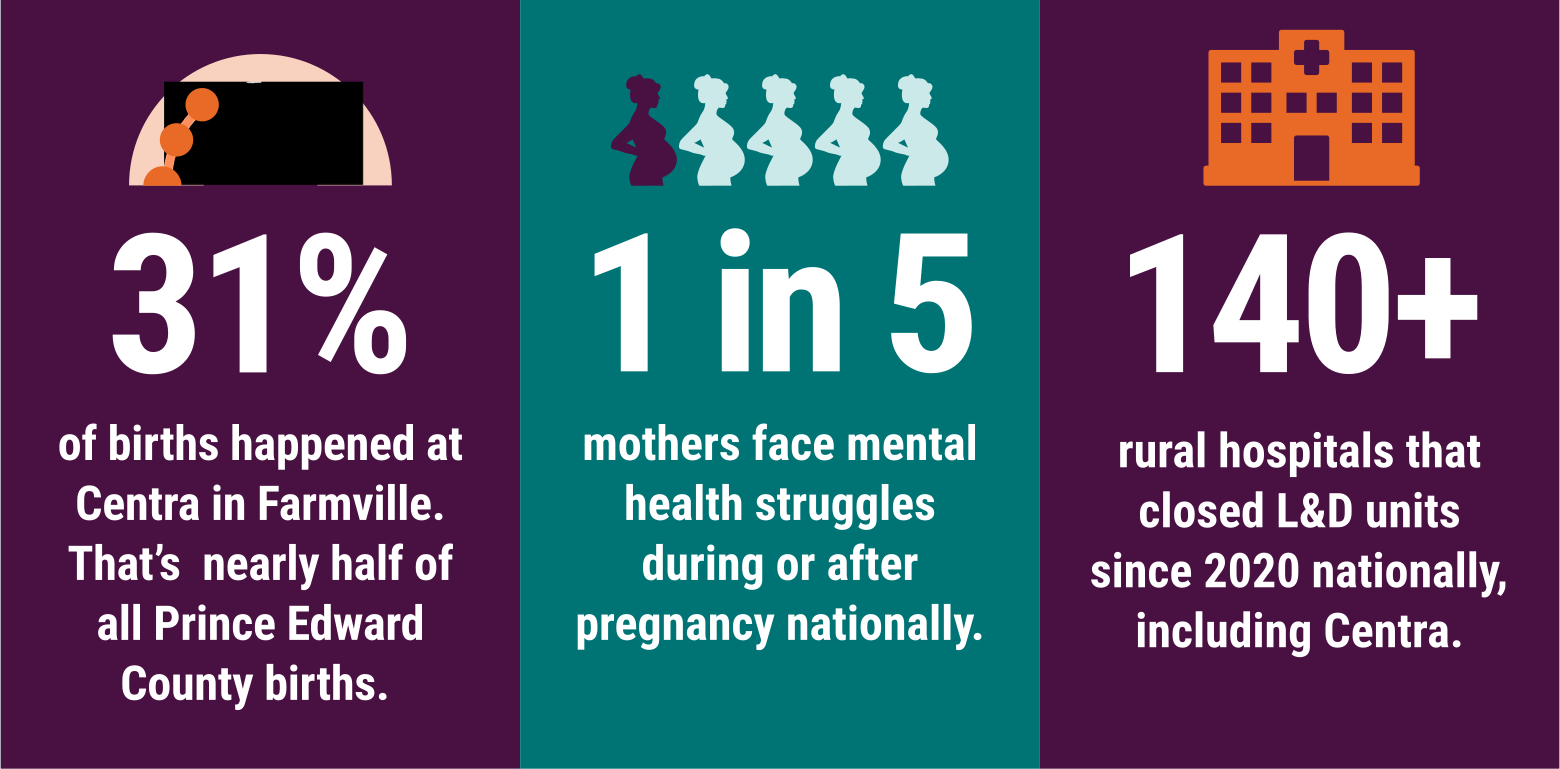
Nationwide, one in five mothers face mental health struggles during or after pregnancy, but only a quarter receive treatment. In rural communities, women are 21% more likely to experience perinatal depression than their urban counterparts, while access to the providers who typically identify and treat those conditions is shrinking. Only a third of U.S. counties have full obstetric services, with more areas losing providers every year. This is what experts and reports from various organizations and nonprofits focusing on maternal health such as Maternal Mental Health Leadership Alliance, Policy Center for Maternal Health, and March of Dimes have found.
America is already living through what these and other groups are calling a maternal mental health crisis, and with these closures and the loss of access to obstetric care, it might get worse.
Even just a few months after the closure of Centra’s obstetric services, the signs of the impacts on maternal mental health are already emerging. Charlottesville Tomorrow spoke with over a dozen mothers and fathers about the mental toll the loss of local services has taken on their families.
Many mothers who were expecting at the time of the closure said they had some level of anxiety that came with long drives and difficulty finding a provider, especially if they had complicated pregnancies. For at least one woman who asked not to be named, anxiety about the travel time became severe.
And for Amber, a woman from the Farmville area who preferred to be identified by her first name only, finding a provider was difficult. She also experienced an eight-week-long delay in diagnosis and medication for pregnancy-related hypertension. She was fighting so hard to keep peace of mind during pregnancy to protect the baby, Amber said, that she worried postpartum depression would hit her “like a train.”
Putting women in situations of such increased stress places them at a higher risk of psychiatric illness, said Payne.
“Psychosocial stressors are known to increase the risk for postpartum depression or perinatal depression. Certainly, having to find a new provider, traveling hours away, if you have a high-risk pregnancy, would be severely stressful,” Payne said.
Other experts agree. Five nationally recognized researchers specializing in maternal health told Charlottesville Tomorrow that there is little to no doubt that the closures of obstetric services and the creation of maternal healthcare deserts across the country are affecting women’s mental health.
‘This is an American problem. We need to do better’
Before the closure, Centra was the closest labor and delivery unit for several rural communities in the area. According to data shared with Charlottesville Tomorrow by the Virginia Department of Health, Centra was responsible for 31% of all births between 2022 and 2024 in the five counties it served — and nearly half of all Prince Edward County births. In the area where the majority of families traveled for such services, Centra in Farmville was the most common place to give birth.
Now it’s one of at least 140 rural hospitals that have closed or announced plans to close their labor and delivery units since 2020. Staffing shortages, declining birth rates, and low reimbursement rates from government and private insurers drive these closures, according to the Center for Healthcare Quality and Payment Reform, a national policy center. These are the same reasons Centra offered for its decision to stop services at its Farmville location and consolidate them with its Lynchburg one in its public announcement and further communications with Charlottesville Tomorrow.
The loss of obstetric care is “one of the most visible and consequential markers of service erosion,” a report on the financial state of rural hospitals recently presented to Virginia General Assembly’s Joint Commission on Health Care noted. Hospitals have to offer fewer and fewer services to survive, it said.
The loss of obstetric services in rural areas often compounds existing shortages — of other healthcare providers, transportation, childcare, and insurance coverage. Centra’s Farmville location served counties where one-quarter to one-third of residents live in low-income households, and families here often rely on Medicaid to cover prenatal and postnatal care, the Virginia Department of Health and DataUSA, a data visualization platform, show.
There is a substantial lack of data when it comes to the question of maternal mental health, experts told Charlottesville Tomorrow. And there are seemingly no studies measuring the direct connection between the closure of obstetric services and the impact on maternal mental health. There is, however, substantial evidence that the lack of such care puts mothers at higher risk of negative mental health outcomes.
“The lack of nearby obstetric care does not just affect where someone gives birth,” Peiyin Hung, a co-director of the Rural Health Research Center at the University of South Carolina, whose area of focus includes maternal mental health, wrote in an email. “While more studies are needed, loss of a nearby maternity care provider can reduce the number of clinical touchpoints where mental health symptoms are recognized, make follow-up less feasible, and leave patients navigating a fragmented system at the exact moment when continuity and trust matter most.”
Those touchpoints matter because perinatal mood disorders are easy to miss even under the best conditions. The symptoms — sleep disruption, exhaustion, appetite changes, intrusive worry — can be written off as “just new motherhood,” said Hung.
Karen Tabb Dina, a professor at the University of Illinois Urbana-Champaign School of Social Work who studies maternal mental health across a family’s life trajectory, has found that high levels of stress in the mother are linked to adverse outcomes for the child as well — including delays in language, cognition, and motor skills.
“This is an American problem,” she said. “We need to do better.”
The stakes extend beyond individual families. “If families don’t have the best experiences, they don’t want to have babies,” Dina said. “The cascading effects are major.”
Yet, at times it might be hard for new mothers to be taken seriously, even if they know what they are going through. This was the experience of another mother in Farmville.
As network of care shrinks, mothers’ mental health needs are neglected
Sarah Calaway stepped out of her car at a Walmart parking lot in Farmville into the humid August heat. Her chest felt tight, her head ached. She just felt absolutely horrible.
“You can’t pass out. You can’t pass out,” Calaway kept telling herself. She had three kids in the car, with the oldest being just 4 and the youngest 1. They needed her.

It was 2024, and Calaway had been struggling with migraines and anxiety since May that year, when they suddenly started. For the first month, she could barely leave the bed. After that, she could function, at least somewhat. But there were still days when she had to lie down on a couch and give kids toys to play with by themselves because she just couldn’t keep going.
All of this started just a couple of months after she stopped nursing her youngest child. It was hormonal — she was certain of it. Based on her online research, it sounded uncannily like a thyroid condition triggered by childbirth that caused the same symptoms she was experiencing.
If only she could make her primary doctor listen. Or any doctor at all.
She leaned on her car, kids listening to music inside, sheltered from the crisis, and called her family for help. This wasn’t the first time she felt she might lose consciousness, but this was by far the worst. She felt like she was dying.

Calaway’s brother-in-law came to take the kids to her mother’s. Her husband took her to Centra’s Emergency Department in Farmville.
It was the second time she was in the emergency department with her symptoms — panic attacks and anxiety, migraines, and chest tightness — and like before, they ran some basic tests and told her they didn’t know what it was. She should just follow up with her primary doctor, they said. But she had already tried that several times.
Despite Calaway’s best efforts to have doctors see her condition as something triggered postpartum, with her family members with medical experience coaching her on how to advocate for herself, her concerns weren’t heard. She was prescribed medication for migraines that didn’t work, some sleeping pills for when anxiety kept her up, and offered an at-home sleep test. This could be sleep apnea, the general doctor said. But Calaway slept like a baby when she wasn’t so inescapably anxious.
The maternal healthcare system is supposed to catch what happened to Calaway, in theory. If it works as it’s supposed to, an OB-GYN will spot signs of anxiety and depression during pregnancy — having either condition while expecting is one of the predictors of having these conditions postpartum, said Payne from UVA.
If those signs are not there or go undetected, there is the six-week postpartum follow-up. But while all of the women Charlottesville Tomorrow spoke with said they were asked about their mental health at that appointment, an average of one in five people were not, according to the Health Resources and Services Administration’s national-level data.
Even when the screening happens, it might happen too early: Postpartum depression and anxiety can develop at any point within a year of delivery. And a Centers for Disease Control and Prevention study found that more than half of women who showed depressive symptoms at nine to 10 months postpartum had not shown any at the two-to-six month mark, when the screening typically happens.
While Calaway knew that postpartum maternal mental health was important, no one talked to her after the one and only six-week check-in survey she was asked to fill out.
The symptoms stopped in October that year, when she became pregnant with her fourth child. For this pregnancy, disheartened by her previous experience with an OB-GYN in Richmond where all roads always led to prescribing birth control, she went to Centra Southside Community Hospital. She had heard good things about their obstetric care.
She told the doctor about her fears that the condition would return once she stopped nursing. This time, the doctor listened.
“Absolutely,” the doctor said. They could figure it out and get her a proper diagnosis. They came up with a plan for when she was to stop nursing. It was a level of support that Calaway didn’t expect and was grateful to receive.

Then, after her delivery but before she stopped nursing, Centra cut its obstetric services.
Lasting clinician-patient relationships are associated with earlier screening, greater comfort disclosing mental health concerns, and better outcomes, research like this 2008 study published in the Psychiatric Rehabilitation Journal shows. And discontinuity of care erodes that trust. Calaway didn’t have the energy or trust in the system to rebuild that relationship with someone else. In Richmond. Now with four kids in the car, such long drives feel undoable.
She decided to take her chances. She had recently stopped breastfeeding and her anxiety returned, but so far, it has been milder. If her symptoms get worse, then she will go to Richmond. It’s not ideal, she said.
During her last appointment at Centra, she saw that the doctors and nurses were disheartened; that they were worried for their patients and grieved Centra’s decision to close obstetric services.
Calaway thought this encouraging, to know that there is medical staff that cared.
New policies could bring progress, but questions remain about implementation
The challenges Calaway and other mothers face are ones state healthcare leaders are scrambling to address.
Virginia has been doing a lot to improve the maternal health situation in the past few years, said Roshay Richardson, a doula and a breastfeeding specialist with the Virginia Rural Health Association, a nonprofit organization working to increase access to healthcare resources.
There is now an “It Takes a Village” program run by the Virginia Health Care Foundation. Launched in September last year, the program connects mothers with partner behavioral health providers for telehealth and in-person counseling to help navigate maternal mental health conditions. A mother doesn’t need a referral to get connected to a provider through the program, said Richardson, who is also a career coordinator with the program.
There is a proposal to bring a mobile maternal clinic specifically to southern Virginia, where Farmville sits, to address growing maternal care deserts. This can relieve the need and stress of traveling further away for care.
There is also a large legislative package called the “Momnibus” that was signed by Gov. Abigail Spanberger into law earlier this year. The law, which went into effect on July 1, increases access to maternal mental health screenings, among other things.
While Richardson believes it’s progress, policy-wise, she sees limitations to the implementation. There is a workforce shortage in rural Virginia and a need to educate rural providers about what they are supposed to do. And the screening itself is not enough to help — providers have to follow through.
“The resources are there on paper, but not in an actual proximity of people who are in rural communities,” said Richardson.
Richardson herself lived through postpartum depression and anxiety after she had her first child and said the system failed her. She responded truthfully in the assessment form at the pediatrician’s office about how much she was struggling. No one ever followed up.
By the time she filled out the next one, she started to worry that being truthful about her mental health might persuade her providers that she wasn’t fit to be a mother and her baby would be taken away. So she started lying and saying that she was fine.
She only realized that it was postpartum depression when it was over.
It’s essential, she believes, to “wrap mothers in care like it’s a spiderweb,” so no one falls through the cracks at any point of their postpartum period.
Del. Rodney Willett, who chairs several health-related committees, including the Virginia House Select Committee on Advancing Rural and Small Town Health Care, said that resolving the issues of rural obstetric care is “not an easily solved problem.”
Low birth rates make it unsustainable for rural hospitals to keep obstetric services, Willett said. And federal funding changes have reduced the amount of money hospitals receive from Medicaid. The Commonwealth is losing options on how to help, he said.
“It’s a structural question,” he told Charlottesville Tomorrow.
Structural questions and solutions — they take time. Virginia has to re-imagine how rural healthcare is provided and financed altogether to address its challenges.
Until those larger questions are answered, rural families like the Calaways and the Jaynes will continue living with the consequences of a system that is shrinking.
“There is a huge lack of concern and care for maternal, mental, and postpartum health in rural America,” Calaway said in a message. “It portrays the lack of concern and care for the rural families.”