

In mid-October, the rolling pastures at Dave Norford’s 3,000-acre cattle farm in rural Albemarle County were a deep, lush green.
“It’s fabulous,” Norford said, as he motored past a herd of grazing cows in his utility vehicle. A few months earlier, the land didn’t look like this.
For much of the year, these pastures were a dry brown. The grasses struggled and eventually withered under the strain of one of the longest and most devastating droughts Virginia has seen in decades.
The drought started a full year ago in October 2025 and persisted through the spring, summer, and, in some parts of southern Virginia, it continues today. Across the state, wells dried up, water reservoirs sank worrisomely low, and cattle pastures baked under the relentless sun.
For Virginia’s cattle farmers, the past year has been a struggle to keep animals fed and farms financially viable. But their biggest challenge may still lie ahead: figuring out how to sustain their farms in a future where drought could become increasingly common.
“One of the biggest threats to farming in general is trying to figure out how we react and are also able to prepare for some of these swings in the weather that seem to be happening,” said Sarah Sharpe, a Greene County extension agent with Virginia Cooperative Extension, a Virginia Tech program that connects farmers with agricultural research and resources.
For now, many Virginia farmers remain focused on getting through the current crisis.
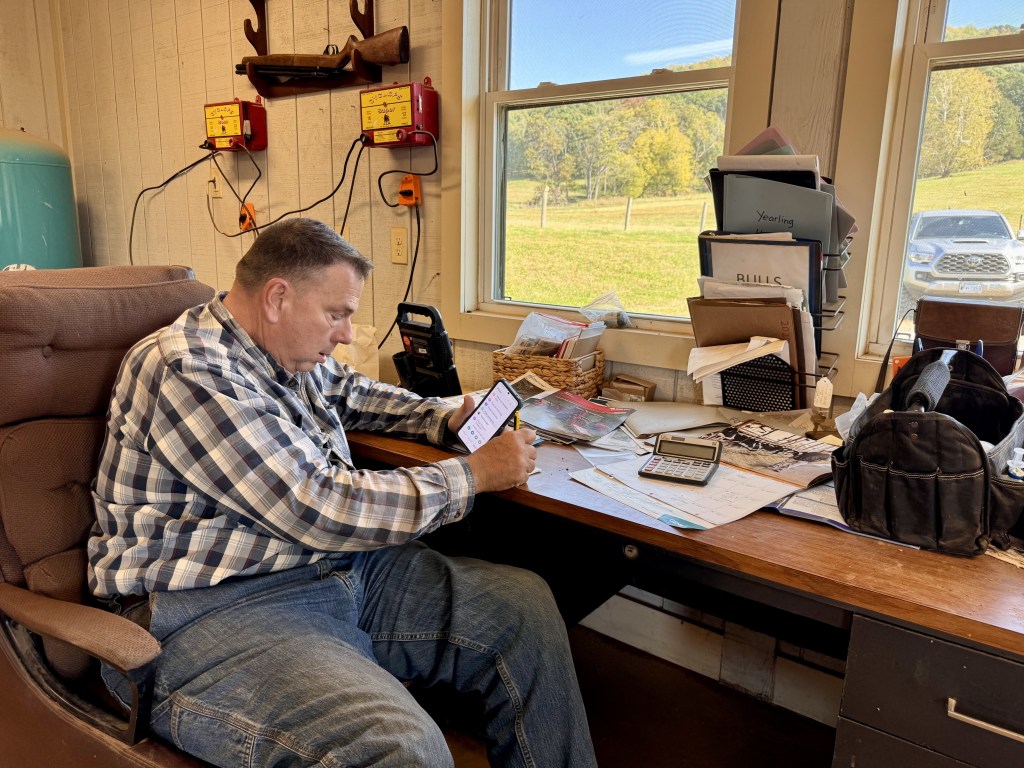
Although the drought technically started in October 2025, it wasn’t until about April that most farmers realized they might be in trouble, Sharpe said. Typically, weather patterns in this part of the world bring substantial rain beginning around March. That rain sparks grass to grow thick and tall. Farmers head out and cut that spring flush sometime in April or May to store as hay to feed their cattle over the winter.
But this year, the rain didn’t come. As April gave way to May, farmer’s pastures weren’t growing.
“Our first cutting of hay was averaging about a third of a normal crop,” said Norford. “So we knew we were in trouble at that point.”
As a seventh generation farmer on his Albemarle County land, Norford immediately recognized that he needed to act. His farm keeps an average of 500 cows that are bred to have calves every fall. And 500 pregnant cows is a lot of mouths to feed.
“We started buying hay as soon as we could find any to buy,” he said.
Norford also made the quick decision to plant summer annual grasses throughout his fields, varieties like sorghum and millet that don’t need as much water to grow. This was a strategy employed by many farmers.
In nearby Greene County, third generation farmer Ralph Morton’s first cutting of hay was also down to about one third of his normal harvest.
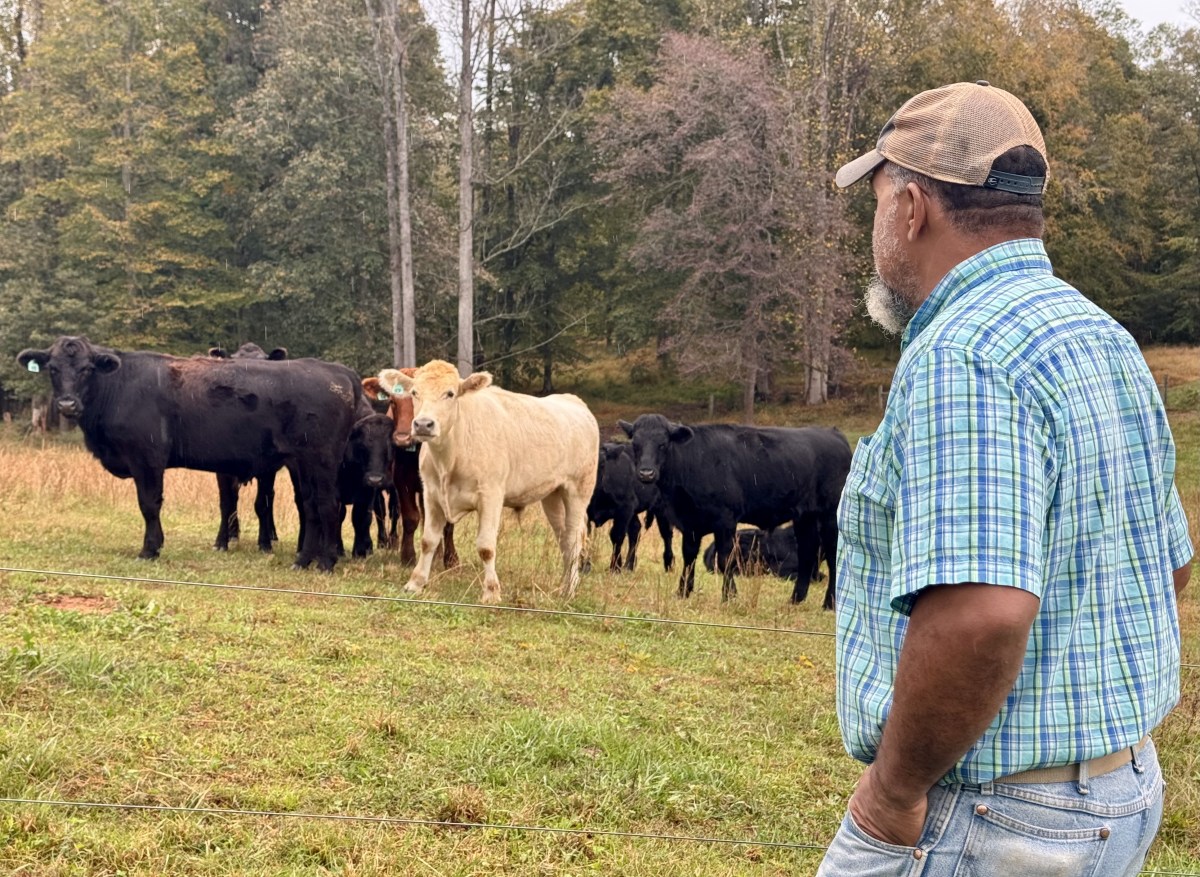
Morton has a much smaller operation than Norford, just a few dozen cows that he sells direct to consumers. He is careful to keep his herd small enough to never overburden his pastures. And he tends those pastures throughout the year, fertilizing them with woodchips he composts himself.
He, too, acted quickly, planting sorghum and sudangrass. The summer grasses grew.
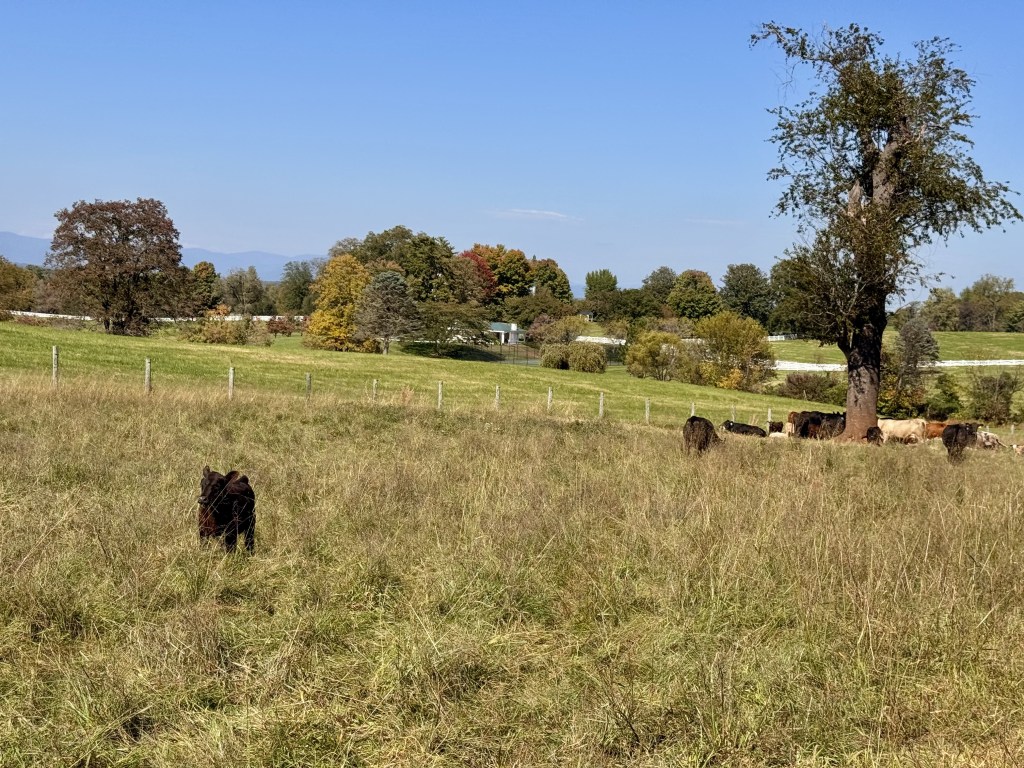
“They were just short,” Morton said. “They weren’t burnt up because we have a mix of warm season and cool season grasses there.”
Though, as the months ticked forward, it became clear to both Morton and Norford that even with their precautions, they really needed rain.
Luckily for both, rain eventually arrived in central Virginia. In late July and early August, a few summer storms rolled through. It didn’t bring enough rain to officially break the drought — but it was enough to bring Norford’s pastures back. He was able to graze his cows, and cut new hay.
“If we hadn’t started getting the rain we did starting about August, we would really be in trouble,” Norford said.
He isn’t speaking hypothetically. In counties further south of him, that is exactly the situation farmers are facing.
“A lot of those rains that came through across the valley, they kind of came across Appomattox and the very top of Campbell County,” said Todd Scott, a cattle farmer and extension agent in Campbell County. “But most of the county didn’t get a lot of that rain that pulled everybody else out of the drought. So, it’s been a tough year.”
By August, the situation in southside and southwest Virginia was bleak.
Scott, like many of his neighboring farmers, sold his new calves early. He then set about carefully rationing his hay, trying to do the math on how long he would have enough to feed his remaining herd — or if he had to sell them.
As other farmers across this region of Virginia, too, had to ration their hay supplies, cows got increasingly hungry.
“We had a lot more cattle getting out,” Scott said. “Cattle usually, if their bellies are full, it doesn’t take a lot to keep them in the pasture. They don’t go anywhere. But a cow is a pretty strong animal. If they want to get out, they can get out of about any fence that we have. So we had a lot more cases of cows out. I put that on some Facebook posts, too. Like, ‘Hey folks, cows are hungry, and it seems like there’s greener grasses in the ditches. So just be careful.'”
Ultimately, many farmers made the difficult decision to sell cows. But even that hasn’t been enough for some farms.
By September, the drought and ensuing hay shortage reached such heights that Gov. Abigail Spanberger declared a state of emergency. Her order lifted several transportation restrictions, making it easier to quickly transport large amounts of hay from neighboring states to Virginia’s increasingly desperate farmers.
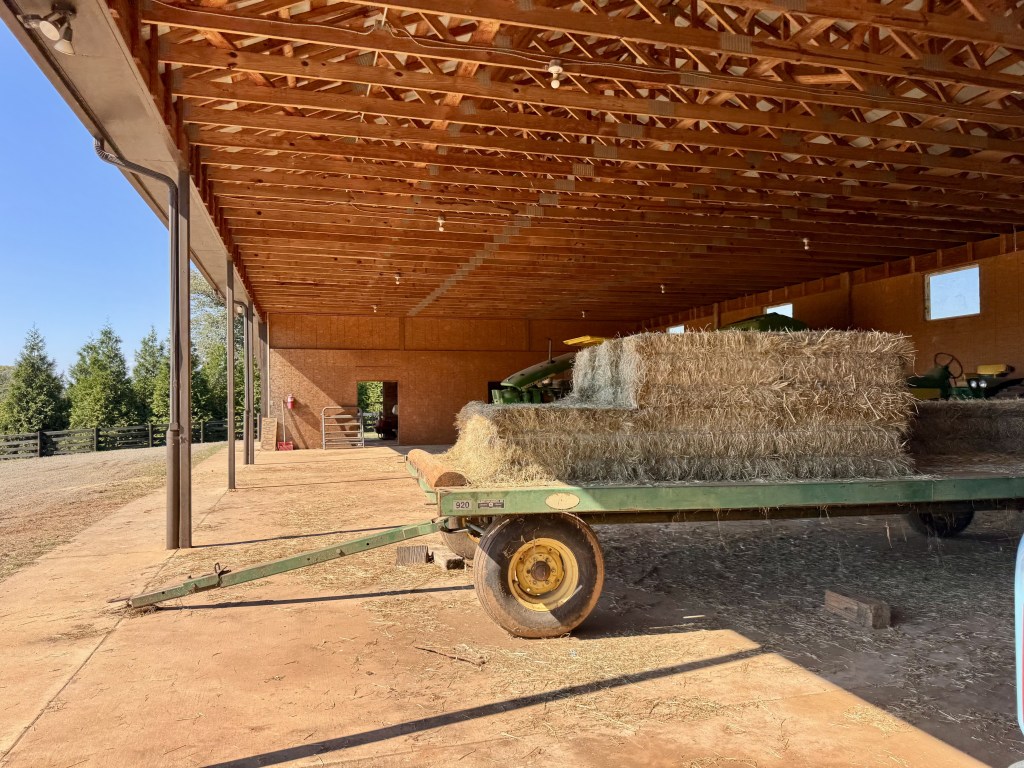
Since then, Scott knows of at least one company that has donated hay. And farmers in Ohio, where the drought didn’t reach, are offering up supplies. He and a few other folks around the state are working to connect Virginia producers with suppliers.
The extra hay brought some much-needed relief. But farmers in southside and southwest Virginia were still waiting for the one thing no one could truck in from another state.
In early October, it finally happened. The clouds rolled in.
“Things have gotten a little better the last couple of weeks,” Scott said on Oct. 19. “We’ve got some rain. I think the grass has started to pop a little bit. But what concerns us now is, is it going to be enough? Because we’re hoping for a warm fall and that the frost holds off. Because if that frost hits quickly, that’s going to slow our grass growth down again.”
As winter looms ahead, Scott and other extension agents have started gathering farmers to talk through strategies for getting through the next season. Increasingly, those talks have veered toward the future, and how to prepare should Virginia farmers face a drought that decimates hay production again.
That’s a real possibility, said Julie Shortridge, an assistant professor in the Department of Biological Systems Engineering at Virginia Tech who spends her time researching how to make water resource systems more sustainable.
“I don’t think that we would necessarily say this drought is because of climate change,” Shortridge said. “We’ve always gotten droughts; we always will. But there are certain aspects of how our climate is changing that can impact the risk of drought.”
The first, she said, is that Earth is getting warmer.
According to the Virginia Climate Center, which is run by George Mason University, the average temperature in Virginia has increased by nearly 3 degrees since 1970. The warmer weather is going to cause a few different changes.
One is that storms will become much more intense. When they hit, they will dump large quantities of water over short periods of time. The downpours will happen too quickly for the soil to soak up much of the water, so most of it will run off into lakes and rivers.

That means that while the overall amount of rain may actually increase over time, the moisture in the soil may, in fact, drop.
That’s not good news for farmers. Because the other thing that the warmer weather will do, between rains, is dry out that soil. Fast.
“If you have higher temperatures, plants are generally going to use more water more quickly, and so the soil moisture will dry out more quickly as well,” Shortridge said.
So farmers in the future will need strategies to deal with more frequent droughts.
But for now, it looks like relief might be on the way. The National Weather Service this month put out a forecast for the upcoming winter. It predicts that this year will bring wetter than average weather across much of the country, including Virginia. This winter may also be warmer than normal.
If a wet winter turns into a wet spring, then next year’s hay crop could enable farms across Virginia to stockpile for the next bad year, as extension agents suggest.
For Morton, a U.S. Army veteran, that uncertainty is something he said he and other farmers have learned to live with.
“Just adapt,” Morton said. “You know, nothing to stress about. It goes back to my military experience. Somebody throws an obstacle in front of you, you just have to figure out how to get around it. You figure out how to adapt, overcome, nothing to be freaking out about. Just take a deep breath, analyze the situation, come up with a course of action and move forward.”