

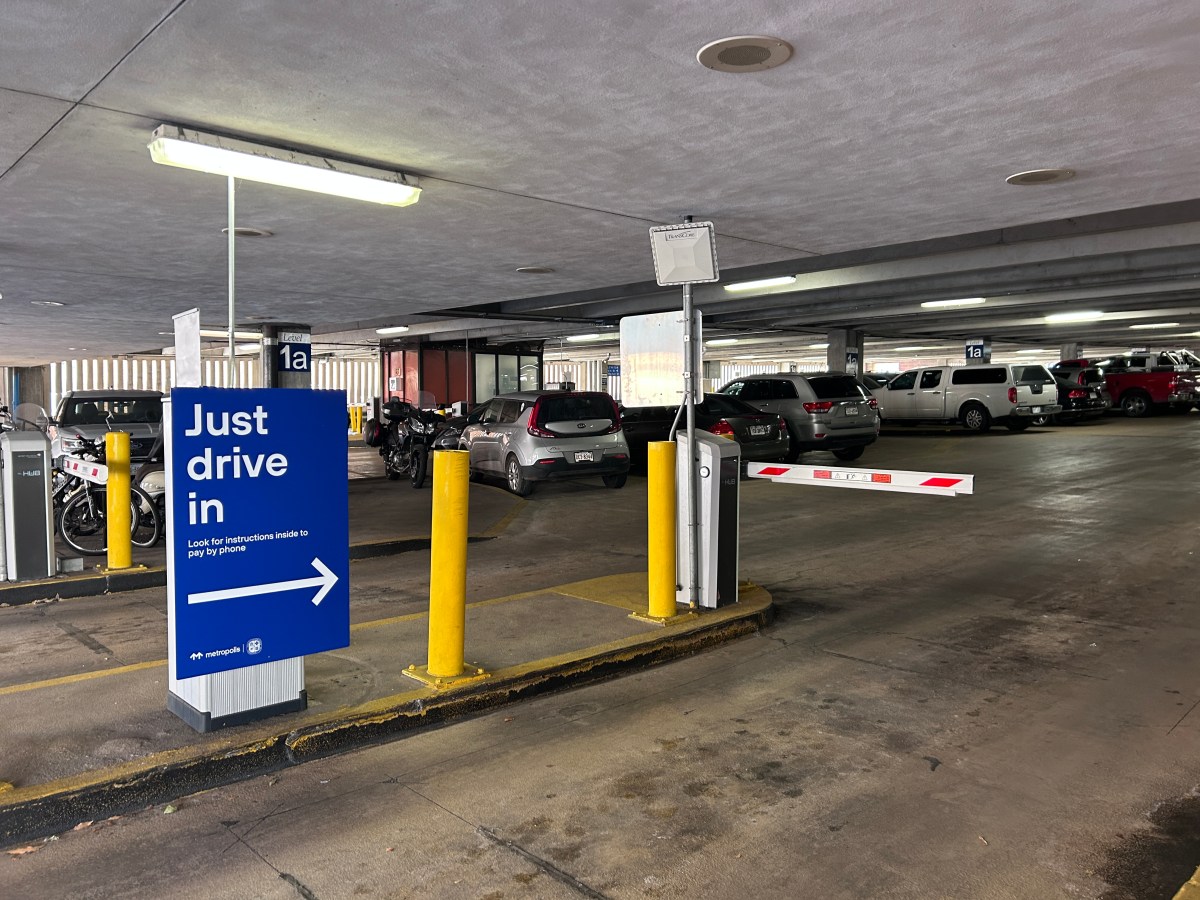
As of Tuesday, Dec. 16, a company called Metropolis Technologies is using artificial intelligence to manage the parking in the Water St. and Market St. garages in downtown Charlottesville.
Parking in the garage means agreeing to the company’s terms and conditions, which includes collecting license plate data and, its privacy policy states, possibly biometric data, from its users.
The city announced the change late Friday afternoon in a press release, just a few days before it happened.
The Metropolis system should offer a “quicker, more seamless experience, alleviates issues with outdated technology (malfunctioning machines) and exit delays,” City Spokesperson Afton Schneider wrote to Charlottesville Tomorrow in an email Tuesday. She added that the equipment in the garages, which are hardware-based, have limited support options, hence the shift to a more modern, software-based approach.
Charlottesville City Councilors discussed problems with the parking garage, and the changes to the system, during its June 2, 2025 meeting. People were reporting numerous problems with the nearly decade-old equipment, including jammed credit cards and dollar bills, tickets blowing away in the wind or getting rained on and rendered unreadable, Charlottesville Director of Economic Development Chris Engel told the Council. Due to these issues, people had reported waiting 15 or 20 minutes to exit the garage on some occasions, he said.
There are no paper tickets or kiosks with the new system. Here’s how it’s supposed to work: In order to park in the garage, a driver must register their vehicle with Metropolis, either via a smartphone app or on the Metropolis website from a desktop or laptop computer browser in advance. Metropolis asks for information like name, phone number, email address, credit card information and license plate number.
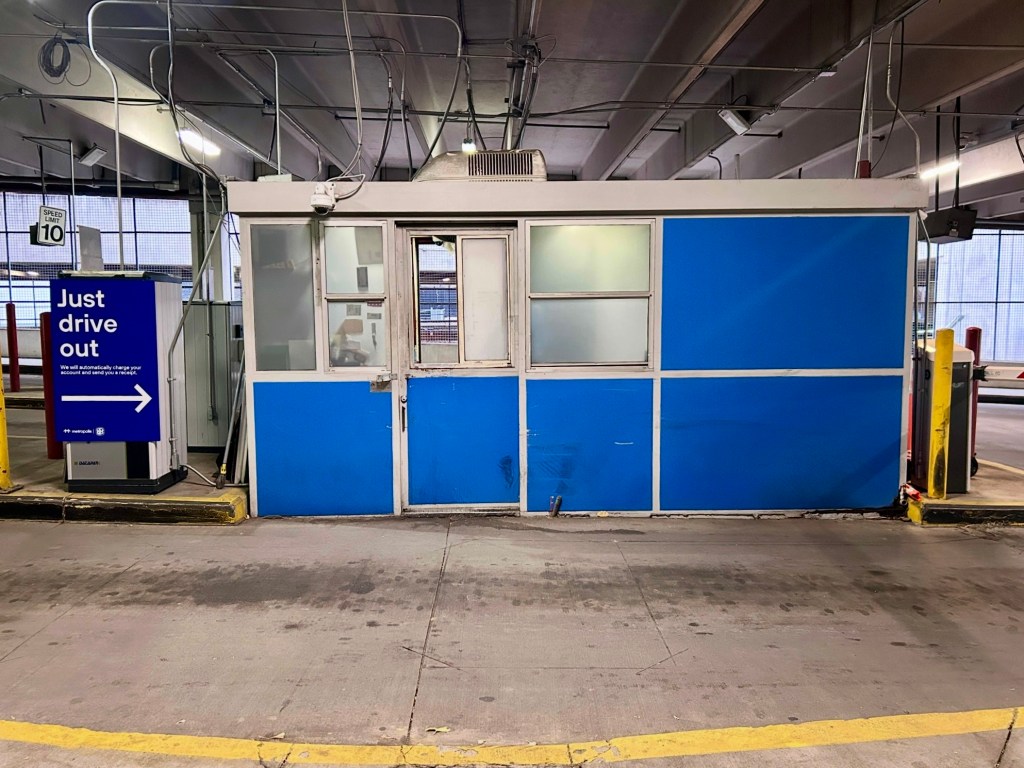
Drive in, and Metropolis cameras collect information on the car. Drive out, and the camera recognizes the car based on its previous data collection, opens the gate, and automatically charges the credit card on file based on how long the car was parked in the garage. The smartphone app will not work unless customers give it permission to access their location data.
The garages will still employ attendants to help with any “unique checkouts,” Schenider said.
How does Metropolis know which cars are coming and going? Charlottesville Tomorrow reached out to the company on Friday, Dec. 12 to find out.
Andrew Morrissey, a Metropolis spokesperson, replied. The company uses equipment installed in the parking garages to collect multiple data points about customers’ cars, he explained over a series of emails to Charlottesville Tomorrow Wednesday and Thursday.
“Metropolis does not use license plate recognition,” Morrissey said. “Instead, our computer vision platform is trained on a comprehensive and proprietary data set to recognize vehicles with a ‘vehicle fingerprint’ based on its unique characteristics, not just license plate information.”
When asked what other information Metropolis collects for that “vehicle fingerprint,” Morrissey did not specify.
“The computer vision platform recognizes vehicles based on their unique characteristics — everything that makes one car different to another,” he said. “The technology doesn’t just read plates; it recognizes vehicles, adapts, and responds. It is continuously learning, and it gets smarter with every interaction.”
Parking operators use a few different methods to manage their lots. “Computer vision” relies on AI to analyze and interpret collected images, compared to “optical character recognition” which focuses more specifically on text and characters on license plates, according to Parking Industry, a Canada-based trade organization for parking industry professionals. Though they’re different technologies, operators use them for similar means — identifying vehicles.
Parking rates will remain the same. The first hour of parking is free, followed by $1 per half-hour or portion thereof. The maximum fee is $12 per day, and 72 hours (or 3 days) is the maximum amount of time someone is allowed to continuously park in the garages.
Parking in either garage for less than an hour does not require registering with Metropolis, Schneider said.
But the cameras still collect information on every car that enters the garage.
The City of Charlottesville owns the Market St. garage, and leases the Water St. one from Charlottesville Parking Center Inc. The city had been contracting with a company called SP+ for parking services since 2023, and Metropolis bought SP+ in 2024. The acquisition made Metropolis the largest parking operator in North America, according to its website. The company currently manages more than 4,600 locations.
Customers in other states have run into problems with the technology.
Metropolis is embroiled in at least three class-action lawsuits, one in Texas and two in Tennessee. The Texas suit alleges, among other things, that Metropolis billed customers for parking they had already paid for, and charged customers even when the Metropolis technology malfunctioned and prevented the customers from paying. The Tennessee suits allege similar things, but also that the company charges excessive fees and that it is illegally accessing the Department of Motor Vehicles database to obtain addresses for people who its system says haven’t paid their bills, according to a July 2025 report in The Tennessean.
Charlottesville customers shouldn’t have to worry about being fined or billed incorrectly, Schneider said, because the city charges flat rather than demand-driven rates. She suspects demand-driven pricing could be the cause of some of the billing problems other localities have seen.
She also pointed out that there are more than 1,000 free parking spots throughout the city, including some in the downtown area.
Metropolis also plans to do more than manage parking lots. Earlier this year, the company received $1.6 billion through a combination of money from private investors and a loan from JPMorgan Chase Bank, and it intends to use the funds “to continue transforming the real world with AI and building the Recognition Economy.”
“With this new capital, we’re scaling our platforms to realize the full potential of the Recognition Economy — building a world where infrastructure knows you, moves with you, and predicts your needs,” Metropolis CEO and co-founder Alex Israel said in a press release announcing the funding. The release says that “the company is ushering in a world where presence replaces credentials” and that “Metropolis’ technology is embedding intelligence directly into physical infrastructure, turning parking lots, retail spaces, fueling stations and hotels into connected, intuitive environments that recognize context and adapt in real time.”
Customers using the parking garages must agree to the company’s privacy policy. Included in that privacy policy is a “Biometric Information Privacy Notice.” That privacy notice informs customers that the company “may deploy cameras and other technologies in our offices and facilities that we operate or that use our technology.”
“From the video recordings, we may generate facial geometry data to enable the use of facial recognition technology,” the notice continues. “Because each individual’s facial geometry is unique, this information may be considered biometric.”
The notice states that the company uses facial recitation technology to support its services, “including contactless parking, security, hospitality and other offerings.” It is not clear what those “other offerings” are.
“Our operations in Charlottesville do not collect or track biometric data,” Morrissey said. “Transparency is core to Metropolis, and we’re committed to communicating clearly and directly as we continue improving our product to better serve our members and their needs.”
The Metropolis AI technology appeared in local garages the same week that Charlottesville City Council decided to stop using Flock cameras at intersections throughout the city. Flock cameras record license plate and other data, and Charlottesville Police Chief Michael Kochis previously claimed that the cameras can be used to solve violent crime, locate missing people, and recover stolen property, according to a CBS19 News report.
However, numerous residents, and later city councilors, expressed concerns about how the company sells or shares the data its cameras collect to outside parties, including the U.S. Department of Immigration and Customs Enforcement (ICE), and what that information might be used for.
The Metropolis system is different from Flock’s, Schneider said. The data Metropolis collects is used only to facilitate parking sessions, and the license plate information will not be shared outside of the company. Customers can also opt to have their data deleted, she added.
“Metropolis isn’t tracking people or building profiles about where they go,” Morrissey said. “The technology is used solely to identify a vehicle for the purpose of charging for parking. Drivers provide payment information to complete that transaction, and that information isn’t used for surveillance.”
Ease of use is one of the features Morrissey touted, but so far, it hasn’t all been smooth sailing.
Multiple businesses and agencies based downtown — including Charlottesville Tomorrow — have been promised a QR code that they can use to continue validating parking for patrons and employees. People should be able to take a photo of that QR code, which takes them to a page where they can enter their license plate number, and then they should be able to exit the garage without being charged. As of Wednesday afternoon, they were still waiting for that code. Some downtown businesses have said they cannot validate parking for the time being.
Editor’s note: This article was updated on Dec. 18, 2025 to include additional information about the technology Metropolis uses in parking garages.