


Editors’ note: This article discusses mental health challenges, including depression and suicide. Some readers may find this content distressing. If you or someone you know is struggling, please consider reaching out to a mental health professional or calling or texting the Suicide & Crisis Lifeline at 988 for free, confidential support.
Demario Knighton Centeno was Kenzie Dessert’s best friend. And he would stay her best friend forever, she said.
That was why, two years after he died by suicide at the age of 14, she decided to do something bold — she decided to hold another memorial. This memorial would ensure her friend was remembered, she said. She believed Albemarle High School didn’t do enough to acknowledge his passing in 2023 — not even enough for her to be able to explain to her peers why she had such a public breakdown on the day of his death.
So, this time, she made sure everyone knew. She informed her entire high school class, and then took it a step further — she posted on Reddit and opened the memorial to all of Charlottesville.
That post got quite popular. In the following weeks, dozens of people, many of whom appeared to be touched by suicide in some way in their own lives, turned out for Kenzie and her friends — through likes, comments, donations and also by attending the memorial.
More than 150 people came to celebrate Demario’s life on Feb. 22. Many were strangers to the boy, Kenzie said. Knowingly or not, it highlighted the cracks in the system meant to care for kids like him.
Demario’s story is, devastatingly, not uncommon.
The number of young people struggling with mental health issues nationally remains alarmingly high, prompting the former U.S. Surgeon General to issue a public advisory in 2021, calling the crisis an “urgent public health issue.” In Virginia, where most of the state is federally designated as a mental health professional shortage area, schools have become the de facto front line of care, experts familiar with the work of schools in the area told Charlottesville Tomorrow.
Teachers, counselors and staff are often the first to notice warning signs — and at times the only ones available to provide help. The need, according to local experts working with youth mental health, is only growing. But funding is not always a given, resources are strained, and the threats facing kids are unpredictable.
In Albemarle High School alone, counselors conducted 80 suicide ideation screenings this academic year, according to data presented during one of the School Board meetings. That means there is one such screening every other day, one counselor told Charlottesville Tomorrow. The counselor spoke on condition of anonymity, concerned that speaking with a reporter would be held against them.
“It’s frontlines. It’s very chaotic, very stressful,” the counselor said.
Since Demario’s death, there was one more death by suicide by a student enrolled in Albemarle County Public Schools — a 12-year-old middle school student passed away on March 13, according to Helen Dunn, public affairs and strategic communications officer for the district. A week prior, another middle school student from Orange County died by suicide, according to Byrd Street, a news outlet covering Orange County.
Suicide is a rare event, said Nancy Deutsch, a University of Virginia professor specializing in adolescent development, but the high rates of youth anxiety, depression, and suicidal ideation that tend to accompany them are not. In 2023, the Centers for Disease Control and Prevention found that 4 out of 10 adolescents experience persistent sadness and hopelessness; 2 out of 10 seriously considered suicide while 1 out of 10 attempted it.
Some schools in Virginia are better positioned to help than others.
“We’re very lucky,” said Dunn.
“Other school divisions don’t have as much in a lot of cases. I think the real issue is that, is there ever ‘enough’ these days?”
A teenager takes his life
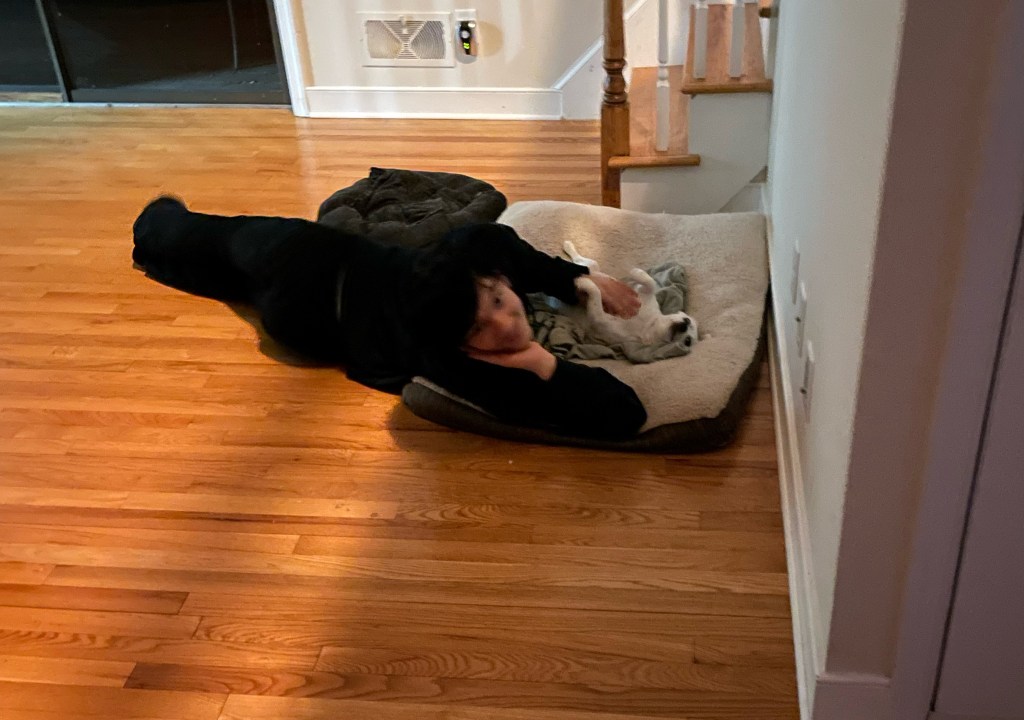
Demario’s case illustrates just how complex it can be to help young people and address mental health issues.
Firstly, no one really knew how depressed he was — he was really good at uplifting others but kept his feelings to himself, his mother, Titi Knighton, said.
Demario had a big heart. He hugged his mother every day and reassured his parents that they were doing a great job. He loved cooking and dreamed of opening a restaurant where his mother, who has gluten intolerance, could eat freely, without ever having to pay.
And he made sure everyone felt welcome.
“There was one kid, he was new in school. And his mama came to me at Demario’s celebration and told me, ‘You know, your son was the first one to come to my son and make him feel like he wasn’t lonely because he was a new kid at school,'” Knighton recalled in a call with Charlottesville Tomorrow.
“Yeah, that sounds like my baby,” she thought. “He was just a really good-hearted kid.”
That kindness was how Demario became friends with Kenzie as well — he adopted her as his best friend when she started middle school.
They laughed together, threw things at each other, and got in trouble for being too loud, Kenzie said. When the pandemic hit, they exchanged thousands of emails — many filled with his attempts to convince Kenzie to watch Naruto, his favorite anime.
“We were friends outside of school, inside of school, everywhere,” she said. “We knew each other for five years, and it was our favorite five years.”
Based on what friends and family pieced together, he was depressed for some time: He had seen a school counselor twice, his suicide note mentioned being in a dark place for a while and he might have been self-harming for some time.
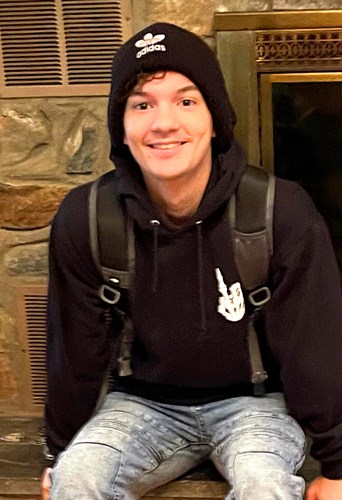
But Demario also appears to be a victim of blackmail, more specifically what is known as “sextortion” — a form of sexual exploitation in which someone is blackmailed, often by threatening to release private images publicly.
According to data from the National Center for Missing and Exploited Children, a private nonprofit organization established by Congress, cases of sextortion of minors are on the rise — the number of reports of such cases more than doubled in 2023 compared to the previous year, bringing it to 26,718 reports nationwide.
The FBI put out a public service announcement in March 2025, warning of a sharp increase in violent online crimes like sextortion targeting minors.
Demario sent Kenzie several messages shortly before he died, seen by Charlottesville Tomorrow, describing what appears to be sextortion. In the messages, Demario said that he had exchanged photos with someone on Snapchat, and that this person started to blackmail him. He didn’t elaborate on what they were asking. But he did tell his friend he didn’t see a point in keeping on living.
The next day, Demario was gone.
Charlottesville Tomorrow is sharing this information with Demario’s mother’s permission but will not expand on these messages further to respect her wishes.
Charlottesville Tomorrow couldn’t confirm with the Albemarle County Police Department whether Demario’s death was investigated as a result of sextortion. ACPD said state law prohibits them from releasing details about a case involving a minor to anyone but their parent or most immediate family member.
ACPD also couldn’t say how often it receives reports of sextortion. These kinds of cases don’t fall neatly under existing criminal codes, so it’s hard to compile concrete data on this, explained Logan Bogert, Albemarle County Police Department communications officer. “‘Sextortion’ and ‘catfishing’ are not specific criminal code sections but rather slang or umbrella terms used to describe certain types of online exploitation, so we do not track cases under those terms,” explained Bogert.
Detective Michael Schneider from the cybercrimes unit gets about six youth sextortion cases a year, and there has been an increase, he said. Schneider is one of the two detectives on the team.
So, what happened to Demario appears to be a combination of existing struggles with mental health and an outside trigger, Knighton and Kenzie believe. And such triggers can be harder on adolescents than adults.
Adolescents are at greater risk because of developmental changes
Adolescents are particularly vulnerable to depression, anxiety and impulsive decision-making in moments of distress due to the rapid developmental changes they experience, said Deutsch, the UVA professor specializing in adolescent development.
“During adolescence, the brain is changing more rapidly than it has since early childhood,” she said. “There are also hormonal and physical changes happening at the same time. If you think about all the ways in which these changes are occurring, it makes sense that young people are more emotionally vulnerable.”
Certain parts of the brain develop faster than others, creating an imbalance. One consequence is that adolescents become hyper-aware of their social environment, engaging in heightened social comparison. Peer relationships and external opinions carry immense weight, Deutsch said.
Then, hormonal changes further impact emotional self-regulation — intensifying emotions before the brain fully develops the tools to manage them.
“You have this confluence of factors — biological, social, and emotional — that can lead to very intense emotional reactions and contribute to depression, making suicidal thoughts more likely,” Deutsch said.
She added that schools, where youths spend about 180 days a year, could be a great resource during this tumultuous time of adolescent development.
“It’s just the easiest place to reach kids.”
School leaders agree. And in recent years, many schools have evolved into networks of mental health support for students. Charlottesville City Schools and Albemarle County Public Schools are no exception.
Schools scramble to fill the growing need for youth mental health

Charlottesville and Albemarle schools go beyond having mental health counselors, psychologists, and support professionals. Albemarle County Public Schools, for example, has partnerships with external organizations like Region Ten, a local mental health services provider, which brings in additional support professionals for students. Both districts also work with outpatient clinicians who see students in need, regardless of whether they have insurance, according to their mental health and mental wellness coordinators.
But schools can’t do everything — there are limits to available resources. Plus, some cases require highly specialized professionals, making it impossible to meet every need in-house with the tools schools have at hand. As a result, a significant amount of time and effort is spent connecting students and their families to outside services.
“We actively work to meet and support students and families in a variety of ways, whether that be serving them at school or connecting them to resources in the community,” said Jodie Murphy, mental wellness coordinator for Charlottesville City Schools.
“Especially since schools are not open 24/7/365, it is critical that we work together with community-based mental health resources to make sure families know their options outside of school hours.”
Yet accessing outside help — specialized care in particular — remains a challenge.

A key issue is the shortage of child and adolescent mental health professionals. In 2022, the Virginia Health Care Foundation reported that 93 out of the state’s 133 localities were federally designated Mental Health Professional Shortage Areas. Even in Albemarle, one of the better-resourced areas, there were only 45 child and adolescent psychiatrists per 100,000 youths — just shy of the American Academy of Child and Adolescent Psychiatry’s recommended ratio of 47. That number is a bit misleading, though, as Albemarle County psychiatrists also take patients from neighboring counties with fewer doctors.
For families, this means that unless they have the time to call providers every week, good insurance, or the ability to pay out of pocket, finding help can be difficult. Even with a school referral, the wait can be long.
“Generally, if you’re waiting on a callback, if you put your name in and put your referral into community agencies, sometimes it can be six months, nine months,” said Miles Nelson, Albemarle County Public Schools’ mental health coordinator.
In one extreme case, an individual was on a waitlist for a year and a half.
This academic year alone, Albemarle schools have made about 400 referrals, Nelson said.
And while students wait to be connected with outside professionals, schools are left to fill the gap.
Albemarle schools have contracted private providers to come to campuses and work with roughly 70 students who need help the most, covering costs for those who can’t afford it. But even this program is stretched thin — demand far exceeds supply. Schools often must assess which cases are most urgent, determining who gets bumped to the top of the list and who may have to wait, Nelson said.
“We do see students facing acute mental health crises, and provider capacity in the region is limited. That’s why our counselors, psychologists, mental health support specialists and community partners are working proactively every day to ensure students and families get timely support. We’re expanding in-school services, strengthening referral pathways, and advocating for additional community resources,” he said.
That struggle is an uphill climb. Even as school districts fight for more resources for their students’ mental health, the funding for these efforts, both in schools and in the community, is becoming less and less predictable.
Funding for mental healthcare remains unstable
When it comes to improving children’s and adolescents’ mental health, there is no single solution, experts told Charlottesville Tomorrow.
“It’s never going to be one system or source,” Nelson said. “It’s not just psychiatrists, it’s not just community providers, not just schools, not just families. It’s how do we, as a community, come together to provide the support that we need as a community?”
Since the pandemic, local schools have made several additions to their toolkits.
Albemarle County Public Schools and Charlottesville City Schools introduced dedicated mental health coordinator roles, allowing professionals like Nelson and Murphy to focus solely on student well-being.
Both school districts also expanded their mental health staff. In the 2021-2022 academic year, City Schools added 11.5 new social workers and social-emotional support counselors — 11 full-time employees and one part-time specialist — adding to the existing 18 school counselors, five psychologists, and 16.5 social workers and social-emotional support counselors.
Take Action
If you’re experiencing suicidal thoughts or are concerned about someone who may be struggling, call or text 988, the free and confidential Suicide & Crisis Lifeline, for support 24/7.
For information on recognizing suicide warning signs and guidance on how to support someone in distress, visit the Virginia Department of Behavioral Health and Developmental Services website.
For information on Child Safety Online, see U.S. Justice Department’s guidelines.
Albemarle County Public Schools used federal COVID-19 relief funds to hire 26 new staff members dedicated to student well-being, bringing its total to 30. Even after those federal funds ran out, the Albemarle County School Board made the decision to keep those positions, recognizing the growing need.
At the state level, efforts to improve mental health resources have also been growing.
In 2022, Virginia Gov. Glenn Youngkin unveiled the $1.4 billion Right Help, Right Now initiative, a three-year plan to expand access to mental health care across the state. By 2024, Virginia had expanded the 988 Suicide Prevention Lifeline and created mobile crisis response teams, among other things. Additionally, Youngkin introduced policies aimed at reducing social media usage among youth, which some see as negatively affecting mental health.
However, the governor’s focus on mental health does not guarantee sustained funding.

Since President Donald Trump started his second term, there have been numerous funding cuts affecting the various programs in the nation’s mental healthcare system.
In March, those cuts hit the Charlottesville area. The Trump administration cut funding for ReadyKids, a Charlottesville nonprofit, that provides free trauma counseling for children who have experienced criminal abuse, according to ReadyKids. The cuts were part of a larger budget overhaul that redirected billions of federal dollars from community projects toward national defense spending.
Then in April, the Department of Education said it will not renew $1 billion of grants for student mental health after this year, saying that the projects were aligned with the previous administration’s priorities, and no longer fit the new administration’s vision, according to the Associated Press. Charlottesville City Schools said it is not “directly impacted” by the cuts. Albemarle County likewise said “so far it looks like this won’t affect” it.
However, recent budget discussions in Albemarle County illustrate how challenging it can be to keep staffing levels steady.
In March, the school was facing a gap of $750,000 between what leaders thought they would need to spend to properly run the school and expected funding levels. Some of the gap was due to changes in state funding and an increase in healthcare costs, among other factors, according to the district’s news release.
One idea to help cover the gap that was presented to the Albemarle County School Board was to cut several mental health professional positions. To Kate Acuff, chair of the Albemarle County School Board, it was a measure of last resort, she told Charlottesville Tomorrow, and they were going to fight to keep their staff of 30 mental health support professionals.
Luckily, they managed to find savings elsewhere, and the county agreed to cover the difference with the help of a slight tax increase, said Dunn.
“It’s extraordinary that Albemarle County schools are the largest provider of children’s mental health services in this region. There’s a real shortage of mental health providers in the community, and we are the primary mental health provider,” Acuff said.
As other sources disappear, schools continue adding programs
And district officials continue adding programs and services they think might help.
In Demario’s case, most of the school district’s existing resources were already available to him before his death in February 2023. It’s impossible to know what may have helped him. But officials hope that a new training program that teaches high school freshmen how to recognize mental health struggles in themselves and their peers — and how to seek help, could help other students.
The program, as well as a few other improvements, was funded by a $500,000 donation from an anonymous donor, said Nelson.
The goal of the program, explained Nelson, is that within four years, every high school student will have completed the training and will be equipped to support themselves and others.
Albemarle Schools also teach digital literacy classes and, according to Albemarle County Police Department’s Detective Schneider, Albemarle schools’ student resource officers are trained in how to react if they hear about potential crimes, like the sextortion and blackmail Demario may have experienced.
The idea is that this kind of support network could help prevent future suicides.
“There are always signs,” Nelson said, referring to depression and suicidal ideation.
“Individuals sometimes are incredibly good at hiding it. And it might be that you were not the individual they chose to disclose that to or show that sign to,” Nelson explained. “It could have been the cashier at Food Lion. It could have been the neighbor they’ve never talked to before.”
Nelson hopes the new program will enable students to better recognize when their peers need extra support and know where to turn for help.
Albemarle County schools also think they can take that training a step further for some students.

“One of the things that we’re looking at is how do we really increase student ambassador programs,” Nelson said. “Once we do this initial training on signs and symptoms, who to go to, how to support a peer — how do we really get the student champions involved? How do you get the people who are passionate, and give them the training in peer mediation or response to empower the kids who want to take on that extra step?
“How do we give those kids the voice to really support peers and others?”
It’s exactly the kind of work Kenzie took upon herself after Demario’s passing.
‘We wanted to make sure no one felt as alone as he did’
Demario’s Feb. 22 memorial was a chilly but unusually mild day. Kenzie and her friends laid out trays of food and boxes of drinks on picnic tables at Pen Park.
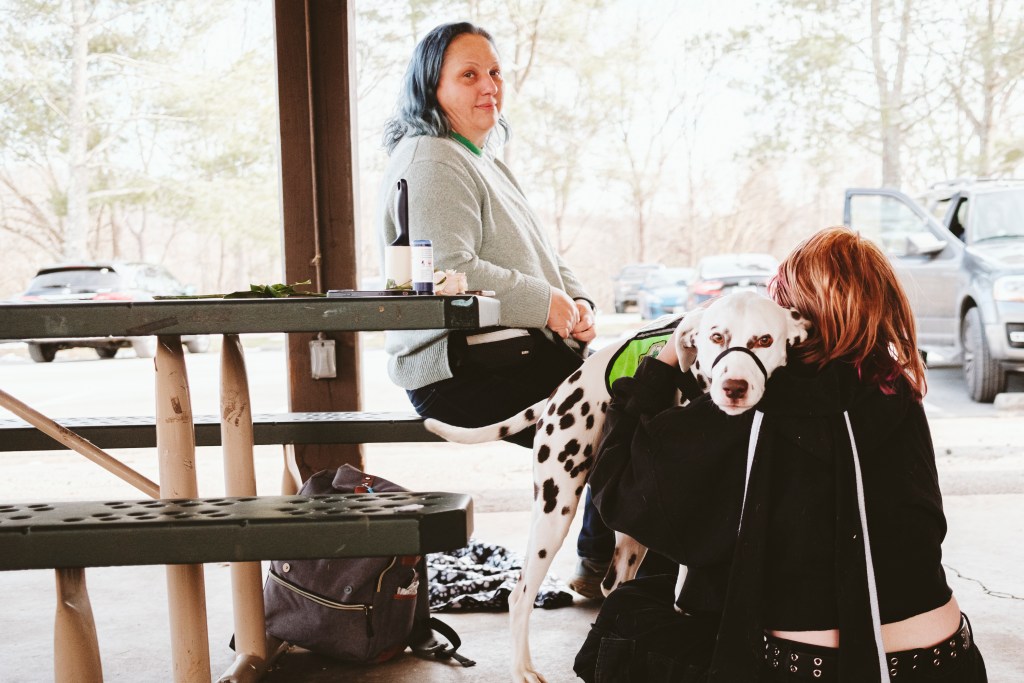
At first glance, it looked almost like a regular picnic. Some people smiled, chatted, and petted a deaf Dalmatian who pressed himself into people’s arms for a hug. But that dog was a volunteer therapy dog. And, on closer look, it was clear that some guests were smiling through tear-stained eyes while others stood in awkward silence as Kenzie moved about with forced energy and cheer, encouraging them to eat the mountains of food donated by strangers.
“There is so much food,” she said somewhat cheerfully. “We need to get people to eat.”
The clues to the seriousness of the occasion were clear in the setup, too: Black-and-white balloons hung above a table with flyers on suicide prevention. A hand-painted sign with flowers that read “In Loving Memory of Demario Knighton Centeno,” a gift from a stranger, leaned against a wall where Demario’s mother and Kenzie hugged.
Some 150 people came throughout the day for Demario’s memorial, said Kenzie. Some were Demario’s family and friends. Others were school staff. But many were community members who had seen her Reddit post and, touched by suicide in some way in their own lives, wanted to show support. Even if it was just dropping off a box of cupcakes.
After Demario passed away, Kenzie struggled to process the loss. She also became acutely aware of how widespread mental health struggles were among her peers.
During the fall semester, she surveyed and interviewed approximately 1,000 students — about half of Albemarle High School — for her data class. Her findings were alarming: 35% reported thinking seriously about suicide within the past six months, significantly higher than the 22% national average reported in the Centers for Disease Control and Prevention’s 2023 data or 11% of students who had suicidal thoughts in the prior 12 months according to the Virginia Department of Criminal Justice Services’s survey of the same year.
“It was beyond scary,” Kenzie said. How many students hadn’t been honest in their responses? she wondered. How was everyone walking through the school halls like everything was okay?
That was one of the reasons she wanted to organize the memorial for Demario — not just to celebrate her friend’s life, but to create a support network for those who needed it.
This time, the Albemarle High School principal made a point of announcing the memorial at school, a stark contrast to two years ago when Demario’s passing was only briefly acknowledged. For Kenzie, it felt like this time, it truly mattered.
Her Reddit post about the memorial plans received hundreds of upvotes and dozens of supportive comments. In the weeks leading up to the event, strangers donated food, beverages, flowers, and more.
“It spoke to me,” said Joellen Finazzo, one of the attendees, about Kenzie’s Reddit post. One of her friends had attempted suicide twice. He was okay now, but it had deeply affected her.
Showing up for Kenzie and her friends felt like “an opportunity to support someone in the future,” she said.
“I was kind of losing hope in humanity,” Kenzie said. “And then hundreds of people were like, ‘We care about him,’ even though they’d never met him. It was weird but amazing.”
This is exactly the kind of community response that Nelson said he hopes to see grow, both through new projects like the student ambassador program in Albemarle schools and outside of them.
And while there may still be no such thing as a completely reliable safety network for kids like Demario, movements like this could help, he said.
After the event, Kenzie returned to Reddit to tell the hundreds of people who had reacted to her first post how it went.
“My friend, before he passed, said he wanted to be a therapist so no one had to feel alone,” Kenzie wrote. “We all wanted to make sure no one felt as alone as he did that night to honor that memory.”