

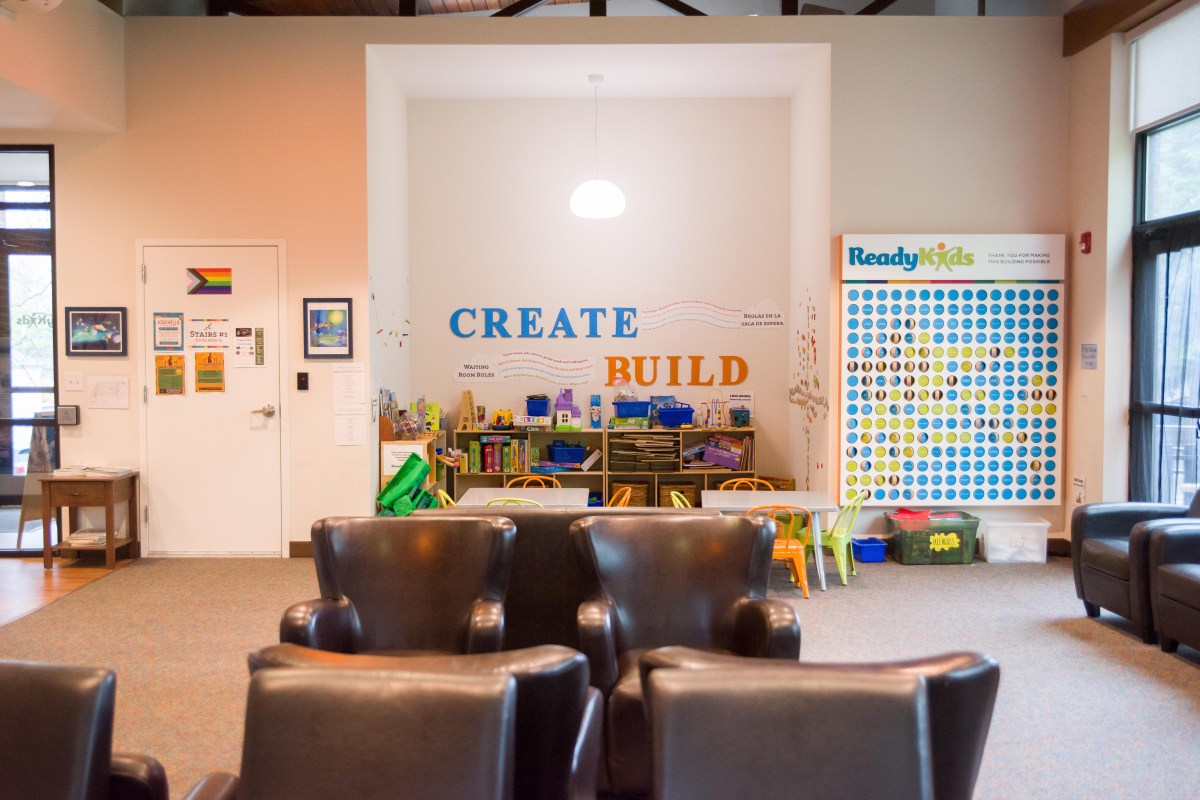
ReadyKids, one of Charlottesville’s oldest social service nonprofits, recently lost $200,000 of federal funding that helped support counseling for children exposed to trauma after Congress passed a stopgap spending bill that omitted money for several central Virginia projects.
This might mean, in a worst-case scenario, that as many as 90 kids who were either victims of or witnesses to a crime would not get access to free trauma counseling through ReadyKids’ Inside Out program, which serves the city of Charlottesville as well as Albemarle, Fluvanna, Louisa, Nelson and Greene counties.
Some of the children ReadyKids works with are as young as 2 years old.
Congress passed a funding bill in March in order to avert a government shutdown, NBC News reported. The bill left out Congressionally directed funding or “earmarks,” which are federal dollars that are directed to a specific project in a specific state or congressional district, according to Roll Call. ReadyKids was the intended recipient of some of that funding.
As the need for youth mental health services in Virginia keeps growing, funding cuts such as these can be devastating — especially for programs that provide free care to the most vulnerable. For ReadyKids, these federal funding cuts are just the latest blow to an already shrinking budget.
“We’re just vital services, and our funding is being cut right and left, even though we have the data showing that there are great needs,” Eileen Barber, ReadyKids communications specialist, said. “These kids and families wouldn’t be able to receive services somewhere else due to cost or other barriers.”
Most of Virginia is in a mental health provider shortage — in 2022, 93 out of the state’s 133 localities were designated as Mental Health Professional Shortage Areas (MHPSA), according to the Virginia Health Care Foundation. It’s worse for youths — according to 2022 data from the American Academy of Child and Adolescent Psychiatry, 70% of localities in Virginia don’t have access to a child and adolescent psychiatrist.
That’s why services like those provided by ReadyKids are so important. Through its Inside Out program, ReadyKids works with children from 2 to 18 years old who experienced or were exposed to the kind of abuse that qualifies as a crime — they might have witnessed violence in their community or home, they might have survived sexual abuse, or they might have been neglected.

Sometimes, it’s a mixture of different types of abuse that leads to complex trauma, explained Ashley Wood, ReadyKids’ director of counseling and a counselor herself. It’s the kind of trauma that requires counselors to help kids learn to regulate their emotions, learn to trust adults and rebuild a sense of safety.
The Inside Out program costs about $1 million a year, so the loss of $200,000 is significant, as it’s about 20% of the total budget. It’s not the only loss the program has seen either: Inside Out received $55,000 from the Biden administration’s American Rescue Plan, which was designed to help economic recovery after the COVID-19 pandemic and recently expired.
The combined funds lost make up the salaries of about three to four counselors, each with a caseload of roughly 20 kids at a given time — about 25-30 kids a year, with turnover.
The counselors often work with families who are uninsured or underinsured, or those who don’t have access to mental health services. Sometimes, they work with kids in foster care as they work through trauma after being removed from their family setting. And ReadyKids provides those services for free.

“We don’t charge for services because we get grants that support those services,” said Melissa Cohen, ReadyKids’ deputy director. “Unfortunately, with funding cuts, we either will have to lose counselors — which we don’t want to do because there’s such a need — or we would have to consider starting to bill for insurance, which we don’t want to do either, because that’s another barrier for families.”
Right now, ReadyKids gets an average of six to eight kids who might need counseling referred to them each week, and every time their waitlist gets to 12 eligible candidates, they close it. This allows them to keep the wait for services to around three months.
“We see a lot of trauma here. The need has grown, and the complexity has grown. Intensity of trauma has become more severe. COVID obviously affected a lot of us, and particularly our kids, and it’s just the mental health needs have really risen,” said Cohen.
Counselors also spend time talking to caregivers, helping them understand trauma symptoms and giving them tools to support a child outside of counseling sessions.
Despite the mounting pressure, Cohen said that letting go of counselors is the last resort — they will see if they can move money around from other programs to compensate for the losses, and hope to find outside grants or donations.
The Inside Out program had already gotten smaller: anticipating federal cuts, ReadyKids didn’t rehire for one of their counselor positions, which led to a decrease in the number of kids who received counseling. In the 2024 fiscal year, the program helped 178 kids — 50 fewer than the year before.
“There is such a great need, and the need outweighs [the resources.] We have nine counselors, and we could probably employ 15. At this rate, we have to open and close our wait list to manage the amount of referrals we’re getting,” said Cohen.
There were other sources of funding that were affected as well, outside of the March congressional funding cuts. For example, ReadyKids benefits from the Victim Services Grant Program (VSGP), which is a state program that relies on federal funds. The program saw a 39% drop in awards between 2020 and 2023 due to lower funding at the federal level, said Barber. If this trend continues, it will become more difficult to provide the mental health support that trauma-exposed youth urgently need.
“This funding decline threatens our ability to maintain critical mental health support for trauma-exposed youth,” said Barber.
And the staff is worried about losing more funding. “The part of the general mood is waiting to see, ‘what else is gonna get cut?’ There’s money we’ve relied on for a long time that just keeps decreasing,” Barber said.
Editors’ note: Article updated on April 15, 2025, to clarify that ReadyKids did not rehire for one of their counselor positions.