

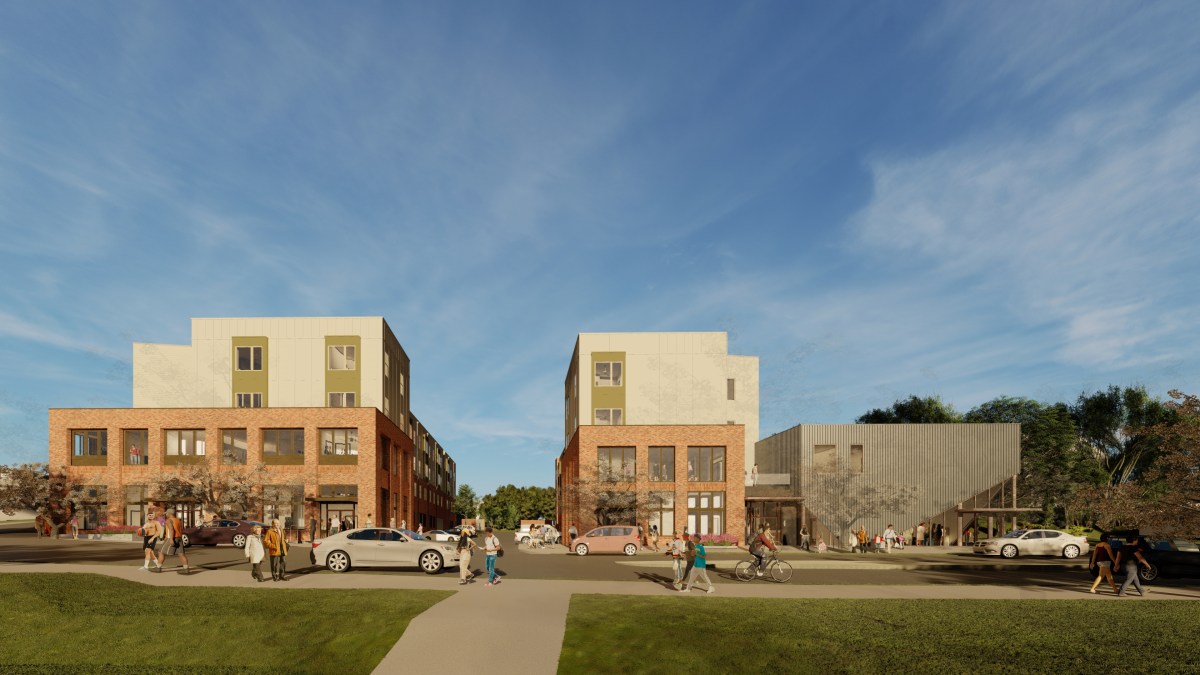
On Monday, Feb. 2, Charlottesville City Council voted to help close a crucial funding gap for the 501 Cherry Ave. project, allowing the unique mixed-use development to move ahead.
All five councilors voted to allocate $700,000 from the Capital Improvement Program Contingency Fund to help build out one of two commercial spaces — and show potential lenders that the city has confidence in the project.
Without that money, the entire development might have been doomed.
The 501 Cherry Ave. project will have three components: 71 low-cost apartments, space for the teen-focused music nonprofit The Music Resource Center, and a commercial space the neighborhood hopes will become a grocery store.
The project is the first of its kind in Charlottesville — the only time so far that a neighborhood association, a for-profit developer and a nonprofit housing developer have collaborated on a project. When Woodard Properties purchased the two parcels of land at 501 Cherry Ave., the Fifeville Neighborhood Association asked for a say in what the company developed there. Woodard agreed, and brought in Piedmont Housing Alliance (PHA) to help with the affordable housing aspect of the project.
The three groups signed something known as a community benefits agreement to hold them all accountable. This type of agreement is so rare, just a handful are signed in the U.S. each year, attorney Julian Gross, one of the nation’s foremost experts on community benefits agreements, told Charlottesville Tomorrow in 2023.
Woodard Properties, the Fifeville Neighborhood Association and PHA have been working on this project for three years. They’ve even selected a potential operator for the grocery store, the Charlottesville Food Co-Op.
That unique collaboration is what led City Council to approve a rezoning of the properties to allow the development to happen as the partners envisioned it. City officials have since encouraged other developers to follow the 501 Cherry project’s collaborative example.
Before last week’s vote, City Council had already pledged $3.1 million to the project, which is projected to cost between $45 million and $50 million overall.
That money will come from a combination of places, Sunshine Mathon, PHA’s executive director, has said, including the Internal Revenue Service’s Low Income Housing Tax Credit program — commonly known as LIHTC, pronounced “lie-tech” — and philanthropic sources. The city’s contributions are vital to showing potential funders that the project is viable, Mathon told the Council on Jan. 20.
But a $700,000 funding gap remained — without it, construction couldn’t begin in April, Mathon said. And if construction doesn’t begin in April, he added, the development will not be open by the time the Music Resource Center needs to vacate its current home on Ridge Street and move in.
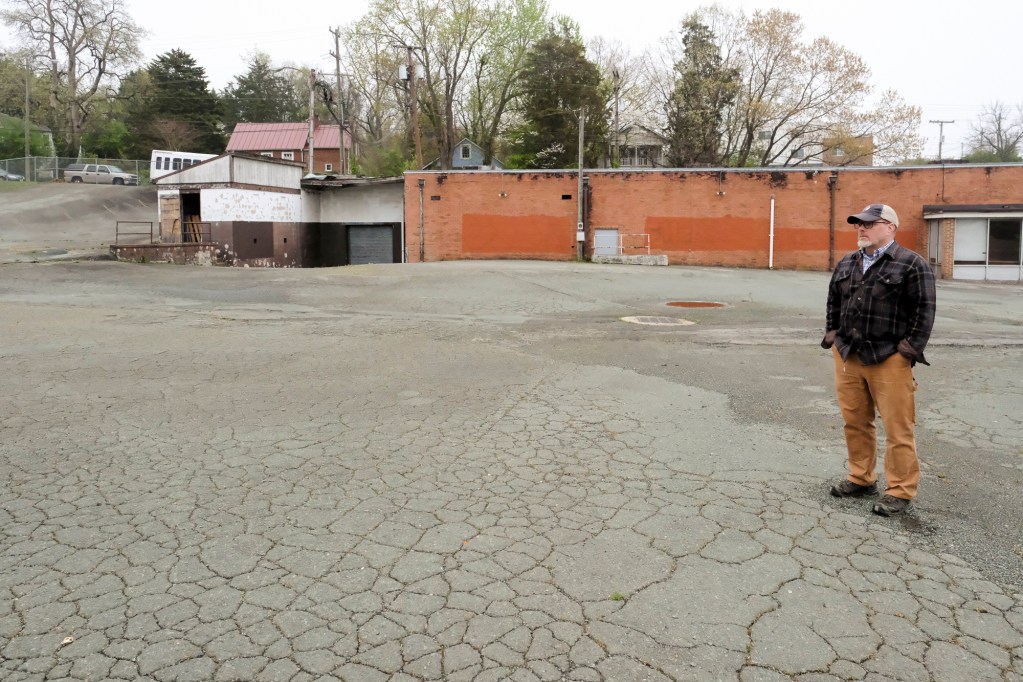
In addition to that infusion of cash, PHA also asked the city to adjust the tax increment financing performance agreement for the project, which is an agreement that allows for lower property taxes on specific projects. In some cases these agreements are needed to make a project financially achievable.
Generally, a developer takes on debt in order to build a project. One of the ways a developer of an apartment building might pay back that debt is through rent payments from tenants.
Because the housing component of the 501 Cherry Ave. project is intended for residents with lower incomes — units the city desperately needs — PHA won’t rely on rent payments alone to pay back that debt. One of the tools it is using to keep rents low is the tax increment financing performance agreement.
Previously, the agreement said that the city would forgive 50% of the development’s property taxes over a 30-year period, meaning that PHA can instead use that money to pay off its debt.
Mathon asked to raise it to 100% over a 30-year period, meaning PHA would not have to pay the city tax on the property for 30 years.
That works out to about $8 million total, or about $266,000 annually for 30 years, the city’s director of economic development, Chris Engel, told the Council.
That way, PHA would be able to take on more debt to get the project built, Mathon said. It would also prove to lenders that the city has confidence in the project. If lenders see that the city has that confidence, they’re more likely to lend money, he explained.
“The uncertainty caused by the federal administration over the last year through both macroeconomic whiplash, as well as housing-specific funding questions, have caused our funding underwriters, both our LIHTC investor, as well as our state housing financing agency, Virginia Housing, to manage perceived risk in the broader environment by tightening their underwriting processes to levels never experienced before,” Mathon said.
“Over the last 72 hours, we have fielded more last-minute interpretations of underwriting risk than I have ever experienced before on any single project in the history of my work,” Mathon said. “I can say with 100 percent certainty that if City Council does not approve the request for additional funds this evening to support the commercial space in 501 Cherry, which we are all aiming to become a neighborhood-scale grocery, the entire project will unravel this evening.”
“I promise you I don’t say that lightly,” he added in a solemn tone.
City Manager Sam Sanders said that he had recently met with the Co-Op to see where they are in the process. He said he wanted to “clarify” for the Council what passing the resolution would mean.
“This act on your part, if you were to pass this item tonight, would still be an endorsement of the concept of a grocery store going in the property, but not a condition that it be a grocery store,” Sanders said. “If it is not proven viable by their efforts, then we would not want to then hold this space from being occupied by any other use.”
Based on the agreement the three community partners signed, they would have to agree on anything else that would occupy that space.
Sanders added that the Co-Op and PHA had to work toward an agreement outlining the groups’ expectations and roles.
Mathon later said the two groups were close on that agreement.
Councilor Lloyd Snook seemed unsure of whether or not to give more money to the project, voicing doubt about whether or not the neighborhood’s hope for the grocery store was realistic.
“One of the concerns that I had had when they started talking about the notion of a grocery store, and I’ve said that from this dais before, is that in most instances, the reason why a grocery store doesn’t exist in a certain place is that because economically it hasn’t succeeded before,” he said.
“The question becomes, what subsidies is the city going to end up making in order to make this spot work? I am just concerned that, if part of the reason why we’re putting a lot of this money into this project is for something that is maybe yes, maybe no,” he added.
“I don’t think anyone is under the illusion that it won’t be hard to both have a small business that can be profitable and sustain, and still also meet the community goals of having modestly-cost food that people can walk to and have access to,” Mathon said in response. “Everyone knows that’s going to be a challenge.”
The $700,000 would help build out the shell for the store, and prevent PHA from having to pass any construction debt for that space along to the operator in the form of high rent costs.
“If, for reasons we can’t control, the grocery is not successful, or even the inverse — let’s say the grocery is spectacularly successful, and they actually want a larger space within five years and decide to move on — our commitment would be we would hold that space and prioritize some other use that is of similar community benefit,” Mathon added.
Other councilors were more supportive. They acknowledged that the grocery store might not be easy to achieve, but they felt it was important to try.
“I’m game,” said Councilor Jen Fleisher, who works as a public health official. “Healthy food access is a priority of all three health systems in the region. We need that.”
“I’m supportive of it, and I think more than anything, we have to ensure that the project can move forward and can actually start to break ground,” said Councilor Michael Payne. He said was encouraged by the idea that, if the grocery store did not work out or if it worked out so well that it needed a larger space, the additional commercial spot at 501 Cherry would still be used for something relevant to the neighborhood, as promised in the partners’ agreement.
Councilor Natalie Oschrin asked if they could waive the second reading of the resolution and approve it that night, and was audibly disappointed when city attorney John Maddux told her they could not.
Council put the resolution on the consent agenda for its Feb. 2 meeting.
During the first public comment period of that Feb. 2 meeting, Deanna McDonald rebuked city officials on the dais for casting doubt on the grocery store’s odds of succeeding.
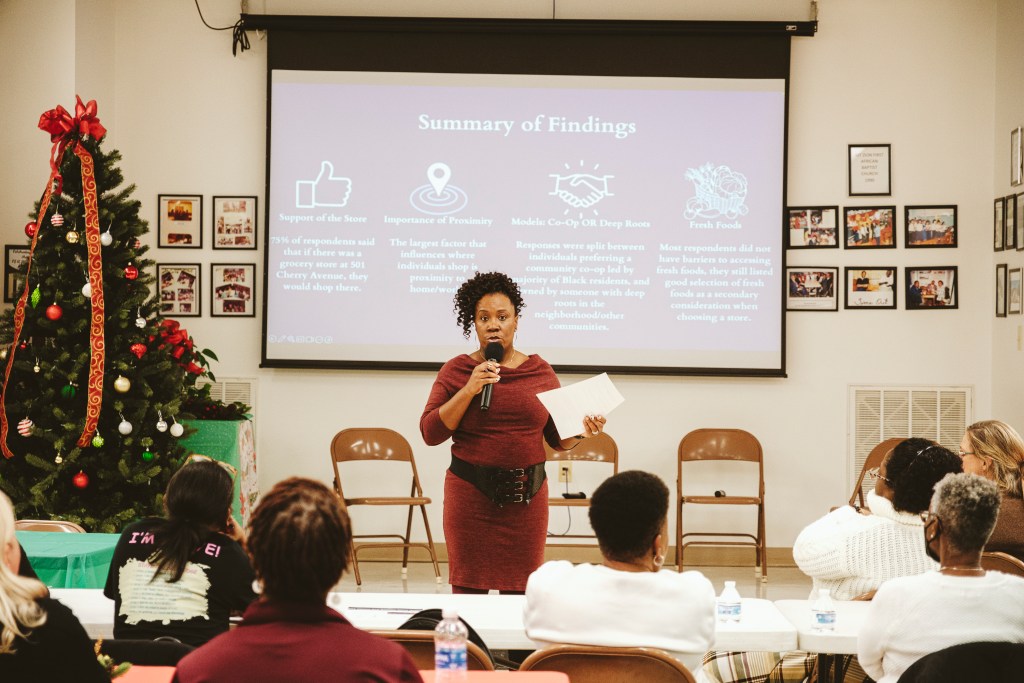
McDonald is a community health advocate and the founder of RN HEARTwork, a health education coaching and consulting business. She helped the project partners with community engagement about the grocery store aspect, conducting community listening sessions and surveys asking what the neighborhood wanted.
Those sessions revealed that the neighborhood wants access to fresh, healthy food at a price point they could afford. The data echoed the neighborhood’s call for a grocery store in the Cherry Avenue Small Area Plan, adopted by Council in 2021.
McDonald is also a member of the Charlottesville Food Co-Op steering committee. The Co-Op, which is run mostly by women of color, has created a business plan and financial projections, both of which were closely reviewed and deemed feasible by an independent grocery industry expert, Woodard Properties CEO Anthony Woodard told Charlottesville Tomorrow last fall.
“The seeds of doubt that Council are sowing related to a grocery store, and making provisions that a developer could put in something else, is not helpful,” McDonald said to city officials. “It is in fact harmful. It’s what happened at Vinegar Hill.”
Vinegar Hill was a thriving, majority-Black, working-class neighborhood and business district in downtown Charlottesville. In 1964, an all-white City Council, working alongside the Charlottesville Redevelopment and Housing Authority and the federal government, razed the neighborhood in the name of “urban renewal,” displacing 500 people in the process.
After the city destroyed the neighborhood, Vinegar Hill sat vacant for years before any significant development happened, according to the Encyclopedia Virginia entry on urban renewal in Charlottesville.
Fifeville, like Vinegar Hill, has long been a majority-Black working-class neighborhood, and is home to some Black-owned businesses. Its demographics, however, are changing, and longtime residents worry that, like some of their neighbors, they will be pushed out.
McDonald pointed out that the neighborhood has come to expect the grocery store.
“There’s promises made to community, and then they fall through and it’s with plausible deniability. City Council is here to serve the community. The community is doing their part. Let’s all partner and work together to really get this thing across the line,” McDonald added.
A few minutes later, Council voted unanimously to allocate the $700,000 and amend the performance agreement.
That puts the whole project another step closer to the finish line, Mathon told Charlottesville Tomorrow in an email the day after the vote.
“We still have some underwriting hurdles we’re working through” with some of the investors, he wrote. “But we’re almost there.”