

Virginia House District 59 covers parts of Hanover, Louisa, and Henrico counties. This year, two candidates are vying for the seat: H.F. “Buddy” Fowler Jr. (R) and Scott O. “K” Konopasek (D).
Fowler is the incumbent, having served in the House of Delegates since 2014.
House Delegates serve two-year terms, author state laws, approve the state budget, and address community issues at the state level — including infrastructure, education funding, and local regulations.
Though Fowler and Konopasek are the only two candidates certified by the Virginia Department of Elections for this race, voters can write-in other candidates.
Charlottesville Tomorrow designed a questionnaire for the candidates based on more than 160 responses we received to a voter survey. Konopasek replied, and his answers are below.
Fowler did not reply. You can use the information his campaign provided to the Virginia State Department of Elections, searchable by last name, if you would like to reach out to him yourself.
Responses have been fact-checked by reporters and lightly edited for readability.
With electricity demand rising rapidly — especially from data centers — what legislation or budget priorities will you support to ensure Virginia can meet its energy needs, protect communities and stay on track with the goals of the Virginia Clean Economy Act?
Scott O. “K” Konopasek: I believe that increasing investment in renewable energy is critical to address Virginia’s energy needs of the future. I would promote requiring public facilities and businesses with high electricity consumption to install solar on their structures to help meet their needs. Power utilities must promote and facilitate this additional solar capacity.
H. F. “Buddy” Fowler Jr.: Did not respond.
When it comes to siting data centers and energy projects, do you support setting statewide minimum standards, or should decisions remain with local governments? What principles will guide your approach, and how will you weigh the tradeoffs involved?
Konopasek: I don’t believe that the two contradict each other. It is the role of the state to establish standards and technical specs for approval of data center sites and major energy projects. When the standards are satisfied, local governments then hold hearings and make their decisions. Meeting standards is not a guarantee of approval. Local approval processes must be transparent and allow for robust public input.
Fowler: Did not respond.
The federal government is changing Medicaid rules — restarting eligibility checks, adding work and reporting requirements and increasing oversight. These changes may affect how many Virginians stay enrolled, depending on how the state handles things like paperwork, renewals and support for local offices. What role do you think the General Assembly should play in responding to these changes?
Konopasek: First, the legislature must adequately fund the agencies that will manage the new eligibility requirements and ensure, through oversight, that budgets and bureaucracies do not contribute to or create bottlenecks resulting in the unnecessary loss of benefits. The legislature must consider the degree to which state funds are used to backfill the federal cuts to Medicaid.
Fowler: Did not respond.
State delegates help shape the budget and decide how Virginia responds when federal funding changes. If funding declines in areas like health care, education or infrastructure, how would you approach decisions about state support? What principles would guide your budgeting priorities?
Konopasek: It is impractical for the state to try to pick up the costs of all the federal cuts to programs. On the other hand, it would be irresponsible and negligent to let the cuts stand unfunded. The impact of the cuts on individuals and families should be the principal lens used in making backfilling decisions. Organizational interests, taxes and profits should always come after human considerations.
Fowler: Did not respond.
With public school funding facing uncertainty at both the state and federal levels, what do you believe is the best way for Virginia to ensure a stable and adequate K–12 education system?
Konopasek: I believe the state needs to stop politicizing and revising curricula content, specifically the widely reported political revisions to the history and social science curriculum that were made after a final (or near final) form which made changes to the way the history of slavery in Virginia was presented.* Adopting these continual changes is costly, inefficient and unnecessary, and degrades the quality of the education we give our kids. The state should fund every school district at a base level and reallocate funds to ensure no inequities.
*Editor’s note: Per state law, Virginia must revise its standards of learning and curricula every seven years. Revisions to the history and social sciences curricula began in 2021, and the results were controversial, as The Hechinger Report, a national newsroom focused on education, reported in fall 2023. A May 2025 report from The Virginia Mercury found that teachers were struggling to implement the new curricula because the state had not yet provided instructional guides for them.
Fowler: Did not respond.
The General Assembly plays a key role in shaping Virginia’s laws on abortion. Delegates decide which bills move forward and can also propose constitutional amendments. What is your general approach to abortion policy in Virginia, and what kinds of measures would you support or oppose?
Konopasek: I support voting for the constitutional amendments in order to put them on the ballot for the people to decide. While I do support the amendments on their merits, I believe the critical issue in play is that the voters, in our form of government, have the right to approve or defeat these amendments.
Fowler: Did not respond.
Many central Virginians who responded to our voter survey expressed concern with accessing affordable housing. What do you see as the General Assembly’s role in addressing housing challenges in our region?
Konopasek: We need to look to public-private partnerships and incentives to promote the development of affordable rental housing in communities with an existing housing shortage. I would support the promotion of ADUs [accessory dwelling units] in single-family housing communities. I believe that the legislature can help families who are first-time home buyers with tax credits, grants, and down-payment assistance.
Fowler: Did not respond.
Some rural areas have faced sudden bridge closures and long detours, with slow timelines for repairs. Delegates help write the transportation budget and set the rules that guide how the Virginia Department of Transportation chooses and funds projects. Would you support any legislative changes to ensure rural communities get the maintenance and emergency repairs they need? If so, what changes?
Konopasek: I would support transportation funding that prioritizes inspection and maintenance of existing roads and bridges. Decades of deferred maintenance have weakened our infrastructure leading to failures and the need for emergency repairs. Inspection and maintenance will make our infrastructure safer and last longer.
Fowler: Did not respond.
Immigrations and Customs Enforcement arrests have surged across Virginia in 2025, with more than 2,500 arrests by early summer and over 4,000 by late July, according to analyses of ICE data. What should Virginia’s role be in immigration enforcement? Should the state encourage local cooperation with ICE, limit it to what federal law requires, or formally restrict it? And how would you use your role as a delegate to influence this issue?
Konopasek: Cooperation with ICE should be limited to what is required by existing law. Virginia should not actively support or underwrite immigration enforcement. I would seek initiatives to make enforcement less cruel and more respectful of human dignity. The state should fund services and nonprofits that serve family members, especially minors, that are hurt by family separation and loss of income.
Fowler: Did not respond.
Virginia is seeing more frequent flooding, heavier rainstorms and longer dry spells. The General Assembly helps fund stormwater and emergency programs, set building rules and support local planning. What’s your view on how the state should respond to these kinds of weather challenges?
Konopasek: The state must plan now to back fill emergency responses due to FEMA cuts. The legislature should set standards for managing impermeable surfaces and ground water. Consideration should be given to offering incentives for reducing surface water such as more permeable surfaces and improvement of drainage and retention systems in areas prone to flooding.
Fowler: Did not respond.
Are there any other pressing issues facing your district that you would like voters to know about?
Konopasek: Federal cuts to agencies and programs, as well as tariffs, pose dire problems for our farmers and agricultural industries in the district. As the scope and scale of the impacts of these cuts become realized (and the impact of all federal and [Department of Government Efficiency] cuts are known) the state has to be prepared to prioritize and mitigate them in a timely and meaningful way. Ironically, shrinking the federal government is going to necessarily increase the size and role of state government. The needs federal programs were intended to meet will not disappear. Their burden will only be shifted to state government. The state has to be more nimble than it has ever been.
Fowler: Did not respond.
More about the candidate and issues
- Fowler’s campaign contributions, from the Virginia Public Access Project
- Konopasek’s campaign contributions, from the Virginia Public Access Project
- A report on questions about Fowler’s residence and whether he is eligible to represent the 59th District (6News Richmond, Nov. 16, 2023)
- A 2023 report that includes Fowler’s positions on various issues (NBC12, Oct. 13, 2023)
- A report on Fowler’s 2023 win (The Collegian, Nov. 7, 2023)
- A report about the Virginia Clean Economy Act and energy demands (The Virginia Mercury, July 2, 2025)
- A report about how cuts to Medicaid and Medicare will affect Virginians (Virginia Public Media, July 3, 2025)
- A report on the costs and benefits of data centers (Virginia Mercury, May 28, 2024)
- A report on how abortion access and other reproductive rights could be enshrined in Virginia’s state constitution (Virginia Mercury, Feb. 13, 2025)
- The state of bridges and other structures in Virginia, from the Virginia Department of Transportation
- A 2022 report about Virginia’s bridge repair backlog (Virginia Mercury, Feb. 23, 2022)

Here are key dates and deadlines in the 2025 elections
| Friday, May 2, 2025 | Early voting for primaries begins weekdays at local registrar’s offices. |
| Tuesday, May 27, 2025 | Deadline to register to vote or update an existing registration for the primary election. You can still vote in the primary if you miss this deadline by registering at the polling place and casting a provisional ballot. You do not have to be a member of a political party to vote in that party’s primary election. However, you can only vote in one party’s primary election each year. |
| Friday, June 6, 2025, 5:00 p.m. | Deadline to apply for your ballot to be mailed to you. Requests must be received by your local registrar’s offices by 5 p.m. |
| Friday, June 6, 2025, 5:00 p.m. | Deadline to apply online for an absentee ballot using the Citizen Portal. |
| Saturday, June 7, 2025 | Local voter registration offices open on Saturdays for early voting for primaries. |
| Saturday, June 14, 2025, 5:00 p.m. | Early voting for primaries ends at local registrar’s offices. |
| Tuesday, June 17, 2025 | Primary Election Day! |
| Friday, Sept. 19 to Saturday, Nov. 1, 2025 5:00 p.m. | Check with your local registrar’s office for early in-person voting. |
| Friday, Oct. 24, 2025, 5:00 p.m. | Deadline to apply with your local registrar’s office for a ballot to be mailed to you. |
| Tuesday, Nov. 4, 2025 | Election Day! |
We will update this list periodically as deadlines approach or we receive new information.
Register to vote, check your registration, find your polling places and apply to vote absentee at the Virginia Department of Elections here. Remember, even if you miss registration deadlines, you can register through Election Day and vote using a provisional ballot.
Need to know if you’re eligible to vote? Here are resources from the Virginia Department of Elections.

Subscribe for Voter Guide updates
Take a survey to help us continue to build this voter guide!
The latest from the 2025 Voter Guide
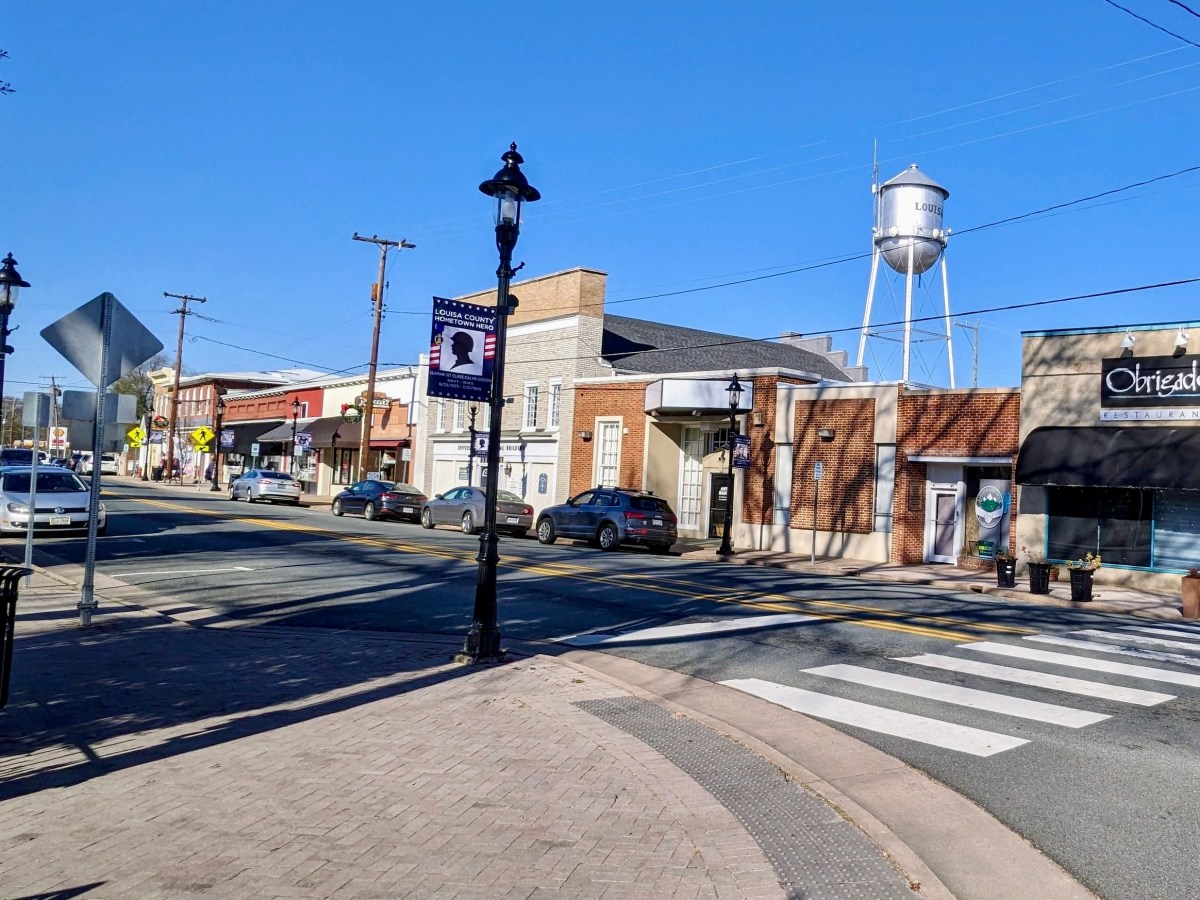
The Town of Louisa faced five resignations in less than a year. Now it’s trying to rebuild
During staffing shortages and months without meeting minutes, residents felt left in the dark. The town is trying to improve its communication.
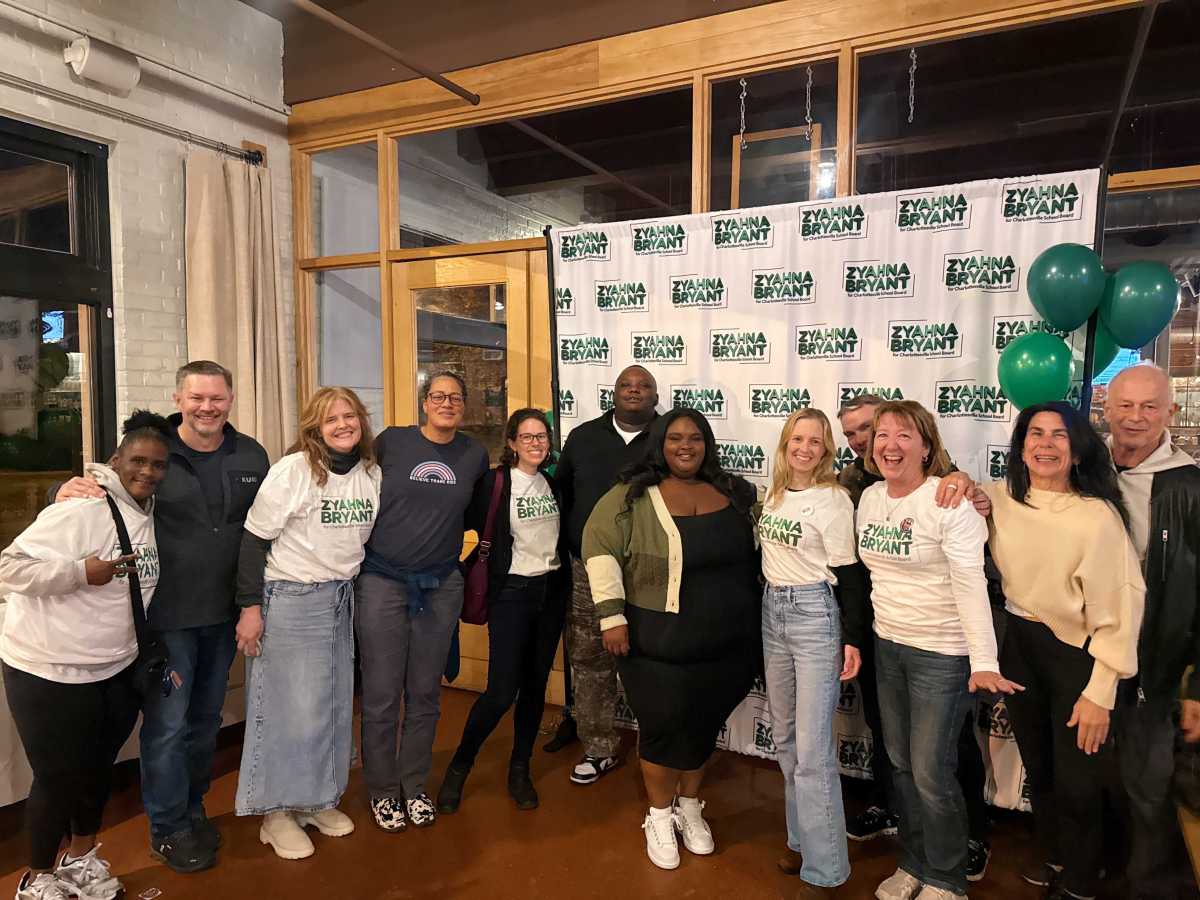
Longtime activist, first-time Charlottesville City School Board member Zyahna Bryant wants to elevate youth voices
“I believe that the community is ready for something new, and so that just makes me so excited to be on the cusp of that and to see a new wave of leadership,” Bryant told Charlottesville Tomorrow.

Matthew Kersey is being challenged by Ashley Michael for Louisa town mayor
Kersey was appointed mayor in July after both the elected mayor and his appointed replacement stepped down in quick succession.