

Virginia House District 50 covers Mecklenburg, Charlotte and Lunenburg counties, as well as parts of Prince Edward and Halifax counties. This year, three candidates are vying for the seat: Trudy Bell Berry (I), Earnadette Powell-Farrar (D), and incumbent Thomas C. “Tommy” Wright Jr. (R).
Wright has served in the House of Delegates since 2001. Berry tried, unsuccessfully, to unseat him in 2019 and again in 2021.
House Delegates serve two-year terms, author state laws, approve the state budget, and address community issues at the state level — including infrastructure, education funding, and local regulations.
Though Berry, Powell-Farrar and Wright are the three candidates certified by the Virginia Department of Elections for this race, voters can write-in other candidates.
Charlottesville Tomorrow designed a questionnaire for the candidates based on more than 160 responses we received to a voter survey. Berry and Powell-Farrar replied, and their responses are below.
Wright did not reply. You can use the information his campaign provided to the Virginia State Department of Elections, searchable by last name, if you would like to reach out to him yourself.
Responses have been fact-checked by reporters and lightly edited for readability.
With electricity demand rising rapidly — especially from data centers — what legislation or budget priorities will you support to ensure Virginia can meet its energy needs, protect communities and stay on track with the goals of the Virginia Clean Economy Act?
Trudy Bell Berry: I would advocate for grants and no- or low-interest loans for homeowners to put solar on their rooftops or property. I would advocate to mandate solar on state and local municipal building rooftops, public school buildings, and parking canopies with solar in commercial parking lots. I would advocate to mandate that data centers install solar on their rooftops and pay for their own energy use rather than putting that cost on taxpayers or consumers of the same energy company. I would advocate for funds to improve our electric grid and other energy infrastructure.
Earnadette Powell-Farrar: I will champion the proposal for the company to assume financial responsibility for its energy consumption, thereby ensuring the continued operational efficiency of the data center without transferring costs to Virginia’s constituents. Furthermore, I will examine existing benchmarks to ensure the state’s adherence to the Virginia Clean Economy Act.
Thomas C. “Tommy” Wright Jr.: Did not respond.
When it comes to siting data centers and energy projects, do you support setting statewide minimum standards, or should decisions remain with local governments? What principles will guide your approach, and how will you weigh the tradeoffs involved?
Berry: I would support keeping decisions with local governments. I realize not all boards listen to their constituents, but I believe that taking the decision away from local governments means taking away decisions from the people. I don’t want to silence people’s voices. Our rural communities need to be protected from companies that would destroy cultural, historical and environmentally-significant areas, and protection is best placed in the hands of local governments.
Powell-Farrar: No response.
Wright: Did not respond.
The federal government is changing Medicaid rules — restarting eligibility checks, adding work and reporting requirements and increasing oversight. These changes may affect how many Virginians stay enrolled, depending on how the state handles things like paperwork, renewals and support for local offices. What role do you think the General Assembly should play in responding to these changes?
Berry: The General Assembly should fill federal shortfalls in funding Medicaid. They should increase the minimum wage requirement for full Medicaid benefits (currently 80% of the federal poverty level) and remove work requirements. They should reduce bureaucratic red tape by reducing frequency of case reviews and state reporting requirements. They should ensure local social services offices have enough staff to review eligibility and weed out fraudulent claims.
Powell-Farrar: I recommend that the allocation of Medicaid resources undergo a comprehensive review. Consideration should be given to the expectation of work for individuals capable of employment, while ensuring that necessary assistance remains available. A strategic plan, coupled with a phased implementation approach, is proposed to address this matter effectively.
Wright: Did not respond.
State delegates help shape the budget and decide how Virginia responds when federal funding changes. If funding declines in areas like health care, education or infrastructure, how would you approach decisions about state support? What principles would guide your budgeting priorities?
Berry: Corporate taxes need to be increased. Amazon got a sweetheart deal from the General Assembly to build its headquarters in northern Virginia at taxpayer expense. No business as large as Amazon should be allowed to set up or expand in Virginia using taxes paid by the people.
Powell-Farrar: To address current budgetary constraints, a freeze on all state job postings and salary increases is proposed to maintain workforce stability. Furthermore, collaborative discussions with members of the House of Delegates will be initiated to explore innovative solutions for supporting Virginia residents through a team-based approach.
Wright: Did not respond.
With public school funding facing uncertainty at both the state and federal levels, what do you believe is the best way for Virginia to ensure a stable and adequate K–12 education system?
Berry: This is a complex issue. A quality education is the foundation of a healthy economy and improves quality of life. We need to include trades training and paid apprenticeships in our schools. We need to increase job opportunities; working people pay taxes and use fewer social services programs such as SNAP, which frees up more money for schools. Increasing corporate taxes isn’t a one-size-fits-all cure-all, but needs to be seriously considered. Publicly funding vouchers for students to attend private and parochial schools needs to be seriously reconsidered. Parents would be less likely to use non-public schools if our school systems were improved. The budget needs to be reviewed for line items that can be reduced or eliminated.
Powell-Farrar: I advocate for the implementation of continuous best practices as a highly effective pedagogical approach. This strategy emphasizes providing fundamental resources, coupled with consistent instruction and open dialogue within a supportive and inclusive classroom setting. The aim is to cultivate a well-rounded learning environment that fosters student success.
Wright: Did not respond.
The General Assembly plays a key role in shaping Virginia’s laws on abortion. Delegates decide which bills move forward and can also propose constitutional amendments. What is your general approach to abortion policy in Virginia, and what kinds of measures would you support or oppose?
Berry: No matter what one believes religiously or ideologically, abortion is healthcare, healthcare is a right, and healthcare is a private matter between self, family and medical providers. You know the saying “your rights stop where my rights start?” You may not want or would not have an abortion, but you don’t have the right to tell me I can’t have one. The government certainly does not have that right. I support a state constitutional amendment to protect women’s rights, including rights to all healthcare.
Powell-Farrar: I support the right for women to choose. I will take the measures of proposing amendments that women have the right to choose with no restrictions.
Wright: Did not respond.
Many central Virginians who responded to our voter survey expressed concern with accessing affordable housing. What do you see as the General Assembly’s role in addressing housing challenges in our region?
Berry: The General Assembly has an obligation to protect consumers from high prices. They need to ban private equity and investment firms from owning homes and treating them as commodities that can be bought and sold, or rented, for profit. Other challenges include the high cost of materials that has been made worse by President Trump’s tariffs. Using paid apprentices keeps labor costs down while teaching workers trades skills that will improve the labor market. They should encourage the establishment of community land trusts and building smaller homes to help low-income people afford homes and keep housing costs down. They should encourage local governments to pass zoning laws suited to increase home building.
Powell-Farrar: Recognizing the fundamental importance of housing for all individuals, I intend to champion legislative initiatives that ensure a designated percentage of housing units are affordable for those with limited financial resources, acknowledging the enduring presence of economic disparity.
Wright: Did not respond.
Some rural areas have faced sudden bridge closures and long detours, with slow timelines for repairs. Delegates help write the transportation budget and set the rules that guide how the Virginia Department of Transportation chooses and funds projects. Would you support any legislative changes to ensure rural communities get the maintenance and emergency repairs they need? If so, what changes?
Berry: I’m not familiar with the transportation budget or VDOT rules, but it seems that changes do need to be made. I know tax revenue is at the heart of which projects get funded and when, but maintaining bridges, especially in rural areas, should be a top priority. This may be another area where paid apprentices can be used to lower labor costs and train a skilled workforce.
Powell-Farrar: I propose that bridge construction activities be scheduled between 9 a.m. and 2 p.m., with a resumption of work from 7 p.m. to 6 a.m., to facilitate efficient project completion.
Wright: Did not respond.
Immigrations and Customs Enforcement arrests have surged across Virginia in 2025, with more than 2,500 arrests by early summer and over 4,000 by late July, according to analyses of ICE data. What should Virginia’s role be in immigration enforcement? Should the state encourage local cooperation with ICE, limit it to what federal law requires, or formally restrict it? And how would you use your role as a delegate to influence this issue?
Berry: The federal handling of immigrants is abhorrent. The state and local law enforcement agencies should not assist ICE and their, dare I say, goons in rounding up individuals based solely on physical traits (brown skin) and without due process. The General Assembly should ban ICE and federal law enforcement agents from wearing masks and should mandate they wear clearly visible identification. Our agricultural, hospitality, construction and other fields rely on immigrant labor. As a Delegate, I would ask the General Assembly to establish a program to aid immigrants working in Virginia to obtain proper work visas and immigration documentation.
Powell-Farrar: While immigration falls under federal jurisdiction, I would prioritize transparency and ensure that immigrants are treated with dignity and respect. Furthermore, I would advocate for policies that facilitate family reunification and prevent separation. Each case would be assessed individually to determine the most appropriate course of action.
Wright: Did not respond.
Virginia is seeing more frequent flooding, heavier rainstorms and longer dry spells. The General Assembly helps fund stormwater and emergency programs, set building rules and support local planning. What’s your view on how the state should respond to these kinds of weather challenges?
Berry: I believe in local authority, but at some point the state may have to step in. Landfills, solar facilities and data centers are putting a strain on our environment and natural resources — such as depleting forests — that leave rainwater nowhere to go but to flood land, roadways and stormwater drains.* Reducing use of fossil fuels is one way to alleviate challenges caused by weather. Protecting our ecosystem from industrial and technical sprawl will also help.
Powell-Farrar: Continuous review of best practices is essential for mitigating flood risks within the state.
Wright: Did not respond.
*Editor’s note: A few different facilities have recently been approved in and near House District 50. Despite environmental concerns from residents, Prince Edward County also recently approved a new 195-acre solar facility, 50 acres of which will be covered by solar panels, according to this report in the Kenbridge-Victoria Dispatch. The report did not say how much land would be cleared, or what the land has been used for previously. A recent Virginia Department of Energy report explains some of the pros and cons of utility-scale solar developments. And in nearby Cumberland County, officials recently approved a 1,200-acre landfill, despite environmental concerns from residents, according to a July 2025 report in Cardinal News.
Are there any other pressing issues facing your district that you would like voters to know about?
Berry: We need to reduce the poverty level by increasing job opportunities and raising the minimum wage. Many rural communities have been adversely affected by medical facility and business closures. The Chase City Primary Care Clinic closed in 2021 and now VCU Health Community Memorial Hospital in South Hill is at risk of closing due to Medicaid cuts under the GOP’s “One Big Beautiful Bill.” Both of these cities are in my district.
Job training in our high schools and funding assistance for small business startups can help graduates remain in their communities by using their skills, opening up businesses and hiring local workers.
Powell-Farrar: I will represent the interests of all stakeholders.
Wright: Did not respond.
More about the candidate and issues
- Berry’s campaign contributions, from the Virginia Public Access Project
- Farrar’s campaign contributions, from the Virginia Public Access Project
- Wright’s campaign contributions, from the Virginia Public Access Project
- A report about Berry’s 2023 campaign to represent state Senate District 9, when a filing error led to her being left off the ballot and the State Board of Election denied her appeal (Cardinal News, Aug. 15, 2023)
- A report about Berry’s 2023 Virginia Senate campaign (Farmville Herald, Dec. 28, 2022)
- A report about Wright’s 2025 campaign announcement (Farmville Herald, Jan. 9, 2025)
- A report about Wright’s 2023 campaign (Cardinal News, June 7, 2023)
- A report about the Virginia Clean Economy Act and energy demands (Virginia Mercury, July 2, 2025)
- A report about how cuts to Medicaid and Medicare will affect Virginians (Virginia Public Media, July 1, 2025)
- A report on the costs and benefits of data centers (Virginia Mercury, May 28, 2024)
- A report on how abortion access and other reproductive rights could be enshrined in Virginia’s state constitution (Virginia Mercury, Feb. 13, 2025)

Here are key dates and deadlines in the 2025 elections
| Friday, May 2, 2025 | Early voting for primaries begins weekdays at local registrar’s offices. |
| Tuesday, May 27, 2025 | Deadline to register to vote or update an existing registration for the primary election. You can still vote in the primary if you miss this deadline by registering at the polling place and casting a provisional ballot. You do not have to be a member of a political party to vote in that party’s primary election. However, you can only vote in one party’s primary election each year. |
| Friday, June 6, 2025, 5:00 p.m. | Deadline to apply for your ballot to be mailed to you. Requests must be received by your local registrar’s offices by 5 p.m. |
| Friday, June 6, 2025, 5:00 p.m. | Deadline to apply online for an absentee ballot using the Citizen Portal. |
| Saturday, June 7, 2025 | Local voter registration offices open on Saturdays for early voting for primaries. |
| Saturday, June 14, 2025, 5:00 p.m. | Early voting for primaries ends at local registrar’s offices. |
| Tuesday, June 17, 2025 | Primary Election Day! |
| Friday, Sept. 19 to Saturday, Nov. 1, 2025 5:00 p.m. | Check with your local registrar’s office for early in-person voting. |
| Friday, Oct. 24, 2025, 5:00 p.m. | Deadline to apply with your local registrar’s office for a ballot to be mailed to you. |
| Tuesday, Nov. 4, 2025 | Election Day! |
We will update this list periodically as deadlines approach or we receive new information.
Register to vote, check your registration, find your polling places and apply to vote absentee at the Virginia Department of Elections here. Remember, even if you miss registration deadlines, you can register through Election Day and vote using a provisional ballot.
Need to know if you’re eligible to vote? Here are resources from the Virginia Department of Elections.

Subscribe for Voter Guide updates
Take a survey to help us continue to build this voter guide!
The latest from the 2025 Voter Guide
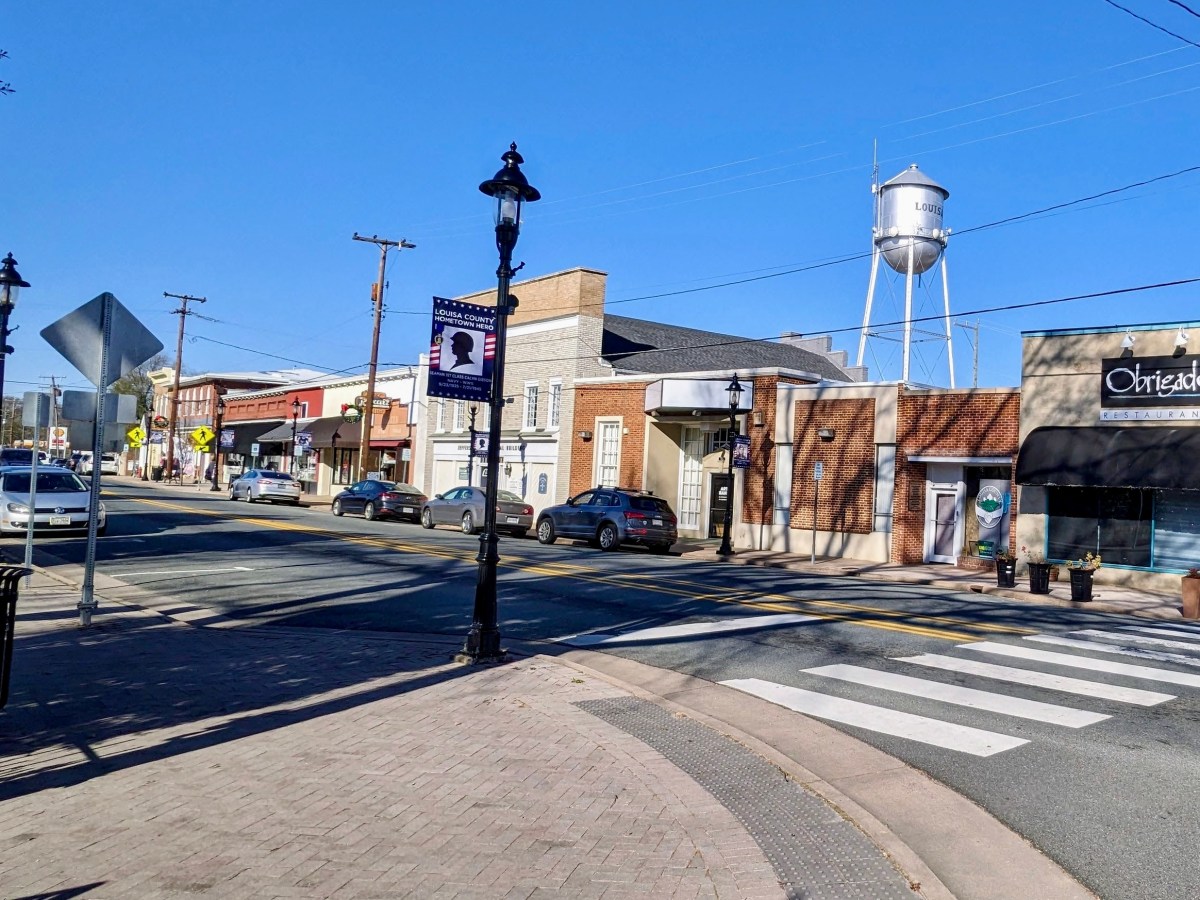
The Town of Louisa faced five resignations in less than a year. Now it’s trying to rebuild
During staffing shortages and months without meeting minutes, residents felt left in the dark. The town is trying to improve its communication.
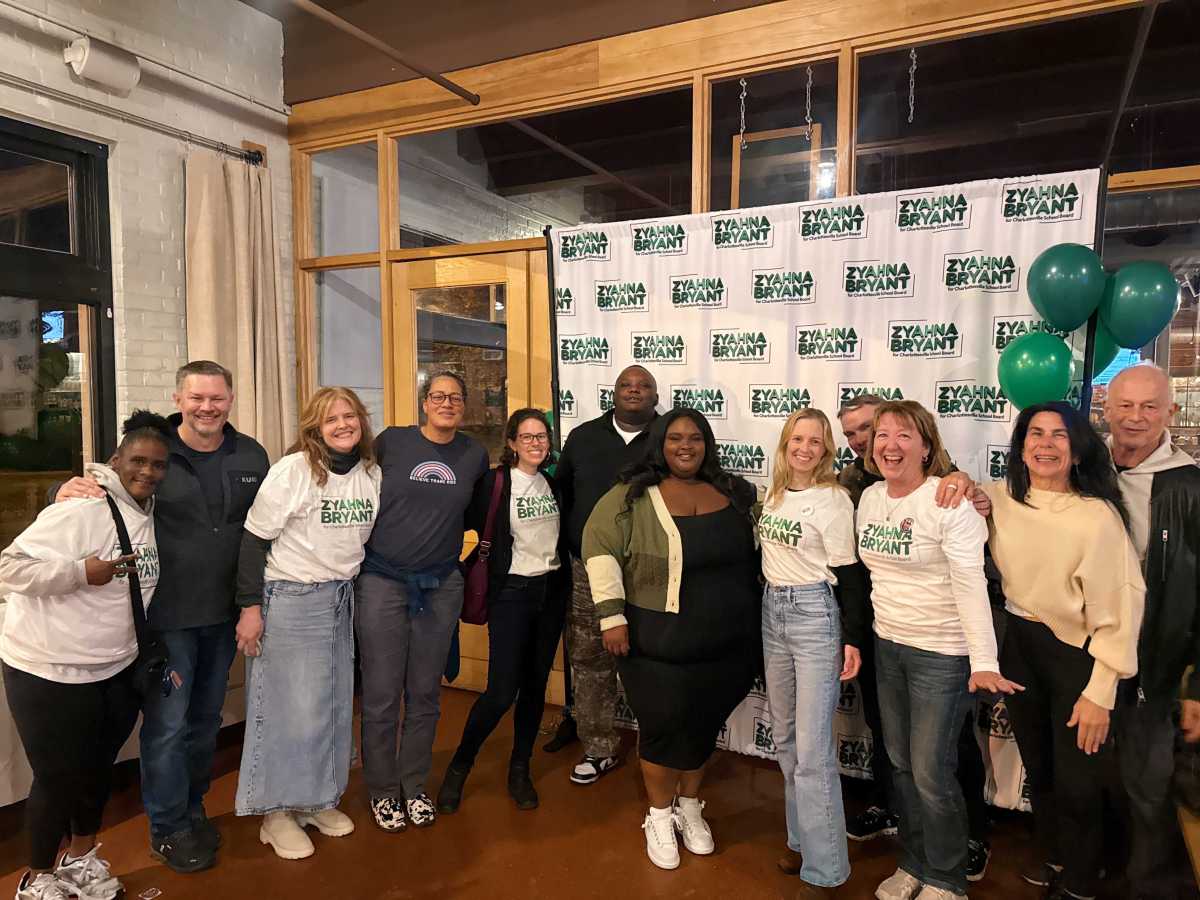
Longtime activist, first-time Charlottesville City School Board member Zyahna Bryant wants to elevate youth voices
“I believe that the community is ready for something new, and so that just makes me so excited to be on the cusp of that and to see a new wave of leadership,” Bryant told Charlottesville Tomorrow.

Matthew Kersey is being challenged by Ashley Michael for Louisa town mayor
Kersey was appointed mayor in July after both the elected mayor and his appointed replacement stepped down in quick succession.