

This November, the City of Charlottesville will decide whether to raise the local sales tax by 1% to fund school construction projects.
Charlottesville is one of 47 localities across the state that voted to add this referendum to their ballots since July, after the General Assembly passed legislation making it an option at the end of June. Since Virginia is a “Dillon’s Rule” state, local governments cannot exercise powers unless they’ve been granted by the General Assembly.
On the ballot, it will read:
“Shall the City of Charlottesville, Virginia be authorized to levy a local general retail sales tax at a rate not to exceed one percent (1%), the revenues of which shall be used solely for capital projects for the construction or renovation of public schools serving the City of Charlottesville, and which shall expire on June 30, 2046?”
The tax wouldn’t immediately go into effect if voters approve it — it just gives the local government the authority to adopt an ordinance imposing the tax. Charlottesville City Council would need to vote to impose the tax, which would increase the overall sales tax collected by Charlottesville to 6.3%.
School officials estimate that the tax could generate $12 million per year for city schools.
Per Virginia state law, the money could only be used for school construction projects and renovations, meaning it can’t fund other operational expenses, such as teacher salaries or curriculum materials.
Completing the new Early Learning Center and renovations to Charlottesville High School are a couple of the capital improvement funding priorities listed on Charlottesville City School’s website.
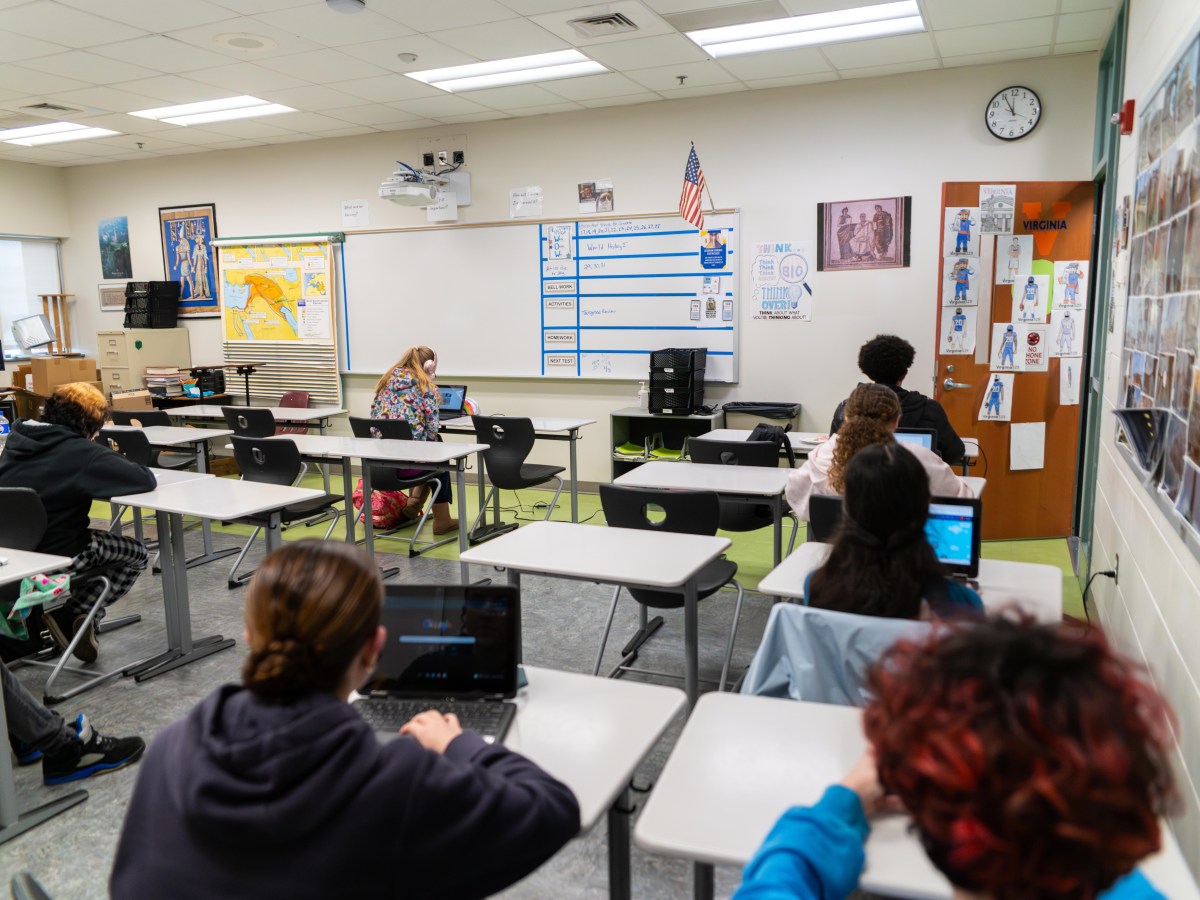
The average age of school buildings in Charlottesville is 64 years, said Amanda Korman Simalchik, a spokesperson for Charlottesville City Schools. With the exception of Charlottesville Middle School, whose $91.8M renovation was completed this summer, little has changed for the district’s various buildings. All were built between 1925 and 1974.
“They were built at that time to be relevant for 50 or 60 years,” said Chris Meyer, a member of the Charlottesville City School Board. “And while they’ve been updated over the years to ensure basic functionality, you have some just needs.”
According to Meyer, the oldest schools actually require the least renovations. Summit Elementary was built in 1931 and Trailblazer Elementary was built in 1925.
“Structurally, those are some of the ones that work best for us,” said Meyer, “They have a lot of light, for example, and windows to the outside in the classrooms.”
But schools built in the 1960s and 1970s did not prioritize light in the classrooms, and their open designs, with wings coming off of the buildings, make them difficult to secure.
Some schools do not even have a space for students to eat. Greenbrier Elementary doesn’t have a cafeteria, and Jackson-Via Elementary doesn’t have a cafeteria or a kitchen.
Simalchik said that at Jackson-Via, “the school meals are prepared at Charlottesville High School and then they are transported over every single day.”

Subscribe for Voter Guide updates
The latest from the 2026 Voter Guide

Greene County voters to decide on 1% sales tax as schools forecast increased enrollment
“Because Ruckersville Elementary is already at 95% capacity, absorbing an additional 630 students would push the building to nearly double its physical capacity,” said Kelly Greer, member of the Greene County School Board.
Proposed sales tax could bring in $1.5 million to $2 million a year for Fluvanna County schools
“If the referendum is approved, we would work collaboratively with county leadership to determine the most appropriate and immediate priorities for the funding,” Superintendent Peter Gretz said.
Orange County voters to decide on 1% sales tax to narrow school infrastructure funding gap
From HVAC issues to wastewater treatment, Orange County Public Schools cite more than $28 million in infrastructure and facilities needs as voters head to the polls.