

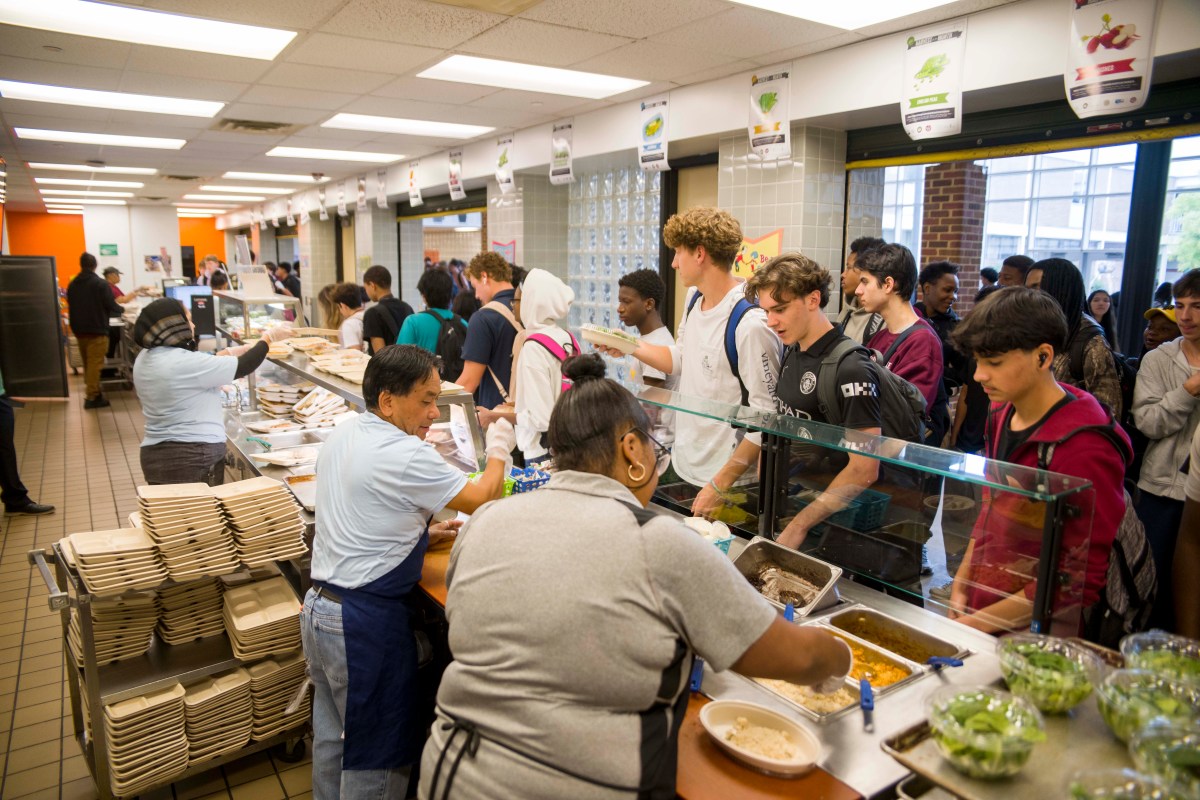
At a recent School Board meeting, Charlottesville City Schools support staff came with a simple message: They cannot afford to live in the city where they work.
Educational support personnel — such as teaching assistants, custodians and school nutritional workers — earn wages so low they cannot survive off them, according to those who spoke at the Feb. 5 School Board meeting.
“A living wage is not a luxury,” Ashlyn Stevens, a City Schools instructional assistant, told the Board at the February meeting. “It’s the minimum.”
City leaders appear to have heard that message.
On March 2, the Charlottesville City Council agreed to include a 10.5% raise for City Schools support staff in its proposed budget. The raises would cost taxpayers about $2.6 million.
The proposal followed a volatile negotiation period. It first needed approval from the school district’s union. The Charlottesville School Board then voted to support the increase at its Feb. 19 meeting.
But the raises are not yet guaranteed. To fund the support staff pay increases, along with a handful of other new spending requests, City Manager Sam Sanders said the city will need to raise the real estate tax rate by two cents, bringing the tax rate to $1 per $100 of assessed value. As assessed value also continues to climb, this will mean added strain on taxpayers.
The city will now begin the final stages of its annual budget process, which includes several meetings and public hearings, during which time City Council could revise the proposal. Council is scheduled to adopt a final budget on April 9.
Charlottesville City Schools operates on a total annual budget of about $129 million. The $2.6 million request for staff support wages is an addition to the roughly $79 million that the city currently contributes to the school district. Like other school divisions in Virginia, the district is funded through a combination of local government support, state funding and a smaller share of federal dollars.
Stevens, 24, is among the educational support personnel (ESP) for Charlottesville City Schools who is asking for an increase. ESPs are employees who have a 10-month contract, which typically ranges between 180-200 days a year.
Required to clock in and out, support personnel work up to eight hours a day. An entry-level support staff worker starting at the lowest wage would make about $26,700 per year before taxes, assuming an eight–hour workday and 180 working days a year, according to pay tables from city schools. Their actual take-home pay would be less after taxes, and the pay would be lower if they worked fewer hours or fewer days. And although they are eligible for overtime pay, their wages continue to be a fraction of the median household income of about $75,000 in Charlottesville, according to the U.S. Census Bureau.
In an effort to close that gap, the Charlottesville Education Association proposed that City Schools raise support personnel’s pay by 10.5%.
Union leader says raises for support workers strengthen the entire school community
Shannon Gillikin, president of the Charlottesville Education Association, the union that represents City Schools teachers and staff, said she is pleased with the Board’s decision to support its educational support staff. During the collective bargaining process, 96% of the participating union members voted in favor of pursuing raises for support staff.
“We are incredibly thankful,” Gillikin told Charlottesville Tomorrow. “CEA looks forward to continuing to support our staff members.”
The decision to raise support staff pay is important not just for the workers, but for the entire district, Gillikin said.
In school systems throughout the United States, educational support staff play important roles such as providing breakfast and lunch to students, some of whom may not get those meals at home. A 2025 report in The Journal of Nutrition noted that school-age years — between ages 5 to 19 — are a critical development period.
“Nutrition during this stage is essential for supporting physical, cognitive, and socioemotional/psychological well-being,” according to The Journal of Nutrition report. “Moreover, nutritional status in these years has lasting effects on lifelong health, well-being, productivity, and human capital.”
This winter, support personnel played a major role in preparing the schools to reopen after the snow storm that affected Charlottesville, according to comments made by teachers and other staff members during the joint budget meeting on Feb. 9.
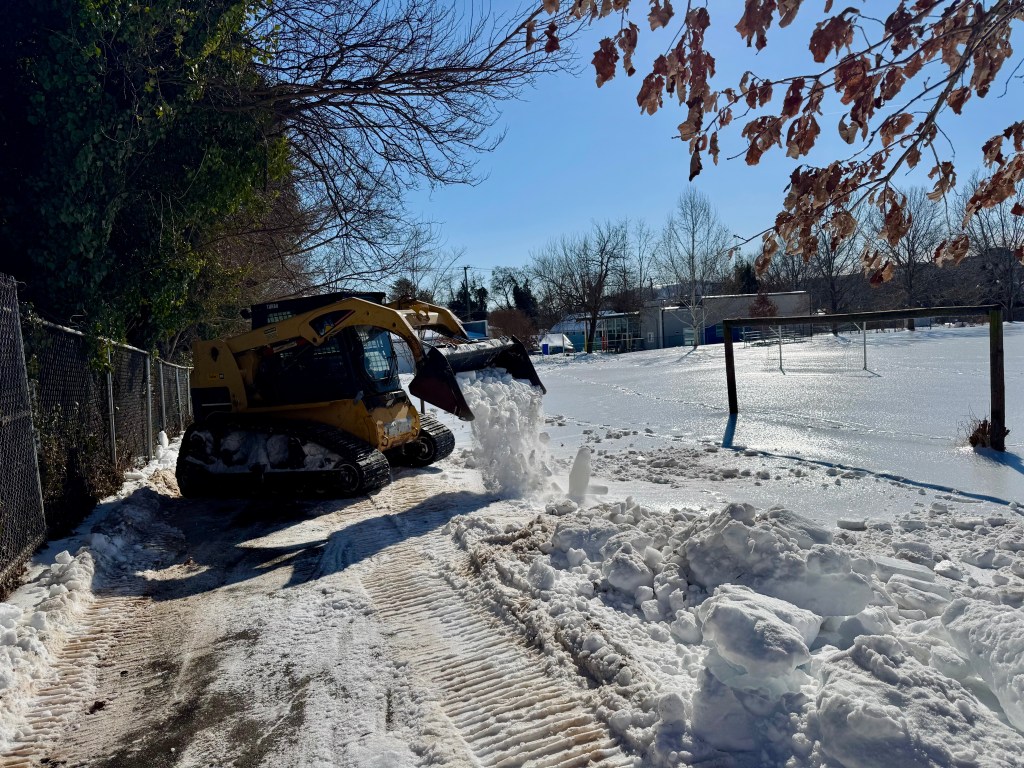
Dozens of hourly employees showed up after the storm to cook meals that were provided at no cost to students and families in the days that followed. They also helped clear sidewalks, parking lots and other areas in and around the city schools.
Other studies, including a 2021 report published by the American Educational Research Association, have shown the benefits of having teaching assistants in classrooms, which lead to improvement in student performance, particularly in students in underrepresented communities.
Yet, several support staff say they are unable to make ends meet on their school salaries.
“I work full-time for Charlottesville City Schools, and I don’t make enough to pay for anything,” said Shameeka Hensen, an instructional assistant, to both the City Council and Board members on Feb. 9.
Holding up more than a dozen photos, Hensen emotionally recounted an incident that caused her vehicle to be totaled in a November 2024 fire in the staff parking area at Jackson-Via Elementary School. Following an investigation, the Charlottesville Fire Department said the fire was likely caused by radiant heat from a parked car igniting a pile of dry leaves. The fire also affected other CCS workers, Hensen said.
“After the incident, I and my coworkers still showed up to work and professionally did our jobs,” said Hensen, adding that a community member started a GoFundMe page to raise money to help her and her affected colleagues.
Hensen was among several people who demanded living wages for CCS support staff on Feb. 5 and Feb. 9. A living wage generally is defined as the minimum amount that a worker must earn to afford their basic necessities, without public or private assistance. According to the Massachusetts Institute of Technology’s living wage calculator, a living wage in Charlottesville for one adult with no children is $48,480. That amount nearly doubles for an adult raising one child.
Stevens described her struggles to make ends meet, despite working full-time for CCS. Holding back tears, she told the Board that if it weren’t for the income from her second job, she could not afford to live in Charlottesville. Stevens said that her take-home pay is around $1,600 a month, and her rent is $1,700 a month.
“It’s simply not enough, nor will it be, until it reflects the dedication and commitment we have toward our students,” said Stevens. “I feel like the School Board doesn’t hear our voices, because we are often working our second jobs when these meetings take place.”
Abigail Johnson, a first-grade teacher at Jackson-Via Elementary, echoed Stevens. Some support staff at her school not only live outside of Charlottesville, but they also work multiple jobs to make ends meet, she said.
“Several of the ESPs that I work with currently live in Buckingham, Louisa, Greene or Fluvanna because they have been priced out of Charlottesville,” said Johnson. “They would likely be here today, speaking for themselves, if they didn’t have to commute an hour each day, drive their kids to their jobs, or drop off their kids at daycare, or go to their second job.”
Johnson said that she has been told by some support staff that their phones have been disconnected because they cannot afford to pay their bill. Others have called in sick because they couldn’t afford to buy gas for their vehicles.
Other support staff have confided to her that they sometimes have no money left after paying their rent, said Johnson.
“Every single working person should be able to afford their basic needs,” said Johnson. “Especially the people who contribute so greatly to our school community, to ensure that the young people of Charlottesville can thrive.”
CCS unanimously voted to pass a collective bargaining resolution in 2023, one of the first school divisions in Virginia to do so, according to the school district’s website, which also states: “This year our licensed staff (teachers) are working under the division’s first collective bargaining agreement, which spans three years.”
Collective bargaining is when workers organize as a group — and select a representative — to negotiate with their employer on issues like pay, benefits, hours and working conditions.
Plans to increase support staff’s base pay appeared to be firm until Feb. 6, one day after the School Board meeting. Support staff and union members raised concerns after the Board posted a letter on ParentSquare stating that the CEA was not willing to ratify a previously agreed contract for support staff. That contract stated that both CEA and CCS had agreed to a 9% base pay increase and a 1.5% step increase for eligible employees, totalling the potential 10.5% pay increase.
Still, negotiations continued and resulted in the Board’s unanimous support of a budget that increases support staff’s salaries.
Charlottesville Superintendent Dr. Royal A. Gurley Jr. expressed his appreciation to the Board and staff for their work during the budget process.
“Every single person in this school division matters,” he said at the end of the special Board meeting on Feb. 19. “The work that every person does in this school division matters, and it’s so exciting to be a part of the Charlottesville City Schools community because we just continue to evolve and continue to provide more and more for our students and families and our staff.”