

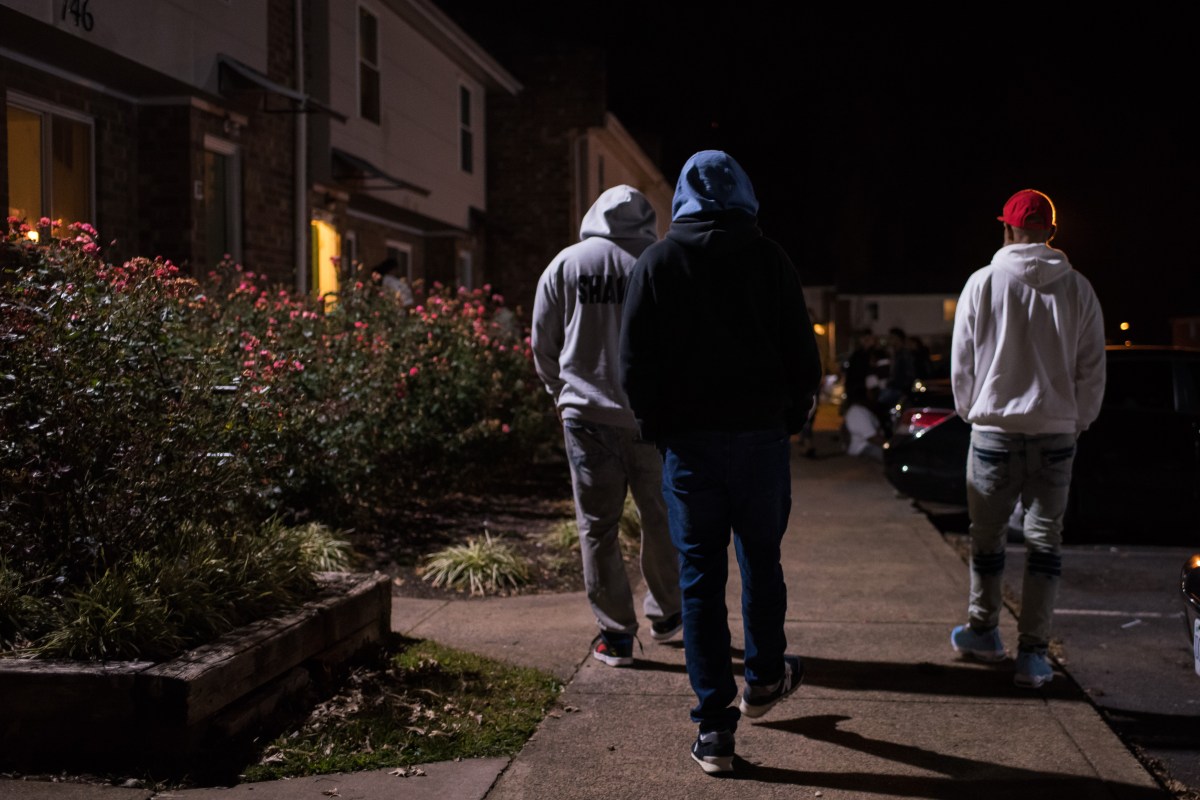
Just two months ago, Central Virginia Violence Interrupters, a Charlottesville-based violence prevention group formerly known as the B.U.C.K. Squad, was thinking about expanding.
Now, caught in the fallout from federal budget cuts and a reduction in local funding, the group says it may not make it past the fall.
“Things are looking very dire for us,” said Tommy Everett, accountant for Central Virginia Violence Interrupters, or CVVI.
CVVI is a group of select community members trained in conflict mitigation and de-escalation, focusing on reducing gun violence in Charlottesville, primarily in the Prospect Avenue area. They hire people with criminal backgrounds because they want individuals on the verge of violence to connect with and respect those who intervene — and they train them to do just that.
They promote themselves as an alternative to calling the police when a situation is about to turn violent — but hasn’t yet. They are the ones who try to talk the involved parties down.
“We’re in front of guns all the time,” said Herb Dickerson, executive director and one of the founding members. This is how volunteering for the group became a part-time paid job, he explained — people working for them have families, kids. It only felt fair to compensate them for the risk.
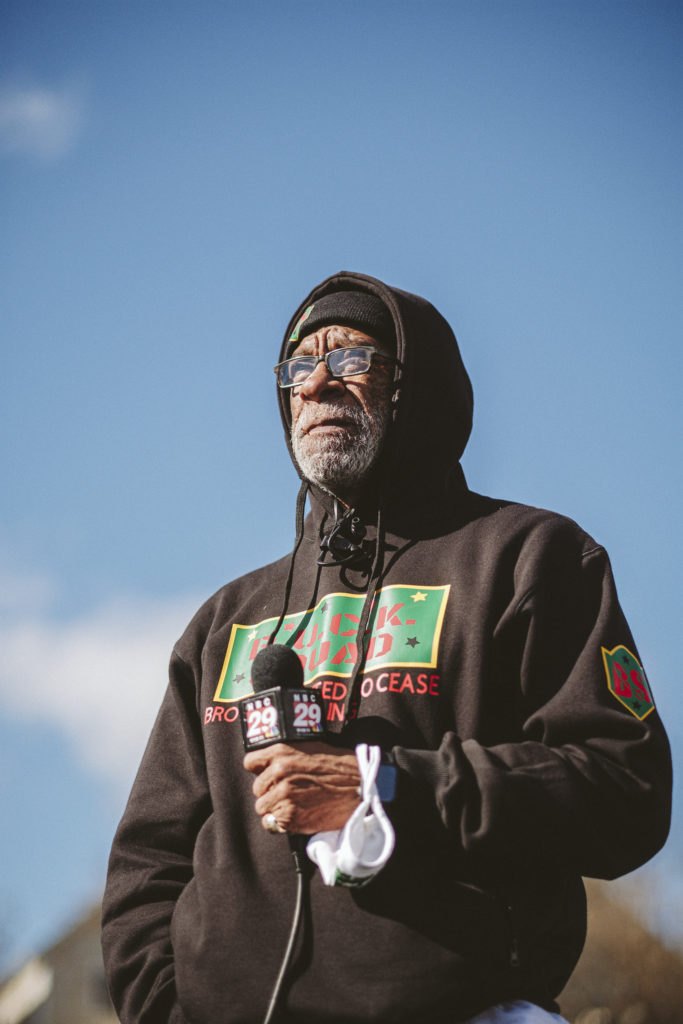
There are 18 people on the CVVI’s payroll now, according to Everett. Fifteen of them are part-time, many holding other jobs as well to support their families, according to Dickerson. The part-time employees are paid $19 per hour.
It costs roughly $450,000 a year for CVVI to operate in just the Prospect Avenue location, said Everett. And they’ve lost so much funding that they’re unsure if they can survive.
In April, they received a notification that $250,000 from the Department of Justice — money CVVI had hoped to use for expansion — had been canceled.
The primary recipient of the grant was Cure Violence Global, a Chicago-based nonprofit that trains community members and credible local messengers to intervene and de-escalate conflicts, and to work with high-risk individuals to help them build healthier behaviors and access support networks.
In April, the DOJ terminated hundreds of thousands of dollars in grants across 37 states, according to many media reports and at least one class-action lawsuit, impacting organizations focused on violence intervention and prevention, survivor advocacy, and other work related to community safety and well-being.
Cure Violence Global was slated to receive $4 million, which it lost due to the cuts. CVVI, trained by Cure Violence Global, was a sub-grantee, said Everett.
At the local level, the City of Charlottesville reduced CVVI’s funding through the Vibrant Community Fund — a program that provides direct financial support to nonprofits — by half compared to the prior year.
Last year, CVVI received roughly $200,000 through the Fund. This year, CVVI was awarded just $94,000. The reduction wasn’t a reflection of CVVI’s impact but rather a result of an unusually high number of organizations competing for the same pot of money, according to Everett and the City.
“Council always has to make difficult choices during the budget process. This year was no exception. This community has many phenomenal nonprofits and we want to support as many as we can,” said Charlottesville Mayor Juandiego Wade.
Those $94,000 are the only “concrete” funding CVVI currently has, said Everett. They still receive private donations that account for $75,000 to $100,000 a year, but it costs $450,000 annually to operate CVVI in just the Prospect Avenue area, he said.
The group also may receive a $75,000 Safe Neighborhoods grant from the Virginia Department of Criminal Justice Services. Though, the messaging for this grant has been confusing, Everett said. The agency sent them an email in October saying they were “approved” for the funding, but adding that they needed “final approval” from another agency. This “final approval” could take many months, the agency said in the emails seen by Charlottesville Tomorrow.
It’s the kind of funding that wasn’t officially lost, but Everett thinks of as such due to the delays and uncertainty, he said.
So, with the loss of $250,000 from federal funding cuts and more than $100,000 from the city, expansion is off the table.
In fact, they may not be able to survive past fall, according to Everett.
“The impact of these cuts is tremendous,” Bryan Page, assistant executive officer of CVVI, said in a news release. “This is a grassroots operation. I hate to think it, but we’re on the verge of disbanding.”
CVVI was founded in 2021 as a response to a wave of gun violence in the city. A group of local community members began walking the streets from evening to early morning in hopes of improving the situation. Soon, they received funding from the City for a training from Cure Violence Global, a Chicago-based nonprofit that trains select community members and credible local messengers to intervene and de-escalate conflicts, work with high-risk individuals, and help them adopt healthier behaviors and access support networks.
In the four years since then, CVVI’s hotline has received 5,000 calls, and the group claims to have prevented over 350 crimes. It’s a hard number to define and defend because it’s difficult to quantify a negative — to count a crime that didn’t happen — but they know, said Executive Director Dickerson.
“So far this year, we probably stopped about 60. But since you’re not shooting someone but the guns are already drawn out, how do you report that?” he said.
Charlottesville City Crime Data visualized by Ckalib Nelson shows a decline in “shots fired” in Fifeville compared to what it was in 2021. However, It is hard to establish for certain how and why the level of violence on Prospect Avenue, which is a part of Fifeville, dropped — and how much CVVI has contributed to it.

The violence-interuption model CVVI uses is based on research by Dr. Gary Slutkin, a renowned epidemiologist who spent years studying gun violence and how to prevent it.
Coming from a background in containing the HIV/AIDS epidemic in Africa, Slutkin had an idea that gun violence in the U.S. acted similar to infectious diseases and came in clusters. So, he suggested approaching it the same way public health officials approach other outbreaks, like HIV/AIDS — find people likely to commit a crime and intervene before it happens to prevent it.
To achieve this, groups like CVVI needed people who would be credible messengers in the eyes of those likely to commit a crime, according to Slutskin’s theory. The solution — recruit those who knew what it was like to commit a crime or to be on the receiving end of it.
“To get this job, you have to fit a certain criteria. To even be hired, you have to either been to prison, you have to have shot somebody, been shot, been a drug dealer or a gang member,” said Page. In other words, CVVI members have to know how to survive on the streets, because that’s where they work.
“We got to immerse yourself in the bullshit,” he said. “We can’t say ‘turn the music down’ or ‘stop smoking weed.’ That’s not our job. Our job is not to dismantle gangs. Our job is to make sure nobody shoots nobody.”
One case Page recalled, they were called to a barbershop where a standoff was on the verge of turning into something violent. Page happened to know one of the people involved and managed to talk them down and walk away without either party losing face.
In another case, a mother of a Buford Middle School student asked for CVVI to help because another student had threatened her son. She felt like the school didn’t do enough to resolve the conflict, said Page.
So they met with the student and the child who was accused of threatening him at a public library. Page wouldn’t disclose which one to protect the privacy of the minors involved, he said. He also continued meeting with the child after, he said.
“Most of the stuff we’re dealing with now is with kids. It’s very few older adults that are involved with this gun violence in Charlottesville,” said Page.
“Most of the kids that got guns don’t got them to shoot or kill, they got them because they’re scared, because everybody got them,” he said. “When you’re growing up in poverty and you’re living with all this trauma inside the community, which is a generational trauma, it’s unbelievable.”
And CVVI doesn’t stop their involvement after the conflict is resolved, said Page. They continue meeting at-risk people for follow-ups and connecting them with the resources they need. With kids, that often means taking them to a boxing gym — Wartime Fitness Warriors — and connecting them with tutors — volunteers from the University of Virginia — to improve their academic standing.
“This is only a starting point. We want to eventually have a full mentoring program,” said Page.
(There are several organizations that mentor area youth. Another is the Uhuru Foundation, a local nonprofit that works with youth and some adults impacted by the criminal justice system. It’s their way to divert more people from the criminal justice system, according to its website.)
Dickerson fears that, if CVVI were to go away, the rate of gun violence would go up again.

“I don’t know what Donald Trump is thinking about,” he said about the federal funding cuts taking away support for violence intervention and community safety programs.
He is concerned that if so-called “One Big Beautiful Bill Act,” a big budget reconciliation bill designed to meet President Donald Trump’s tax-cutting promises, passes, some people would lose access to the Supplemental Nutrition Assistance Program (SNAP), also known as food stamps, and Medicaid. Those are the programs on the chopping and trimming block to find funding for the tax cuts.
“If he do that now and take food out of some of these folks’ mouths, they don’t have any means necessary to eat,” Dickerson said. That might lead to more crime. “We just don’t know.”
Cure Violence Global is appealing the loss of funding with DOJ, arguing to the department that the reasoning provided for termination isn’t right and the funding should be restored. The organization hopes it will get enough funding back to get them through the year.
CVVI asked City Manager Sam Sanders and Mayor Wade in May for additional off-cycle funding, meaning money given outside of the annual budget season, since the loss of federal funding in late April. The City turned down the request, Afton Schneider, spokesperson for the City of Charlottesville, confirmed.
In June, Everett resubmitted the request to Sanders.
“This request is added to the list for Council to consider. I should have a response to you by the end of the month,” Sanders wrote back, according to emails seen by Charlottesville Tomorrow.
“There’s going to be a strong limit to what we’re going to be able to do,” Charlottesville City Councilor Michael Payne told Charlottesville Tomorrow. There are many nonprofit partner organizations dealing with funding losses in Charlottesville, he said, but the funding for off-cycle budget is limited.
All of this leaves CVVI uncertain about their future.
“We are currently working on four other grants that could total as much as $1 million if all are awarded,” CVVI’s Everett said. “Realistically, I think we can replace close to what we lost, about $300,000. The timing of these other grants is further in the future, so our issue is bridging the gap.
“We’ve got enough money to last us probably until the fall,” he continued. “So we’re hoping that the appeal process will occur. If not, it’s going to be the end of us.”