

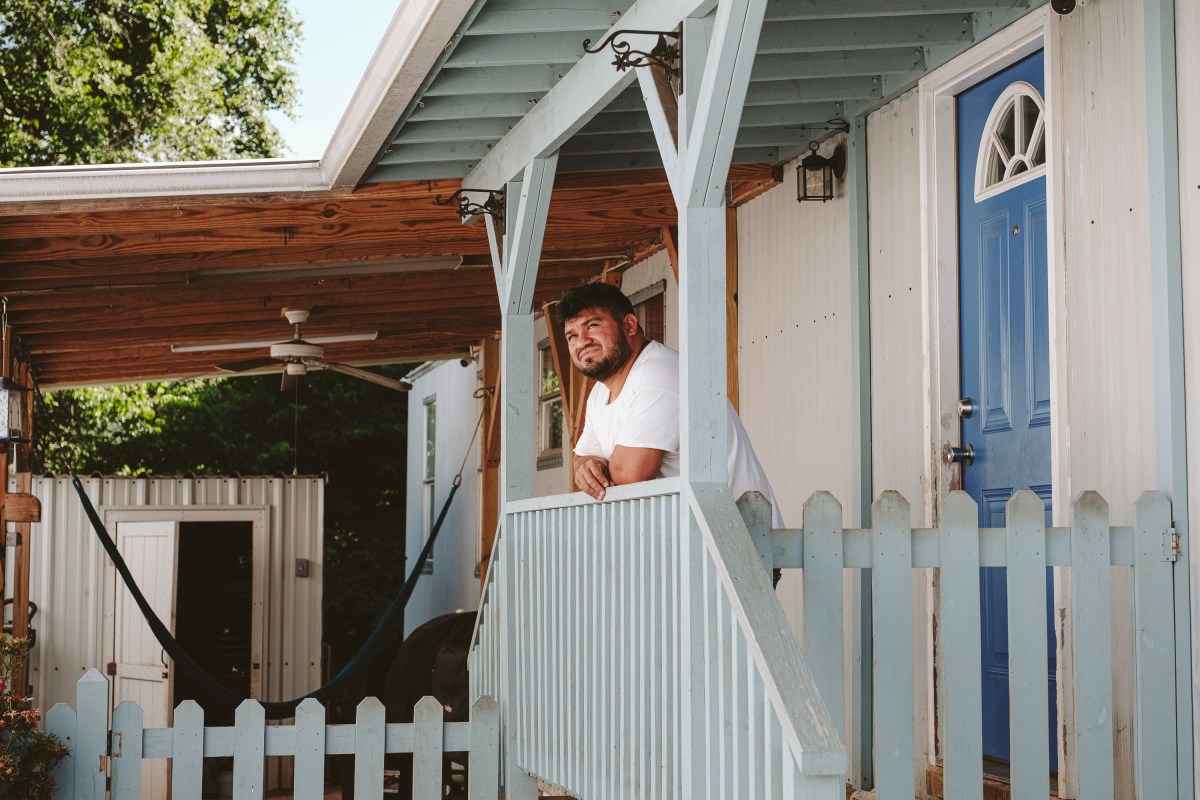
Habitat for Humanity of Greater Charlottesville will buy Carlton Mobile Home Park.
Tuesday night, the nonprofit housing organization announced that the Bolton family, the longtime owners of the park, had accepted its offer.
Habitat’s offer to purchase was a counteroffer. In late May, the Boltons received an offer from an unnamed buyer to purchase the park for $7 million. The Virginia Manufactured Home Lot Rental Act requires mobile home park owners to give residents, or an organization representing residents, 60 days to come up with an offer on their own. Residents were notified of the sale, and the ticking clock, the first week of June.
After Charlottesville Tomorrow published a story in late June on the potential sale and what it could mean for residents, local groups started scrambling to save the park and the affordable housing that it provides.
It was a longshot, Habitat for Humanity leaders said at the time. But their offer was accepted.
The organization has not said how much it will pay for the park. A presentation made during the Monday, Aug. 5 City Council meeting suggested the offer amount was $7.25 million.
Habitat has not confirmed that. Angela Guzman, a spokesperson for Habitat, said that the offer amount will be made public soon, once the sale goes through.
Habitat is not making the purchase alone. It’s partnering with Piedmont Housing Alliance and the City of Charlottesville.
During Monday’s City Council meeting, all five councilors voted to approve an ordinance pledging financial support to the purchase — an estimated $8.5 million over the next five years. That will help cover the principal balance on the loan the organization took out to buy the property as well as interest, and is for the purchase of the 6-acre property only. It does not include any potential redevelopment costs.
The city is helping to fund the purchase, but it will not ultimately own the property.
“The intention is that this is the city’s contribution” to the project, said Piedmont Housing Alliance CEO Sunshine Mathon. But that could change when the redevelopment conversations begin, he added.
Any funding requests to assist with redevelopment costs could be considered in the future, Deputy City Manager Eden Ratliff told the Council.
City Councilor Michael Payne said during the meeting that he sees this as part of the city’s commitment to pledging at least $10 million annually toward the development and preservation of affordable housing in the city.
“When this began, I thought at best there was a 1% chance something could even be put together to make an offer,” said Payne, who accompanied canvassers when they visited the park to get signatures to allow Habitat for Humanity to make a counteroffer for the park. The signatures were one of the steps needed before the group could move forward. “To see it happen has been really incredible.”
He hoped the Boltons would accept the offer, and they did, less than 24 hours later.
The Bolton family has not yet said why it decided to accept Habitat’s offer over the initial $7 million one from an unnamed buyer. Charlottesville Tomorrow reached out to the family’s spokesperson for comment and did not immediately hear back.
Because this happened on a short timeline — about four weeks — the partner organizations haven’t had time to talk amongst themselves, or with residents, about what redevelopment of Carlton Mobile Home Park could look like.
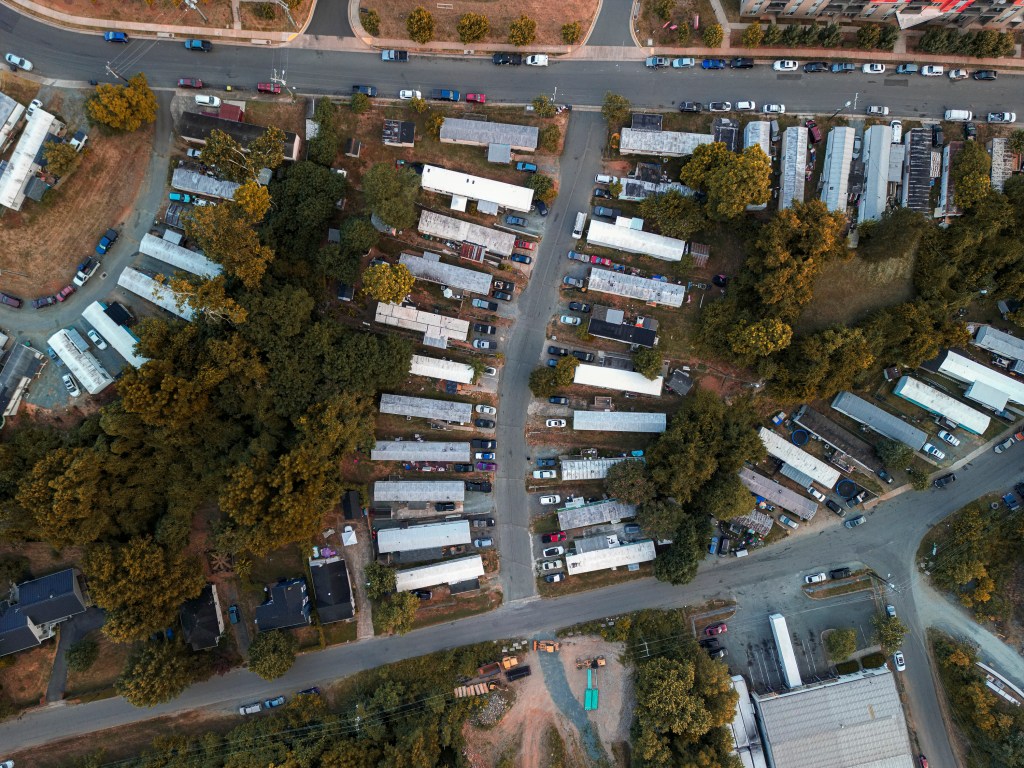
Ratliff’s presentation to the Council on Monday suggested that about 180 units might be built on the site, which currently hosts 66 trailers.
That the site could offer even more affordable housing than it does now is what spurred City Councilors Brian Pinkston and Natalie Oschrin to vote in favor of using city funds to support the purchase, they said during the meeting.
Payne added that Habitat’s redevelopment of the Southwood Mobile Home Park in Albemarle County influenced his yea vote. In 2007, Habitat purchased the 100-acre Southwood Mobile Home Park in Albemarle County, just south of the city, so that its 1,500 residents wouldn’t be displaced.
Habitat is in the process of redeveloping the park with at least 500 units of affordable housing.
About 85% of the residents of Southwood have chosen to stay, moving into one of the new homes when the redevelopment is complete, Dan Rosensweig, Habitat for Humanity of Greater Charlottesville CEO, told the Council on Monday. And of those residents, 80% of them will stay as homeowners.
For now, Carlton Mobile Home Park residents will be able to stay in their homes. An agreement reached between Habitat, PHA, the Legal Aid Justice Center, and residents during a July 24 meeting says that all current residents of the park will continue renting their trailer pad (also called a lot) for at least three years from the date of purchase, as long as residents follow community rules. The agreement also states that the organizations will not increase lot rents by more than 5% or $15 per year, whichever is smaller.
Residents will also have first right of refusal for the new units, which Habitat has promised will be affordable to them. “We will never charge anybody more than 30% of their income on housing,” Rosensweig told Charlottesville Tomorrow.
To use Southwood as an example once more, the rents on the newly developed units there will be less than what most residents are paying for in lot rent and utilities, said Rosensweig — utility costs for trailers can be very high, since they’re not well-insulated. He expects that will be true for a new development at Carlton, too.
“I’m just hoping that’s the way it’s going to work out,” Carlton Mobile Home Park resident Billy Marshall told Charlottesville Tomorrow after hearing the news on Wednesday. He and his aunt pay about $400 in lot rent and $200 for electric, totalling $600 in monthly housing costs. They can’t afford much more than that, and they don’t want to have to leave their neighborhood.
Marshall is proud to have lived in the neighborhood, known as Hogwaller, all his life, and he wants to stay. He also hopes he can keep his dogs and his chickens — he’s worried that a new development won’t allow pets.
“I try not to get my hopes up, because I’ve been let down so many times,” he said. “But I’m hoping that’s the way it’s going to be. It’s just hard to tell.”
With all the uncertainty of the last two months, some residents have already moved out of the park, Marshall said. The family a couple trailers up from him moved over the weekend. “They didn’t know what was going on, and they didn’t want to be put out on the street,” he said.
Once the sale goes through, the partner organizations — and the residents — can start talking more about the redevelopment process. And that, said Assistant City Manager Ratliff Monday night, is where “the real work starts.”