

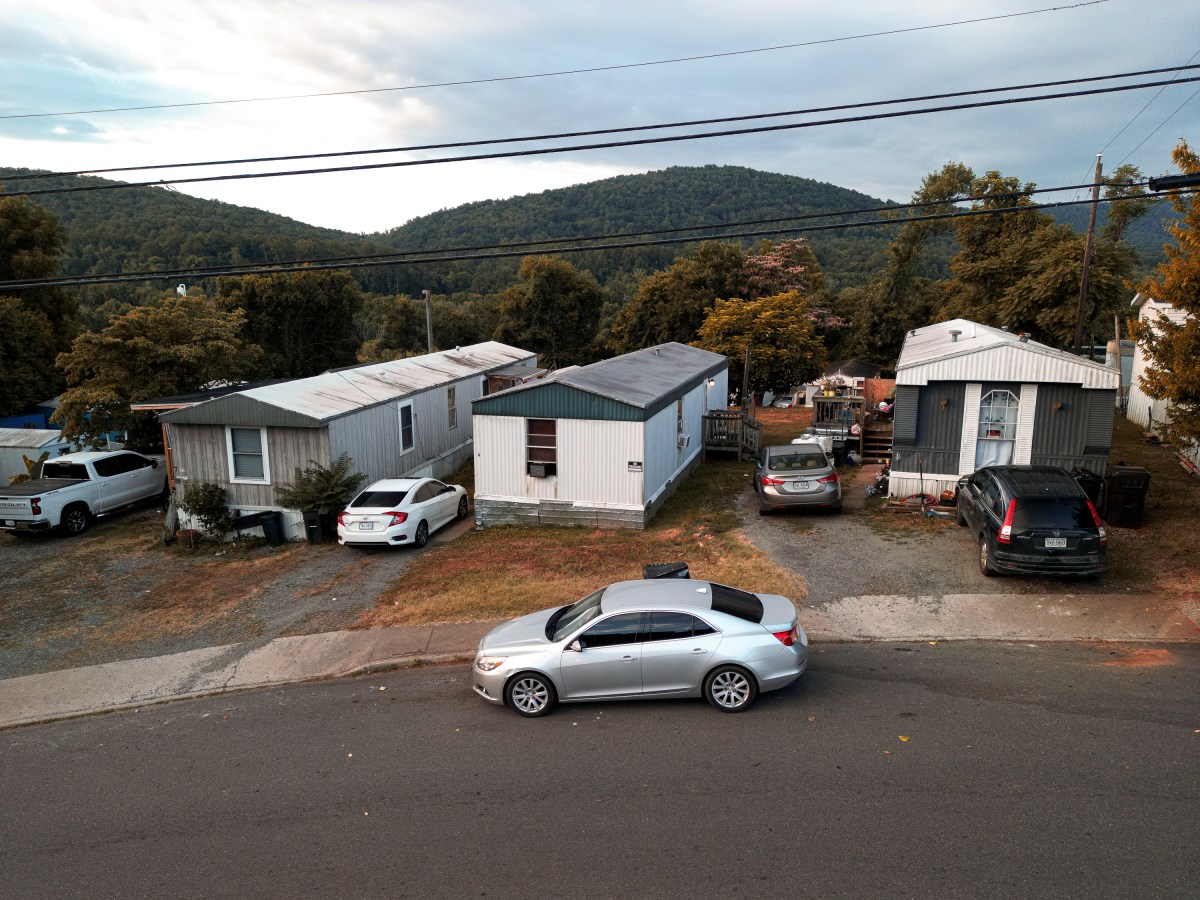
A reporter from Charlottesville Tomorrow was not allowed into a meeting where Habitat for Humanity of Greater Charlottesville asked Carlton Mobile Home Park residents’ permission to try and buy the park.
But she could hear the shouting from outside.
Within the first hour, a few residents stormed out, shouting criticisms. But by the end of the three-hour meeting, the 40 or so remaining residents reached an agreement with the nonprofit staff: They gave the group permission to put in an offer to buy the park. And shortly after the meeting ended the group announced it will do just that.
The agreement provides hope of at least some short-term stability for park residents. Without it, the more than 60 individuals and families who live there are facing the possibility of losing their homes.
During the first week of June, Carlton Mobile Home Park residents received a letter stating that an unnamed buyer had made an offer to purchase the park for $7 million.
It’s unclear what this buyer’s plans are for the park. But when a mobile home park is sold, it typically faces one of two fates: Either the new owner raises the lot rent above what residents can feasibly afford; or it clears the park for a new development, Laura Dobbs and Brenda Castañeda, attorneys with Housing Opportunities Made Equal of Virginia, a nonprofit that enforces and advocates for fair housing laws, told Charlottesville Tomorrow.
The letter informed residents that the owners were poised to accept the offer, but that per the Virginia Mobile Home Lot Rental Act, residents had 60 days to come up with the money to put in an offer themselves or empower another organization to do so on their behalf.
That’s now Habitat’s role.
Habitat is working with Piedmont Housing Alliance, a local nonprofit affordable housing developer, on the financing. It is not clear what role PHA would play in any redevelopment, but Dan Rosensweig, president and CEO of Habitat for Humanity of Greater Charlottesville, said he imagines Habitat would work on a homeownership program while PHA would lead a rental component.
The plan was not welcomed by all Carlton residents.
Anthony Davis left the meeting less than an hour after it started. Davis has lived in the park since 1977 and doesn’t support Habitat putting in an offer on the park, he told Charlottesville Tomorrow outside of the meeting.
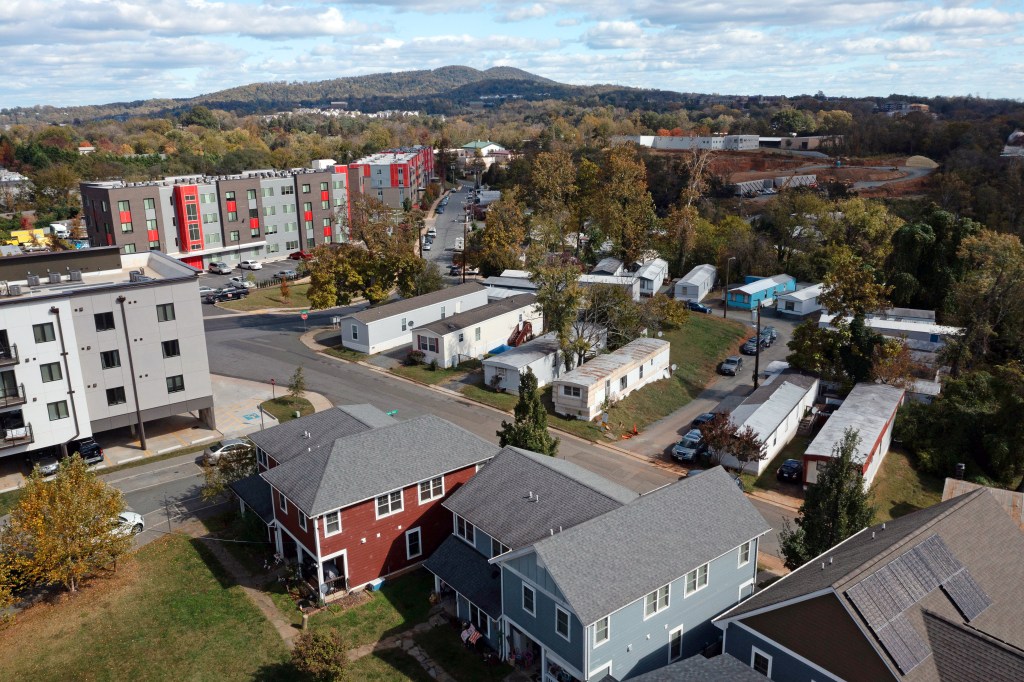
He supports the work Habitat does with homeownership — his sister has a Habitat house, he said — but he does not support them buying mobile home parks. Davis called Habitat “vultures” and said that he saw what happened when Habitat bought the Sunrise Mobile Home Court right next to Carlton, and built apartments and small houses on the land.
“They had to get rid of half their belongings to fit in here,” he said, gesturing to the Sunrise apartments above the community room where the meeting was being held.
They want to push us out, put us in these condominiums. They’re built like sh–. I lived in one. You can hear everybody — upstairs, downstairs, next door neighbor. There’s no privacy.
—Tiffany Gentry, pointing at the Sunrise apartments, next to the Carlton Mobile Home Park
“Them expanding into this is just them and Charlottesville City trying to get rid of all the trailer parks,” he said. “All the city sees is a bunch of Hispanics and people that look like me, with long hair and tattoos. Like, ‘oh, we need to get this trash the f— out of here.’ And that’s not right. We’ve been here forever. This trailer park’s been here since the 60s. Leave us the f— alone. Build your sh– somewhere else. Pack everybody in like sardines on the other side of f—ing town.”
Tiffany Gentry, a neighbor and longtime friend of Davis’, also does not support Habitat putting in an offer on the park. She said that she and her mother have had bad experiences with Habitat in the past, and that the organization places too many limitations on who qualifies for Habitat homes, both ownership and rental.
“They want to push us out, put us in these condominiums” said Tiffany Gentry, pointing at the Sunrise apartments. “They’re built like sh–. I lived in one. You can hear everybody — upstairs, downstairs, next door neighbor. There’s no privacy.”
She believes that Habitat is out for itself, for the money, and not for the people actually living in mobile home parks. Her housing is already affordable, she said, and she wants it left alone.
It is unclear what will happen to Carlton Mobile Home Park if the owners go with the unnamed buyer and not Habitat, as Davis and Gentry would prefer. William “Billy” Bolton, a spokesperson for the current owners, Sunshine Court LLC and Hogwaller Holdings LLC, both based in Virginia, and ABB3 Holdings, based in Maryland, previously told Charlottesville Tomorrow in an email that he could not speak to the potential buyer’s plans.
Some residents seem to be hearing conflicting messages on that. Davis claimed that one of the owners told him that the $7 million offer was made by a person, or a company, that already owns multiple mobile home communities. Davis therefore assumes that nothing will happen if the sale to that unnamed buyer goes through.
However, another resident previously told Charlottesville Tomorrow that one of the current owners told him to sign the Habitat petition because it was the best hope he had of saving his home.
Rosenweig said he understands why there’s so much fear and confusion among some residents.
“It’s hard to imagine being somebody who just got essentially an eviction notice, trying to keep all this stuff in mind,” he said. “When things happen so quickly like this, there’s obviously a rumor mill, so we did our best to be incredibly honest and understanding. People are traumatized right now.”
These folks are making a mistake. Habitat is their best bet.
—A Carlton Mobile Home Park resident outside a tense meeting with Habitat for Humanity
Many residents at Wednesday’s meeting said they did want Habitat to put in an offer.
“These folks are making a mistake,” one resident said as she left the meeting amid a tense moment. “Habitat is their best bet.” She didn’t want to say anything else, or give her name, because she knew some of her neighbors disagreed.
Another resident, who stayed until the end of the three-hour meeting, said that she was supportive of Habitat’s plan, but didn’t want to comment on the record. Her family feels differently, and she said she didn’t want to cause family turmoil.
“We put all our love and everything into our trailer,” said yet another resident after the meeting. She also wished to remain anonymous because she, too, didn’t want her neighbors who disagreed, to know. She doesn’t feel like she has a lot of options. If the unnamed potential buyer who put in the $7 million buys it, she thinks she’ll have all of six months to find a new place to live. At least with Habitat for Humanity, she’d have a minimum of three more years in her trailer, she said.
A majority of the residents at the meeting supported Habitat putting in an offer, said Rosensweig. “If they hadn’t been, we would have walked away. We made that clear multiple times during the meeting.”
Residents who stayed to the end walked out with a copy of the written agreement. Rosensweig wasn’t expecting that, but when residents asked for some things on the fly, the nonprofit groups wanted to put their commitment in writing.
The agreement says that Habitat for Humanity and Piedmont Housing Alliance commit to allowing current residents to continue renting their trailer pad (also called a lot) for at least three years from the date of purchase, as long as residents follow community rules. The organizations also commit to not increasing lot rents more than 5% or $15 per year, whichever is smaller.
“This is a testimony to the neighborhood,” Rosensweig said. “Residents on the fly came up with some requests from us. It was really wonderful because that’s what can happen when a community has honest conversations: You work together on the values that really matter to people. The residents were able to come to a consensus on what was important to them, and they articulated that, and we were happy to oblige. So as hard as the meeting was — and it was incredibly hard — it was incredibly productive.”
As for what the redevelopment process of Carlton Mobile Home Park might look like, it’s still too early to know. Normally, Habitat has many months, even years, of conversations with residents about those plans. The organization’s staff have been talking with Carlton residents for just a few weeks.
“It’s way early in the process,” Rosensweig said.
Early indeed. Habitat doesn’t own the park yet, and it’s possible it never will.
Dobbs and Castañeda, the lawyers familiar with mobile home park sales, said that based on what they’ve seen with other mobile home parks in the state, it is very unusual for a seller to accept an offer from a group representing the residents.
Habitat hasn’t said how much its offer will be, but Rosensweig said it is a “competitive” one.