

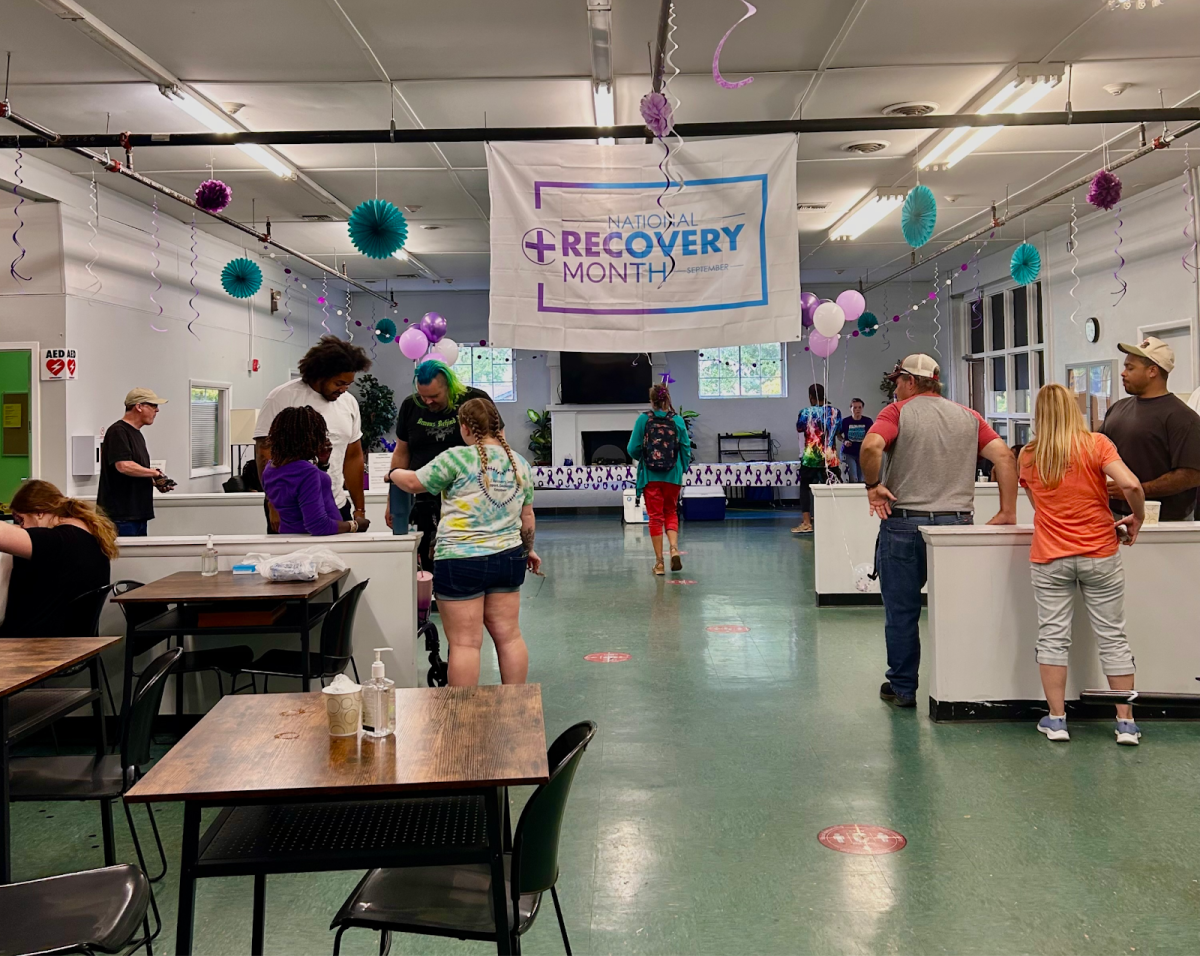
Robyn Hantelman, director of treatment and recovery at Encompass Community Supports in Culpeper, gets a lump in her throat whenever she thinks about the possible cuts to Medicaid that have been floated at the federal level.
“Ten years ago, when I first started thinking about getting into recovery and getting sober and trying to change my life, I would have had to travel 45 minutes to an hour — maybe even an hour and a half — to get medication for substance use,” Hantelman said.
Today, however, many clinics have opened and other services expanded, with Medicaid being partially responsible for the improvements, especially in more remote areas. Medicaid can even help with transportation when patients need to travel further for better care, Hantelman explained.
After getting into recovery from opioid addiction, Hantelman joined Encompass, a community service board serving Madison, Orange and other central Virginia counties. Community service boards, or CSBs, are organizations created by local governments that provide mental health and behavioral treatment services.
Hantelman has seen significant improvements in access to mental health and substance use disorder treatment since Virginia expanded its Medicaid coverage to more adults in 2019 under the Affordable Care Act.
But if Congress decides to decrease Medicaid spending in the federal budget, it could negatively impact many central Virginians’ access to mental health or addiction treatment.
Medicaid has been instrumental in treating substance use disorders and lowering overdose deaths
Medicaid is the largest source of funding for mental health and substance use disorder treatment in the U.S. Many states, including Virginia, opted to expand coverage to include adults earning up to 138% of the federal poverty level — about $20,782 a year for an individual or $35,631 for a family of three in 2024, according to the Virginia Department of Medical Assistance Services.
Since then, Medicaid expansion has become instrumental in fighting addiction and, according to experts, is a big part of why Virginia’s overdose deaths have dropped in recent years.
“Medicaid is our No. 1 tool in the fight against addiction,” Victor McKenzie Jr., executive director of the Substance Abuse and Addiction Recovery Alliance of Virginia and chair of Virginia’s Addiction and Recovery Council, argued in an editorial originally published in the Richmond Times-Dispatch on April 1. Medicaid, especially through the expansion, made the treatment more accessible, he said.
Drug overdose-related deaths dropped 43% to 1,396 in 2024 from 2,463 in 2023, according to data from the Virginia Department of Health. In the Blue Ridge Health District, which VDH defines as the City of Charlottesville and Albemarle, Fluvanna, Greene, Louisa, and Nelson counties, there were 54 overdose-related deaths in 2023 — a decrease from 67 in 2022.

The Medicaid expansion, as well as other statewide policy changes aimed at helping those struggling with addiction led to a 486% increase in the number of addiction treatment providers taking Medicaid from 2017 to 2022. And 592% more people with Medicaid received medication for opioid use disorder, according to Health Affairs, a peer-reviewed journal focused on health policy research.
“We have seen declines in overdose deaths. Now is not the time to go backwards. Those numbers going down are not an indicator for us to stop what we’re doing. In fact, it’s the opposite. We need to double down, and Medicaid expansion was a big part of that,” McKenzie told Charlottesville Tomorrow.
Currently, there are a little over 160,000 people enrolled in Medicaid in central Virginia through the expansion, according to the Virginia Department of Medical Assistance Services.
“Medicaid allows people options where they didn’t have them before, especially in small towns or more outlying counties where we don’t have the things that the cities do,” Hantelman explained.

Now, as Congress works to finalize a budget that would reduce non-defense spending in areas such as housing and education while increasing spending on defense and border security, many fear that Medicaid funding could decrease from prior years. The reduction in non-defense spending is driven by the Trump administration’s goal of reducing “wasteful spending and bloated bureaucracy,” according to a White House statement.
The proposed budget bill has just advanced through the House Budget Committee. The bill will likely need further changes before it can get the votes needed to pass the House, and it still faces opposition in the Senate, according to NBC News.
In its current form, it proposes to add work requirements for many able-bodied Medicaid recipients without children, with some exceptions. Including work requirements can negatively affect people in recovery, McKenzie said.
We have seen declines in overdose deaths. Now is not the time to go backwards. Those numbers going down are not an indicator for us to stop what we’re doing.
— VICTOR MCKENZIE JR., EXECUTIVE DIRECTOR OF THE SUBSTANCE ABUSE AND ADDICTION RECOVERY ALLIANCE OF VIRGINIA
“It can be incredibly challenging for individuals who may be early in their recovery and need the ability to focus solely on their recovery and receive the support that they need,” he said.
While it’s unclear what the final bill will look like, many experts who spoke with Charlottesville Tomorrow are concerned that a decrease in Medicaid funding could hit Virginia particularly hard, as it’s one of several states that have a “trigger law” which would end expanded Medicaid coverage.
Currently, the federal government covers close to 50% of the cost of Medicaid coverage for those who are eligible through regular requirements and 90% for those who are enrolled through the Medicaid expansion — the other 10% is paid for through tax on private hospitals, as the Virginia-Pilot explains. So, if the federal government reduces funding below 90%, anyone in the state receiving coverage under the Medicaid expansion would lose their coverage.
The State general Assembly can choose to reconvene and mitigate the fallout from the trigger law, if the federal cuts take place, according to an email sent to staff on Apr. 11 by Lisa Beitz, Region Ten’s executive director.
And while Congress continues to debate potential cuts to Medicaid, it’s still not clear whether or how it would affect Virginia’s coverage.
“We aren’t out of the woods yet,” said April Achter, director of communications and outreach for Encompass.
Loss of Medicaid benefits will likely cause strain on other systems
In Virginia, if federal Medicaid funding decreases, it could trigger a whole range of negative outcomes — 630,000 Virginians depending on Medicaid through the expansion might lose access to treatment, according to a report from Axios. That means not only losing access to behavioral and addiction treatment, which Medicaid pays for, but also potentially losing the housing and food available through a support network to help people improve their situation.
That, in turn, would increase pressure on nonprofits and other CSBs, at a time when there is a lot of funding uncertainty that already undermines nonprofits’ ability to serve those in need of help.
“When we talk about rates of overdose and opioid use, if you look at data, we have seen a decline in overdoses,” said Achter. Fentanyl-related deaths dropped 44% between November 2023 and November 2024 and were down 46% from the peak in 2021, according to VDH data.
“But I would propose that this is due to better community supports. We’ve opened a drop-in center, [S.E.E. Recovery Center], done a huge amount of work in collaboration with the local health department to get Narcan out in the community,” said Achter.
“I think we have better treatment and resources, and if those things go away, we could potentially see those rates of overdoses rise again.”
Region Ten — a CSB providing mental health, developmental disability and substance use services in the City of Charlottesville and Albemarle, Fluvanna, Greene and Nelson counties — has also expressed concern about potential reductions in Medicaid funding and the domino effect it could have on the region.
“Without Medicaid and access to primary care providers, individuals are more likely to utilize hospital emergency rooms, state psychiatric facilities, and/or criminal justice settings and systems that are already at capacity,” said Joanna Jennings, a spokesperson for Region Ten, in an email to Charlottesville Tomorrow.

“As the public behavioral health safety net for Virginia, community services boards like Region Ten will become the primary resource if private providers are no longer able to serve people with Medicaid coverage. This will decrease the capacity of CSB staff while increasing the needs and complexity of individuals served,” said Jennings.
It’s still unclear if Medicaid funding will be reduced as the federal budget is not finalized, but the House passed a budget resolution directing the Energy & Commerce Committee to reduce the federal deficit by at least $880 billion over 10 years. A reduction in Medicaid spending is very likely needed to hit that goal, according to KFF, a nonpartisan nonprofit focused on health policy.
According to an email sent to staff by Beitz, Region Ten serves about 3,000 people eligible for Medicaid a year, which amounts to more than $18 million in annual revenue from Medicaid. Out of them, 800 people are eligible for Medicaid under the Affordable Care Act expansion, and Region Ten provides about $3.2 million worth of services to them a year.
She highlighted that the Medicaid expansion has been instrumental in helping to improve access to substance use disorder treatment for Virginians. According to 2021 VDH data analyzed by Virginia Commonwealth University, nearly 150,000 Virginians had an opioid use disorder. In 2019, when Medicaid expansion allowed for more people to enroll, more than 46,500 received such treatment, a 79% increase from the previous year, according to the Virginia Department of Medical Assistance Services.
Across Virginia, 50,000 people receiving help with behavioral health treatment at one of 40 CSBs could lose coverage if there are changes to federal Medicaid. And the community boards could lose $91 million from their total system funding, according to Region Ten’s “talking points” attached to Beitz’s email.
And there has already been a reduction in funding, even without changes to Medicaid.
According to Beitz’s email to staff, all CSBs in the state, including Region Ten, lost some federal funding in the past few weeks. Region Ten refused to specify which federal department or program was providing the money, when Charlottesville Tomorrow asked, but according to the email, it affected four people they had been trying to reassign within the organization. Region Ten would not say if any jobs were lost or if employees were reassigned to new roles.
Encompass lost some funding for their aging services, which also affected four people, whom they managed to reassign without negatively impacting their clients, said Achter.
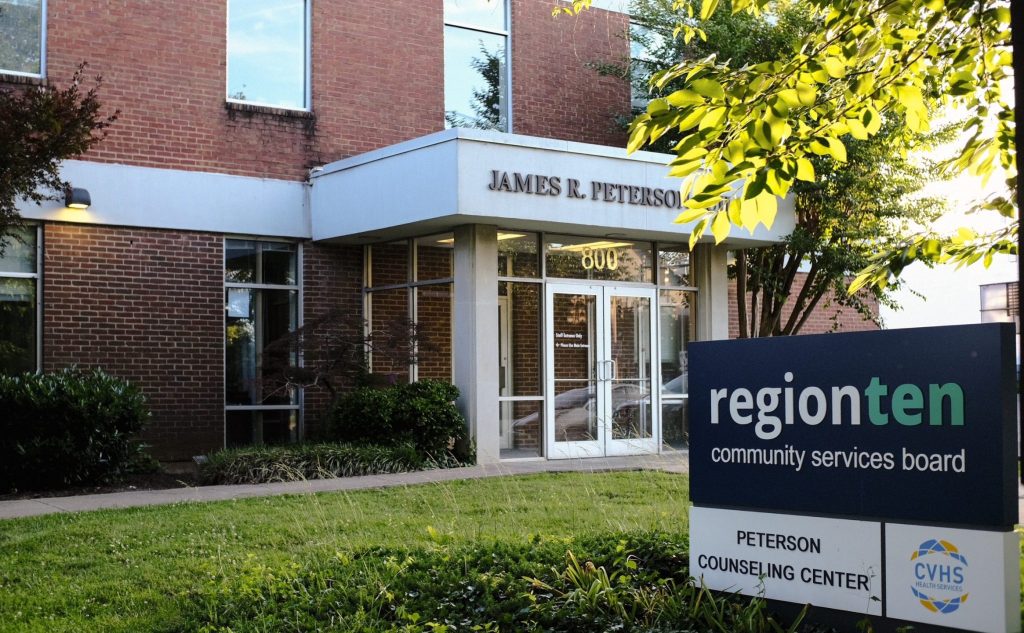
But the changes to Medicaid are the one thing all nonprofit organizations who spoke with Charlottesville Tomorrow in the past weeks, even those that don’t bill Medicaid, are worried about.
Multiple central Virginia nonprofits that spoke with Charlottesville Tomorrow, such as the Sexual Assault Resource Agency (SARA) and Jefferson Area Board for Aging (JABA), have expressed concern for the well-being of their clients and the pressure that changes to Medicaid funding could put on them and other nonprofit providers.
Jennifer Faison, Executive Director of the Virginia Association of Community Services Boards, said that even small changes to Medicaid could force CSBs to care for more people with fewer resources.
“If the federal government enacts changes to Medicaid, it will necessarily have a trickle-down impact on state budgets, which will, in turn, impact local funding as well,” Beitz’s email said, reflecting the same concerns.
“So the CSBs could see a situation where they will need to take on new individuals who have no insurance and at the same time will need to cover the cost to deliver services to existing consumers who lose coverage, all using limited state and local resources,” Beitz wrote.
In other words, the safety network for those who are most vulnerable might face major disruptions if Congress proceeds with reduced funding for Medicaid and triggers reduced coverage in Virginia.
Providers are preparing for reduced Medicaid funding
And while it’s unclear what would happen, nonprofits and community service boards are advocating for keeping Medicaid funding steady and preparing for potential changes.
Region Ten, according to Beitz’s email, is developing a conservative budget for the 2026 fiscal year in case of funding reductions. They are advocating for Virginia to retain expanded access to Medicaid and working alongside the Virginia Association of Community Services Boards to outline the impacts to Virginians if Medicaid expansion ends.
“What is most helpful to Region Ten, and all CSBs across the commonwealth, is for individuals to attend to the decisions that impact their access to care, and communicate the importance of behavioral health care for the most vulnerable and our community to our statewide leaders. We remain committed to our mission and will communicate information as the situation unfolds,” Jennings told Charlottesville Tomorrow.
Encompass, according to Achter, is trying to educate the public and encourage them to reach out to representatives and ask them to keep Medicaid expansion.
“Once a week, I’ve been writing a message — just sort of a weekly, ‘this is what’s happening, this is how it could impact our community’ message. It goes out through different channels: on our website, through a mailing list and email list of about 900 people, and social media snippets. We’re really trying to educate and encourage our community to advocate by contacting their local representatives to oppose these funding cuts,” she said.
There is a lot at stake, after all.
“What’s at stake is it’s beyond just this idea of medical care or mental health care or having medications for substance use disorder. It’s deeper than that,” said Hantelman.
“It’s parents not being able to provide for their children. It’s children seeing their parents in a different light, and it’s whole communities having this thing one day that they lean on for service, support, linkage to other resources, linkage to basic needs, and then it’s gone.”