
Two to three new premature deaths a year. About six new asthma cases and 1,100 asthma symptom cases annually. Two more emergency room visits and one non-fatal heart attack a year.
These are the predicted health effects that Tenaska’s proposed 1.5 gigawatt gas plant would have on Fluvanna County and the surrounding area, according to a study by the Harvard T.H. Chan School of Public Health.

Tenaska, a Nebraska-based energy company, has proposed building a second, $2 billion gas plant as an expansion of its existing facility near Scottsville. The company said the project will bring jobs and an estimate of $247 million in tax revenue for the county. The company has also proposed paying $5 million to homeowners who live within two miles of the site over four years, according to reporting from the Fluvanna Review.
The proposal has been facing pushback from the community on the grounds of environmental and health impacts it could have. (Read more about community concerns in this November 2025 article from the Fluvanna Review).
The Fluvanna County Planning Commission has not yet agreed to approve zoning changes or a special use permit requested by Tenaska. The commission will meet on Jan. 13 to consider whether the proposed project is consistent with Fluvanna’s Comprehensive Plan for future development.
Take action
Have your say on the proposed second Tenaska gas plant in Fluvanna County
The Fluvanna County Planning Commission is meeting on Tuesday, Jan. 13, at 7 p.m. to consider whether Tenaska’s request to build a second gas plant in the area aligns with the county’s Comprehensive Plan. The commission will also review Tenaska’s requests for zoning changes and a special use permit.
Residents throughout central Virginia can submit comments ahead of the meeting through Fluvanna’s “My Two Cents” portal. You can also attend the meeting in-person at Carysbrook Performing Arts Center, 8880 James Madison Highway, Fork Union, 23055.
The Harvard study was commissioned by the Southern Environmental Law Center after Tenaska “refused to provide health impact data before seeking approval of its Special Use Permit (SUP), signaling that any health analysis would occur only after permits were granted,” according to a news release by Fluvanna Horizons Alliance, a community-led organization focused on protecting Fluvanna County’s health and environment.
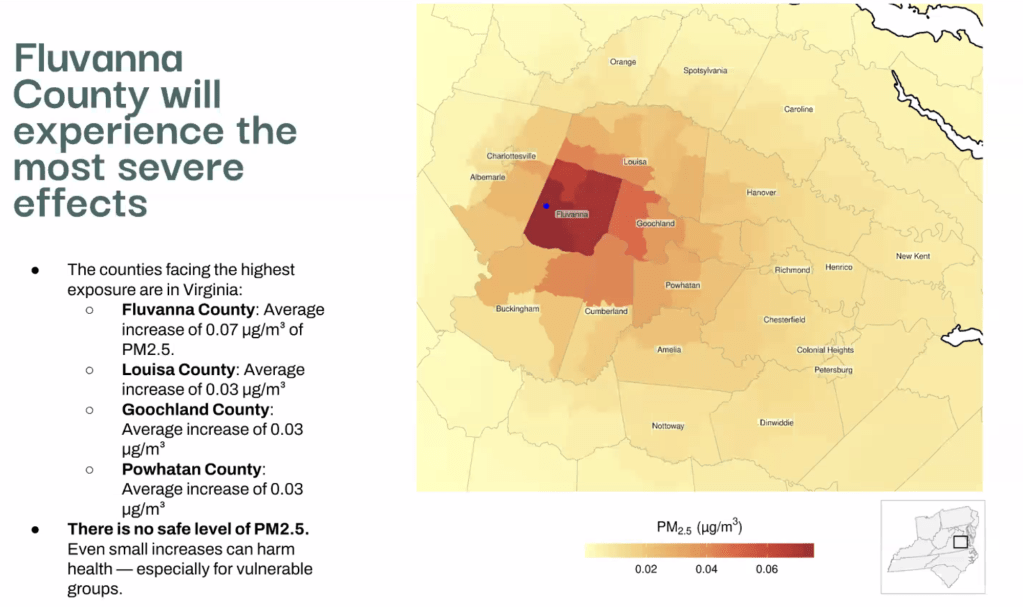
The study, which was presented during a Jan. 8 webinar organized by Fluvanna Horizons Alliance, found that emissions from the plant would cause public health harms estimated to generate up to $50 million in health-related costs annually. Over the plant’s estimated 30-year lifespan, those costs could total between $500 million and $1 billion. The impacts would extend beyond Fluvanna County, affecting communities across Virginia, as air pollution levels are expected to increase in neighboring counties and cities, including Charlottesville, Albemarle, Cumberland, Louisa, Scottsville, Keswick, Richmond and others.
Michael Cork, a Harvard scientist and the study’s lead author, spoke about how the plant, if approved, would increase levels of PM2.5 — fine particulate matter produced by combustion and industrial processes — and worsen health outcomes for Virginians.
While the estimated PM2.5 emissions in Fluvanna County are projected to remain within federal, state and local air quality standards, the study found they would still have measurable health effects.
“There is no safe level of PM2.5,” Cork said. Especially for vulnerable groups. “Being in attainment of the National Air Quality Standards, which is the legal requirement, is not the same as that there’s no health risks. Being in attainment doesn’t mean that there isn’t still a trade-off that we deserve to understand and have an opinion on.”
Teneska said on its webpage devoted to environmental issues that they stay within the requirements adopted around the U.S. as safety standards and operated their first plant responsibly.
“If you want to know what sort of impact a new plant will have on Fluvanna County, take a close look at the county’s air and health statistics after more than 20 years of operating a natural gas-fueled power plant,” the website says. “Fluvanna County’s PM2.5 concentrations are well below federal health-based standards based on data collected from the closest regional monitor. Fluvanna County’s rates of adult asthma, COPD and all types of cancer are in line with surrounding counties without natural gas-fueled power plants.”
According to national studies, including those from the U.S. Environmental Protection Agency, PM2.5 particles pose significant health risks because they can bypass the body’s natural defenses, penetrating deep into the lungs and entering the bloodstream. Exposure has been linked to asthma, lung cancer, heart disease, stroke, diabetes, dementia, bronchitis and premature death.
The study estimated an increase in PM2.5 concentrations of 0.07 micrograms per cubic meter in Fluvanna County, while Louisa, Goochland, and Powhatan counties would each experience increases of 0.03 micrograms per cubic meter. While these changes may sound small, air pollution accumulates over time.
“It’s like smoking,” said Cork. A smoker might not feel the negative health effects immediately, but they accumulate over years.
While we can’t cover every story that’s important to you, we do our best to be responsive to your needs. We use tips from readers to choose which stories to cover, to incorporate information into broader reports or to help us decide how to grow Charlottesville Tomorrow. Here’s where you can tell us what you think we should be covering.
More about public health in central Virginia

Respiratory illnesses remain high across Virginia, health officials warn
Nearly one in four emergency and urgent care visits last week were tied to respiratory illnesses such as the flu, COVID-19, or RSV, according to Virginia Department of Health data.


One in three Virginia mothers struggle to find mental health care for their children
Mothers described navigating long waits, limited providers and a system stretched thin as youth mental health needs rise.
Centra Southside Community Hospital closing labor and delivery unit in December
The hospital cited staffing challenges and declining births in the Farmville area as reasons for the decision.
More local News
This community leader believes inclusive civic engagement can transform institutions
“Having a seat at the table, it really opens you up to the reality of, ‘I am an individual with a voice and with power,’” said Ivet Aviles.

In 20 years, this UVA professor hopes that Dillon’s Rule is a distant memory
UVA School of Law professor Richard Schragger wants Virginia to reject Dillon’s Rule, which limits local government power.


For the kids’ sake, this dancer hopes the arts take center stage in the next 20 years
Ike Anderson joined the Music Resource Center when he was in middle school — and he was hooked. Nearly 30 years later, he tries to give kids that same feeling of belonging, safety and freedom to discover their talents.


2026 Central Virginia Voter Guide
Your guide with information to help you decide who you want to represent you. It covers all eligible races in 11 central Virginia counties and the City of Charlottesville.


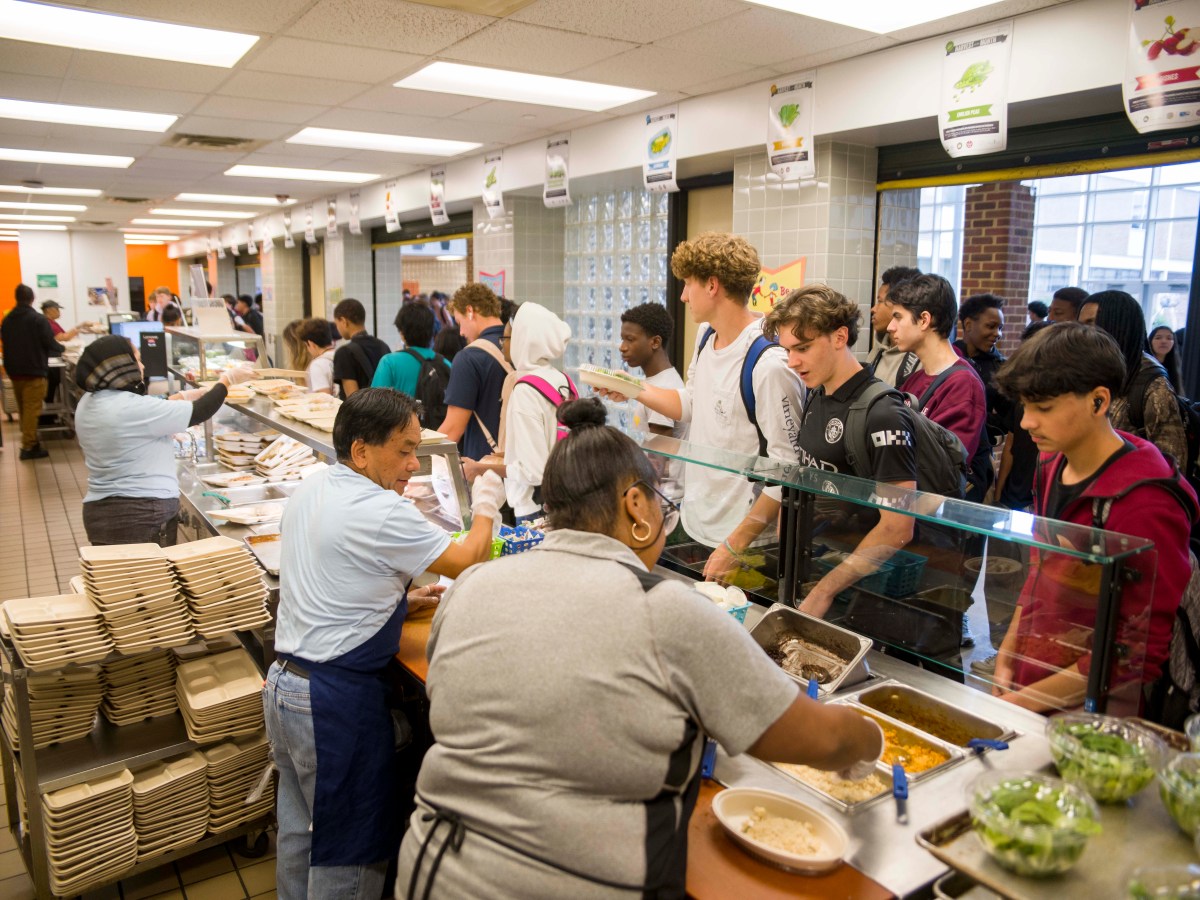
Charlottesville city manager says city must raise taxes in part to cover raises for school support staff
The 10.5% raise would increase pay for teachers assistants, custodians and nutrition staff if it makes it into the final city budget.