

In the quiet of the Waynesboro Circuit Court lobby, Jessica Cook is desperately trying to get her 1-year-old son, Jerado, to fall asleep.
Kids are not allowed in the courtroom, but Jessica couldn’t get Jerado to daycare today. She’s a single mom from Charlottesville and doesn’t have a car, which on a regular day means an hour on a bus to take Jerado to daycare on the other side of town, going home to do chores or running errands, and then returning to pick him up.
To make it to her hearing in Waynesboro, Jessica had to schedule a Lyft ride through Medicaid days in advance. But, because one of the buses she uses only runs once an hour, she couldn’t make it to daycare and back home in time to pick him up. So she brought him. Now, as the lobby fills after lunch, Jessica is hoping that if Jerado falls asleep, she might be able to leave him at the back of the courtroom when the hearing starts. But Jerado is stubbornly awake, no matter what she does.
She panics.
“What am I supposed to do, as a single mom?” she asks a guard sitting by the metal detectors at the entrance. Her voice is accusatory. He stands up.
“You are expected to make arrangements,” he responds.
“But I have nobody.”
“Life is a series of decisions that you make,” he says. “Don’t think the world revolves around you.”
What goes unsaid is how hard it was for Jessica to get there at all. She is in Waynesboro on a chilly and gray Wednesday, Sept. 17, 2025, to see charges against her dropped. She served about one and a half months in jail, then did three years of probation and public service, all while being a single mother living well below the poverty line.
Jessica’s challenges aren’t unusual. For thousands of Virginians, particularly women who research shows tend to face a different set of challenges than men, re-entry from incarceration is a marathon of bureaucratic endurance: long commutes between siloed agencies, endless paperwork, court dates and childcare crises that can undo months of progress overnight. The system meant to help people start over often sets them up to stumble again. While most re-entry programs were designed around men’s experiences, parents in general — and women like Jessica in particular — navigate a patchwork of services that rarely account for motherhood, trauma or the daily logistics of survival.
Jessica’s story is one of relative success. Two years after release from jail, she is still free, she has housing (every expert Charlottesville Tomorrow spoke with found that surprising) and various government benefits to help her and Jerado while she sorts through the herculean task of getting her life back on track.
Yet, within days of that September court hearing, the fragile balance that Jessica had fought so hard to build began to collapse.
Finding another chance after a life ‘in shambles’
The crime that brought Jessica to Waynesboro Circuit Court that day happened in December 2021. She said she was drunk and depressed after her husband won sole custody of her 2-year-old daughter, when she spotted someone leaving a running car in front of a gas station. She decided to “teach them a lesson,” she said, and drove the car around the block before returning it.
The joyride led to 11 days in jail, plus a month-long return in 2023 when she failed to appear for a hearing, three years of probation and $1,200 in court fees, with interest.
Most incarcerated women are arrested for nonviolent crimes, like the one Jessica committed. Things like property or drug offenses, according to a 2025 report by the National Institute of Justice, a research and technology agency within the U.S. Department of Justice.
More than that, research shows a direct link between women’s experiences of physical or sexual abuse and incarceration. According to the Women’s Justice Commission, a research initiative at The Council on Criminal Justice, a nonpartisan think-tank and membership organization, roughly 60%–70% of incarcerated women or girls experienced physical or sexual violence in childhood, and about 70%–80% experienced intimate partner violence as adults before incarceration.
In other words, women who survive abuse are far more likely to end up behind bars.
Jessica, 37, is one of them. She said that since she was a child, she was molested, neglected and sex-trafficked, with intervention attempts that never stuck. It’s not easy to confirm this part of her biography since juvenile records are sealed. Some events in her life are not easy to date.
She said she was sent into juvenile detention at 14, after she attacked a family member who had been molesting her for years. That was around 2003. Soon after, Jessica found herself in a string of foster homes, all while pregnant from her boyfriend. The child went to his father’s family, and in 2004 Jessica ran away to Washington, D.C. to join a friend.
She found work where she thought she would be a strip dancer. Instead, she said, there was more — she was sex-trafficked and advertised on Backpage, a classified ads website that was shut down in 2018 for its extensive use for criminal activities.
This is not a period of her life Jessica talks a lot about. It took her many years and attempts before she escaped in 2009, at 21.
In September of that year she was arrested for unauthorized use of a vehicle. Jessica says she borrowed her friend’s car with permission, but her friend called the police. She spent the following two years on the run, until she turned herself in 2012. In 2014, she was charged with unauthorized vehicle use again. This time, the 2009 and 2014 cases together lead to five years in prison.
She was released at the very end of 2018, at 30 years old. The only person she knew to call was her trafficker, and despite her protests against it, she became trafficked again.
“It became the only thing I really knew, because it happened to me at a very, very young age,” she said over a meal at The Ridley one autumn afternoon. She speaks with the pride of a survivor. The only time she cries is when she speaks about the way the traffickers forced women to punish those who tried to escape. She had to participate in the punishment of her best friend, she said.
She ran away from the trafficking again with the help of her boyfriend in 2019. Just a few months later, she was pregnant and homeless in Virginia. She decided to marry a man she barely knew for stability.
Jessica left that relationship, too, when her daughter was just one and a half months old and moved to Charlottesville. The city offered her a glimmer of hope: She was approved for subsidized housing. It was a chance to start over.
But it wasn’t so easy. After leaving her husband and before getting housing, she said she started using drugs to cope with the stress. She quickly developed a substance use disorder. It led to a series of bad decisions that culminated in her husband winning sole custody of their daughter while Jessica spent time in jail in 2021 for the “dumb decision” to drive a stranger’s car at the gas station around the block. She was in jail during the custody hearing.
The following year was difficult: She was in jail for 38 days across three different stays.
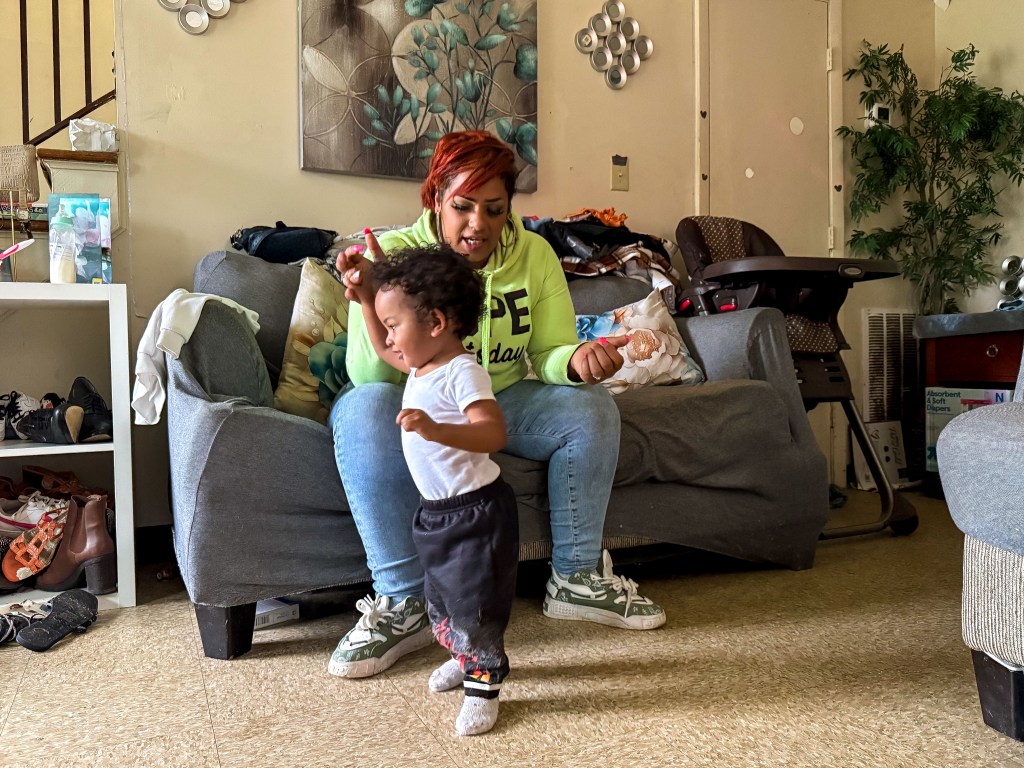
Not long after her release in 2023, which was her last time in incarceration, she became pregnant and gave birth to her son, Jerado. This became a turning point for her.
“My whole life, it’s been in shambles,” Jessica said. “I didn’t know how to love myself. So I didn’t know exactly how to love a kid. I never had it. But when I had my son, it was like I had another chance.”
Jerado saved her, she said. He made her turn her life around.
She started working with Region Ten, the Community Services Board providing mental health services, to address her substance use disorder and her struggle with PTSD, anxiety and depression. She signed up for government benefits to cover healthcare, food, daycare and baby formula. She started to fight to regain custody of her daughter, who is now five. And she cleared up the court requirements to lift her probation period. This was why she had a hearing in Waynesboro on Sept. 17, the day her chargers were expected to be dropped.
But rebuilding a life after incarceration and a lifetime of trauma isn’t simple, and it’s particularly brutal for women navigating re-entry systems never built with them in mind.
Where re-entry fails women
Across Virginia, people returning from incarceration spend much of their time just moving — between agencies, courtrooms and childcare drop-offs — trying to keep their lives on track despite systemic hurdles. It doesn’t take much. Even one missed appointment with a probation officer or a court hearing can trigger reincarceration, even if the reason was something like a missed bus. A decrease in benefits might mean homelessness or losing access to meals.
Even in Charlottesville, where there are more resources than in many other places in Virginia, re-entry can be structurally difficult, explained a group of Charlottesville re-entry advocates.
For instance, many people leave incarceration without IDs, said Jean Knorr, cofounder and steering committee member of the Charlottesville Area Justice Coalition and a cofounder of Cville ID Team, a volunteer group that helps people returning from incarceration or experiencing homelessness get state-issued identification.
Before a person navigating re-entry can find a job, housing, open a bank account or apply for benefits, they have to have an ID. It might be challenging to collect supporting documents or even find an address for the ID to be mailed to.
Challenges mount for folks with kids.
Sam Heath, a local advocate with Charlottesville Area Justice Coalition, spoke about how Charlottesville, which is already experiencing affordable housing and shelter bed scarcity, offers few re-entry housing options that meet the specific needs of women — especially mothers with children.
Gary Spry, a re-entry program manager at Offender Aid & Restoration (OAR), which works with individuals navigating re-entry, said on a call in December that he wasn’t sure how many re-entry housing options were there in general for women and families with kids in the area.
“One minute someone’s doing something, the next minute they’re not,” he said. It’s hard to keep track.
These are all parts of national trends.
A 2025 report by the U.S. Department of Justice’s National Institute of Justice looked into the trends and challenges formerly incarcerated women experience during re-entry, and found that while the number of women involved in the legal system has skyrocketed over the past decades, “a corresponding growth in gender-responsive programming has not manifested.”
And women, the study found, face many unique challenges. They are often primary caregivers to minor children, and separation from them and the need to provide for them can contribute to distress and depression, as well as unemployment and unstable relationships. Women are more likely to have PTSD and other mental health disorders, due to high rates of prior victimization and the lack of support. Housing is harder to secure as well. Formerly incarcerated people are ten times more likely to experience homelessness, and within that group, women are more likely than men to find themselves unhoused.
Nationally, barriers during re-entry are even higher for Black women like Jessica. Studies show they are more likely to lose custody, face housing discrimination and experience prolonged economic instability due to the overlap of racial and gender inequities.
And even where resources exist — job training, women-focused mental health support or programs that help with family reunification — they are few, siloed or difficult to access for women with children. It’s true nationally and locally, according to the U.S. Department of Justice report and local experts.
“There are way more men in prison than women and, obviously, more men released. Most of the services are men-led,” Heath wrote in an email, reflecting on the reasons behind the scarcity of resources.
But also, “Some of the needs for women get overlooked because they don’t apply as often to men. Namely, childbirth, child care, and any needs related to children, since women are far more often the caretakers than men. I think reentry services are just not equipped for those unique needs as often,” he wrote. Men are perceived to be “easier.”
The resources that do exist are siloed, said Heath.
Locally, there is Offender Aid & Restoration, a nonprofit that provides peer-support and assistance navigating re-entry in the area.
There is also the “One Stop Shop Cville,” a community event that brings together organizations that help formerly incarcerated people under the same roof for a day, every other month. Organizations ranging from Region Ten, a mental health resources provider, to the Fountain Fund, a provider of low-interest loans and financial coaching for formerly incarcerated people starting businesses, set up tables and connect with those in attendance.
Jessica attended one One Stop Shop Cville event about a year ago, after her social worker told her about it. It wasn’t too helpful, she said, but only because she was already in touch with organizations she needed. However, the concept of having all resources under one roof seems very helpful to her.
Outside of those One Stop Shop Cville events under one roof, connecting the dots might be harder, Knorr and Heath said. There are peer navigators working with different organizations, but Charlottesville needs more.
Director of Charlottesville Social Services Leon Henry said he saw what Heath and Knorr mean when they talk about the resources being siloed. Most government benefits are accessible through one stop, either in the city’s Social Services office downtown, online, or by phone. But using them requires travel all over town. A doctor that accepts Medicaid and takes new patients is in one part of town, a daycare might be in the second, and affordable housing in the third. Plus the agencies that offer resources like housing and education are spread all over.
He sees the pattern of Jessica’s life often, he said. The daycare shortage is real. Transportation issues are real. There’s a need beneath the need.
“People are just trying to take it one day at a time,” said Henry.
Jessica is doing just that.
‘They keep you in this little bubble’
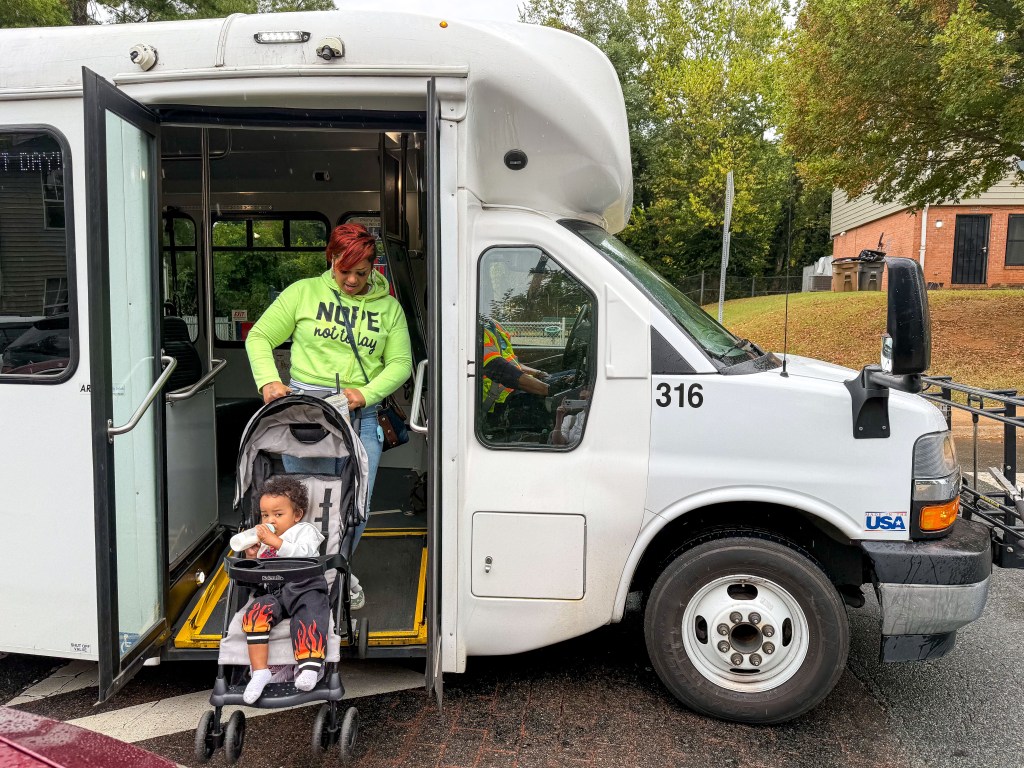
On a typical day, Jessica spends roughly four hours on the bus, dropping off and picking up her 1-year-old son, Jerado, from daycare. His daycare is across town and requires two different buses, but Jessica knows she’s lucky to have daycare at all.
Until recently, she did her four hours of community service a day as a part of the court’s requirement, traveling with Jerado in tow, hauling his stroller and carrying the baby seat and diaper bags on the side during Charlottesville’s hot and humid summer days. Then she went to her court-mandated psychiatric and medical appointments, as well as check-ins with social workers.
When Jerado finally got a spot in the daycare in July, she started to first drop him off there before proceeding with her day. With that, her daily time on the bus started to add up to six hours. It was exhausting, she said.
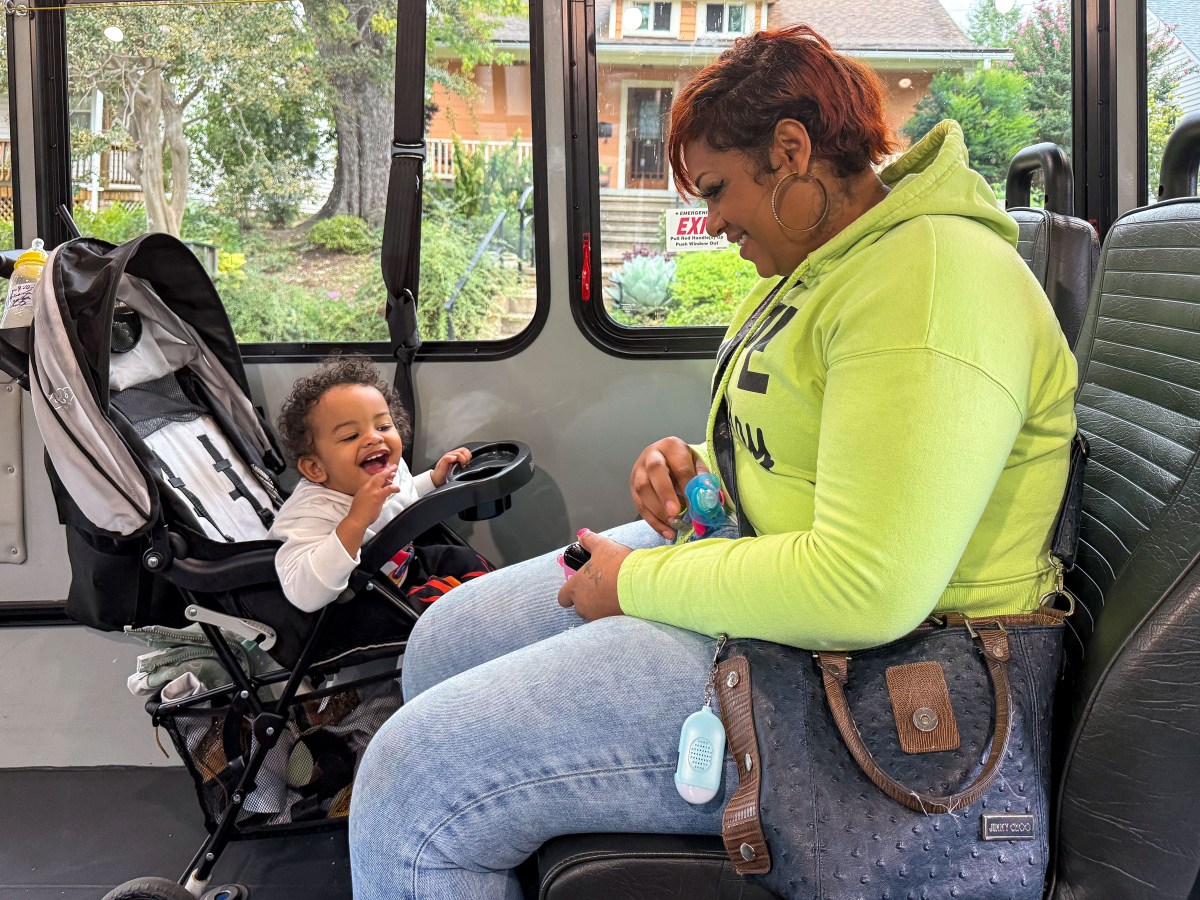
On the first bus on Sept. 16, the day before her court hearing in Waynesboro, she plays peek-a-boo with Jerado through the stroller window, trying to make him laugh. Neither of them slept much the night before. A week earlier, she finally finished her 127 required hours of community service, which makes her days a little easier. Before that, the few hours she got to herself after daycare drop-off went to volunteer work, court-mandated therapy, or meetings with her probation officer.
So, after dropping him off, she has things to catch up on, like figuring out why her benefits this month are less than she expected. Usually, she gets about $580 a month in Supplemental Nutrition Assistance Program benefits, Temporary Assistance for Needy Families benefits and child support payments. But this month the $100 in child-support payments didn’t arrive. So she’ll need to stop by social services later to ask why.
That missing $100 matters. Since losing access to free baby formula a few months ago — she missed a re-certification appointment while she was sick — she’s been scraping by until her next eligibility interview. Even small disruptions ripple through her budget.
By the end of the day, she’s too exhausted to even look for work, she said, not that many places would hire her. Job applications always include the felony question, and Jessica has to check “yes” every time.
She didn’t even get a call back to flip burgers, she said.
She tried to start her own business connecting moms, so no one has to feel so alone as she does parenting Jerado. It didn’t take because women just treated her as a babysitter.
“It is a lot, but this is how they treat single moms on welfare. I don’t want to continuously be in a low-income base. This is supposed to be a stepping stone. But how is it going to be a stepping stone for me so that I can get out there and get my own money when they are not helping?” she said, the frustration clear in her voice.
“They keep you in this little bubble, and they tell you what you need to do, but they’re not helping you do it.”
After three years of work and waiting, a five-minute hearing
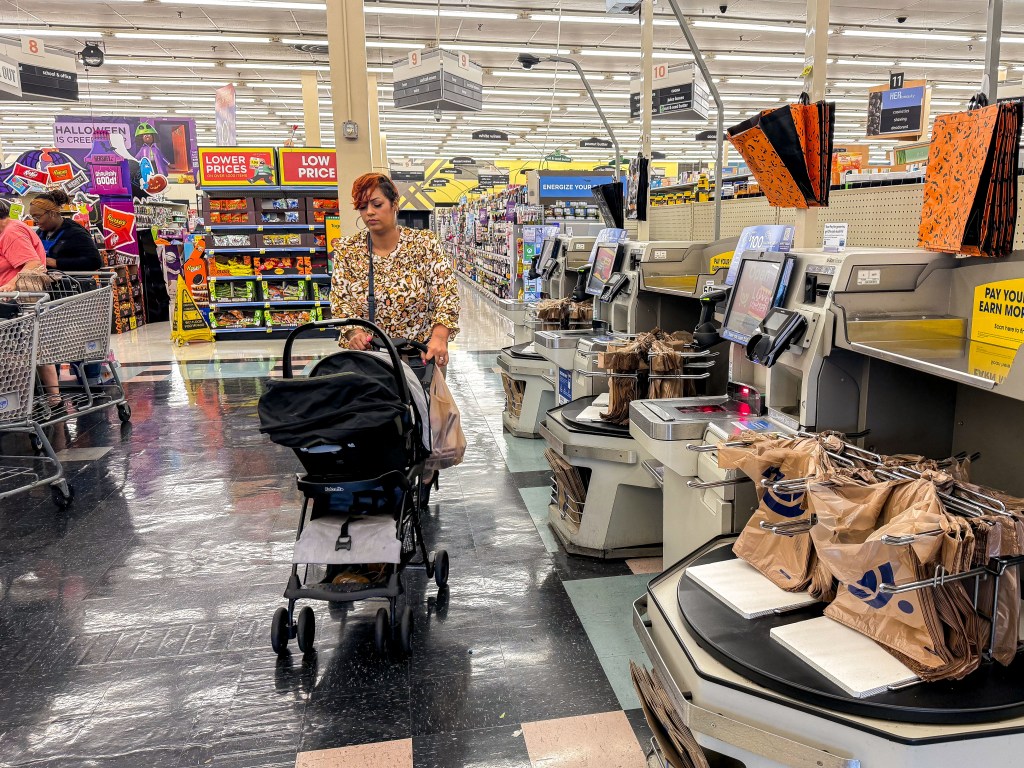
To get to Waynesboro for her court hearing on Sept. 17, Jessica had to “finesse the system.” She is allowed one car-ride a month to buy groceries through Medicaid, so she ordered a Lyft to Kroger in Waynesboro, planning to do her shopping then.
However, that extra $100 she expected didn’t arrive yet. A social services employee told her the day before not to worry; it will arrive. “You’re in a good place,” she said. So Jessica just buys Coke and meat jerkies for breakfast and makes her way up to the court, juggling a baby car seat and a stroller. It’s unexpectedly chilly, too.
After about a half an hour of waiting in the lobby for her hearing and hoping to get Jerado to fall asleep, Jessica redirects her frustration at the guard sitting by the metal detector. He has kids too, he responds as he stands up and walks a few steps closer. He says he never fails to make arrangements for them.
“Are you married though?” Jessica pushes. Yes, he acknowledges.
“That’s different,” she says. She has no one to call for help with Jerado.
Still, she should not expect that everything would fall around her, he says. He would call someone to come help with the baby, he says, and radios it in.
“People who don’t have to struggle don’t understand. I can’t believe he just said ‘the world doesn’t revolve around you,'” Jessica says.
The guard speaks quietly and chuckles into the radio. Jessica starts to cry. “I’m so pissed,” she says quietly.
Jerado, after a long time of being stubbornly awake and bored, is finally asleep in her arms.
In the end, nobody comes to help with Jerado. A friendly officer comes out of the courtroom and, after a bit of back and forth, secures permission from the judge to have Jerado at the back of the court room in his car seat. He also arranged for Jessica’s case to be heard first.
By the time Jessica makes it into the warmly lit room with red-cushioned seats and chandeliers, quite a few seats are already filled with other people whose hearing is also at 1 p.m. After Jerado is settled, Jessica goes to the front of and takes a seat at the table across from the prosecutor. The judge sits above them at his dais.
The judge flips through the paperwork. Jessica has fulfilled the court requirements, the judge noted. Three years later, the charges were dismissed, marking for Jessica a freedom from the legal system and a longest time she hasn’t been “locked up.”
“Best of luck, Miss Cook,” the judge says.
“Thank you, thank you!”
Jessica and Jerado are out of the courtroom. The whole hearing took less than five minutes.
Re-entry is ‘a series of ups and downs’
On the ride back, Jessica talks about her plans now that she is free. She wants to get her GED — she’s been taking classes and did well on practice tests. She plans to get her driver’s license and buy a car. She also hopes to get certified as an emergency medical technician, or EMT, because she dreams of giving back to the community and helping those who are going through hard times.
And she wants to get her daughter, who is now 5, back. The custody hearing is in December. She still has to figure out how to get to the hearing, though. It’s out of town.
Then, once she has her daughter back, she will be gone to Georgia, Florida or Texas. She just wants to be away from Virginia, leaving years of trauma behind.
“I could thrive in Atlanta,” she says. She used to model there, and she knows the city. Anything is better than Charlottesville, she says. It hasn’t been the fresh start she hoped for.
But just days after the Waynesboro hearing, a major step toward her new life, the fragile balance she was so carefully building collapsed. That $100 in benefits that had been delayed never arrived. Those were child-support payments, and her son’s dad lost his job, she said. That left her with only $480 a month.
She had to pull her son out of daycare because she could no longer afford it, even with subsidies. Paying rent was difficult that month too, but she managed. But there is no question about getting a job now, without a daycare option.
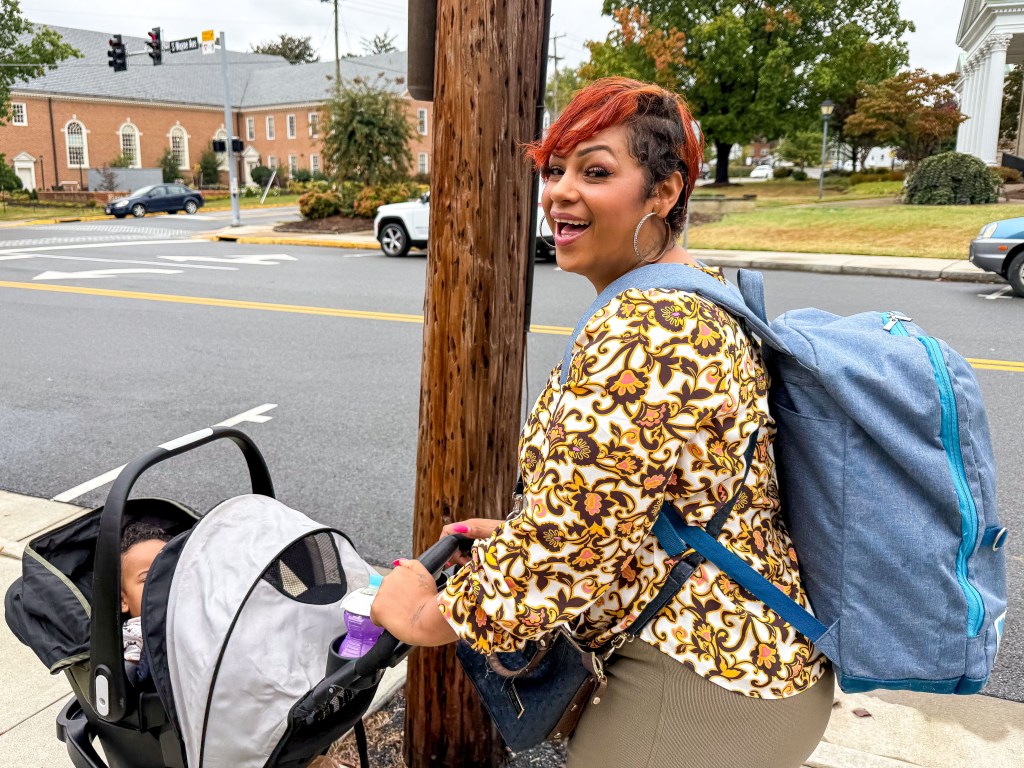
She spent the next two weeks at home, depressed and anxious as waves of PTSD hit from all the trauma she has lived through. She just wants to be out of Charlottesville, she said, to break the cycle and teach her son how not to end up behind bars, like she did. She wants a good life for her kids, but it’s so hard to get back on her feet.
“This is what re-entry is, a series of ups and downs,” Heath, from Charlottesville Area Justice Coalition, said sympathetically. “It’s a process that is nonlinear and ever-constant. Society offers few endpoints, forcing formerly incarcerated people to reinvent themselves, be continually creative and compromise.”
There is no timeline for re-entry, Heath added. It can be a few months, or it could be the rest of someone’s life as they try to put things back together after getting out.
Charlottesville, compared to other places, has a lot of resources and people willing to help someone going through re-entry, said Heath. For instance, there is the Cville ID Team, where Knorr works, the Fountain Fund, Network2Work, Pipelines & Pathways, Home to Hope, Central Virginia Community Justice and others.
There are efforts to make the re-entry experience more coordinated and overall smoother.
In 2024, the first Re-entry Summit, organized by the Fountain Fund, the Charlottesville Area Justice Coalition, Equal Justice USA and the Tom Tom Festival, brought together organizations and individuals to assess the current state of the re-entry experience. After analyzing data with the help of UVA’s Center for Community Partnerships, it found that re-entry in Charlottesville needs to be coordinated, comprehensive and connected. The second summit that same year focused on connecting the existing organizations.
The final report that came out of all three summits said that Charlottesville needs a brick-and-mortar community center for re-entry, more transitional housing options, and expanded peer support groups, among other recommendations.
To help address that gap, Heath transitioned the Charlottesville Area Justice Coalition into a new local nonprofit — the Commonwealth Justice Coalition (CJC) — which launched in December 2025. Unlike Offender Aid & Restoration, which works directly with individuals coming out of jail and prison, CJC will collaborate with and support service providers. It aims to reimagine public safety in the Commonwealth by pointing people to solutions that heal, especially in re-entry, gun violence and restorative practices spaces.
“There is solid reentry work, but it’s scattered and siloed. The Cville Street Sheet is a great example showing this reality,” Heath wrote in an email. “We’d work to make the system more streamlined and to get more peer navigators to help people.”
He isn’t quite sure what it would look like yet, but it will depend on funding.
“I think those efforts would help Jessica because it would allow her time to be spent on living life rather than navigating a system,” wrote Heath.
This wouldn’t solve everything, but it’s something.
Either way, for Jessica it’s something that is taking one step at a time.