
Andrea Douglas and Jordy Yager weren’t surprised when the National Endowment for the Humanities rejected the Jefferson School African American Heritage Center’s grant application over the summer.
After all, their application for a public humanities project about the history of public housing sites in Charlottesville, Virginia contained words and phrases like “inclusion,” “injustice,” “segregation,” “subsidized housing” and “Black.”
All told, the Heritage Center’s grant application used at least 29 words and phrases that have been deemed no longer acceptable by the Trump administration, according to PEN-America, a nonprofit that advocates for press freedom and against educational censorship.
The Heritage Center submitted its application in December 2024, when Joe Biden was still president, and before the Trump administration started disqualifying diversity, equity and inclusion (DEI) initiatives from receiving federal money.
“We would have loved that money,” said Douglas, the Heritage Center’s executive director. The grant was for $200,000. But the Heritage Center is taking the NEH grant committee’s comments — which were downright glowing — and using them to strengthen its commitment to telling local histories. They’re doing the project anyway.
Like all of the Heritage Center’s projects, this one focuses on overlooked local history.
Their emphasis on community building, as well as listening to ‘local people,’ is well placed. The JSAAHC has already established a strong track record of historical research and education, which this project can expand on. Therefore, this is a very strong proposal overall.
—Comment from a reviewer of the Jefferson School African American Heritage Center’s rejected grant proposal to the National Endowment for the Humanities
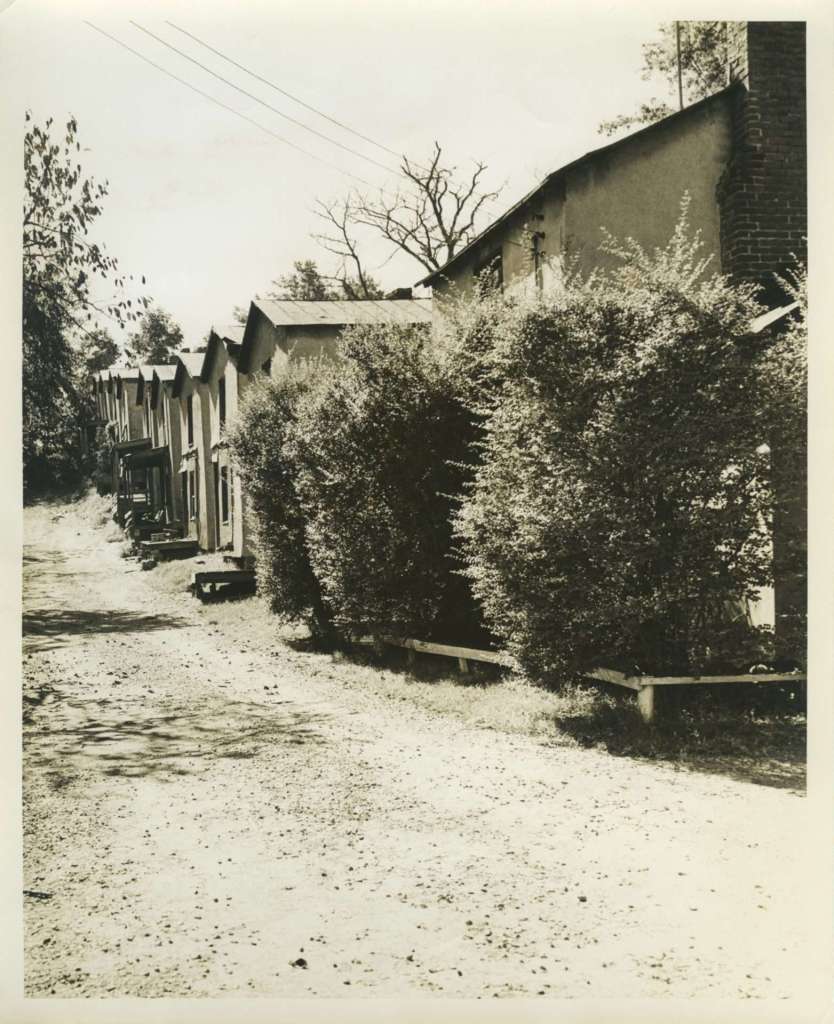
Cox’s Row was a working class Black neighborhood founded in the City of Charlottesville in the late 19th century. It was located in the present-day 10th and Page neighborhood, where the Westhaven public housing community is now.
“The neighborhood hasn’t received much, if any documentation, in large part because it’s destroyed in the same decade Vinegar Hill is,” said Jordy Yager, the Heritage Center’s director of digital humanities.
Due in part to the Heritage Center’s efforts, the story of Vinegar Hill is relatively well-known throughout the Charlottesville community. In the mid-20th century, Vinegar Hill was a thriving majority-Black, working-class neighborhood and business district in downtown Charlottesville. It stretched from West Main St. to Preston Avenue, from 4th St. NW where the Jefferson School is located, to the west end of the Downtown Mall, where the Omni Hotel is today.
In 1960, city voters approved a referendum authorizing the redevelopment of Vinegar Hill, though a poll tax prevented many of the neighborhood’s residents from voting. In 1964, the city government, working in conjunction with the Charlottesville Redevelopment and Housing Authority (CRHA) and the federal government, razed Vinegar Hill in the name of urban renewal and displaced about 500 people.
Some of those people moved into the newly-built Westhaven, the city’s first public housing community. But the city razed another Black neighborhood, Cox’s Row, and built Westhaven on top of it.
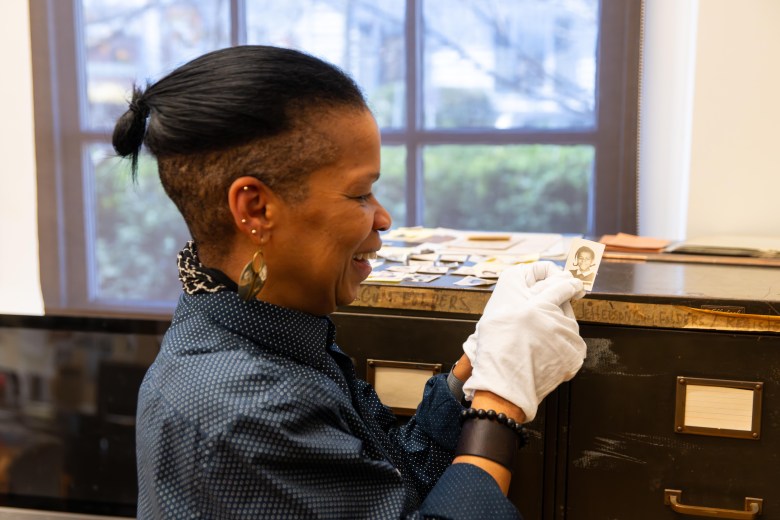
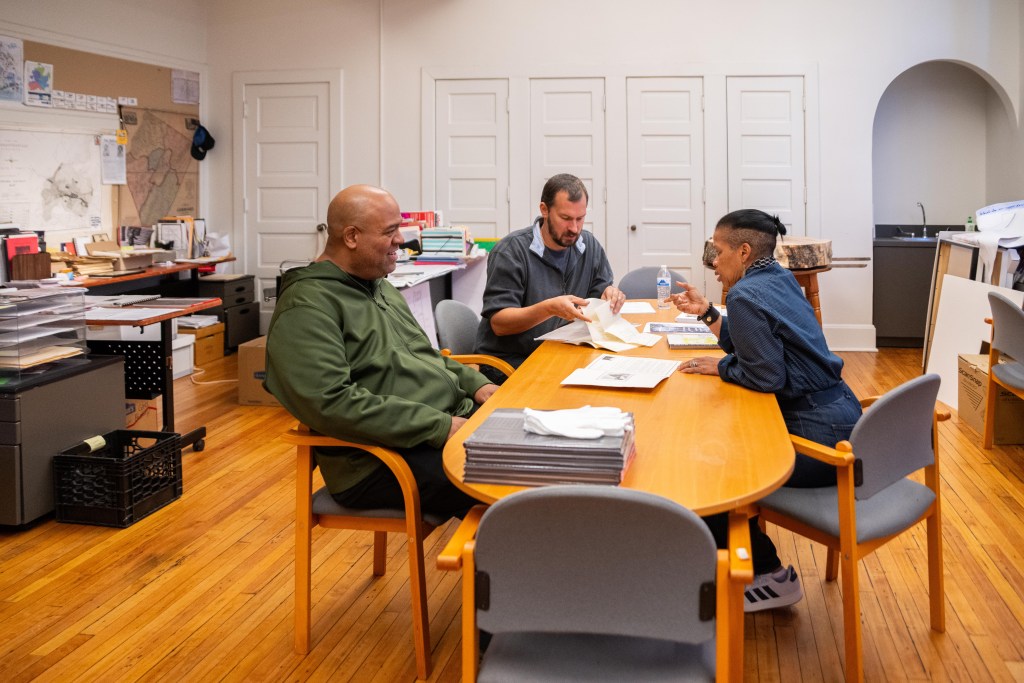
The Heritage Center is working with the Public Housing Association of Residents (PHAR), a tenant advocacy organization co-founded by Westhaven residents, to uncover the buried history of Cox’s Row. They want to know when the neighborhood was established, what it looked like, who lived there, who owned property.
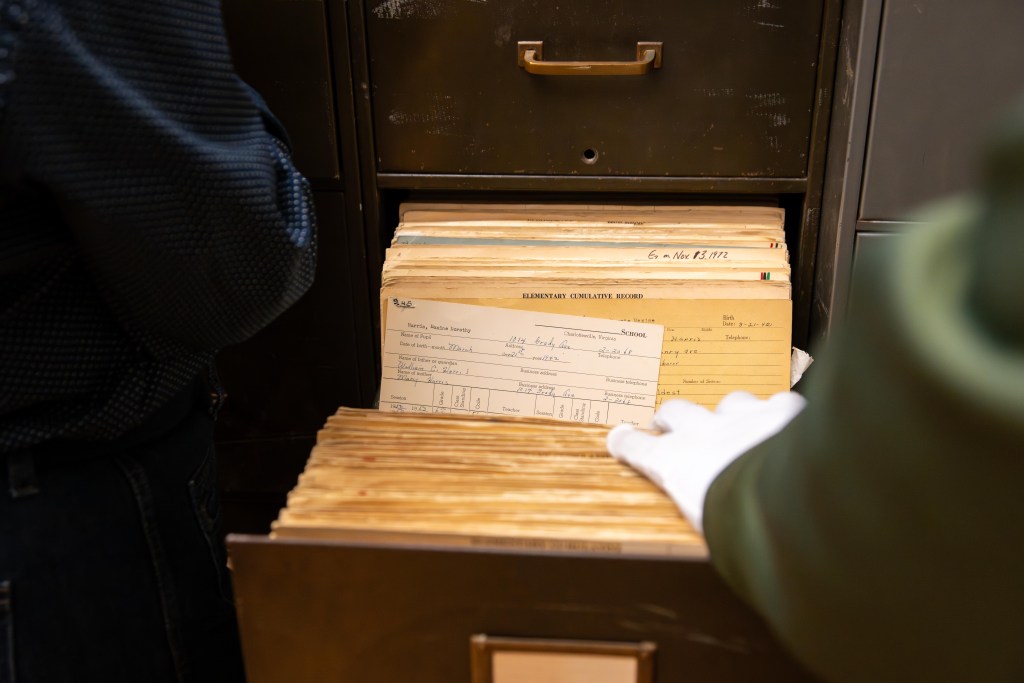
Using property records, school records, family histories and oral histories, the Heritage Center and PHAR plan to collaborate on building up that history. The Heritage Center will guide and facilitate the research, which will be conducted by Westhaven residents. Other public housing residents throughout the city, at Sixth Street and South First Street, for instance, will do the same for their communities.
From there, Sherry Bryant, the Heritage Center’s head curator of learning and engagement, will work with local teachers and administrators to translate these histories into a K-12 curriculum that meets statewide standards of learning. That curriculum would then be taught in local schools.
It’s important for people to know the history of where they live, said Douglas.
“In order to fully understand where you live, and to fully understand it as a true thing, you have to know the African American history,” she continued.
In Charlottesville, it dates back to the 1700s. Currently, the Heritage Center is showing an exhibition about 17 Black patriots from Central Virginia who fought in the Revolutionary War.
“But it’s much bigger than that,” Douglas said. “The importance of knowing where you live, and how that story unfolds, includes all of the people who are involved in it.”

Places like Monticello and Montpelier have spent decades telling the story of Central Virginia through the lens of Thomas Jefferson and James Madison. And so it is the Heritage Center’s job, Douglas said, to tell it through the lens of Black Central Virginia residents, among them the residents of Cox’s Row, Vinegar Hill and Westhaven.
That’s what the Heritage Center hoped a nearly $200,000 NEH grant would help kickstart. When they got the grant denial, Douglas and Yager asked to see the five-person review committee’s comments. The comments they shared with Charlottesville Tomorrow were overwhelmingly positive.
“Applicants have done an excellent job arguing for the need to capture and disseminate the stories of individuals displaced by urban renewal and public housing,” one reviewer wrote.
“Their emphasis on community building, as well as listening to ‘local people,’ is well placed,” wrote another. “The JSAAHC has already established a strong track record of historical research and education, which this project can expand on. Therefore, this is a very strong proposal overall.”
“In the best tradition of civil rights organizing, the applicants seek to empower local residents to carry out historical research as a means of fostering reparative justice and educating the community,” wrote another.
“Especially refreshing to see a variety of K-12, community members, traditional academia, and public humanities all represented. Proven track record of effective collaboration.”
After seeing these comments, Douglas and Yager figured that the only reason why the grant was denied was because of the Trump administration’s crackdown on DEI initiatives.
Charlottesville Tomorrow reached out to the NEH for more information on why the Heritage Center didn’t get the grant and did not hear back. It is unclear if the lack of response is due to the recent 43-day government shutdown, or something else.
“You’re left to make your own conclusions,” said Yager.
Shortly after the NEH grant email, Douglas and Yager received a second rejection of funding from the federal government, this time from the Institute of Museum and Library Sciences (IMLS).
President Donald Trump issued an executive order in March effectively dismantling the IMLS, an independent federal agency that provides financial support to museums, libraries and other types of archives throughout the country. The agency’s staff, and therefore its services, have been greatly reduced, and could go away altogether, Charlottesville Tomorrow reported earlier this year.
The IMLS rejection was just like the NEH one, Yager said. No grant, but enthusiastic comments from the review panel.
Because the Heritage Center hasn’t relied much on federal grants in the past, losing out on that money isn’t a catastrophe, Douglas said.
Most of the Heritage Center’s funding comes from local and state governments. For the past few years, the Virginia Department of Historic Resources has given $500,000 per year for the Heritage Center’s public learning and engagement programs, including its Center for Local Knowledge. The City of Charlottesville is also a major source of funding for the Heritage Center, allocating about $247,000 in fiscal year 2025 and $228,000 in 2026.
Still, Douglas, who was the Heritage Center’s only employee when it launched in 2013, spent years growing the organization to the point where it could compete for grants at the federal level.
Douglas first wrote an NEH grant proposal in 2013 or 2014, for the Heritage Center’s permanent exhibition, “Pride Overcomes Prejudice,” a history of peoples of African descent in Charlottesville.
“Amazing exhibition, wonderful idea,” Douglas recalled the NEH telling her at the time. But the NEH doubted a one-person organization could pull it off.
“We were not mature enough to be able to receive those grants,” she said. “So it has been my goal to establish the institution’s reputation so that we could one day do that.”
Using local and state funding, Douglas was able to grow the Heritage Center’s programming and its reputation. Currently, the Heritage Center has seven full-time employees — more than ever before.
In 2021, they received a two-year $150,000 grant from the National Trust For Historic Preservation, a privately-funded nonprofit. Its African American Cultural Heritage Action Fund specifically supports programs that identify and document Black cultural heritage sites that have shaped American history.
That grant went to helping the Heritage Center create the Black Land Repository, which uses 400,000 pages of property and tax records to create a comprehensive database of historical Black property ownership in Charlottesville and Albemarle County. It’s a massive project that the Heritage Center is still working on, including making it available online.
The following year, in 2022, the Heritage Center received its first federal grant, $109,000 from the Institute for Museum and Library Services (IMLS) for the Central Virginia Black Land Repository, 29News reported at the time.
A couple years later, in early 2024, Shelly Lowe, who at the time was chair of the NEH, visited the Heritage Center. Lowe’s visit, in combination with conversations Douglas and Yager were having with people in the national funding sphere, motivated them to go for an NEH grant for the Cox’s Row project.
They were encouraged, in part, because folks on the national level see that what the Heritage Center is doing, and how, can be replicated in many places throughout the country. Charlottesville’s history of public housing, of urban renewal and its razing of Black neighborhoods, is not uncommon. But the method of letting locals guide the telling of that story, is.
“Charlottesville is a pretty good crucible for understanding a national race history,” said Douglas. “Things that happen here, that we understand to be our little town, are happening in much larger places.”
Douglas wasn’t rattled by the NEH grant denial. Plenty of people on the local, state, and national level have already affirmed — with significant funding — that the Heritage Center’s work is important. And now she has two strong grant applications she can shop around elsewhere.
Douglas said in this changing funding landscape, the Heritage Center will do what it’s done, successfully, many times before: double down on its values.
“Truth and equity are real values that we can continue to build on,” she said, and she’s looking to partner with organizations and people who understand that. “I think that’s how we will certainly survive this.”
As its research and educational programs continue to flourish, the Heritage Center is trying to figure out how to preserve its physical space. The former school building and auditorium on 4thSt. NW is used almost daily for Heritage Center events, community meetings, concerts, theater performances and more. The floors are decades old, and they need to be replaced, Douglas said.
Some of programming might have to give a little, Douglas said. Maybe the Heritage Center won’t be able to do as many tours for UVA students and faculty. But no matter what, it will forge ahead with the Cox’s Row and Westhaven project, and all of its other projects that tell a more complete story of the Charlottesville area.
“Happily, we have remained consistent,” Douglas said. “We have remained imaginative. And we have remained connected to our community.”