

Three local affordable housing projects are facing additional hurdles after Congress cut planned federal dollars for neighborhood projects in its most recent stopgap funding bill.
On March 14, Congress passed, and President Donald Trump signed, a bill continuing to fund the federal government through the rest of the fiscal year, which ends Sept. 30, 2025.
The bill increased spending for the Department of Defense by $6 billion, according to Stars and Stripes, an American military newspaper, and reduced other spending by $13 billion. Most of the cuts in non-defense spending came from omitting Congressionally-directed spending, also known as “earmark” funds, for projects across the country, Roll Call reported.
Funding for community projects has been included in federal budgets since the very first Congress in 1789, with a hiatus between 2011 and 2021, according to a Cardinal News report.
Any nonprofit or not-for-profit organization (such as a local government) can make a funding request to its elected Senator or Representative for a fiscal year. Congresspeople then bring those requests to their appropriation committees, and projects that are selected are included in the federal budget for that year.
Dozens of projects throughout the Charlottesville area — including ones focused on clean drinking water, expanding UVA Children’s Hospital’s neonatal intensive care unit and counseling services for traumatized children — will not receive the funding they’d applied for and expected to receive in the 2025 fiscal year.
Piedmont Housing Alliance (PHA), Habitat for Humanity, and Piedmont Community Land Trust are among the local organizations affected. All three were hoping to use federal funds to advance affordable housing opportunities for residents of Charlottesville and Albemarle County.
The evaporation of the earmarked funds will have different effects on each project, depending on its size.
Federal dollars would have made 501 Cherry Ave. project ‘a whole lot easier’
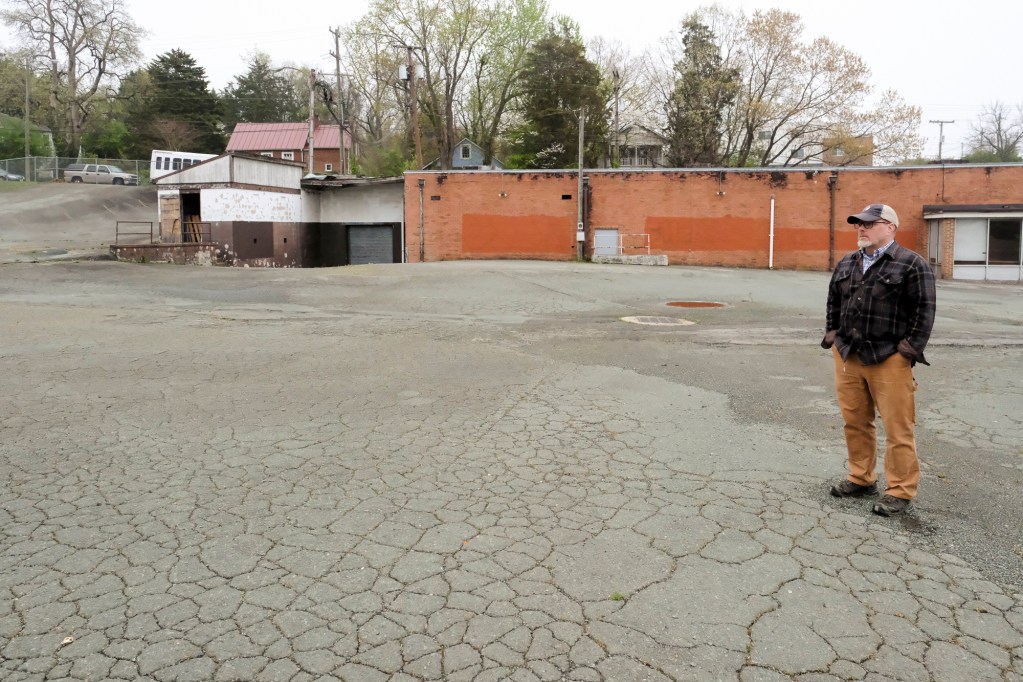
PHA, a nonprofit housing developer, in partnership with the City of Charlottesville, applied for $2.4 million to help with the 501 Cherry Avenue project, a mixed-use development of apartments for low-income individuals and families, space for a teen-focused music nonprofit, and a grocery store planned for the city’s Fifeville neighborhood.
The project is the first of its kind in Charlottesville. When local real estate company Woodard Properties bought the site, the neighborhood association asked for a say in the development plans — and Woodard said yes.
PHA had success with earmark funding in the past. In fiscal year 2023, it received $1.1 million to help with the construction of 121 affordable apartments at the Southwood development in Albemarle County (a project Habitat for Humanity is also involved in). That year, PHA also received $625,000 toward an early learning center at Kindlewood (formerly Friendship Court), a low-income development in downtown Charlottesville.
In fiscal year 2024, PHA received $650,000 for a permanent location for the Charlottesville Financial Opportunity Center and Housing Hub, where people can get in-person help with finding a place to live, eviction prevention and financial counseling.
For the 2025 fiscal year, the Senate Appropriations Committee awarded PHA half of what it had asked for — $1.2 million — in its final budget package, but all of the earmark funding was cut in the bill that Congress passed in March.
The Congressionally-directed spending money would have been a fraction of the $45 million to $50 million projected overall cost for the development, but it’s still challenging to not have it, said Sunshine Mathon, executive director of Piedmont Housing Alliance.
While it won’t sink the project, it does make closing some existing funding gaps for both the housing and the grocery store more difficult, Mathon said.
Pulling together funding for any affordable housing project is “an exercise in financial architecture,” he added, and this project is particularly complex. All told, Mathon expects there to be between 15 and 20 sources of funding for the housing component alone.

The earmark funding “would have made it a whole lot easier,” Mathon said. “But frankly, we’ve been moving forward on the project assuming it wasn’t going to happen in any case. We’ve had it as a line item in the budget as a ‘maybe,’ but not as a necessity. We’ve taken other strategies to fill the hole.”
One of those strategies is applying for the Low-Income Housing Tax Credit (LIHTC, pronounced lie-tech) program, run by the IRS. There are two different LIHTC funding pools for different types of projects: One is less competitive, but offers less money; the other offers more money, and is more competitive. PHA is going for the latter, and Mathon said he expects to hear whether or not the application is successful in late June.
Because none of the entities that applied for Congressionally-directed spending funds for the 2025 fiscal year got their projects funded, there is an assumption that those applications will roll over into fiscal year 2026, said Mathon.
But that’s not possible for this project — the timing doesn’t line up. Projects that are already in the construction phase are not eligible for earmark funding, Mathon explained.
“We don’t want to be in a position where we’re asking for those funds, and waiting in limbo for them when our goal is to start construction,” he said.
Federal funds for Southwood fell through, but project will continue
Like Piedmont Housing Alliance’s request, Habitat for Humanity’s also made it through the Senate Appropriations Committee and into the final budget package before being cut in the March funding bill.
Habitat anticipated receiving just under $1.1 million to help with the construction of 12 rental units at Southwood, a mixed-income redevelopment of a former mobile home park just over the Charlottesville city line in Albemarle County.
The earmark funding would have covered about half of the estimated $2.3 million cost for those units, which Habitat plans on making available to families at or below 80% of the Area Median Income.
(Area Median Income is calculated by the U.S. Office of Housing and Urban Development annually, so it is a changing number. In 2025, a family of four earning 80% AMI makes $100,650 a year.)
The money would have covered a small fraction of a massive project: Upon final completion, Southwood is expected to have more than 1,000 homes, available to homeowners and renters at a variety of income levels. The entire project, which is being completed in phases, is projected to cost $500 million.
Habitat bought the park in 2007 “to prevent massive and catastrophic resident displacement,” according to its website. More than 1,500 low-income residents lived in the 100-acre community at the time, and many of them are staying through the redevelopment.
Southwood is a “resident-led” redevelopment, meaning that residents get a say in the decisions made about the community. The long-term goal is for Habitat to turn ownership over to the residents themselves, Habitat states on its website.
Previously, in fiscal year 2022, the organization received just over $1 million in earmark funding for Southwood. And while additional money for the current fiscal year would have helped with the current phase of the project, it won’t stop it from happening.
“The good news is that most of the capital stack for this part of the project is funded,” Dan Rosensweig, President and CEO of Habitat for Humanity of Greater Charlottesville, wrote in an email to Charlottesville Tomorrow.
Rosensweig is confident that Habitat will be able to find that $1.1 million elsewhere.
“One of our organization’s core strengths is that we have never relied on any single funding source,” he wrote. “Our funding stream is very diverse: from revenue from the Habitat Store, to private donations, public grants, and, critically, partner family mortgage payments. Our private donors have always been incredibly generous and stepped up in times of greatest need.”
‘It slows down the region’s ability to provide more low-income home ownership’
While the Congressionally-directed spending money would have been helpful for PHA’s and Habitat’s projects, it would have made a world of difference for Piedmont Community Land Trust (PCLT).
A community land trust, generally, maintains land for community needs, most often affordable housing.
That’s what PCLT does, with a focus on home ownership. The nonprofit organization operates in the City of Charlottesville and Albemarle, Fluvanna, Greene, Louisa, and Nelson counties.
Here’s how it works: The land trust acquires a property. It maintains ownership of the land, but sells the home on it to a low-income family or individual. When the homeowner decides to sell the house, the land trust can ensure that it is passed along to another low-income family.
“That arrangement allows us to increase and foment low-income ownership in a region where it’s needed,” said Luis Oyola, Director of PCLT.
Right now, PCLT has 40 properties, with another 20 in development. The organization could be looking at more, Oyola said, if it had the funding.
That’s why it applied for $1 million in Congressionally-directed spending.
“One of the biggest challenges for community land trusts is trying to find the money to develop it in the first place,” said Oyola. “What we were trying to do was establish a million-dollar fund to start developments.”
The money would have been used to establish a revolving fund, so that the land trust could have a continuous pipeline of homes — something that’s key to the longevity and success of the land trust.
Unlike Piedmont Housing Alliance’s and Habitat’s requests, Piedmont Community Land Trust’s application didn’t make it to the budget. Oyola found out last fall.
“We are trying to look somewhere else, but every time we get denied funding like that, it slows down our ability to grow, which means it slows down the region’s ability to provide more low-income home ownership,” Oyola said.
The organization is now looking toward local, state, and private philanthropic funding opportunities for affordable housing development. It could go to a private bank for that $1 million, Oyola said, but a bank loan comes with interest rates — an added cost that the earmark funds wouldn’t have had.
“At the end of the day, it’s all of the people who are trying to get out of cycles of increasing rent, and are trying to get into more stable situations where they have ownership,” who are affected by these federal spending cuts, Oyola said. “The less resources we have, the slower we move toward expanding those opportunities for families and households.”
More challenges ahead with possible HUD cuts
Both Rosensweig and Piedmont Housing Alliance’s Mathon said that because the funding landscape for affordable housing projects changes constantly, they’re used to adapting.
That said, Mathon is preparing for additional headwinds.
If PHA were to receive Congressionally-directed spending for a different housing project in the future, those funds would be administered by the U.S. Office of Housing and Urban Development (HUD) — which is expected to have its staff slashed in half, according to an internal memo obtained by The Washington Post in February (subscription required).
Cuts to HUD staff would almost certainly mean slower processing times for much-needed funding.
“Staff in these offices play a critical role in ensuring that tens of billions of dollars of badly needed federal funds are distributed promptly and used efficiently,” Will Fischer, senior fellow and director of housing policy at the Center on Budget and Policy Priorities, a research institute that analyzes policy, wrote in March.
“Everyone in the development community who does this, who interfaces with HUD, every public housing agency — everyone — is hoping and praying that the HUD cuts don’t slow down their processes further,” said Mathon. “But hope and prayers don’t get you very far. The likelihood is that it’s almost certainly going to happen.
“It does seem like there are different programs that will be impacted differently, and that landscape is still uncertain.”