

On Feb. 18, a federal judge overturned the U.S. Department of Education’s guidance that effectively banned diversity, equity and inclusion programs and initiatives at colleges and universities, but the legal decision will not lead to policy changes at the University of Virginia without intervention from its Board of Visitors.
Following the latest legal developments, UVA spokesperson Bethanie Glover told Charlottesville Tomorrow that the university will continue to follow a March 7, 2025, Board of Visitors resolution, which dissolved its DEI office and programs, unless the Board takes further action.
In addition to the March 2025 Board resolution, UVA is bound by an October 2025 agreement with the U.S. Department of Justice, including a requirement for quarterly reports to the DOJ on ongoing compliance with the Trump administration’s guidance on civil rights laws. UVA submitted its first report on its dismantling of DEI to comply with this guidance on Dec. 29, 2025. The university hired the law firm McGuireWoods to oversee the ongoing review.
According to the first report that UVA submitted to the DOJ, UVA has taken extensive actions to dismantle DEI initiatives at the university, including eliminating diversity-related language from its websites as well as its admissions and hiring process. UVA also made changes specific to the Schools of Medicine, Nursing and Commerce, including the elimination or revision of implicit bias trainings, ending partnerships with organizations that were focused on protected characteristics (such as race or gender), eliminating programs that existed under UVA’s central DEI office and more.
The School of Medicine also eliminated any awards for faculty and staff that were geared toward specific genders, race and other characteristics. Meanwhile, the Medical Center no longer conducts community outreach events for specific communities on the basis of race, sex or other protected characteristics, and no longer conducts faculty leadership trainings or pipeline programs that are targeted to certain groups that are underrepresented in medicine, among other changes.
The Trump administration began formally challenging DEI programs over a year ago, arguing in a Jan. 21, 2025, executive order that DEI programs are discriminatory under the Title VI of the Civil Rights Act of 1964, which prohibits discrimination based on race, color, or national origin.
The Department of Education followed up on the executive order when it sent a “Dear Colleague” letter to schools on Feb. 14, 2025, threatening to rescind federal funding from institutions that continue to pursue “illegal” diversity, equity and inclusion practices.
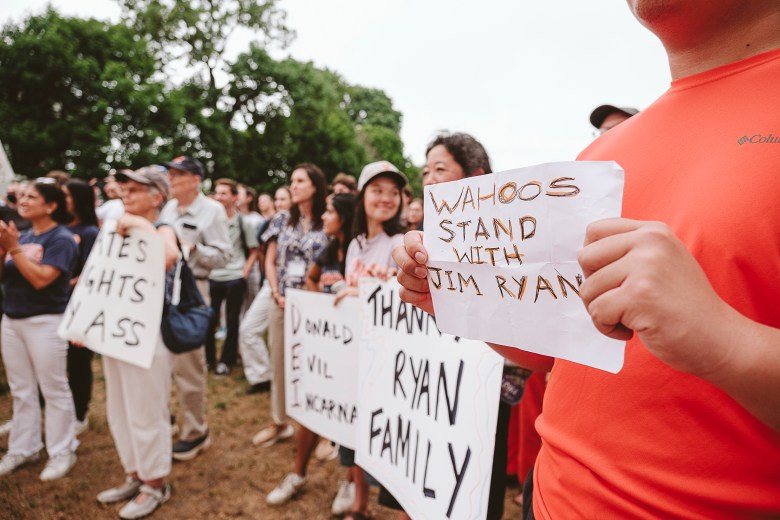
On March 7, 2025, UVA’s Board of Visitors, the university’s ultimate governing body, unanimously passed a resolution dissolving UVA’s central DEI office and related programs. The resolution, which heavily relied on and referenced the guidance targeting DEI in the Feb. 14 “Dear Colleague” letter, was originally drafted by former Republican Virginia Gov. and Trump ally Glenn Youngkin and later edited by the Board, according to statements made by former UVA President Jim Ryan in a Nov. 14, 2025 letter to UVA’s Faculty Senate.
The American Civil Liberties Union, National Education Association and others sued the Department of Education over the guidance in March 2025, arguing that banning DEI programs and initiatives is an unconstitutional attack on civil rights, free speech and academic freedom.
On Feb. 18, 2026, a federal judge invalidated the guidance targeting DEI, preventing the government from enforcing or reviving it.
“The Trump administration tried to use a ‘Dear Colleague’ letter by the Department of Education to rewrite civil rights law, and luckily, the judiciary was a bulwark against these encroachments on programs and policies meant to effectuate civil rights laws,” Legal Defense Fund Senior Counsel Antonio Ingram told Charlottesville Tomorrow on Feb. 19.
More than 60 higher education associations, including the American Council on Education, had called for the “Dear Colleague” letter and its guidance to be rescinded. They argued that the guidance “misinterprets institutions’ legal obligations,” does not take into account First Amendment protections afforded to higher-ed institutions, and emphasized that “efforts to build inclusive and diverse campus communities are neither discriminatory nor illegal.”
“Many of these actions that were taken to remove resources and cultural centers and graduation ceremonies for particular communities, this was never legally mandated, it was never about complying with what is legal and not legal,” Ingram told Charlottesville Tomorrow. “It was about bowing to political pressure of an administration that finds certain communities disfavorable, unfortunately. And I think we will see if places like UVA stand with them, or if they continue to capitulate to an administration who doesn’t recognize and uplift those communities.”
For now, it’s unclear how this latest legal ruling will affect UVA in the long term, and at the state level, political control has shifted. Last November, Democrats swept Virginia in the general election, attaining a majority in the state Senate, House of Delegates and winning the top three state offices. Several members of UVA’s Board of Visitors resigned in January, reportedly at the request of Gov. Abigail Spanberger, a Democrat. Spanberger appointed 10 new members to the Board, and separately, Virginia Democrats are making a push to pass laws that would change how universities in the state are governed.