

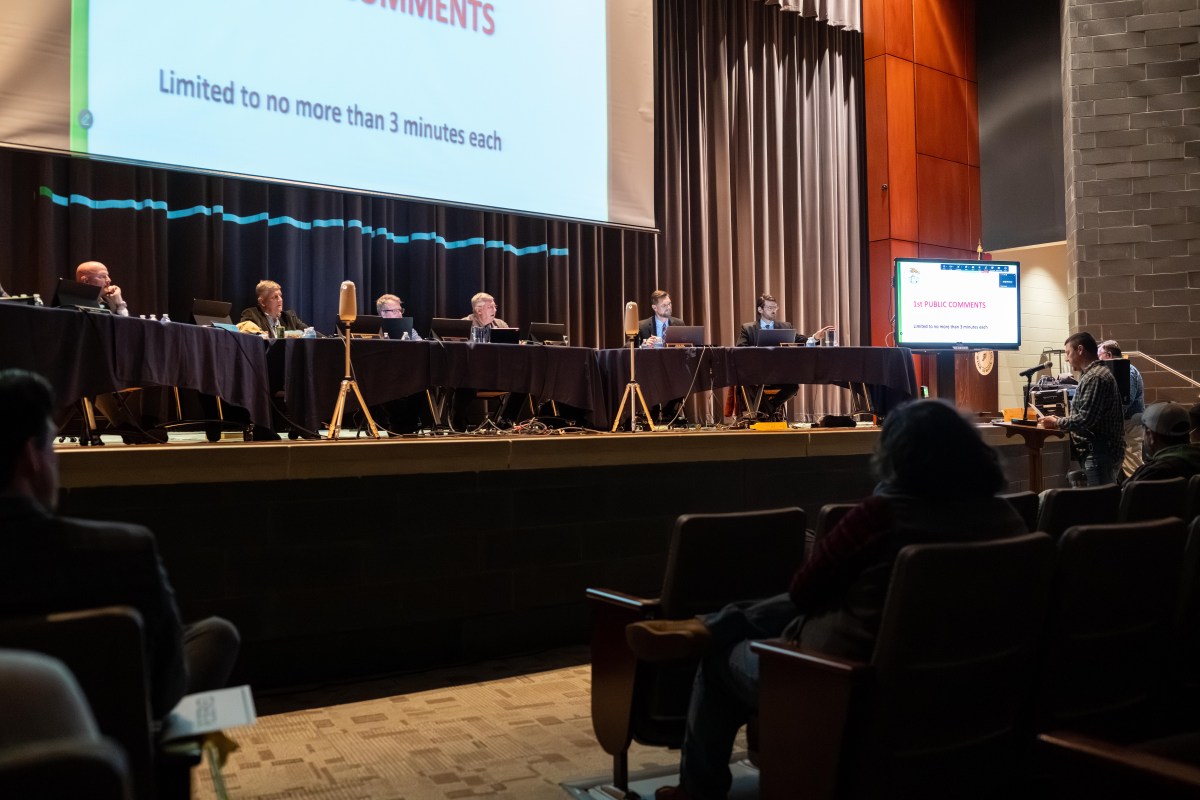
The Fluvanna County Board of Supervisors gave Tenaska’s proposed natural gas-fired power plant a green light at its March 18 meeting.
The meeting stretched from 6 p.m. into the early hours of March 19 and was filled with comments from community members arguing for and against the new plant.
Tenaska, a Nebraska-based energy company, plans to build the plant as an expansion of its existing facility on Branch Rd. near Scottsville. Tenaska says the plant would generate enough electricity to power about 1.5 million homes and would help ensure reliability of the region’s electric grid.
The Board’s decision comes after the county Planning Commission’s ruling that the plant was not in “substantial accord” with Fluvanna’s Comprehensive Plan for its future, as well as the Commission’s recommendation that the Board deny Tenaska a special use permit.
The project now heads to state regulators for approval. The State Corporation Commission, which regulates public utilities, financial institutions and other businesses, and the Virginia Department of Environmental Quality, which regulates water and air quality, both need to sign off on the project, explained Dan Whitten, Fluvanna County Attorney. The environmental quality review process takes about 18 months; if approved, construction of the plant would begin in 2028.
The Board voted 4-1 in favor of the plant being in alignment with the Comprehensive Plan and in favor of granting the special use permit. The Supervisors also approved a change in ordinance to allow the construction of taller smokestacks, which Tenaska said are necessary in order to meet the Virginia Department of Environmental Quality’s air modeling standards and allow for emissions to be distributed over a wider distance instead of concentrating around the plant.
According to the meeting materials, the project site is on two parcels totaling about 416 acres, and about 50 acres would be needed for the plant. The Board also voted on restrictive covenants which put limits on how the remaining land can be used in order to “ensure that it returns to its rural state following plant construction.”
“It has been a lot of sleepless nights,” said Supervisor Mike Goad during the meeting. There are good arguments on both sides, and it’s challenging to balance progress and preservation, he said. The question weighs heavily on him, he added.
Some Board members agreed that the decision didn’t come easy before voting for the plant. Supervisor Chris Fairchild was the only one who voted against.
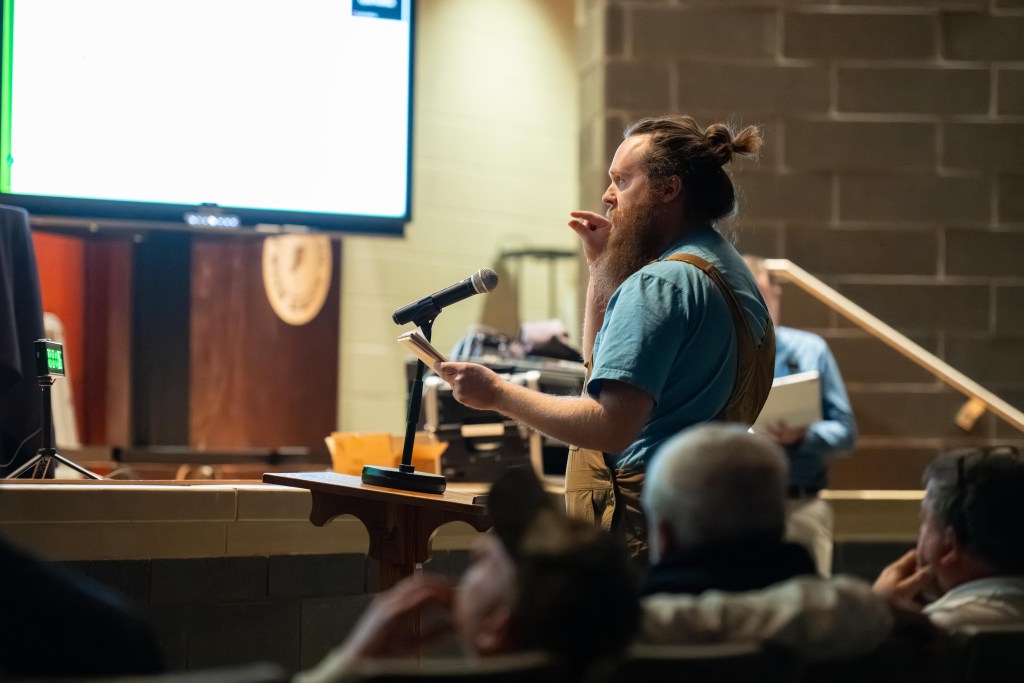
Dozens of community members voiced their opinions during the public comment and public hearing sections of the meeting. There were several speakers supporting the plant, many of whom are current plant employees or their family members who wanted to share their positive experiences with the company.
“It’s a fabulous opportunity for our county. It’s an opportunity for young men like me,” said Will Smith, an employee at the current plant, during the public hearing section. “They took a chance on me, gave me a wonderful career, a wonderful future, and I think that down the road that could be some other kid that grew up here his whole life.”
There were also many opponents, pleading with the Board to consider the environment and the potential long-term community health impacts — or at least more time to further study the matter before granting the final approval.
Ashley Crocker, a county resident, spoke during the public hearing section about the amendments to allow for higher smokestacks and told a story of her daughter, who had a bad respiratory infection a few years ago and struggled to breathe.
“I will never forget the sound of listening to her wheeze and gasp and choke,” she said. For her, the air pollution the new plant will bring means more families who might have to deal with a similar situation. She added that the taller smokestacks spreading emissions over a wider area does not resolve the concern for her.
“Taller stacks means the pollution doesn’t stay here. It travels. It comes down somewhere else. Meaning it impacts more families and more kids and more moms, terrified watching their kids struggle to breathe.”
As a result of the months-long consideration of the project, 49 conditions were added to the special use permit, ranging from noise limits to traffic management. Tenaska also agreed to remove the spending cap on how much money it will contribute toward a traffic circle that will be built to manage traffic.
Tenaska issued a statement expressing its satisfaction with the outcome.
“We are pleased that the Board recognizes our desire to develop a project that not only benefits Tenaska but also benefits Fluvanna County, while at the same time delivering on the goal of reliable power for the region,” wrote Timberly Ross, Tenaska’s vice president of community relations, in a news release. “Our focus now turns to the state permitting process.”
Fluvanna Horizons Alliance, a community organization that has been spearheading the opposition to the plant, said in its own release on Thursday that it is disappointed with the outcome. “This decision has generational impacts and was made without due process and with a bias toward the developer. The community sought and provided information, called for accountability, showed up, and spoke clearly.”
While the project is settled at the county level, opponents will still have opportunities to challenge it at the state level, said Whitten.
A somewhat comparable natural gas plant in Chesterfield County, which Whitten said is about a year ahead of the Tenaska plant in its process, was recently approved by the Department of Environmental Quality. That plant faced significant opposition from environmental justice groups, Virginia Mercury reported.
There were public hearings as part of the Chesterfield County plant approval process, so Fluvanna County residents will likely have another chance to voice any concerns during the state review.
Fluvanna Horizons Alliance said in its news release it is exploring legal remedies to “this incorrect decision.”