

We see homelessness around us every day, but we don’t have to accept it as the norm. We can and should work toward its abolition.
It wasn’t that long ago that homelessness in the United States was vanishingly rare. A 1990 paper by P.H. Rossi in American Psychologist started this way: “In the 1950s and 1960s homelessness declined to the point that researchers were predicting its virtual disappearance in the 1970s.”
Researchers’ prediction was not to be. A 2024 census — the U.S. Department of Housing and Urban Development’s Point-In-Time report — counted over 770,000 homeless people in the United States in a single night.

The first step to creating our shared future is imagining it.
For Charlottesville Tomorrow’s 20th anniversary, we are inviting central Virginians to share their visions for the next 20 years.





Here in Charlottesville, the sight of so many people sleeping on the Downtown Mall, in tents along the Rivanna River, or in parks or doorways, indicates that we’re losing the battle too. But in 20 years or even less, we can turn this back around.
Here’s how.
Homelessness, at its core, is the absence of a home. Ensuring access to stable and affordable housing is the primary way we end homelessness. We know this. More to the point, we know how to do this.
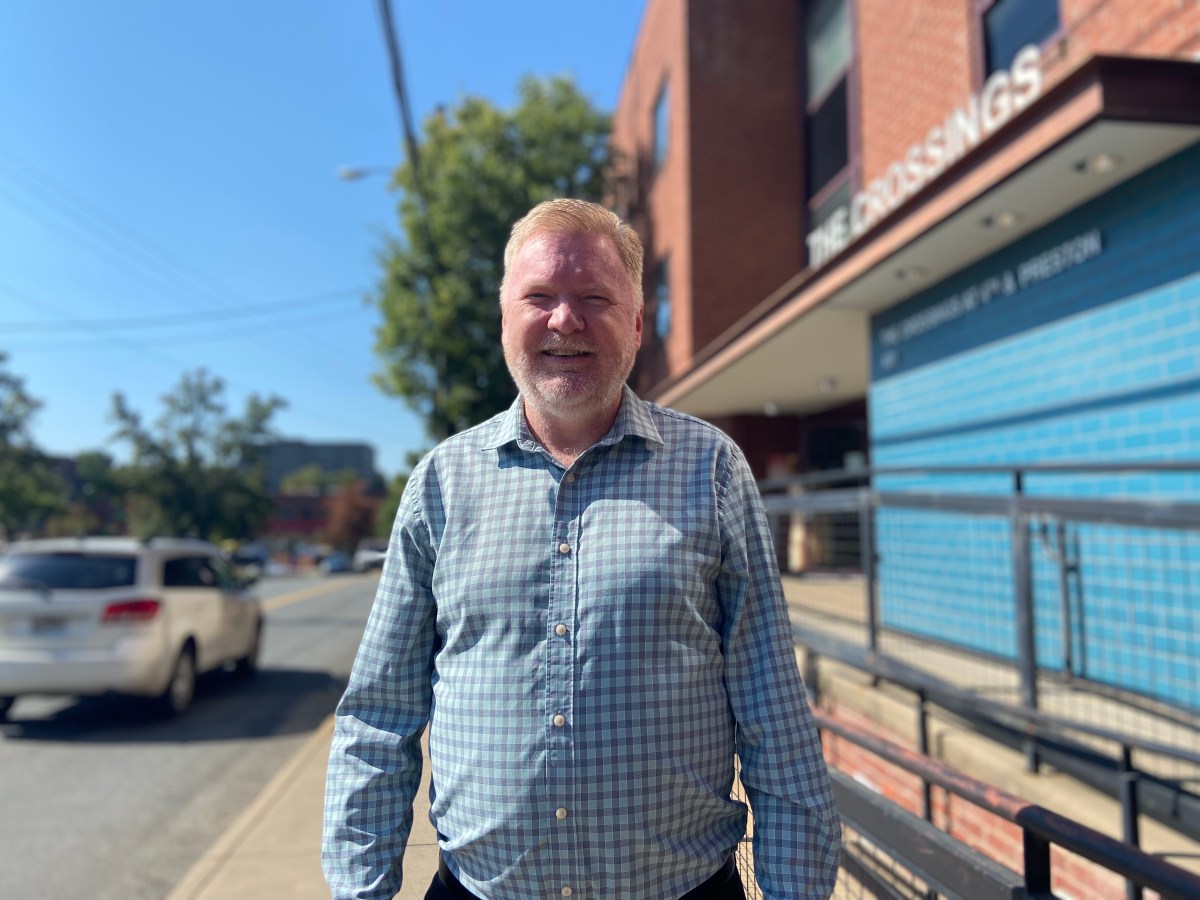
Back in 2012, the city of Charlottesville partnered with the nonprofit SupportWorks Housing (then called Virginia Supportive Housing) to open The Crossings at Fourth and Preston, offering 60 units of permanent supportive housing — affordable efficiency apartments with on-site support services and security, targeted at those who were most likely to die had they remained out on the streets. The Thomas Jefferson Area Coalition for the Homeless (now the Blue Ridge Area Coalition for the Homeless) participates in the federal government’s point-in-time survey. They reported that the number of chronically homeless people dropped almost 60% (from 76 in 2012 to 32 in 2014) after The Crossings opened, according to Information Charlottesville.
What did we do next? We patted ourselves on the back and acted as if we had fixed the problem. Thirteen years later, chronic homelessness is back in full force.
The good news is that SupportWorks Housing recently broke ground on a second permanent supportive housing building called Vista 29, on Premier Circle in Albemarle County. Once Vista 29 opens its doors in 2026, we can expect our homelessness numbers to decrease significantly. SupportWorks Housing reported in 2024 that 96% of their permanent supportive housing residents in Virginia remain stably housed over the long haul.
Let’s not rest on our laurels this time.
In 20 years, central Virginia can be a place where homelessness is largely a relic of the past.
Dave Norris, Executive Director of the Charlottesville Area Association of REALTORS® (CAAR) Foundation
We must redouble our commitment to building deeply affordable housing for those who are at the margins of society. Not just permanent supportive housing, but also affordable multi-family housing, transitional housing and therapeutic group homes for people recovering from addiction or mental health crisis. Heck, we could even give tiny home communities a try.
People often talk about shelters as the solution to homelessness. But shelters are just a bandaid. When PACEM (People and Congregations Engaged in Ministry) was launched in 2004, the organization declared that its ultimate goal was to put itself out of business. If we create enough affordable housing in our community, the PACEM Board of Directors said, cots in church basements would no longer be needed.
It’s time to reclaim that bold vision.
We also need systems change so that fewer people fall into homelessness in the first place. Prevention-oriented mental health programming and better resources for treating addiction are two obvious places to start.
Let’s resist the urge to “clean up” our Mall and our community by removing homeless people from our eyesight. Instead, let’s make them not homeless.
In 20 years, central Virginia can be a place where homelessness is largely a relic of the past. The homeless population here is not enormous and we have the resources to solve this problem. Let’s get to work.