
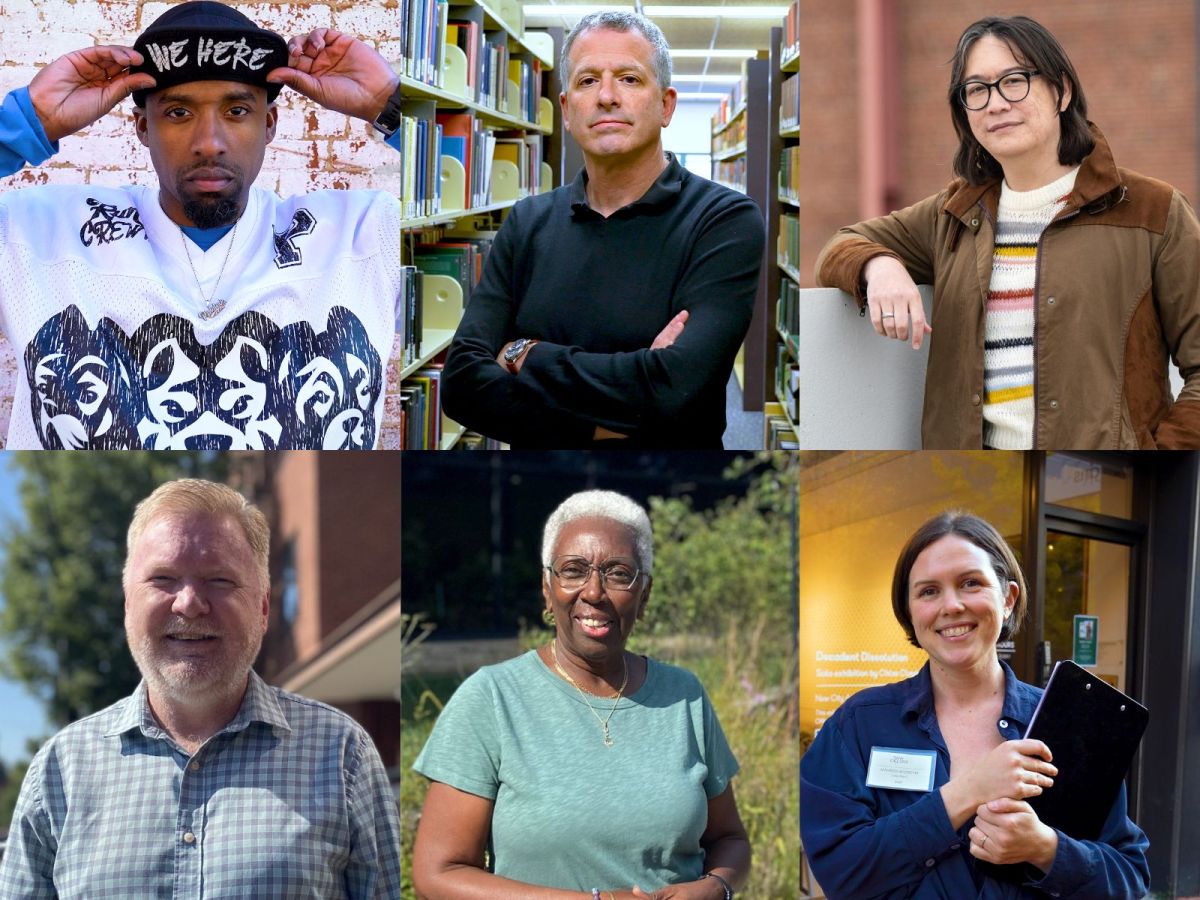
When we launched the Next 20 series, we hoped that asking people to imagine the future would help them create it, and inspire others to dream. For many of the contributors, that’s exactly what happened.
Enid Krieger retired to central Virginia in 1999. She spent many hours on nonprofit boards and committees, drawing on her decades of experience in health care. But it wasn’t until contributing to Next 20 that she considered herself a writer, comfortable enough to share her ideas broadly.
Being edited to share her vision of Black history’s place in our future, Krieger said, “gave me the courage to join Beloved Community CVille’s newsletter staff as their content writer.”
Ckalib Nelson, a data engineer, said the Next 20 series gave him just the push he needed. Telling his story of local data for all propelled him to create a new company that will expand access to public data.
“I’m confident that without the recognition and discussion the series sparked, I wouldn’t have pursued this path. Thank you again for creating something that clearly had ripple effects well beyond the page,” he said in an email.
For Charlottesville Tomorrow’s 20th anniversary, we invited central Virginians to share what they imagine for their communities over the next 20 years. Krieger and Nelson were among 21 community members who participated in the Next 20 series through written pieces and video storytelling, sharing their ideas to help our region thrive.
- Dave Norris said it’s possible to create permanent, supportive housing instead of focusing on shelters alone to address homelessness;
- Maureen Brondyke dreamed of how central Virginia could be a place where artists live, work and enrich our lives;
- Emily Gorcenski shared why she decided to return to Charlottesville after experiencing the violence of 2017;
- Daniel Fairley wrote about how his own experience gives nonprofits a way forward, together;
- Lisa Draine shared how she believes cooperatives can offer a hyperlocal way to explore alternatives to capitalism;
- and James Dowell — who still doesn’t really like running — explained how a run club can change a community.
Since the last piece ran in March, contributors have told us that they made new connections, and that friends, colleagues, fellow church members and neighbors reached out. They saw their work — and their causes — shared in social media and supported by donations.
“I was surprised at the number (and diversity) of people who mentioned the piece in the week or two after it was published,” Sunshine Mathon, executive director of the Piedmont Housing Alliance, said by email. “Universally, they thought it was great and they got a glimpse into me in a way many previously hadn’t.” Mathon’s essay told a deeply personal story about his vision for decreasing income inequality in our region.
In her video piece, Zakia Haque called for more interconnection and solidarity between the local Muslim community and other groups. “Members of my community were proud to have our community visible and represented, which was humbling and gratifying,” Haque said in an email.
Many of the writers reflected on the novelty and value of working with our editors, and multiple people mentioned how the experience built their confidence — sparking new projects like Krieger’s newsletter writing and Nelson’s company.
“I had a wonderful time as a Next 20 contributor,” said Daniel Fairley. “I am most comfortable off the cuff and on camera, so writing and refining my thoughts was a new experience for me. I really appreciated the opportunity to write my thoughts down and go through the editorial process of publishing a piece.”

The first step to creating our shared future is imagining it.
For Charlottesville Tomorrow’s 20th anniversary, we invited central Virginians to share their visions for the next 20 years.




“I was in awe of the curiosity, creativity, and vision each Next 20 community member sees for our home,” said Charlottesville Tomorrow’s 2026 Board Chair Barbara Kessler. “The individual and collective impact from the stories shared is at the heart of Charlottesville Tomorrow’s mission and vision: strengthening community by connecting conversations, listening to a variety of voices, and enabling future action.”
Along with our neighbors, Charlottesville Tomorrow’s team and board also envisioned the future to celebrate our 20th anniversary.
In 2024, our board, with guidance from the community and staff, developed a five-year strategic plan for the newsroom called “Vision 2030.” That strategic plan was approved by the board in 2025.
The plan starts this way: “We have a vision for news that informs and serves everyone, centers the people most impacted by it, and helps to create the conditions for stronger, healthier, more diverse communities.”
“Charlottesville Tomorrow envisions by 2030, that we will have expansion of our work in stories told, voices heard, communities served, sectors covered and overall impact,” said Kessler.
Vision 2030 outlines how Charlottesville Tomorrow will meet our region’s growing information needs and respond to communities who increasingly see high quality, locally governed news institutions as an essential part of strong civic life.The strategic plan is a roadmap to cover more topics, such as business, labor and wealth; arts and culture; energy and the environment, said Kessler.
When we filmed board member Joshua René for his Next 20 contribution, one piece didn’t make the video cut: He described a scene from “Back to the Future,” where far ahead in the future, fingerprints are used to unlock a house — decades before that technology would catch up. Imagining things that don’t yet exist is powerful.
“The future is fun to think about,” he said.
Locally governed independent news gives fuel to our communities’ biggest ideas.
By supporting us today, you help our region share its vision, help your neighbors share their experiences and help central Virginians get more informed about each other. Your contribution supports Vision 2030, creating a sustainable framework for local news that informs and serves everyone, centers the people most impacted and creates stronger, healthier, more diverse communities.
We rely on your support to continue this important work for the next 20 years.