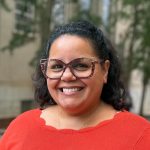


It’s the last day of class in Louisa County, but that hasn’t stopped 17-year-old Macaih Grooms from taking a moment to talk about music. Grooms can’t stop smiling as he talks about his experience this past year.
“This year it was a little bit different, because I got to learn how to produce music instead of learning how to play it,” Grooms told Charlottesville Tomorrow. “Basically putting up all the parts together, picking out different sounds, and then adding the little bass line and drum part, and sometimes that can get a little bit challenging, but I learned to work through it. It’s basically trying to figure out how you want your music to sound.”
Grooms has been listening to all types of music since an early age, but his favorite, he says, is hip-hop and R&B. Grooms’ interest in playing instruments began after seeing his mother play the drums at church.
“I saw that, I was like, maybe I can do that as well, so that’s what got me started,” said Grooms. “Since then, I played guitar in church, and sometimes, if she wants me to, I play the drum set as well.”
This school year Grooms has been able to grow his love for music after Louisa County High School Band Director Micah Lee expanded the school’s music theory program. The new curriculum includes teaching students how to create their own music, as well as how to produce original songs and learn about copyright laws. This, Lee told Charlottesville Tomorrow, was possible through a new grant.
“One of my goals is making sure I have a comprehensive music program, and that just means that you know everything that we do is geared to the wholeness of a musician,” said Lee. “We were able to, and are in the process of transforming our practice rooms into small recording studios. So we have professional-grade recording equipment, things that are industry standards.”
Lee was able to make the improvements after meeting Shaun Masavage in the fall of 2024 at the Virginia Music Educators Association conference. Masavage is the chief executive officer and founder of Fret Zealot, an online platform for guitar lessons. After speaking with Lee, Masavage encouraged him to apply for the Zealot Interactive grant.
Masavage first showed Lee the guitar lessons that Zealot offers on their platform, Lee said. “And I’m like, well, I’m not really interested in the guitar system. Do you have anything else? And then that’s what he showed me was the ‘how to build a band’ program, and I was like, you know what? This may be something that may work out.”
By the fall of 2025, just in time for the new school year, Lee had applied for and was awarded the Zealot Interactive grant, which caters specifically to middle and high school students and their teachers.
The “Build-a-Band” curriculum is designed to teach students how to create original music, and includes tools like recording equipment, software and a syllabus that teachers can use to help them build their teaching guides for students. It also goes over copyright laws and offers real-time online support for teachers.
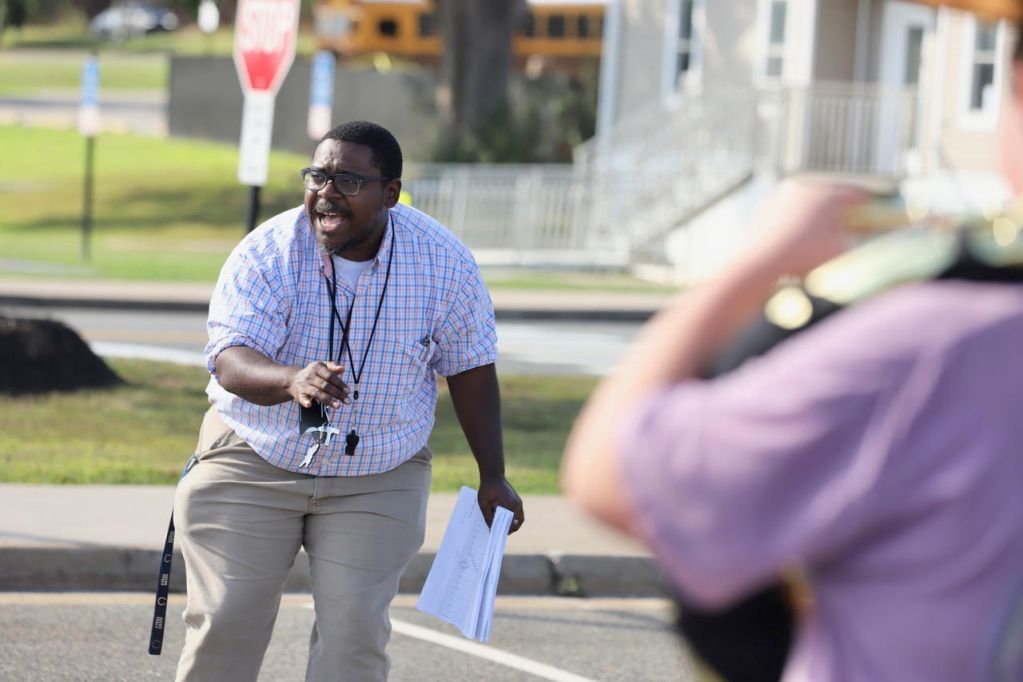
“I’ve had some students, even in my jazz ensemble, that are using the technology and the equipment that we were able to get for the music theory class,” said Lee. “It’s translating to my other classes as well. So, some of them are creating their own songs because of the grant that we were able to get from Shaun.”
Lee said that he’s seen significant changes in his students. One of those changes, he said, and the most rewarding one, was seeing how creating their own music led to his students finding and using their own voices.
“One of the things I am huge on is — if the opportunity is there for my students to be able to improve — I’m going to take the opportunity,” said Lee. “The biggest difference I’ve seen was the creation of their own voice. After they got through the slog of, okay, well, here’s what music theory is, here’s what a measure is, most of them were soft-spoken students, and throughout this class they became more vocal, verbally vocal, and they came more musically vocal too, and that’s because of what we were able to draw out of them.”
The costs for the “Build-a-Band” program range from $750 to $1,500 in the first year for schools, which can be covered by the one-time $5,000 grant. Schools can also keep the licenses for the digital audio work station – the software used to edit, master and mix music – and transfer them to new students the following year to help lower ongoing costs.
The idea for the program came to Masavage after a few years of helping people learn how to play music as adults despite having taken classes as teens.
“What we found after years in industry with this is that students felt like they weren’t learning how to create their own original music at the high school level, and then middle and high school level,” Masavage told Charlottesville Tomorrow. “They didn’t have a program for that, and so we kind of put our heads together and we talked and realized that nobody had ever learned really anything in high school on how to create original music.”
Masavage and his team of instructors came up with a way to teach all aspects of music creation and productions to younger students, which is what attracted Lee to the program, because it fell in line with how he wanted to teach his students about music.
“The way you keep and grow a music program is to offer something to everybody,” said Lee, who previously taught music at Thomas Jefferson Elementary. “And so some of those students that may have fallen through the gaps previously in my program — because maybe an instrument is not approachable for them — maybe that music production piece is that final thing that can get them.”
This approach helped draw out students’ creativity and led to some, like Macaih Grooms, pursuing music production as a future career.
“I’m going to continue producing this music, and I want this to be my career option,” said Grooms. “Since I’m graduating next year, I want to be able to work with other music producers.”