


Inez Gonzalez, executive director of Charlottesville’s Police Civilian Oversight Board, has resigned her role with the city as well as her membership on the board, effective Aug. 15.
Gonzalez is leaving Charlottesville for a similar role in California, she wrote in a farewell email sent to Charlottesville Tomorrow, among others, on Aug. 12.
Her departure is the latest in a line of several exits from the PCOB as members have raised concerns about systemic issues that prevent the board from achieving its goals and some activists and community members have expressed frustration with the board not living up to what they envisioned and lobbied for.
Most recently, the board lost half of its members due to a wave of resignations between May and June, which included former PCOB Chair Al Pola. In his resignation letter, Pola cited challenges the board was facing as part of the reason behind his decision and pleaded with the City Council to address them. Currently, the PCOB doesn’t have enough members to vote, meaning it can’t take action as a unified body or even accept minutes from its prior meetings.
Gonzalez wrote that her time in Charlottesville was deeply rewarding. She didn’t, however, explicitly say what led to her decision to resign.
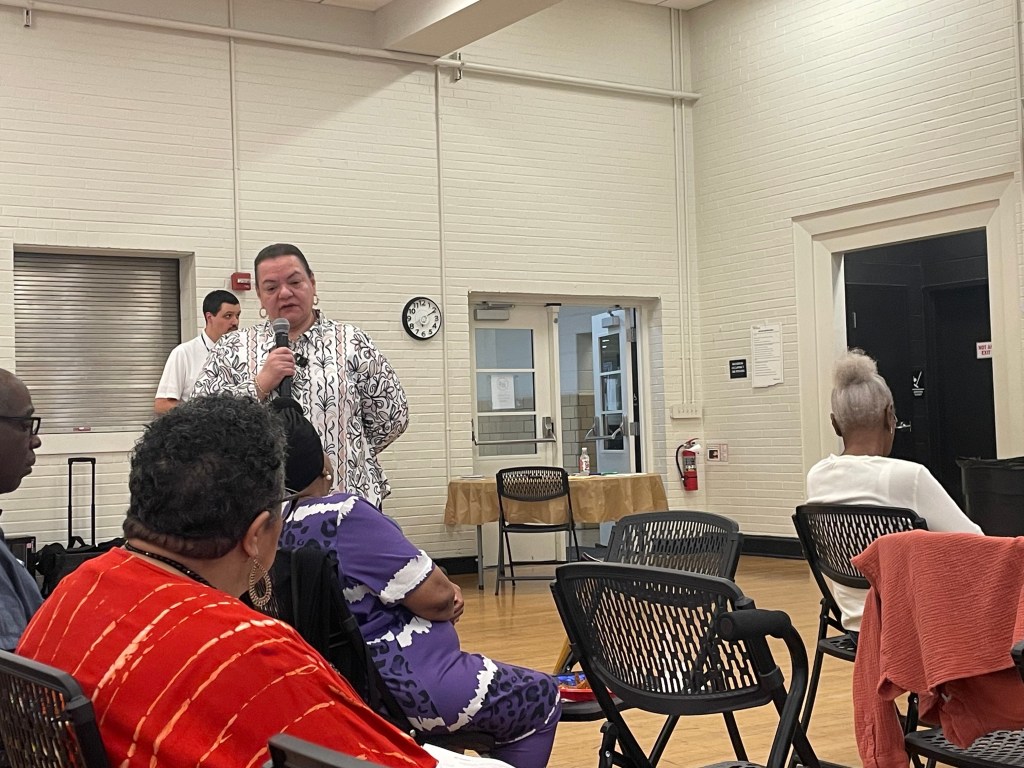
Instead, she reflected on the progress the PCOB made since 2023, when she took on the role of executive director. She also outlined the challenges for the board going forward: the fragility of the relationship with the Charlottesville Police Department; the lack of clarity in city ordinance and other documents governing the PCOB’s responsibilities; and insufficient clarity on the separation of duties between the board of civilian volunteers and the PCOB staff, who are city employees.
“Some of the most important fixes to our oversight system lie beyond the control of staff, requiring specific changes to the ordinance,” she wrote.
“This is why I urge the community, and all organizations committed to police reform and accountability, to put differences aside and work together to codify what has been achieved in practice here in Charlottesville. Legislative change, at both the local and state level, is essential to secure the progress we have made.”
Charlottesville’s PCOB is set up to have two separate parts: the executive director’s office and the board of volunteers.
In the past, it has been the office of the executive director doing most of the oversight, since members have more access to internal police resources as city employees. They receive and review complaints, audit internal police investigations, suggest follow-up questions to officers under investigation, and review the police budget, among other oversight duties.
During Gonzalez’s tenure, the PCOB made progress toward ensuring more oversight powers, even if it still lacks some of the power that the community asked for at its inception, such as the ability for the civilian board to conduct independent investigations.
Among the improvements are the PCOB implementing standard operating procedures and entering into a memorandum of understanding with the CPD, as well as building goodwill with the chief of police, Gonzalez said in her resignation letter.
“That goodwill was not given lightly. It was earned through a steadfast commitment to ensuring the due process rights of all parties and a strict adherence to the rule of law,” she wrote. “However, goodwill is fragile, dependent on who holds the title of chief and the political climate at any given moment.”
While Gonzalez was one of the driving forces drafting suggested revisions to the documents governing the PCOB with the goal of making the board more functional, she also told Charlottesville Tomorrow in July that it might be more effective to start over.
“It would be easier and more effective to draft a new ordinance, drawing from lessons learned, than to attempt to revise the existing patchwork of documents that currently govern the board’s operations,” Gonzalez said at the time.
“To try to fix it is going to be more time-consuming than to just build a model that makes sense with what everybody envisions for this board.”
In her resignation letter, she shared advice on how people continuing the work should proceed going forward.
“The path forward must be one of reasoned, informed advocacy. Impassioned pleas, no matter how heartfelt, are not enough, if that has not been made clear already,” she wrote. “Those who stand before City Council or other legislative bodies must do so prepared: fully informed, thoroughly researched, and armed with well-written proposals delivered by the most gifted speakers among you. Common sense, well-thought-out, and legally grounded arguments will be the key to achieving lasting reform.”
“It’s obviously negative in that Inez has lots of valuable professional experience and knowledge, and worked to lay out possible paths to reform/improve the PCOB to have it operate more effectively. I don’t think her leaving needs to stop efforts to improve the PCOB though,” Charlottesville City councilor Michael Payne told Charlottesville Tomorrow.
The PCOB’s 2024 report, he said, has a lot of recommendations that can ground a work session between the PCOB and City Councilors — an idea he mentioned to Charlottesville Tomorrow previously in July as a way to move forward with the board.
“Obviously losing a key staff member leading the office is never ideal,” he added.
Gonzalez is leaving the PCOB in the hands of James Walker, the PCOB’s management analyst and sole remaining member of the executive director’s office.