

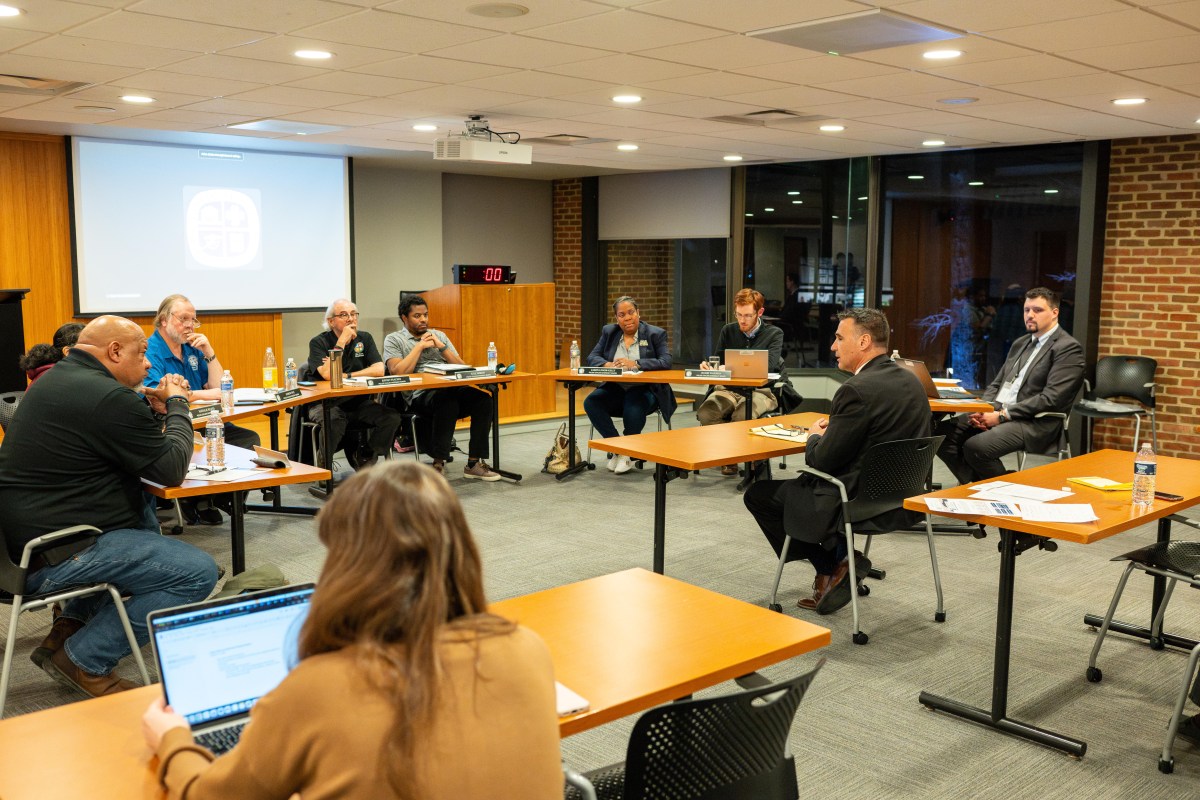
Charlottesville’s Police Civilian Oversight Board (PCOB) has officially asked City Council to change its oversight model, which would include giving up its independent investigative powers.
Over the past few months, the board, comprised of civilian volunteers and its interim director, have been working on draft changes to the City ordinance governing PCOB’s structure, authority and functions to address the roadblocks it has faced since its founding.
The PCOB’s current model, known as a “mixed model,” asks it to do everything — investigate complaints, audit internal police investigations, analyze policing practices and systemic trends and suggest policy changes — without accounting for time, financial, and legal constraints. Current and former leadership told Charlottesville Tomorrow that this approach simply doesn’t work.
The investigative function, which was at the heart of the vision for the board when it was first conceived in 2017, never materialized due to a wide range of practical and legal limitations. The PCOB has not completed a single investigation or hearing in its existence.

“That model has presented significant, insurmountable barriers to implementation,” Jeffrey Fracher, the PCOB chair, told the City Council during the May 18 meeting. So the PCOB proposed to drop the investigative component, formalizing the way it has been functioning in practice.
“Is not a retreat from oversight. It provides for more oversight at the end of the day, not less,” said Fracher. “It is a refocusing of our oversight role as an achievable, sustainable, and actionable set of procedures under Virginia law within the realities of the local statute, constitutional issues, employment issues, police union issues, the list goes on and on.”
City Councilor Michael Payne acknowledged that not being able to perform independent investigations undermines the PCOB’s credibility within the community and asked why public hearings that the community wanted were not an option.
While the PCOB faces multiple obstacles to conducting independent investigations, the primary challenge is the board’s inability to grant Garrity Rights, which offer officers protection against self-incrimination. Offering this protection is standard procedure in administrative investigations.
In order to resolve this, the City would have to not only amend its collective bargaining agreement with the Charlottesville Police Department, but seek legislative changes to police oversight at the state level.
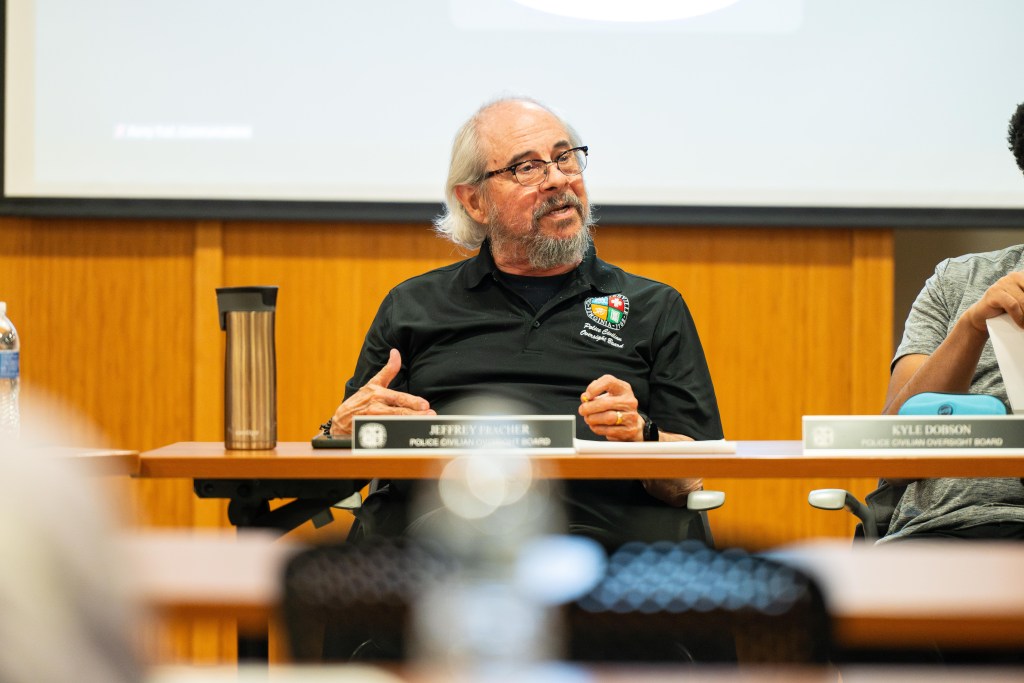
The draft presented to City Council also brings together all the documents that govern the PCOB into one place for clarity and makes recommendations on who could serve on the volunteer board, Interim Director James Walker said. The board would keep its subpoena powers, but give up the right to make recommendations on disciplining officers in cases of misconduct. In practice, the PCOB has not issued recommendations on disciplining officers because they do not have adequate time to investigate and submit their recommendations before the police chief makes a disciplinary decision. The board would retain its ability to make CPD policy recommendations.
“Some of these changes are probably not of interest to some of our community members. We understand that. And that’s why I’m asking those community members — have the conversation with us, speak to board members, come to our meetings, share those opinions, help us direct our work,” said Walker.
The draft ordinance changes are now under review by the Charlottesville City Attorney’s office and PCOB’s independent legal counsel. City Manager Sam Sanders and Police Chief Michael Kochis have already provided their input, Fracher said.
At the same time, the PCOB is collecting community feedback about the proposed changes. Board members reached out to neighborhood associations, community groups, the People’s Coalition that led the community activism for the creation of the board, and other organizations, Fracher told Charlottesville Tomorrow.
The board is asking for input and feedback, answering questions and concerns, and keeping a log of what it is hearing to later present to the City Council.
“We’re gonna get some pushback. We know that there are folks that still want the original model, but it’s just not feasible. It just can’t be done for any host of reasons that I hope we made clear to Council on Monday,” said Fracher.
After the City Attorney and PCOB attorney are done with their review of the draft, which is roughly 40 pages, Fracher said, there would be a Council reading where members would consider the proposal, feedback and any possible changes.
Fracher said the City Manager hopes for that reading to occur sometime in July or August, but the timing is out of the board’s control.
“We have really no control over their timeline,” said Fracher.
Take action
Share your thoughts on the proposed changes to Charlottesville’s police oversight model
For anyone interested in learning more or sharing their opinion about the proposed changes to the ordinance governing the Police Civilian Oversight board’s rights, duties and function, Jeffrey Fracher, the board’s chair, invites them to reach out to him directly.
You can email him at fracherj[at]charlottesville[dot]gov. You can also review the summary of proposed changes here, here and here.
Editor’s note: This article was updated on May 22, 2026, to correct Jeffrey Fracher’s role as chair of the Charlottesville Police Civilian Oversight Board.