

The City of Charlottesville has taken another step toward opening a low-barrier shelter for people experiencing homelessness.
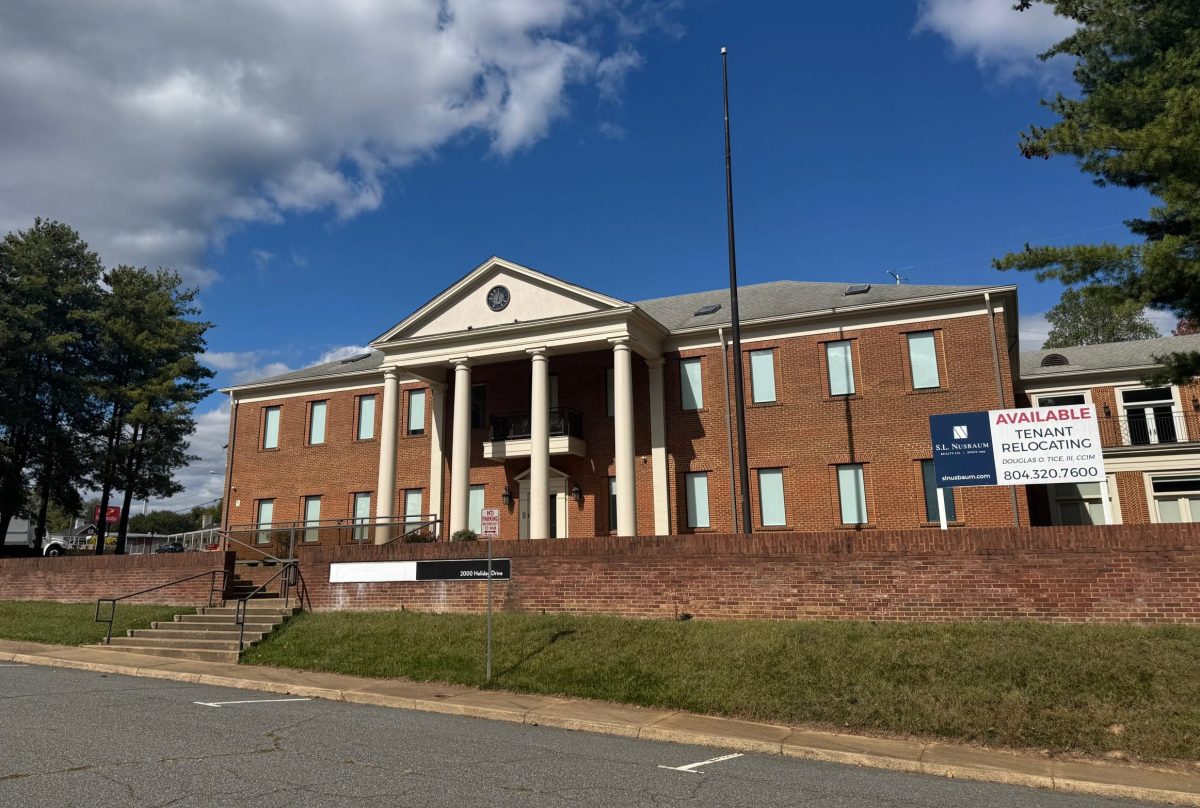
Monday night, Charlottesville City Council voted unanimously to authorize City Manager Sam Sanders to move forward with acquiring 2000 Holiday Dr., a 3.8-acre property behind the Days Inn and the Country Inn & Suites on Emmet St. N/Route 29, with the intention of converting the 27,000 square-foot building on the property into a shelter.
The vote was the first step in a longer process. A public hearing and vote to use $6.2 million from the city’s Capital Improvement Contingency Account to purchase the building is expected during City Council’s regular business meeting on Monday, Oct. 20.
During the public comment portions of the meeting, most of the community members who spoke about the plan supported it. But a few expressed some doubts over whether or not the property is the right location for a shelter, and whether it will adequately serve unhoused community members.
Sanders has been trying to find a location for a low-barrier shelter for the past two years. In October 2023, he presented a Homeless Intervention Plan to City Council. One of the plan’s priorities was opening a low-barrier shelter in the city — something homeless services providers have repeatedly told city officials the city needs.
Learn more about low-barrier shelters in this report from January 2025.
The 2000 Holiday Dr. property is the third one Sanders has publicly considered.
The city acquired the first, a property at the corner of Avon St. and Levy Ave. at the foot of the Belmont Bridge, in February 2024, saying that it may be a possible shelter location. But some anonymous residents pushed back on the idea of a shelter there by mailing out misleading postcards to residents, and later that year, city officials said that there was no plan for a shelter in that location.
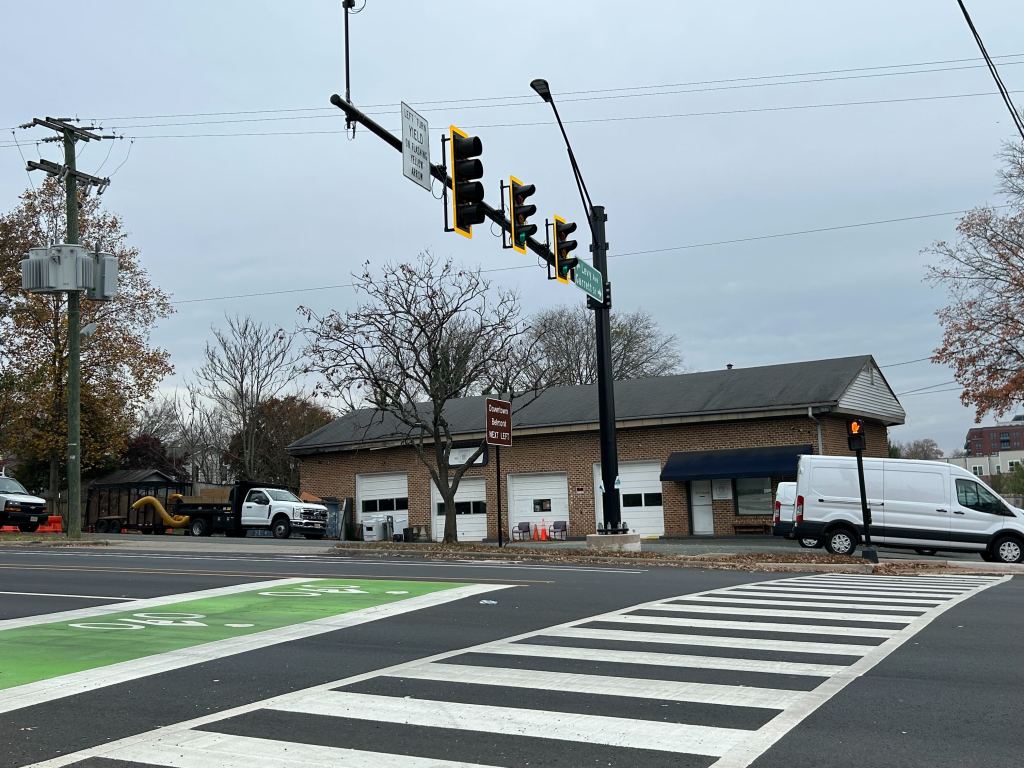
However, during the Sept. 15, 2025, City Council meeting, Sanders said that while there are no definite plans for the Avon/Levy property at this time, it could be used for a permanent supportive housing project — something that site had been considered for years ago, and something homeless service providers have supported.
Charlottesville already has one permanent supportive housing community, The Crossings at Fourth and Preston, and another, Vista 29 on Route 29, is under construction. Residents of permanent supportive housing are most often single adults who have been chronically homeless. They sign a lease and stay as long as they need to, living independently but with access to an on-site case worker who can help them with everything from applying to jobs, applying for Social Security and disability benefits, or even substance abuse and mental health counseling.
When The Crossings on Fourth and Preston opened in 2012, it cut the number of people in the community experiencing chronic homelessness, by half in just two years.
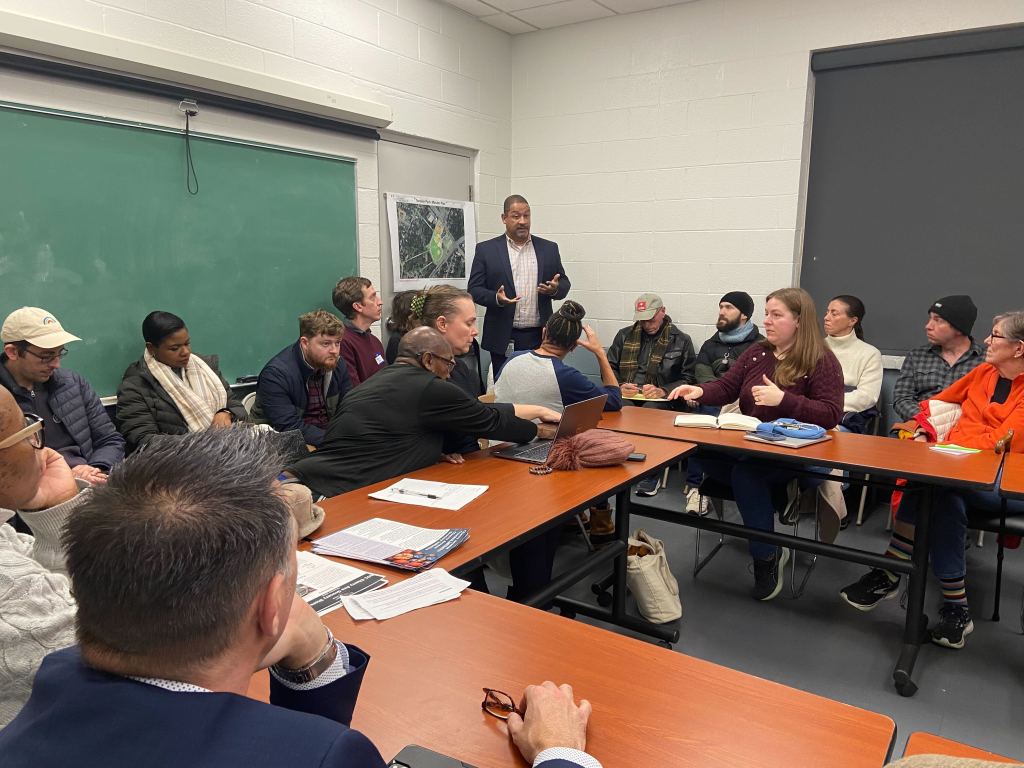
The second possible location Sanders looked at was the Salvation Army thrift store at 604 Cherry Avenue in Fifeville. That, too, was met with pushback. At an initial neighborhood meeting about it last fall, residents told the city to find a different location, because they didn’t want another shelter in their neighborhood (The Salvation Army currently operates a shelter in Fifeville, at 207 Ridge St.). In subsequent meetings, some, but not all, residents came out in support of the idea.
Monday night, Felice Boling-Key thanked Sanders for listening to her and others when they told him the Fifeville location was not the right one for the shelter.
“I came to you, and I said where they were talking about putting it was not good for me, it wasn’t good for the neighborhood. I hear you heard me,” she said. “I’m thankful that you’re still trying to do what you can do, what the Council can do, for the homeless in the city. This is so important,” she said.
But while the city is prioritizing the Holiday Dr. location right now, the possibility of a shelter on Cherry Ave. remains, Sanders said later in the meeting.
“The Cherry Avenue location is not dead,” he said, adding that the scope of the problem of homelessness in the community is so great that one low-barrier shelter alone won’t solve it.
“We are shifting to the Holiday Drive location with the focus,” Sanders said, “but I don’t want anyone to walk away thinking that if I come back talking about Cherry Avenue that I have somehow violated what I said.”
The Holiday Dr. location is different from the locations the city previously considered in a few key ways.
First, it is not in a residential area. There are hotels and a few businesses nearby, and Sanders said Monday that he still anticipates opposition to the location when word about the property acquisition spreads.
Second, the Holiday Dr. location is much bigger. The Holiday Dr. building could hold 200 beds, maybe more, City Councilor Michael Payne said during Monday’s meeting — a lot more than the 50 beds the Cherry Avenue building could likely accommodate.
Though even 200 beds might not be enough — approximately 220 community members are sleeping outside on any given night.
The property also includes a lot of green space, which Councilor Natalie Oschrin pointed out could be helpful for accommodating people who come to the shelter with pets.
One potential drawback is that the Holiday Dr. location is far from existing homeless services, many of which are concentrated in the downtown area.
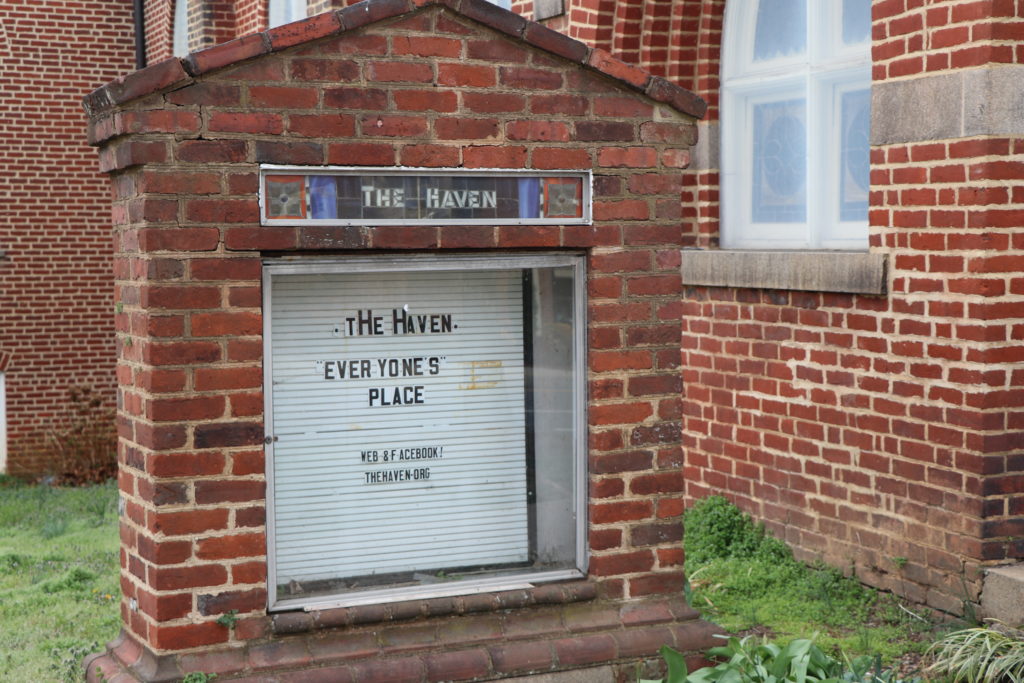
Councilor Payne mentioned that the Holiday Dr. site is near a Charlottesville Area Transit (CAT) bus stop (served by routes 7 and 8), and that a shuttle could easily get shelter guests from Holiday Dr. to the downtown area, to places like The Haven day shelter and the city’s Department of Social Services. He also mentioned that the Holiday Dr. site is walkable to grocery stores.
However, at the start of the meeting, city officials were discussing how safe that very location may or may not be for pedestrians. On Wednesday, Oct. 1, a 67-year-old man died while crossing Emmet St., right near the Holiday Dr. site.
Despite city officials’ and community members’ enthusiasm for the proposal, not everyone is so sure about it.
Christopher Wall, a Charlottesville resident who lives on the streets, said that many of the unhoused people he knows aren’t happy with the proposed location.
“The thing of it is, a lot of them feel like the proposed location is segregation,” he said. “They do. They feel like they’re being segregated. I get it. I’ve heard everyone’s opinions on it, and I understand the different viewpoints. It’s a sensitive issue, and it needs to be solved. But putting us out there, out of sight out of mind, I don’t feel is the solution.
“If it’s done, I hope there are resources put in place and implemented,” Wall continued. “That would be the best way to do it.”
Later in the meeting, Sanders said that segregating people wasn’t the intention.
“We have successfully found an opportunity to acquire a substantial piece of property — not just the building itself, but the land that is available as well — that allows us to attack this issue from multiple angles. And while it may be viewed as an attempt to move people away from other people, it doesn’t, because they’re still in the city,” he said.
“I have stated clearly my position on this,” he added. “This is a human issue, and we have to have people have a place to live, inside, as many as we can possibly get inside.”
Mayor Juandiego Wade, acknowledging the idea that this would be segregating unhoused community members from the rest of the city, said he viewed it instead as an opportunity to bring different services into a single location.
“This will allow us to potentially bring our services together and assist those who are most in need in our community,” Wade said.
The idea, city officials said, is for the shelter to have services available on-site for shelter guests, but those details have not been worked out yet.
Sanders said that he and other city staff have been talking with local nonprofit homeless services providers about partnering with the city on running the shelter, but did not say which ones they had spoken with and in what capacity.
“If they were to choose to join us, then they would be right at the table making those decisions with us,” he said.
That could be a big adjustment for service providers, Payne said.
“I know for executive directors and boards, I’m sure this is a big thing to process, because it may involve thinking about really changing how their fundamental model works in some ways,” he said.
While the property could be acquired soon, there is no timeline for actually opening a shelter.
The city is currently having the property inspected to get a better sense of what condition it is in, and what would need to be done to convert the building — which was previously used as an office building and which has been vacant for two years — into a shelter.
And while the city is ready to spend $6.2 million to acquire the site (which is valued at $8.8 million), it will have to spend more on renovations, Director of Economic Development Chris Engel told the council on Monday.
“A fair amount of renovations, like safety improvements, would have to take place to get it to a place where it’s suitable” for habitation, he said. “At this state, there’s very little detail on that.”
Because the scope and type of renovations are not yet known, neither is the cost, Sanders said.
Still, officials acknowledged, it’s not the only solution. The community will still need more supportive housing, among other things, Payne pointed out.
Sanders agreed.
“This is a complicated issue,” he said. “It’s a very significant-sized issue, and the scope of what it takes to really make a material difference, it’s not just the low-barrier shelter. That’s the lowest rung of the ladder. It’s meant to give people an ability to take additional steps beyond that. It’s this and more.”
Learn more about the community’s previous low-barrier housing-first programs like Step Up, and PACEM’s shelter at Premier Circle, in this report from 2022.
And while almost all of the public comments about the shelter during Monday’s meeting were positive, some community members aren’t ready to let the city off the hook entirely in regards to its treatment of unhoused community members. Some pointed out that opening a low-barrier shelter would not give the city license to criminalize homelessness.
In September, the council considered an ordinance that would have banned camping, sleeping, and storing personal belongings in public spaces. Dozens of community members showed up to voice opposition to the ordinance, which they said unfairly targeted their unhoused neighbors. They called it “cruel,” “inhumane,” and “draconian,” among other things.
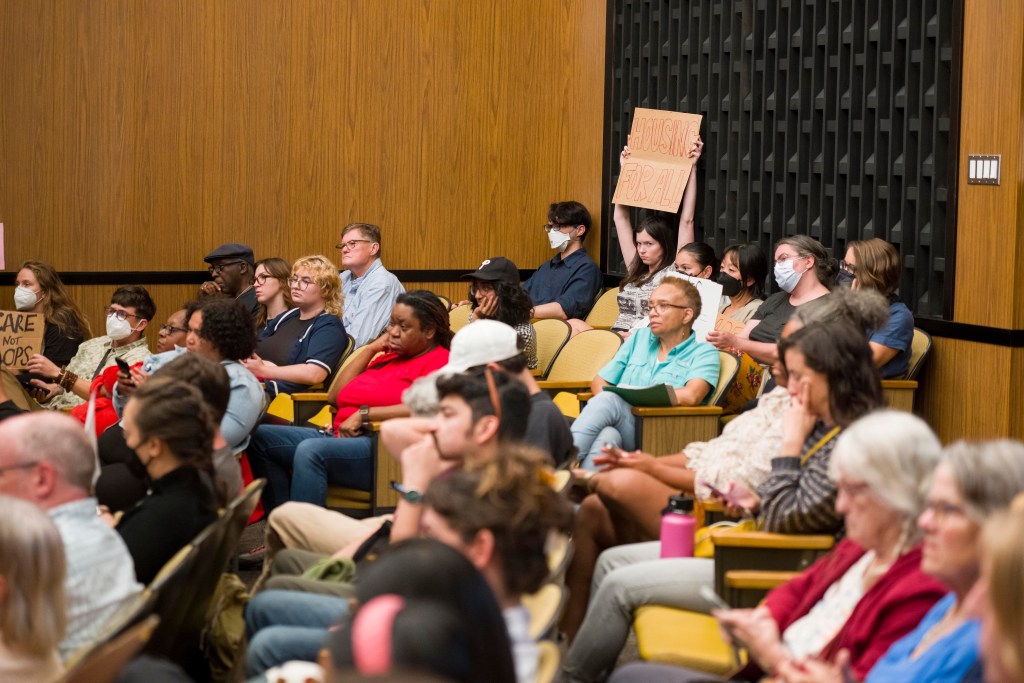
And while the council decided to table the ordinance indefinitely, some community members fear it could come back.
“It’s great that we’re building [a shelter] and exploring options,” said Wendy Gao, an organizer with the Public Housing Association of Residents (PHAR).
“But once it is built, the fact that an alternative shelter exists would still not absolve the previously debated anti-camping ordinance from being any less cruel or inhumane. The mere existing of housing options does not mean that people who do not choose those options should face possible criminal charges or contact with the police that may result in jail time, or exorbitant fines,” she continued, pointing out that not everyone who is unhoused will choose to go to the shelter.
“People need to be met where they are, and supported wherever they are, whether in supportive housing, in a tent, or otherwise on the street, without the threat of state violence hanging over them.”