

Emotions were high in a small room in the Tonsler Park community center Thursday night, where Fifeville residents reacted to the news that a low-barrier homeless shelter might be coming to their neighborhood.
About 25 residents were present at the meeting, and the majority of them railed against representatives of The Salvation Army, elected city officials and city staff — many of whom were in the room — for creating a plan to put the shelter in their neighborhood, without talking to them first.
“We really feel like this decision has been made by the City, with no consultation with people in the neighborhood. We first read about it in various newspaper articles, and that is infuriating,” one resident, who did not say their name before speaking, said to the City officials and staff who were present.
Though many residents expressed opinions Thursday, the neighborhood association itself has not come out either for or against the proposal.
In the fall, Charlottesville City Manager Sam Sanders shared a multi-point plan to address homelessness throughout the community.
Local homelessness service providers say that a low-barrier shelter is a critical need. Earlier this year, they told the city that on any given day, they estimate that 200 people in the Charlottesville area are experiencing homelessness, and there are not enough resources to help them.
One of the things he proposed was for the city to give $5.25 million in unused American Rescue Plan Act (ARPA) money, as well as city budget surplus — all of which is taxpayer money — to help the Salvation Army to expand its shelter operations in the city.
The Salvation Army already runs a homeless shelter in Charlottesville, located at 207 Ridge Street. That shelter is what is known as a “high-barrier” shelter, meaning that people must abstain from drugs and alcohol in order to stay there. People who are on the sex offenders’ registry, or who have been convicted of violent crimes, also cannot stay at that shelter, because there are transitional apartments for families with children on the site.
But that shelter is usually at capacity, and the Salvation Army has plans to expand it.
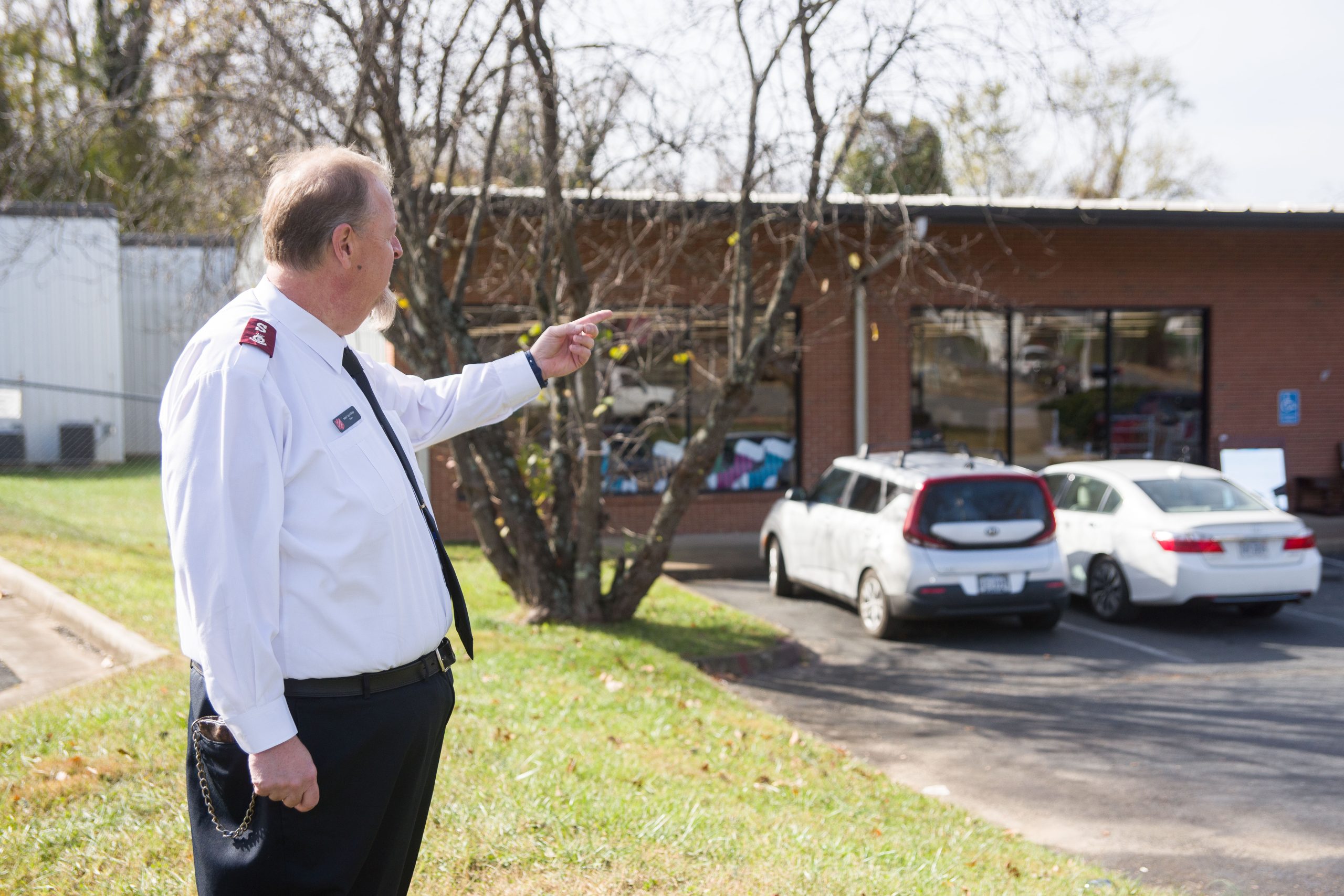
And, because not everyone who is experiencing homelessness is eligible to stay at that shelter, Maj. Mark Van Meter, the Salvation Army Charlottesville Corps leader, has proposed creating an overnight, low-barrier shelter, too. And he’s offered the agency’s thrift store at 604 Cherry Avenue as a location.
A “low-barrier” shelter is typically defined as one where people who are using drugs or alcohol, or who have been convicted of violent crimes including sex offenses, can stay.
Van Meter offered up a definition of “high-barrier” early on in the meeting, but he did not fully define “low-barrier shelter.” In speaking about the low-barrier shelter, he said, that with “the crisis that Charlottesville is experiencing, a great majority of [the people experiencing homelessness] fall in what we call a low-barrier shelter need, where individuals have not yet identified that they want to begin getting out of the cycle of homelessness. We need to provide a warm, safe shelter for them to be off the street and out of the elements.”
Residents called him out on it.
“There is a little bit of distrust that occurred tonight, because when you had the chance to describe ‘low-barrier,’ you had the opportunity to talk about the pedophiles, the drugs, the violent offenders,” one resident said. He did not want to give his name. “A lot of us already knew. I feel a bit of manipulation going on that makes me uncomfortable.”
Thursday night’s meeting was a Fifeville Neighborhood Association meeting. President Carmelita Wood told the attendees that she invited Maj. Van Meter as well as city officials so that they could hear residents’ thoughts on the proposal.
Residents expressed a multitude of concerns about putting a low-barrier shelter in the Fifeville neighborhood. Safety was at the top of their list.
I’d like to know exactly why that isn’t a priority, protecting the children of this community?
—A Fifeville resident, who did not give his name, at a neighborhood Association meeting
“How can you justify it?” one resident, who did not give his name before speaking, asked Van Meter. Putting a low-barrier shelter, where sex offenders would almost certainly be staying, and where people would almost certainly be using drugs and alcohol, next to a park where children play, seems dangerous, the resident said, to nods of agreement from others in the room.
“I’d like to know exactly why that isn’t a priority, protecting the children of this community,” the resident said.
“The reality is, these people are already on our streets,” said Van Meter.
This issue came up multiple times throughout the meeting, and Van Meter regularly repeated his response. Residents pushed back, saying that right now, those folks are scattered throughout the community, but opening the shelter would attract a majority of them to Fifeville.
One woman, who did not give her name before speaking, asked if, legally, sex offenders could even stay in the shelter if it were to open next to the park. If not, wouldn’t that then be a barrier to them using the shelter? No one in the room acknowledged her question.
When pushed, Van Meter tried to reassure residents that the Salvation Army has a lot of experience running shelters, not just locally, but across the country. He said that in the plans, they’ve talked about adding lighting, and are budgeting for shelter monitors and “full-time security.”
Residents were skeptical. They asked Charlottesville Police Chief Michael Kochis what he thinks of it all.
“It’s not my place to say whether a shelter should be at this location or that,” Kochis said. “What is my place, wherever this shelter is, I can commit to all of you, it is my duty that it is safe. Wherever it’s going to be, it’s going to be safe, and we’re going to protect the community.”
One resident, who did not give his name before speaking, asked if Charlottesville Police could guarantee that there would be an officer in the parking lot at all times.
No, Kochis said, he could not promise that. But the shelter could hire its own private security if it wanted, he said.
City Manager Sam Sanders, who proposed the plan to the Council, was not at the meeting, because he was hosting a community budget forum elsewhere in town that night. When asked about the community’s concerns about safety and the shelter, City spokesperson Afton Schneider replied in Sanders’ stead.
“We haven’t identified an operator yet for the proposed low barrier shelter, and these are all points that will be discussed with them,” Schnedier wrote in an email to Charlottesville Tomorrow Thursday afternoon. “Of course, the safety of our community is always a top priority.”
Why build a shelter here?
Another pressing question for residents was why Cherry Avenue is being considered for the shelter, and not another location in the city.
“It gives the community what is needed, quickly,” because The Salvation Army already owns the property and there is already a building on it, said Van Meter.
Someone asked whether The Salvation Army would consider moving the high-barrier shelter to Cherry Avenue, and putting the low-barrier shelter on Ridge Street, where it would be situated on a main road, between a church and a fire station.
Other attendees suggested other locations for a low-barrier shelter. They mentioned Fashion Square Mall in Albemarle County; some of the warehouses on the outskirts of the city; and the abandoned structure for the Dewberry Hotel (also called the Landmark) on the Downtown Mall, which is currently for sale for $9 million. One wondered aloud why the Avon/Levy property in Belmont, which the city previously considered for a shelter, was no longer an option.
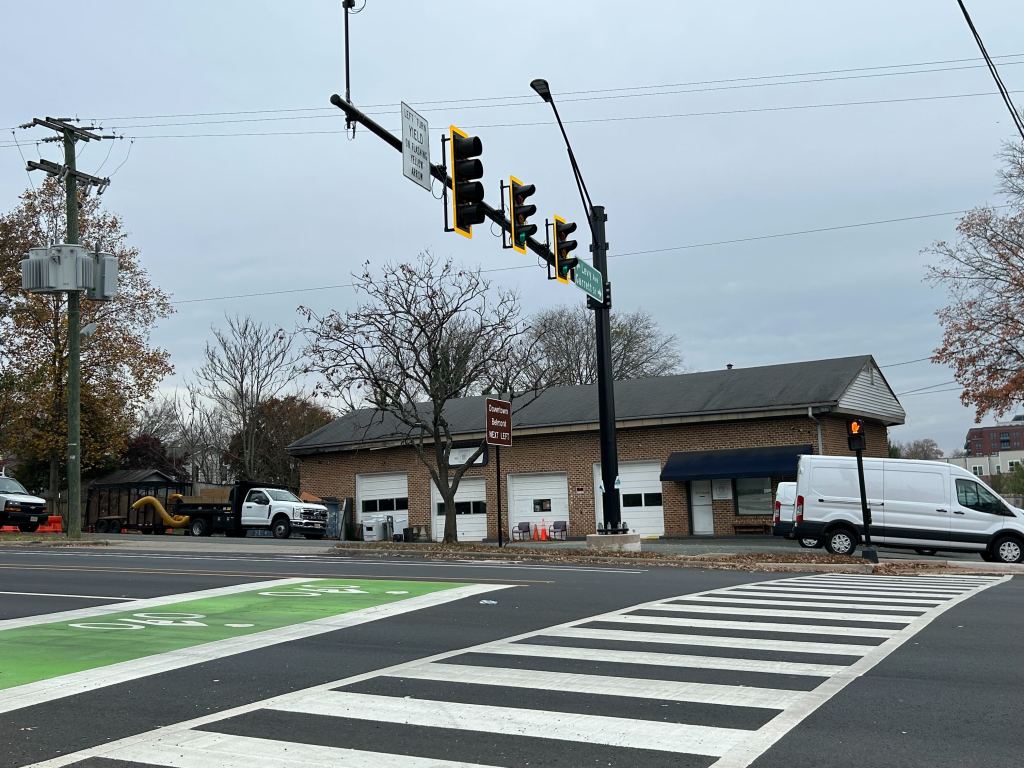
Van Meter said that The Salvation Army is already “very far along” in the planning for the Ridge Street shelter expansion.
“You understand that 207 Ridge Street is also in Fifeville?” he asked.
That didn’t sit well with residents. Yes, they understood, they said. They were upset that so many plans had been made without their knowledge, and that this conversation was happening so late in the planning process.
Charlottesville City Council will vote Monday night on whether to donate unallocated American Rescue Plan Act (ARPA) money to The Salvation Army to expand its shelter operations.
“I don’t even want to call it Fifeville anymore,” said Marcia Johnson, her voice shaking. Johnson has lived in the neighborhood since 1993. “I want to call it Dumpville, because every time you turn around, something is being dumped on us, and we have very little say in it. It’s always brought to the table after, and we have not had a say-so in so many things.”
“I understand they need help, but find another neighborhood,” Johnson added.
Johnson’s comments encapsulated some of her neighbors’ feelings and concerns — that the city doesn’t hold Fifeville, a historically Black, historically low-income neighborhood, in the same regard as other neighborhoods.
“In Belmont, the refrain is always ‘it’s not in keeping with the neighborhood.’ So it is in keeping with Fifeville?” one person, who did not give his name, asked.
“We feel like this issue is being pushed from the Downtown Mall to Fifeville, because who cares about Fifeville? The people on the Downtown Mall seem to have a more powerful voice than us in Fifeville,” another said.
City leaders hear both sides before expressing opinions
Residents repeatedly said they want other neighborhoods in the city to share the burden of what is a community-wide problem.
People spoke about the challenges the neighborhood is already facing: Gentrification and the displacement of longtime, low-income, and Black residents; the loss of housing to short-term stays like AirBnB; the challenge of the neighborhood’s reputation as one that is already riddled with crime; increased traffic on its narrow streets.
They said they worry that opening a low-barrier shelter in the neighborhood would scare people away from using Tonsler Park, its playground and community center, as well as the Fifeville Trail, which the neighborhood recently restored with some help from the City. The neighborhood is already struggling economically, they said, and they want to see data on what happens to an already-hurting neighborhood — not an economically-thriving neighborhood — when a low-barrier shelter opens in it.
None of the officials present spoke to that.
A few residents spoke about what it is like to live near the Salvation Army’s high-barrier shelter on Ridge Street. They talked about trash, mostly in the form of styrofoam take-out containers from the agency’s soup kitchen, littering the neighborhood. They said they regularly find needles, drug bags, and alcohol containers in their yards and on the sidewalks, and accused both the agency and the city of doing nothing to clean it up. They said they often have people walking through their yards, or knocking on their doors asking for money.
Some of these residents said they fully support the Salvation Army’s mission and the work it is doing in the community. But, they said, the reality of living near even the high-barrier shelter is that it sometimes feels dangerous, and they are worried that it will only get worse.
The distrust in the room wasn’t just reserved for Van Meter and The Salvation Army. It extended to some of the city officials and staff present.
Residents disagreed on whether or not giving money to a religious organization was a proper use of tax dollars, and they wanted to make sure the three city councilors present heard that.
“I’m happy to have our tax dollars go to supporting a low-barrier shelter,” the resident who wanted The Salvation Army to address what low-barrier meant said. “I want people to get the help that they need. And I don’t think this is the best location, or that Fifeville is the best neighborhood for that.”
“I really believe in the city’s attempt to take on a mandate to address homelessness, affordable housing, and things like that. But the idea that the city would partner with a religious organization to address this, doesn’t sit well with me at all,” said a different resident, who did not say his name before speaking.
Van Meter tried to quell this fear by saying that even though The Salvation Army owns the building and the property, it might not be the organization actually running the shelter. Van Meter wants to build a coalition of community groups to run the shelter together, but that coalition has not yet been formed.
Van Meter also said that The Salvation Army is the only organization currently stepping up to fill the need for a permanent, overnight low-barrier shelter.
Mayor Juandiego Wade, Vice Mayor Brian Pinkston, and City Councilor Natalie Oschrin all attended the meeting Thursday night. But they were there only to listen, and would not speak or answer questions, Fifeville Neighborhood Association president Wood said at the start of the meeting.
That angered a few people in the room when they wanted to hear from the councilors.
“That’s not helpful,” said Dorenda Johnson, a lifelong resident of the neighborhood.
Someone urged the councilors to leave, then accused them of doing this on purpose so that they couldn’t answer questions.
The resident who was concerned about The Salvation Army not directly addressing what low barrier meant said he disagreed. “I would rather have three council members that can go back and articulate everything that they’ve heard, instead of one person with one perspective,” he said.
Near the end of the meeting, Dorenda Johnson made a point to address her neighbors and the Council directly.
“All of y’all’s concerns have been here forever in this neighborhood,” she told her neighbors. “Nothing’s changed, except that there aren’t as many people in this neighborhood who look like me.”
Dorenda Johnson is Black.
“Gentrification has happened,” she continued. “And hopefully because of the $700,000, $600,000 homes that are here now, maybe the city will do something about it.”
The morning after the meeting, Mayor Juandiego Wade said he “found the meeting very informative.”
“I am sorry that we could only listen at this meeting, but I was glad I could hear the concerns of the residents of Fifeville. We want to go into this process with all the information available. Hearing from the residents and The Salvation Army firsthand was invaluable. It will be a tough decision to weigh all of the concerns.”
Pinkston and Oschrin did not immediately respond to a request for comment.