

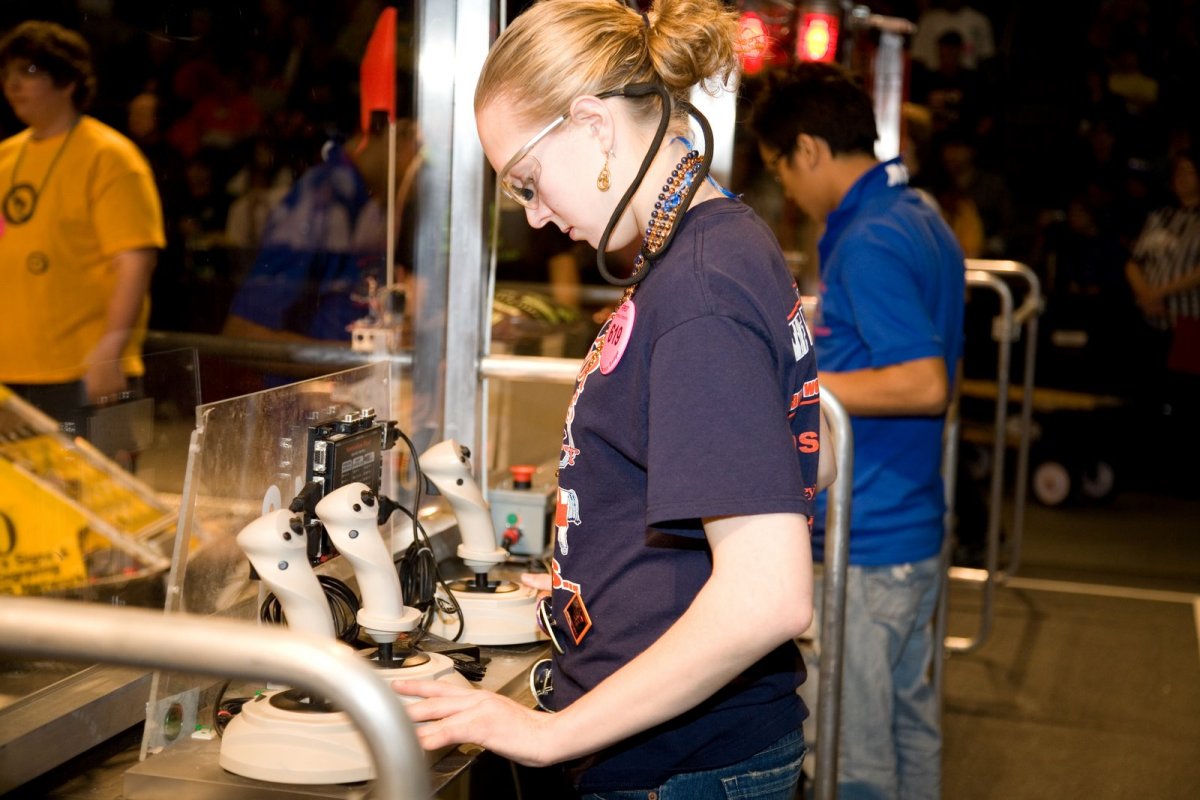
Growing up in Earlysville, I was fascinated by the world around me. How do ants explore so far, yet make their way back to their nests? How do video games work? Why do the stars in the night sky change position?
I devoured episodes of the PBS science show NOVA and eagerly took a kid’s computer programming class from the University of Virginia. In high school, I joined Charlottesville’s FIRST Robotics team (sponsored by UVA), where I learned about mechanical engineering and robotics. I also did an independent study with a member of Virginia Tech’s DARPA Urban Challenge team, learning about technologies in self-driving cars, and took classes on mathematics from Piedmont Virginia Community College (PVCC).
I am fortunate to have grown up in a city where my family could engage me with so many opportunities to learn about science — opportunities that paved the way to me becoming a scientist as an adult. The experiences I had taking programming classes and learning about robotics greatly strengthened my college applications, giving me the chance of a lifetime to study at the Massachusetts Institute of Technology after my graduation from Albemarle High School in 2007. After MIT, I went on to earn my Ph.D. from the University of California, Berkeley, and today, I work as a research scientist at Google DeepMind where I study how to make artificial intelligence systems more trustworthy, reliable and useful.
In many ways, my trajectory is a Virginia success story and shows the huge role science funding plays in our lives. American science is supported in large part by two vital, federal institutions: the National Institutes of Health (NIH) and the National Science Foundation (NSF).
Yet, the NIH and NSF are currently being threatened with massive layoffs and cuts to funding — cuts which have the potential to decimate the American scientific landscape. As of Feb. 20, the journal Nature reports that NIH grants are still frozen, Science tells the stories of layoffs at both NIH and NSF, and The Guardian and MIT Technology Review report on the generational impacts of this slashing of science support. On Feb. 10, the president of Virginia Tech said the NIH cuts would have a “debilitating effect” on universities’ missions.
The Virginia institutions that educated me — UVA, Virginia Tech and PVCC — all receive public funding. In a single year, Virginia as a whole receives nearly $1 billion from these federal programs, with UVA alone receiving the largest share at $230 million and Virginia Tech receiving $115 million. (Here’s an NSF factsheet about their funding in Virginia, and here is a search of NIH’s database of Virginia grantees.) PVCC also receives funding from the NSF. (Here’s an award for undergraduate education for manufacturing into 2026.) The NOVA program I watched as a kid is funded by the NSF. My Ph.D. was funded by the NSF Graduate Research Fellowship program in 2014. And research into immunotherapy treatment for cancer — which was used by UVA to save my grandfather’s life — was funded by the NIH and NSF.
Federal funding is the lifeblood of research institutions like UVA and Virginia Tech. Without that funding, there are two possible outcomes. The first is to employ fewer faculty and graduate students — stifling not just the science but also undergraduate and even K-12 education. This is because undergraduate classes are taught by those same faculty and graduate students, and independent studies like mine are also usually supervised by graduate students. The second outcome is to find the money somewhere else — putting educational outreach and community programs at risk of having their own budgets cut, and reducing the opportunities available to future Charlottesville scientists like myself.
Take Action
Find out which institutions near you are funded by the National Science Foundation by using the NSF award search tool. The National Institutes of Health also have an NIH search tool to help you find out which organizations around you have grants.
The NIH and NSF continue to support the Virginia communities where much of my family still lives, investing tens of millions in Virginia businesses and education each year and creating billions in economic activity. The reason for this huge economic impact — $2.46 for every dollar invested by the NIH, according to the United for Medical Research coalition — is that the majority of scientific funding pays for the salaries of the people who do the research. These salaries, in turn, enable researchers to spend money in their communities on rent, groceries, childcare and other small businesses. Funding for science is therefore not just funding the science itself, but deeply supporting the communities where scientists live.
And, of course, there is the science itself, which improves our lives and our family’s futures. For example, in 2023 and 2024 scientists at UVA were awarded $5.6 million across two NIH grants (see press releases here and here) to study new treatments for prostate cancer, a terrible disease which claimed the life of my father in 2009 when I was in college.
The process of science is often slow, so these dollars do not always result in immediate breakthroughs, but over the course of many years, sustained scientific effort has dramatically changed our lives. Indeed, mortality rates for prostate cancer have already dropped by half in the last 30 years according to statistics from the American Cancer Society. With continued investment in institutions like the NIH and NSF, future generations of doctors and scientists like those at UVA may very well discover the treatment that could have saved my dad’s life — and so many others like him.
The cuts planned by the new administration threaten such scientific breakthroughs, the opportunities available to Virginian scientists, and the economy and jobs of people in Charlottesville. Already, hundreds of staff at the NIH and NSF have been laid off, and their budgets may be cut by as much as two-thirds. I desperately hope this won’t come to pass — and that’s why I’ve written this piece, joining a group of other scientists who are raising awareness of what these cuts mean.
Whether you’re a scientist or not, you can also help by telling your representatives what you think of cuts to science funding. (Here is a government tool that will help you find who to call.) While it might seem at first glance that these cuts will save the government money, the reality is that science funding supports every aspect of communities like Charlottesville — including the children growing up in Charlottesville who might one day go on to be scientists, just like I did.
More local News
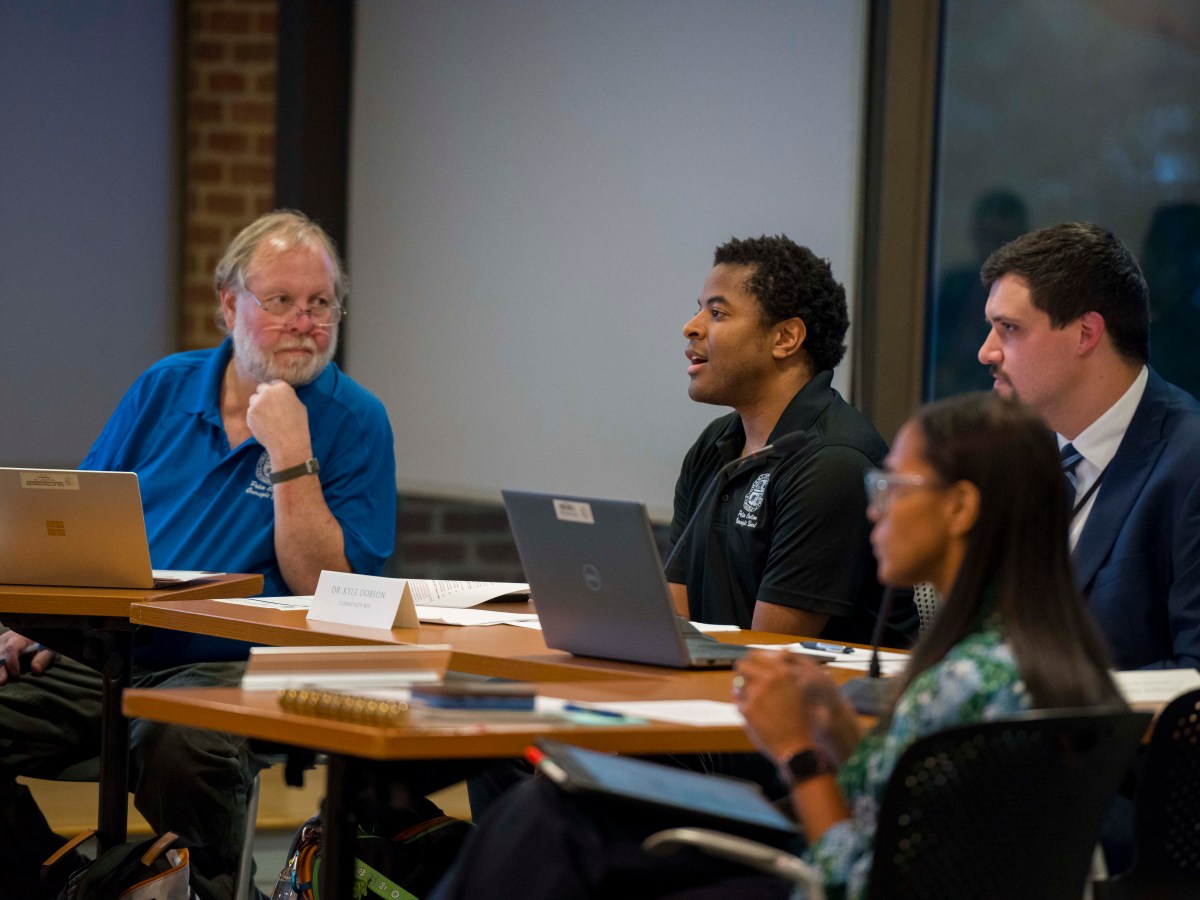
After two years without independent counsel, Charlottesville’s police oversight board has an attorney to represent its interests to the city
New counsel will review suggested ordinance changes that will shape the Board’s role before a planned meeting with City Council.

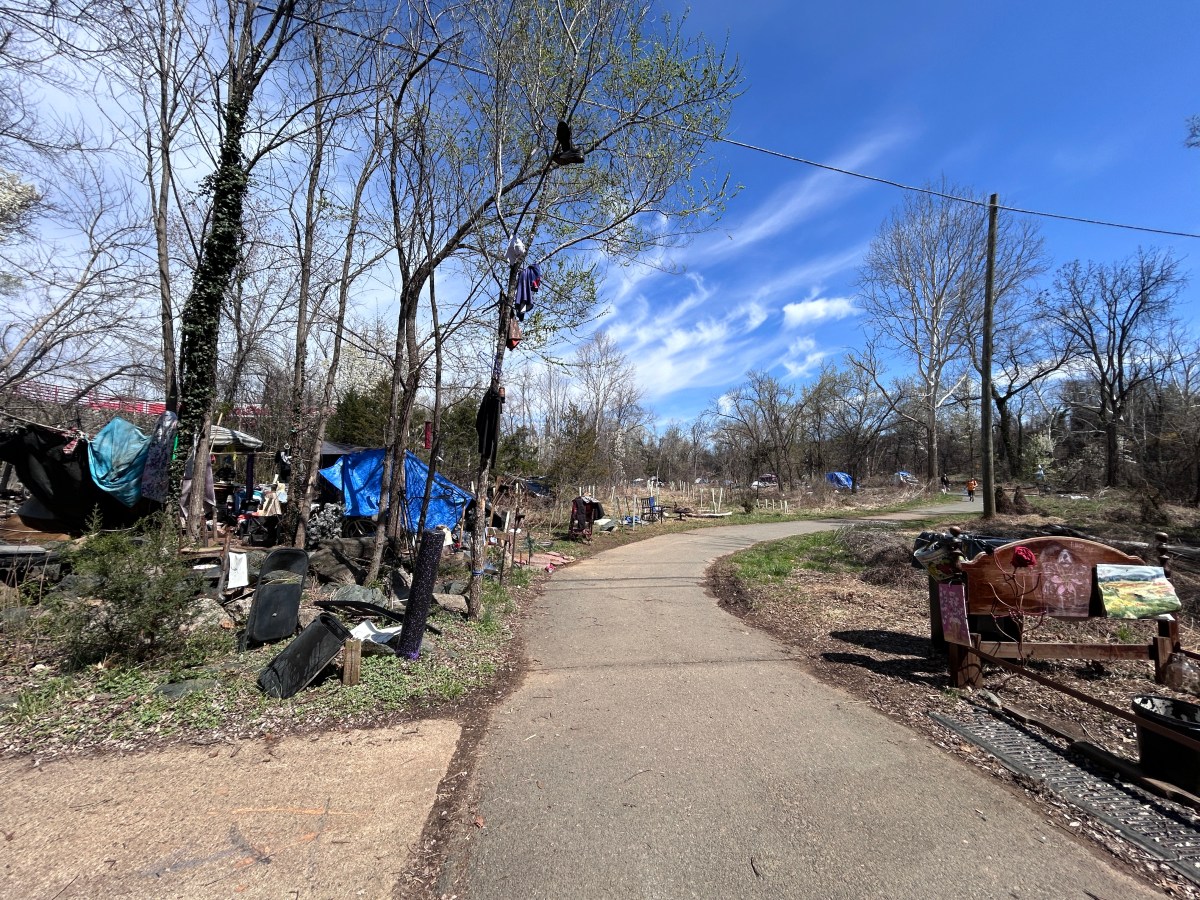
Charlottesville city officials promise not to displace unhoused community members during an encampment cleanup effort this week
Citing public health, safety and environmental concerns, city staff and a local landscaping company will clean up trash and install portable toilets and sharps disposal containers at the site Tuesday, March 24 and Wednesday, March 25.

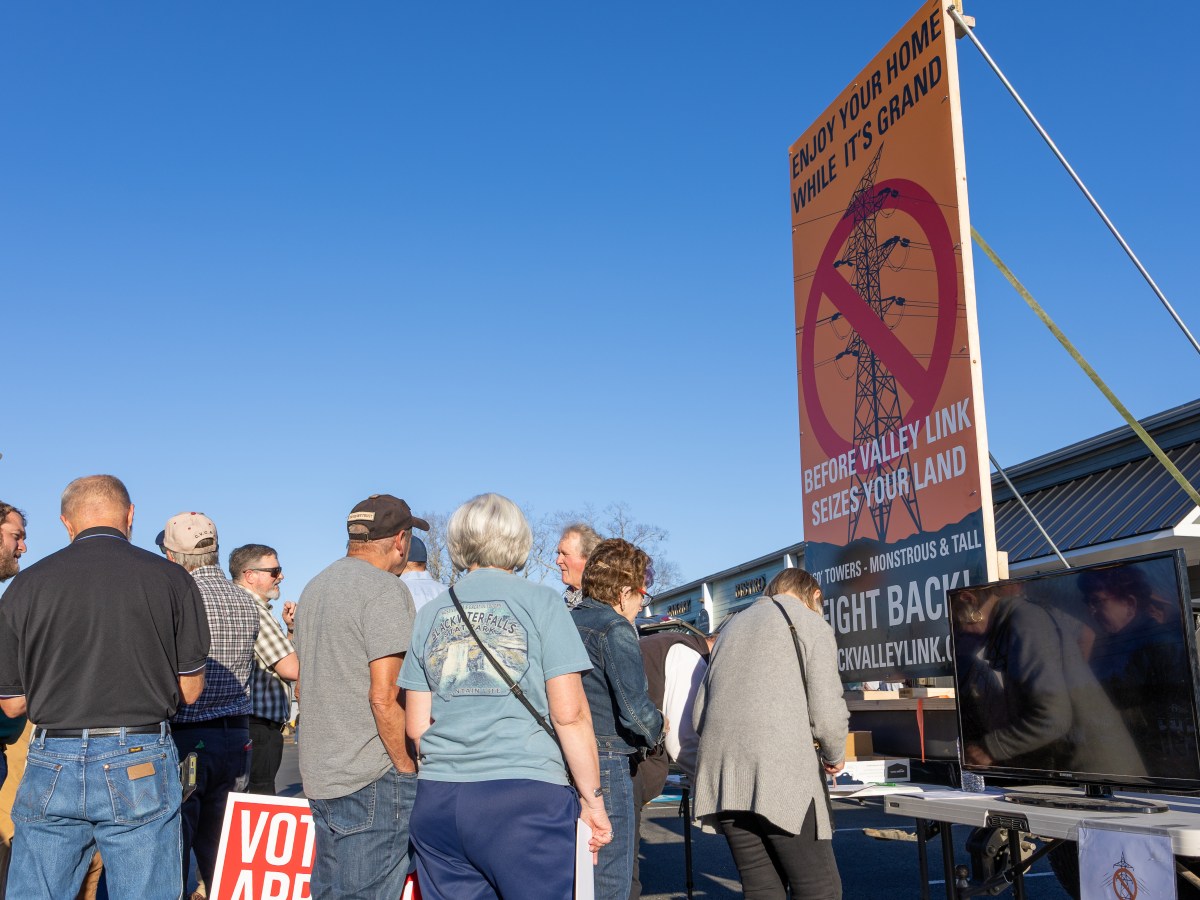
In Orange and Louisa, residents and public officials voice concerns over proposed Valley Link transmission line
Residents are speaking out about potential negative impacts on homes and farmland, and many local governments are finding their influence is limited, as the fate of the project rests with state regulators.


The Prolyfyck crew is growing — in the next 20 years, its leader wants to show up for the neighborhoods where they run
James “Littlez” Dowell co-founded Prolyfyck Run Creww as a way to bring communities together through fitness. But now it’s so much more.

Fluvanna Board of Supervisors approves Tenaska plant despite Planning Commission’s opposition
Supervisors voted 4-1 in favor of the proposed power plant, which now needs state-level approval before construction can begin in 2028.