


Real Quick
- Residents of Park’s Edge, an apartment complex in Albemarle County, have experienced poor and at times hazardous conditions in their homes for years.
- Tenants have struggled to get their landlords to fix the problems, even with help from pro bono attorneys.
- Often a tenant’s only option is to move out. But every Park’s Edge resident we spoke with said they can’t afford to.
Take action
Are you a renter who needs help? Find local agencies and programs to connect with in Charlottesville and Albemarle County in Charlottesville Tomorrow’s Housing Resource Guide.
“My toilet is leaking and draining all over my floor. In the master bedroom, with an odor,” Park’s Edge resident Lanika Hester emailed to her property manager at 9:55 a.m. on Monday, Sept. 12, 2022.
A foul-smelling substance — maybe sewage? — was spewing from the sink in the apartment next door, she wrote. It had seeped through the walls and leaked into the hallway and the other basement-level apartments. The neighbor across the hall was trying to mop it up.
“Do you have maintenance to take care of this asap? Or a hotel you can put me in until it is taken care of?”
Chunks of what appeared to be used toilet paper and reeking brown stuff floated in at least an inch of water in the hallway and her apartment, Hester later recalled to Charlottesville Tomorrow.
Waking up to such a disgusting mess was startling, Hester said, but it wasn’t necessarily surprising. It wasn’t the first time her apartment had flooded, and it was far from the only maintenance issue she and her neighbors have faced.
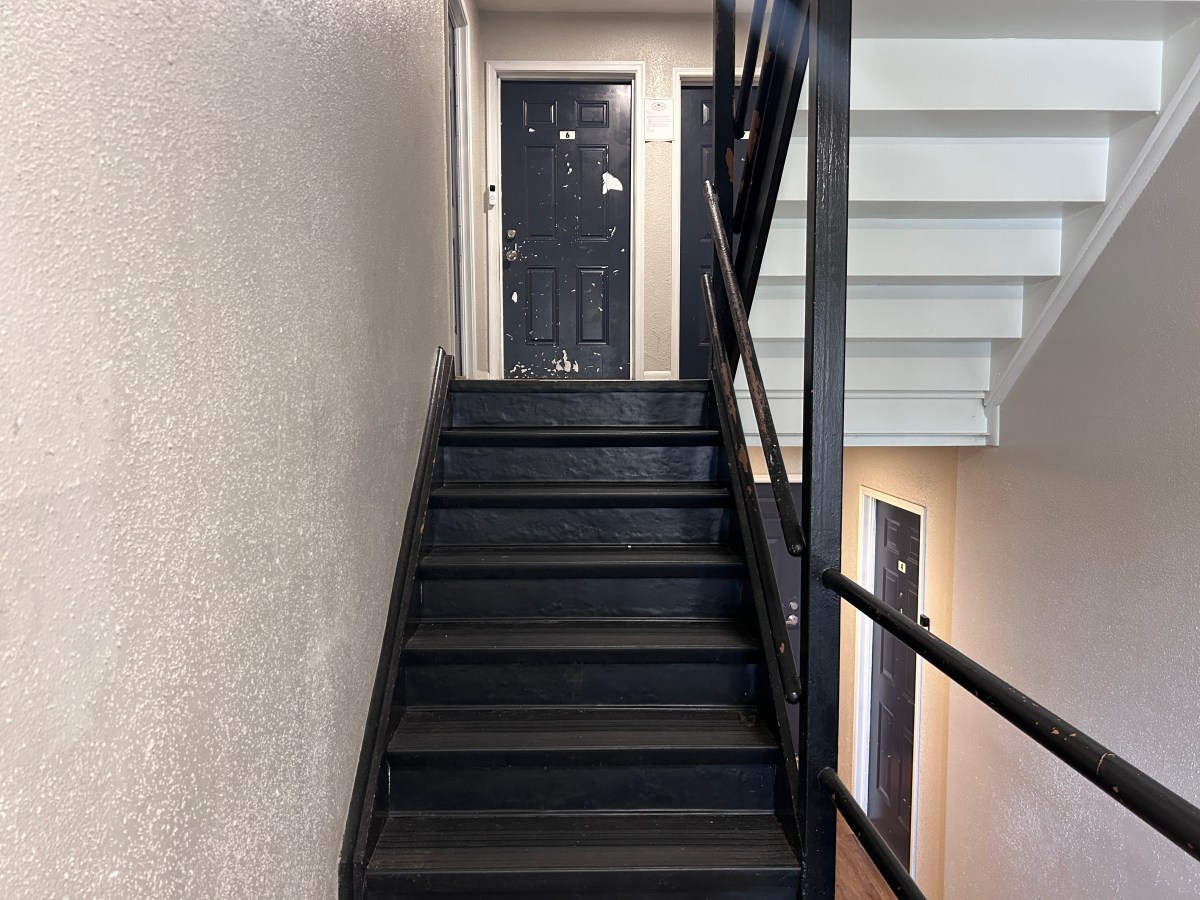
Since 2020, residents of the Park’s Edge apartment complex in Albemarle County have reported electrical outlets releasing sparks; broken smoke detectors; faulty appliances; exterior dryer vents bulging with dense, dark balls of lint; mold creeping along walls and growing in ceiling tiles; improperly ventilated and irregularly cleaned HVAC closets that sent dust, dirt and mold into apartments. Residents reported tripping on broken hallway stairs and on the parking lot’s split pavement. Children were waking up to rats in their rooms.
Many of these issues were documented by attorneys and organizers with the Legal Aid Justice Center. LAJC has worked with dozens of Park’s Edge residents who faced eviction, many of whom couldn’t pay rent after losing wages during the COVID-19 pandemic. But during their meetings, residents regularly mentioned poor living conditions, said LAJC attorney Victoria Horrock.
“For everything that we verify, clients are coming in and telling us other things,” she said.
Over the past three years, Charlottesville Tomorrow interviewed seven Park’s Edge residents about their experiences living in the complex, as well as some of the attorneys and housing advocates trying to help them and their neighbors.
Those residents, attorneys and advocates asked other residents if they wanted to speak publicly. Most said they didn’t out of fear of retaliation from their landlord or property manager.
Those who did speak tell the story of a quickly deteriorating apartment complex with limited and inconsistent maintenance — even when the problems were dire.
Built in 1977 and renovated in 2005, Park’s Edge is an eight-building, 96-unit apartment complex located on Whitewood Rd. in Albemarle County’s urban ring, very close to Albemarle High School. It has one-, two-, and three-bedroom apartments, all of which are relatively affordable compared to other places to live in Albemarle County.
Park’s Edge apartments are more affordable because the complex is part of a federal program called the Low-Income Housing Tax Credit program (or “LIHTC,” pronounced “lie tech”). LIHTC is a nationwide tax incentive program administered by the Internal Revenue Service and used by developers to acquire, build, or — as in Park’s Edge’s case — rehabilitate low-cost rental housing reserved specifically for low-income households.
The complex has had at least five different owners since it was built, including two different ones in the last five years, according to Albemarle County’s geographic data.
Residents say they noticed problems starting to pile up in 2020, the year Albemarle Housing Improvement Project sold the property to a company called TRC Park’s Edge LLC.
Charlottesville Tomorrow reporters made multiple calls and sent multiple emails to various individuals associated with TRC Park’s Edge LLC. No one responded. TRC Park’s Edge LLC owned the property for less than two years before selling it to RailField Realty.
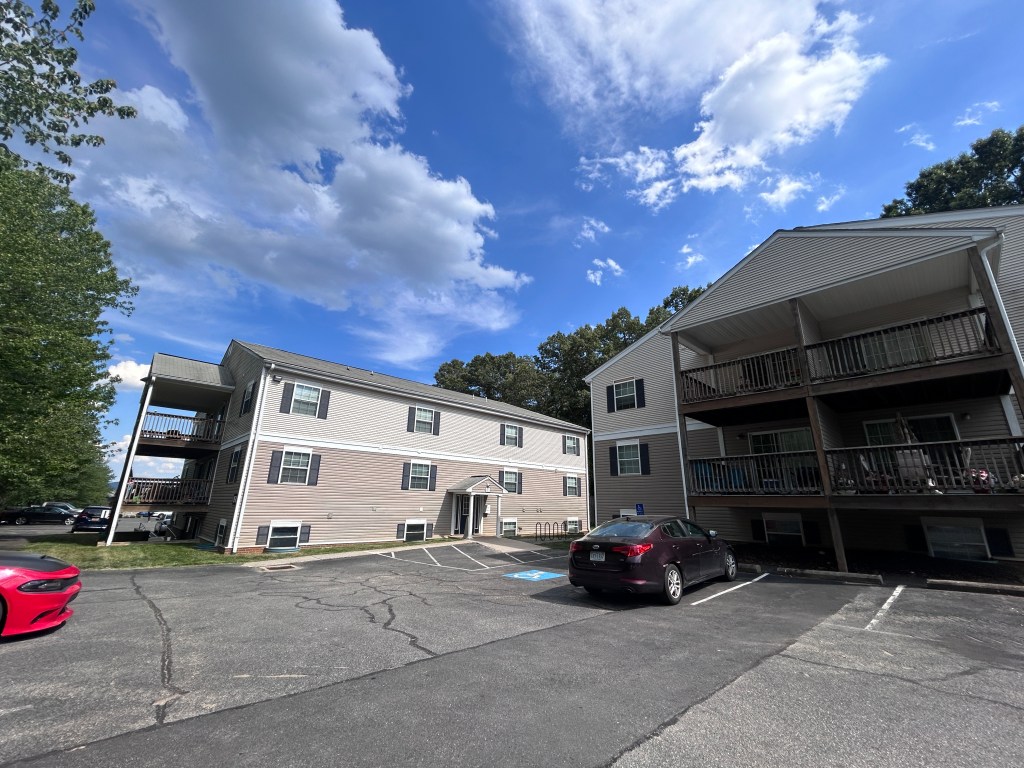
RailField Realty responded to several emailed questions in 2024 and again in 2026, detailing the attempts it has made to address issues with the property since buying it in Sept. 2022.
In April 2024, a representative of the property management company, The Franklin Johnston Group, agreed to answer Charlottesville Tomorrow’s questions on a phone call. They did not respond to multiple messages through their website, emails and phone calls to schedule time for an interview, however. A few weeks later, the reporter received an automated email from the company marking the request “resolved.”
Over the course of about five years, residents in several Park’s Edge buildings made different attempts — from emails and calls to legal action — to improve their living conditions. Most of the residents who spoke with Charlottesville Tomorrow were not satisfied with the responses they received, if they received them at all. Even as conditions got worse in some cases, all said that they could not afford to move. Even if they could, there are not enough affordable housing options in Albemarle County or Charlottesville for them to have any place to go. Now, they say, they’ve run out of options. They’re stuck.
Despite sparking outlets and expired fire extinguishers, residents say their landlords ‘just don’t care’
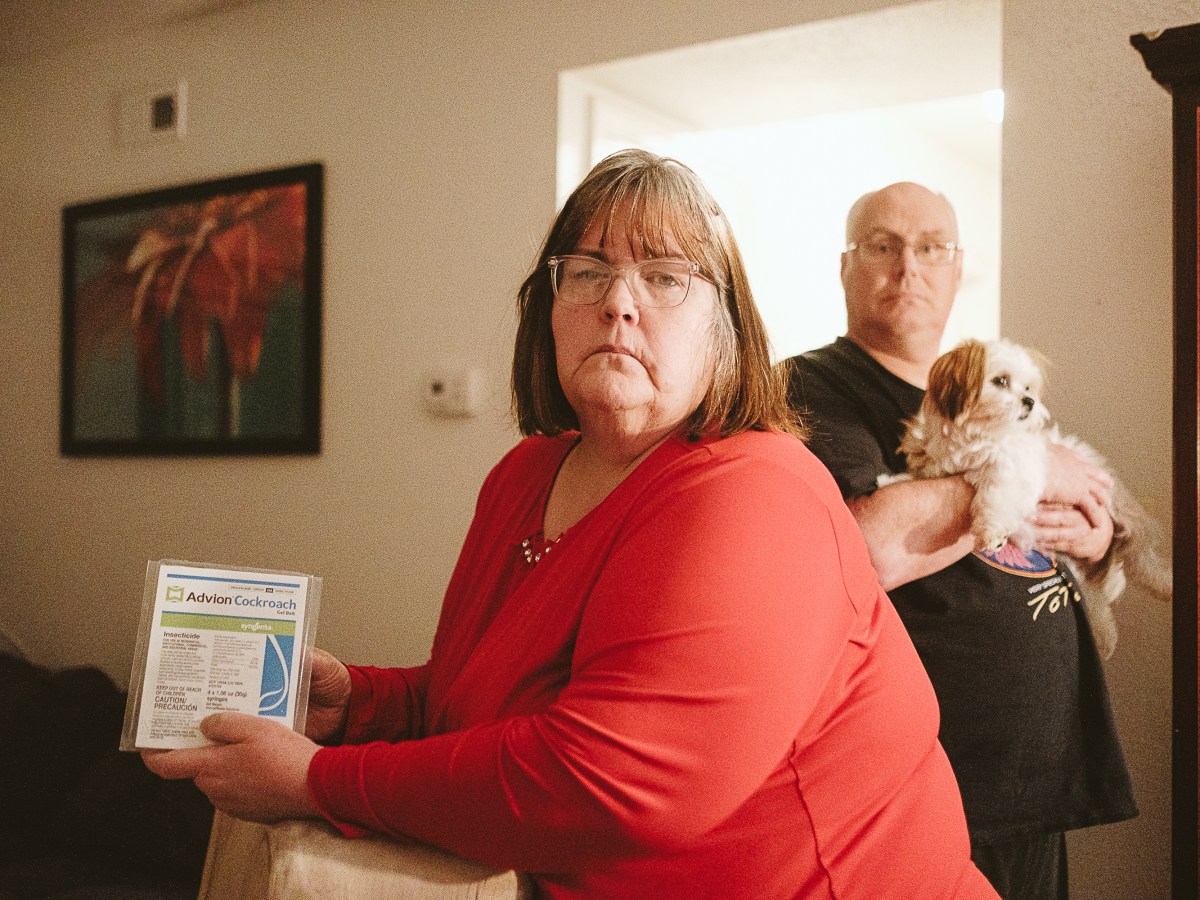
Jojo and Rick Robertson, who have lived for more than 12 years on the third floor of the same Park’s Edge building where Lanika Hester lives with her daughter, have documented a slew of issues in their family’s three-bedroom unit, which smells vaguely of cinnamon. Jojo makes homemade cinnamon air fresheners because it relaxes her and because it covers the mildew odor that permeates the entire building.
Sitting in their living room one January evening in 2024 with their dog, Coco, the Robertsons rattled off a list of things wrong with their apartment — it was clear they’d done this before. They pulled up photo after photo on their phones to show exactly what they were talking about. Jojo regularly stopped to take deep breaths before continuing.
“They just don’t care,” Jojo said repeatedly, shaking her head. “They just don’t care.”
To start, the Robertsons have been afraid to drink or cook with their tap water — it’s been brown or smelly several times, they said. And then there’s what’s happened downstairs with the putrid floods of what smelled like sewage. A few years ago, the Robertsons bought a water cooler and started to pay to have water delivered.
Jojo has photos of roaches the size of Sweet ‘n’ Low packets, and of an enormous ball of lint bulging from an exterior vent, one that the couple can’t reach themselves. They constantly worry the lint ball could catch on fire.

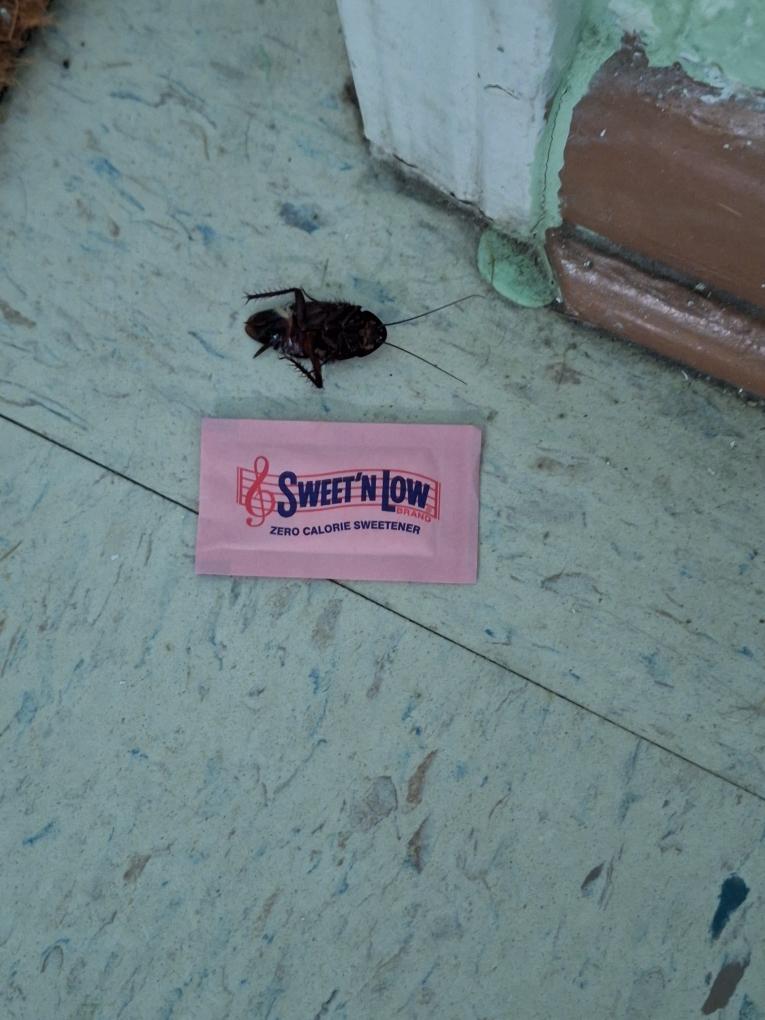
The Robertsons have worried about fires quite a bit, actually. Their outlets sometimes sparked when they plugged in appliances. At least one of their outlets has caught fire. Sometimes, their smoke detectors haven’t worked.
In the fall of 2023, the Robertsons were sitting in their living room when they heard banging on their door.
“There’s a fire, there’s a fire! I don’t know what to do!” yelled the teenage boy who lives in the apartment below theirs. The garbage disposal was ablaze.
One neighbor told him to grab the fire extinguisher while another called the fire department.
After the fire department put it out, Jojo said, they noticed the fire extinguishers were dated 2000. Most have a lifespan of about 10 years.
Jojo said it took weeks for property management to give them new extinguishers.
“We were scared shitless,” she said.
Even though one resident took legal action and got repairs, others said the condition of their buildings got worse
Looking back, many residents say they noticed living conditions in the Park’s Edge complex started to deteriorate between 2020 and 2021, around the time the COVID-19 pandemic was accelerating.
The U.S. government declared a countrywide state of emergency in mid-March 2020, and by the end of the month, then-Virginia governor Ralph Northam issued a statewide stay-at-home order.
The following month, in April 2020, Lanika Hester emailed Albemarle Housing Improvement Program, the nonprofit organization that owned the building at the time, about having the carpets in her apartment cleaned after a flood. She received a prompt reply from the community manager, who explained that certain maintenance issues were on hold due to the state of emergency. Maintenance would address emergencies, including water leaks and flooding. Non-emergency requests, however, would be documented and taken care of once the government lifted the state of emergency.
But even after the state’s stay-at-home order ended in May 2020 and public health guidance allowed for non-essential, masked work to resume, conditions in Park’s Edge apartments continued to decline.
After TRC Parks Edge LLC bought the complex in December 2020, residents’ emails and their website show that they hired The Franklin Johnston Group, a Virginia Beach-based company, to manage it.
Fifteen months after the sale, a Park’s Edge resident took TRC Park’s Edge to court over the conditions in her unit.
A Charlottesville Tomorrow reporter learned about this case while reviewing cases in Albemarle County General District Court records. The lawsuit lists more than a dozen problems, including air filters that hadn’t been replaced in over a year; leaking windows; a rotting bathroom vanity; buckling floors; electrical outlets that didn’t work; a leaky sink; and a buckling kitchen floor.
“I am optimistic that the majority of these repairs can be done in a reasonable timeframe, preferably within/or about thirty (30) days,” Central Virginia Legal Aid Society attorney Katie Allen wrote to the property manager in December 2021. However, Allen added if the repairs were not made, the tenant she represented would take legal action.
In March 2022, the tenant filed a tenant’s assertion, a legal action a tenant can take against a landlord claiming that the landlord is in violation of the lease agreement. The point is usually to pressure a landlord to fix whatever is wrong with the unit.
It seems to have worked. In August 2022, Allen moved to dismiss the case because the repairs had been made.
But, while the apartment in the lawsuit was being fixed, the issues in Hester’s apartment were accumulating.
“I have put in several requests about the issues with my apartment,” Hester wrote in an email to Franklin Johnston Group on June 2, 2022. “It takes months to get anything done, if ever at all. The latest is that I can’t use my stove without it catching fire. My apartment floods regularly. And there has been nothing done. The [bathroom] tub is stopped up again but no service yet. The ceiling that you guys took pictures of is still in the same condition. These floors have suffered from years of flooding and no attention. No one has checked for mold in this basement apartment.”
Hester received a prompt reply to that email, and it seems some repairs were made, but they weren’t the end of her problems.
Hester shared four years of email correspondence between her and various property management staff with Charlottesville Tomorrow detailing the litany of maintenance issues her apartment had during that time.
Between the spring of 2022 and spring 2024, Hester sent more than 150 emails to employees of the property management company about issues with her apartment.
Hester’s emails show that sometimes the Franklin Johnston Group’s staff responded within hours. Other times, it took weeks — and multiple follow-up emails — for someone to reply. A few times, her records show, they didn’t respond at all.
Seven residents of Park’s Edge, along with attorneys and community organizers who talked to dozens more residents, said they had similar experiences trying to improve the condition of their apartments. All of this was particularly frustrating, they said, because it wasn’t always clear who they should be communicating with.
New “community managers” would cycle through every four to six months according to Hester’s email records. Additionally, at least two other people from Franklin Johnston Group filled in when that job was vacant. On top of that, the company used two separate — but similar — email addresses to communicate with Hester.
Whenever someone left the management office and a new person came into that role, Hester said she was back at square one. She had to explain what was going on with her apartment all over again, and justify her frustration to new staff.
Hester is a friendly, upbeat person who loves herbal teas and laughs with her whole body when her cat, Pep (short for Pepita) springs around her living room.
But when she talks about her experience living at Park’s Edge, particularly the last five years, her demeanor changes. She takes sharp, shallow breaths and talks quickly, rattling off a laundry list of things wrong with her home.

The worst of the maintenance issues in Hester’s apartment at Park’s Edge started Sept. 12, 2022. She woke up that morning to a flood that she said smelled “old, mildewy and poopy.” She emailed property management about it right away, but by the following morning, nothing had been done.
“Sewage has flooded my apartment and they have yet to fix it. It’s madness here,” Hester wrote in an email to an eviction prevention case manager at Piedmont Housing Alliance’s Financial Opportunity Center the next morning. (Hester said she was struggling to keep up with rent after losing one of her two jobs, and at that point, PHA was no longer involved in the management of the property.)
Someone at Franklin Johnston Group replied to Hester on Sept. 13 at 10:56 a.m., about 25 hours after she first emailed them. The company cycled through at least a dozen on-site property managers over about four years, most of whom Charlottesville Tomorrow could not find contact information for after they left the property.
“Is your toilet still leaking? Is there water all on the floor still?” the property manager at the time wrote.
The toilet had stopped leaking, Hester replied. But the apartment was still soaked with foul smelling water.
Hester had to go to work, but she said someone told her they would clean the place. When she returned home, it didn’t appear clean.
“It smells so bad. Is there any way the office can pay for a hotel or refund hotel fees until this particular issue is resolved?” Hester wrote at 3:54 p.m. “The stuff in the tub hasn’t been cleaned. The laundry room, none of it is clean — all covered in the sewage that spewed. They said they did the carpet but the place smells horrid.”
Someone at Franklin Johnston Group replied that professional cleaners could come by the following morning, 48 hours after the flood.
The email did not acknowledge her request for a hotel.
Hester was concerned about what was in the water that soaked her carpet, floors, and some of her belongings and — unable to stand the putrid smell of it — paid to stay in a hotel for a few nights with her daughter.
Hester asked the property manager by email to pay for the hotel a few more times. Someone wrote back about a week later: “If you have renters insurance, I would strongly recommend reaching out to them as they may be able to help out with the refund for a hotel.”
Hester didn’t have rental insurance.
One resident is offered to exit her lease, but she can’t afford to
Hester was still emailing the property manager about the smell on Sept. 19, about a week after the flood, and days after a cleaning crew came and went.
“You can smell later at 3:15 when I’m home if you are available,” she wrote.
Eventually, the Franklin Johnston Group decided to just replace the carpet. They scheduled the work for Sept. 29, two weeks after the flood.
But that created an entirely new dilemma.
As the carpet replacement date neared, the Franklin Johnston Group told Hester that she had to move all her belongings out of her apartment in order for the work to be done. Hester panicked.
She barely had the money for the hotel stay, and she couldn’t afford to pay movers. She would have to take time off work to move things, and that meant lost wages. Plus, she didn’t have anywhere to move her stuff.
Hester asked management if she could move her things from room to room as the crew removed the old carpet and installed the new. She asked if someone could help her. The flood wasn’t her fault.
No, they couldn’t have anyone help due to liability issues, management wrote. They couldn’t answer for the carpet crew. And no, they wouldn’t put her in touch with them.
“Just to clarify on this email thread your carpet is being replaced due to age and how long you have been in the apartment,” the Franklin Johnston Group told Hester on Sept. 26. The email did not mention the flood.
Whenever Hester asked a question about the replacement process, management referred her to the agreement she signed for the carpet replacement. Among other things, the contract stipulated that all of her furniture must be moved in order for the carpet to be installed. If she didn’t have her apartment in the right order, they wouldn’t replace the carpet and Hester would be charged a fee.
Hester sent a final email a few days before the appointment with a few more questions.
“If this is an inconvenience,” management replied, “then you will have the choice to cancel your appointment.”
That is not what Hester wanted, she wrote. She only wanted to be prepared.
“We have gone over this with you,” an employee of the Franklin Johnston Group replied. “We cannot help unforeseen circumstances, all we can do is take care of it immediately, which we did. We are doing everything we can to rectify and remedy this situation. If you are still unhappy, then I will let you out of your lease with a 60-day notice.”
Hester couldn’t afford to move out. She did not have the money to pay movers, or to pay first and last month’s rent and a security deposit, likely thousands of dollars, for a new apartment. She wrote back that she did not want to cancel the appointment. Her apartment still smelled.
Hester and other residents say they never learned why their apartments flooded with sewage. But it wasn’t the last time it happened.
About a year and a half later, in mid-2024, another basement apartment at Park’s Edge flooded, this time in a different building in the complex.
Brittney, who has lived at Park’s Edge for about a decade, first with her mother and then on her own, told a story that mirrors Hester’s — mostly.
Brittney (not her real name) spoke with Charlottesville Tomorrow by phone in August 2024 on the condition that we not use her name. She said she feared losing her housing. Legally, a landlord cannot evict a tenant for speaking with a reporter about potential code violations. However, a landlord can decide at their discretion to not renew a tenant’s lease when that comes up.
Her apartment had flooded a couple of months earlier, she said. A chunky brown substance floated in the water. It stank. It inundated her hallway, her son’s bedroom and the small bathroom. She put on her rain boots to walk around inside.
“It smelled like sewage,” she said.
Property managers sent the company Roto Rooter to look at the problem, she said. The Roto Rooter employee told her the flood was caused by wipes clogging up the building’s pipes.
Management said that someone from the maintenance crew would come in after Roto Rooter to clean up the brown water, Brittney said.
“I was up until 4 in the morning waiting for people to come and fix the problem, get the water up,” she said. “But nobody came.”
By the time a maintenance worker knocked at her door the following morning, she’d already mopped up the stinking mess herself. But worse than all that, she said, has been the rats.
“I can deal with a lot of things, but the rats I cannot deal with.”
Park’s Edge residents said that a rat infestation made them lose hope
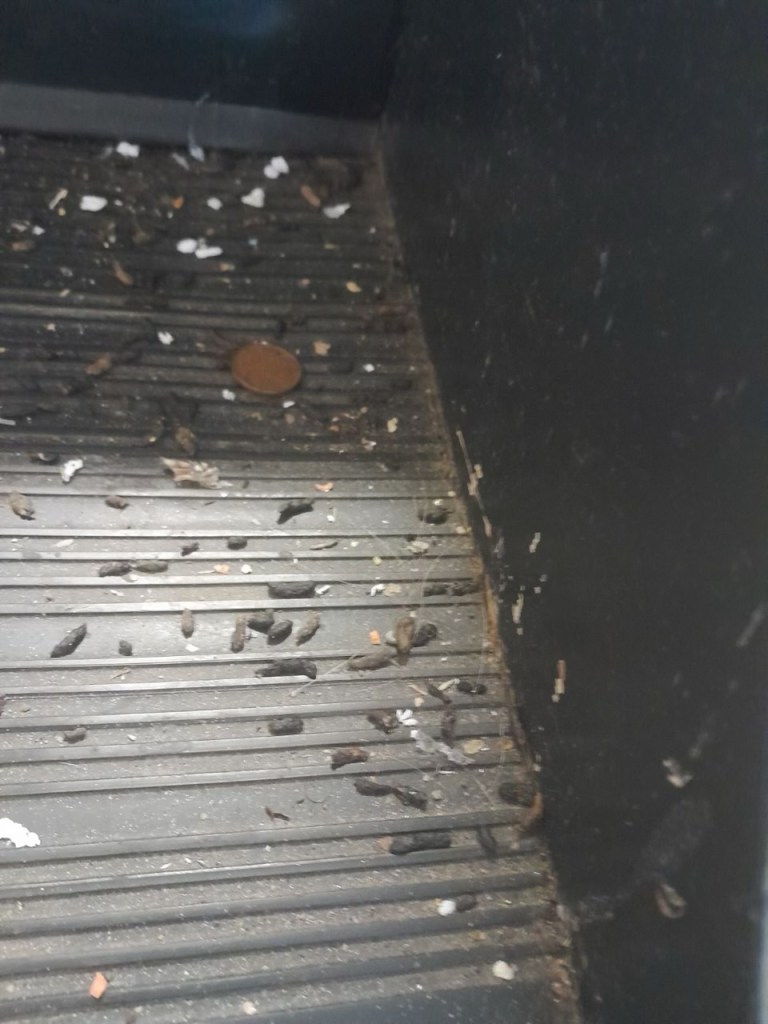
Rats disturbed, disgusted and eventually terrorized Park’s Edge residents between at least August 2023 and August 2024. By the end of 2024, residents were not only disappointed by how management handled it, they were feeling discouraged because they felt they had no choice but to live with the infestation.
It started sometime in summer 2023. In early September of that year, Jojo Robertson sent a text message to Charlottesville Tomorrow saying that the complex was dealing with a rat infestation. Brittney said she first noticed rats around that time, too. The rats were still around in December, when Hester emailed property management about them.
“It’s getting cold outside and I do not want them in my home,” she wrote.
None of management’s replies to Hester’s emails about rats mentioned rodents.
In January, Robertson said she heard from other residents that the Franklin Johnston Group hadn’t paid extermination bills, and so no one had come to the property to take care of the rats (or the roaches).
Charlottesville Tomorrow was unable to confirm that the property manager did not pay bills, nor did the company explain what actions they took to address the rodent problem. The Franklin Johnston Group did not respond to multiple requests for comment by email and phone from 2024 to just before publishing.
But what is clear is that trash was an issue at Park’s Edge that same month. A heap of it started to accumulate outside some of the buildings in the complex.
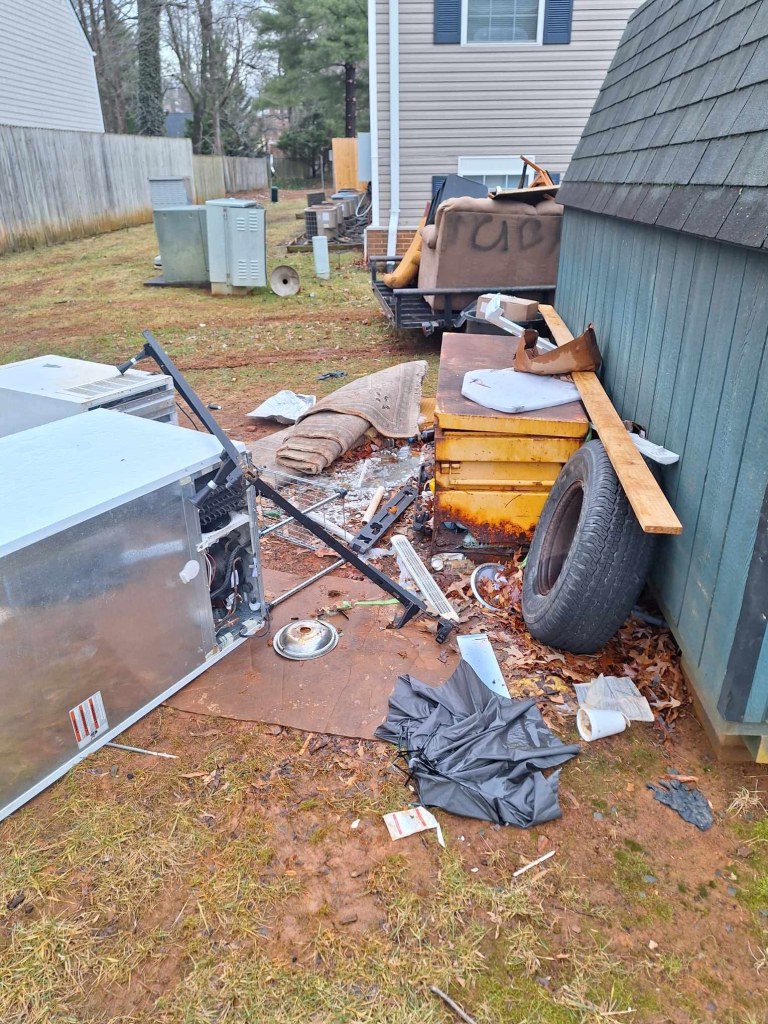
Robertson took photos of the discarded objects. Household appliances lay tipped over on the ground, their internal parts and wiring exposed. Someone had tossed half a bent bed frame over them. There were rolled-up rugs, chairs, a couch, a utility trailer, a rusted tool chest, and smaller bits dotting the ground.
By February, residents suspected that one of their neighbors was hoarding trash and other items inside their apartment. It is unclear whether or not the trash that accumulated outside of the complex was related.
Later that month, though, the outside trash was gone, Robertson said. Management had sent out a notice to residents asking them to tidy up their apartments and exterior areas in preparation for a visit from the owners, RailField Realty, that day.
But, not long after that visit the trash was back. This time it was appliances sitting in the yard next to an upside-down couch.
Trash is one of the things that can attract rats and foment an infestation, Denise G. Aranoff, vice president of American Pest, a national company, told Charlottesville Tomorrow in an email. The company is mentioned in emails between Hester and the property manager, but Aranoff said she was not commenting about Park’s Edge specifically.
“Trash in hallways and breezeways or around dumpsters and trash chutes will attract all sorts of pests,” Aranoff wrote.
As 2024 progressed, the rats became more pervasive, residents said. Fed up, Brittney bought her own traps. But they didn’t help in the way she’d hoped.
One night, Brittney woke to a horrible screeching sound coming from her young son’s bedroom — a rat was stuck to a glue trap. The scene petrified the three-year-old child, who refused to set foot in his bedroom afterward.
“He sleeps with me,” Brittney said. “He doesn’t even play in his room.”
That wasn’t the end of it, though. Rats got into Brittney’s clothes. They chewed up her couch.
Brittney spoke with Charlottesville Tomorrow in August 2024, about a year after she first noticed rodents around her building. By then, she estimated she’d caught about 30 rats in her apartment.
“I’m constantly catching them,” she said at the time, convinced that the rats were getting in through the HVAC system. “I’m catching, like, three a week now.”
It’s unclear how the Franklin Johnston Group was handling the situation before Charlottesville Tomorrow spoke with Brittney. But, by the time she spoke with a reporter, Brittney said she was getting weekly visits from property management, and a pest control company was also visiting the property regularly.
“They’re treating the outside and not really doing anything on the inside,” she said. “They put poison down, but then they’re crawling inside the walls and dying. We have these horrible smells, huge black flies. It’s just terrible.”
She said that property managers were coming into tenants’ apartments weekly to monitor interior conditions, checking to see if people were taking out their trash, warning them not to leave dishes in the sink, or leave laundry out.
But at the same time, she said, trash was all over the outside of the complex.
At one point, the dumpster was so full of furniture, residents had to put their trash on the ground, Brittney said.
“They say we can’t keep trash overnight, but everybody’s scared to take the trash out at night because we have rodents that run around the trash can,” Brittney said. “There’s trash all over the ground. That’s what’s causing rats. None of the maintenance team is picking it up.”
While the property management company did not respond to requests for information, the complex’s owner, RailField Realty, did respond just before this report was published.
“There was a rodent issue in 2023/2024. That issue resolved when two residents were evicted,” Todd Watkins, Railfield’s Chief Operating Officer, told Charlottesville Tomorrow in an email on May 25, 2026. “To my knowledge, the pest control contract was always in full force. We currently have monthly pest and rodent servicing at the property and have not seen a recurrence of the problem.”
But while the infestation was going on, residents began to realize that there wasn’t much they could do to force a faster response. They were learning that Virginia law makes it hard for renters to hold landlords accountable for the condition of their properties, even when there is flooding, rats and fire hazards.
The next report in the series shows what can happen when, against all odds, a resident manages to get a case against their landlord into court.
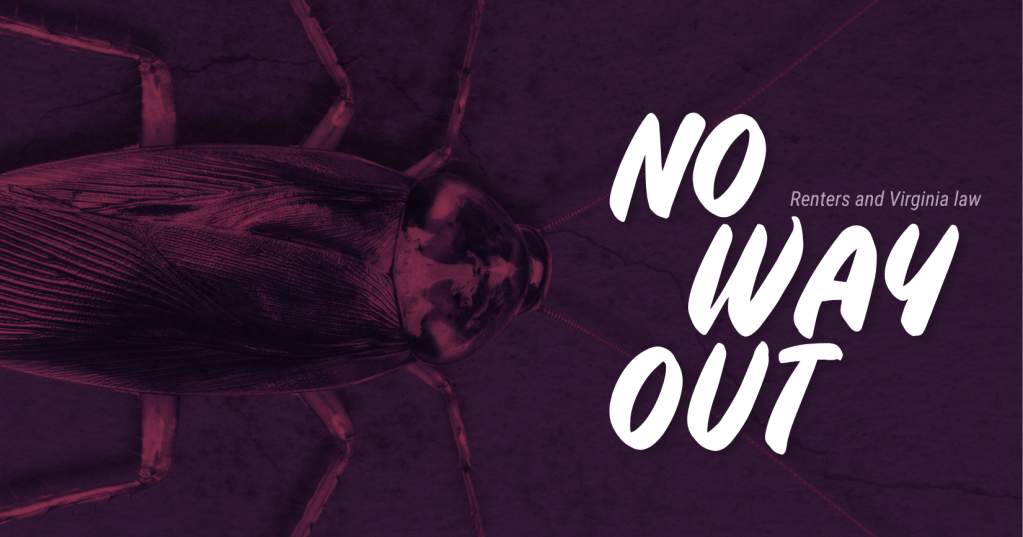
Floods, roaches, rats, mold — these are just a few of the issues in Charlottesville Tomorrow’s investigation into how Virginia law often fails to protect vulnerable renters.



This series, reported over years of following tenants’ stories, is about what happens when renters in Virginia try to improve the conditions of their homes. It took reviewing images and records, hundreds of emails between residents of Park’s Edge, their landlords and advocates, court records and legislative efforts.
It was reported by Erin O’Hare with editing by Jessie Higgins, photography by Ézé Amos and O’Hare, with images and documents provided by residents of Park’s Edge, editing and design by Angilee Shah and Ashley Harper.
Follow the series over the week of June 1, 2026 by subscribing to Charlottesville Tomorrow’s free Beyond the Headlines newsletter.
Erin’s reporting is a testament to what can happen when journalists listen to their community, paving the way for change when other systems fail.
Investigative journalism is essential to a healthy democracy — it informs citizens, holds institutions accountable and catalyzes action. If you believe these stories deserve to be told, consider donating. Together, we can ensure that more voices are heard and that the stories that matter most do not go untold.
This article appears in No Way Out.