

Real Quick
- The City of Roanoke and about 18 other Virginia localities run rental inspection programs to help ensure safe conditions in designated zones.
- After speaking with Charlottesville Tomorrow about rental inspection programs, the Albemarle County Board of Supervisors asked county staff to look into what it would take to create a rental inspection program, or something like it.
- If the Albemarle County Board of Supervisors decides to move forward with a rental inspection program, they’ll have some important decisions to make. They’ll need to decide which areas of the county to inspect and how best to make a registry of rental properties, for example.
Take action
Want to learn more about proactive rental inspection programs? Here are a few resources to help you get started.
- The National Center for Healthy Housing has compiled policy recommendations, case studies, and more, drawing on more than 30 years of research and advocacy for safe, healthy homes across all income levels.
- ChangeLab Solutions, a nonprofit focused on equitable laws and policies, published a Guide to Proactive Rental Inspections in 2022.
Jojo Robertson stood at the kitchen stove in her Park’s Edge apartment, stirring a simmering pot of water and cinnamon sticks. She lifted the wooden spoon into the air, closed her eyes, and took a long, deep breath as beads of aromatic liquid dripped back into the pot. Her face relaxed.
“It soothes me,” she said, turning off the stovetop and waving the steam around, wafting the scent of homemade potpourri through the living room of the three-bedroom apartment she shares with her husband and their two children. “It’s so stressful living here that I do whatever I can to feel peace.”
Over the past few years, Park’s Edge residents in Albemarle County have faced a slew of problems in their units: fetid floods, rats in children’s beds, sparking electrical outlets, fire hazards, roaches, mold.
Like her downstairs neighbor, Lanika Hester, Robertson has tried many times to get the property managers and owners of Park’s Edge to pay attention to the issues in her unit.
Unlike Hester, Robertson hasn’t been able to bring a case to court, so she’s tried other ways.
Like many other tenants at Park’s Edge, Robertson has a housing voucher, a form of rental subsidy provided by the federal government. That means problems in her unit should be covered by the U.S. Office of Housing and Urban Development’s inspection program. But her unit has passed inspection despite obvious problems. And she’s not the only one. An investigation published by ProPublica and the Southern Illinoisan in 2018 and 2019 showed that HUD inspections passed dangerous apartments all over the country. That reporting pushed HUD to revise its quality of living standards and inspection practices, but the agency hasn’t yet implemented those changes for its housing voucher program.
Running out of options, Robertson contacted her local elected official for help.
At the time, early 2024, that was Diantha McKeel, who represented the Jack Jouett district on the Albemarle County Board of Supervisors from 2013 to 2025.
Robertson knew that as a tenant, she had few protections under the Virginia Residential Landlord-Tenant Act. But she was surprised — and disappointed — to hear that the local government couldn’t do much to help her either.
“I have a lot of sympathy and I understand where they are,” McKeel told Charlottesville Tomorrow in March 2024. “Having said that, we are very limited in what we can do. There’s no magic bullet here. People think that we have a lot more power than we really do in a lot of areas.”
That’s true, but it doesn’t have to be.
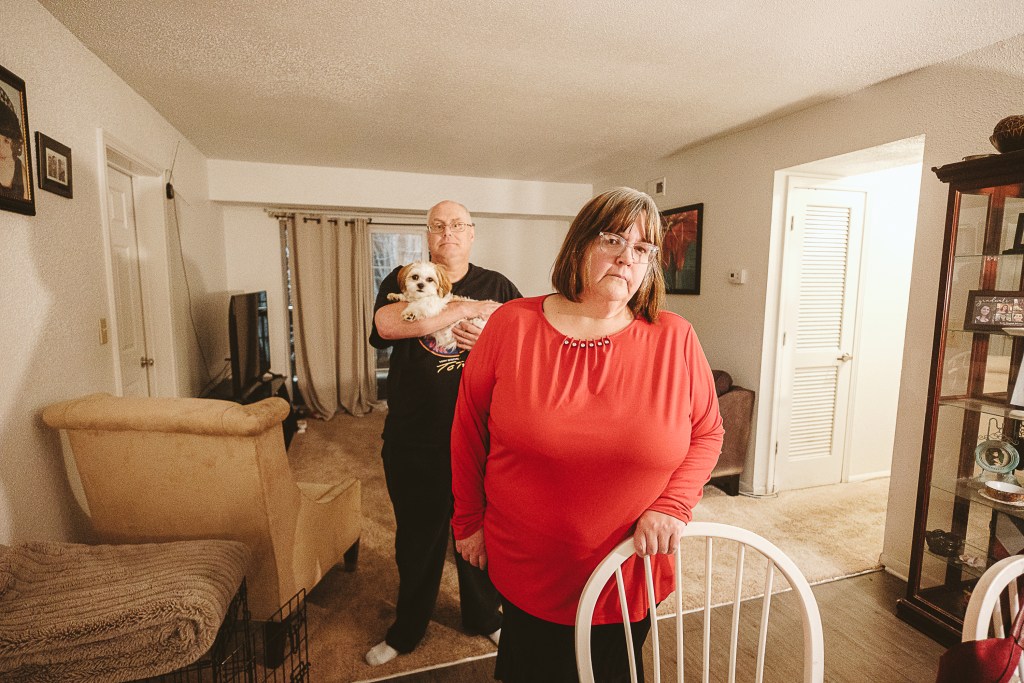
Albemarle County, like all Virginia local governments, has the authority to intervene in the kinds of conditions tenants at Park’s Edge describe enduring. Housing law experts say one policy in particular could reshape accountability for landlords across the county: rental inspection programs that proactively identify unsafe and neglected housing.
“Localities have been given the power” to implement rental inspection programs, said Daniel Rezai, an attorney with the Virginia Poverty Law Center who works exclusively with low-income clients, many of them renters. “In a perfect world, every one of them would have one.”
Some do. At least 18 local governments across the commonwealth have active rental inspection programs, and the City of Richmond is currently working to create one.
“It just makes sense,” said Gregory Miao, an attorney who has worked with jurisdictions across the country to establish rental inspection programs. “You should make sure that housing that’s being leased in your community is suitable and habitable for people to live in. That’s a core government service that we should probably be providing.”
In the three years Charlottesville Tomorrow has investigated conditions in rental units, Albemarle County officials have offered different perspectives on the possibility of implementing a rental inspection program here.
When Charlottesville Tomorrow reached out to the Albemarle County Board of Supervisors in 2024 to ask about rental inspection programs, three of the six supervisors responded. They gave multiple reasons why they hadn’t established a rental inspection program in the county, including that it would be impossible, very difficult, or simply not worth it. Some said that Virginia law forbids them from creating such a program. Others said the county’s own ordinances won’t allow it.
However, that appears to be changing. During its May 20, 2026 meeting, Supervisor Sally Duncan, who has represented the Jack Jouett district (where Park’s Edge is located) since January 2026, initiated a Board discussion about a rental inspection program. The rest of the Board seemed interested in learning more about a program, or something similar, and they directed county staff to look into it.
“If it’s legally allowed, then we should do it,” Duncan, who succeeded McKeel in January 2026, told Charlottesville Tomorrow in a May 13 phone call. That call was the first time Duncan heard that the county could, in fact, have a rental inspection program, she said. “If the county can enforce that, we have a moral obligation to do so.”
Until Albemarle County changes its policies, renters have few options to improve conditions
Currently, when someone contacts Albemarle County about conditions in their rental home, all the county can do is send out code enforcement, said Mike Pruitt, who has represented the Scottsville District on the Albemarle County Board of Supervisors since 2024.
That’s exactly what McKeel did when Robertson and some other residents got in touch with her in early 2024.
County code inspectors visited Park’s Edge in mid-February 2024, which was about a year and a half after RailField Realty bought the property from TRC Parks Edge LLC. An email between code enforcers and McKeel that Robertson shared with Charlottesville Tomorrow mentioned things like trash and debris, as well as an outdoor light that wasn’t up to code, but said nothing about any of the more severe issues that terrified residents — flooding, blocked exterior vents, mold, pests or faculty electricity.
One inspector did note that he and his colleagues tried to speak with the property manager but were met with a “closed” sign on the office door. Eventually, he spoke with Todd Watkins, Chief Operating Office of RailField Realty, about the lighting problem.
The county is limited in what it can enforce as far as conditions go, Jodie Filardo, Director of Community Development for Albemarle County, told Charlottesville Tomorrow — it can only address what’s mentioned in county ordinances and what is required by the Uniform Statewide Building Code. Filardo retired from her position with the county in February 2026.
The Uniform Statewide Building Code has three parts: the Construction Code, the Existing Building Code and the Maintenance Code. All localities are required to enforce the Construction and Existing Building codes. However, localities can choose whether or not to enforce the Maintenance Code, and Albemarle chooses not to, said county spokesperson Abbey Stumpf.
The Board of Supervisors discussed enforcing the Maintenance Code in December 2021, but according to the meeting minutes, they felt the cost — $500,000 for the first year and $390,000 annually after that — was prohibitive.
From a zoning perspective, the county can force a property owner to address things like weeds, inoperable vehicles and stagnant water in pools, Filardo said. All of this falls under the county’s Spot Blight Abatement Ordinance, which also addresses damaged, decayed or dilapidated structures, as well as completely inoperable utilities.
The building code is more focused on public health and safety relative to a structure, for things like broken windows and holes in roofs, Filardo said.
When county inspectors find a violation of either a county ordinance or the building code, staff work with the property owner to bring the property or the structure back into compliance. If it’s not addressed, the county can issue a fine.
Interior issues, however, fall under the auspices of the Residential Landlord and Tenant Act, Filardo said. That’s a state law that defines the relationship between a landlord and a tenant.
McKeel said she frequently heard complaints from her constituents about living conditions in their apartments.
“It’s frustrating, I think, for all of us,” McKeel told Charlottesville Tomorrow in 2024. “It’s especially sad and frustrating for our residents. I don’t want to paint everybody with the same brush, but we do have property management companies that are doing exactly what they’re supposed to do and are really doing a good job. We also have some property management companies that are not, for various reasons. Sometimes they’re out of town, they’re not located here.”
Virginia state lawmakers add a few new tenant protections, and Albemarle County considers rental inspections
When Charlottesville Tomorrow spoke with some Albemarle County elected officials in spring 2024, they said they were interested in advocating for more tenant protections, but a county rental inspection program was not one of them. Since Charlottesville Tomorrow started sharing residents’ experiences and asking officials questions about these issues, that changed.
In 2026, Albemarle County officials asked local representatives in the Virginia General Assembly to support a variety of tenants’ rights bills meant to work in tandem to give tenants more substantial rights within the Residential Landlord and Tenant Act.
“I see this network of other priorities as being, frankly, more urgent than an inspection program,” Supervisor Pruitt told Charlottesville Tomorrow in March 2026.
One of the bills the supervisors supported was HB281, sponsored by Del. Katrina Callsen and signed into law by Gov. Abigail Spanberger on April 22. The law, which will take effect Jan. 1, 2027, will allow a tenant who is being sued by their landlord, usually in an unlawful detainer case (i.e. an eviction case), to defend themselves on the grounds that the home the tenant is renting is unlivable. It would also allow a tenant to raise that defense in court without having to pay all of their past-due rent first. Currently, tenants can do neither of those things under the Virginia Residential Landlord and Tenant Act.
“If you get caught in a situation where your landlord’s not doing right, you can be completely out of luck,” Callsen told Charlottesville Tomorrow in March 2026. “There’s something inherently kind of wrong about not being able to raise a defense, a valid defense, unless you’ve paid money to do so.”
And in order to raise this defense, the tenant must have proof of those poor conditions, such as photos, a paper trail of communications to property management, receipts — just like Lanika Hester did for her case where she won damages from the owners of Park’s Edge.
Another piece of legislation the supervisors supported was HB14, which was also signed into law and will take effect July 1. It allows all localities to enforce the Virginia Residential Landlord and Tenant Act. The new law essentially allows a local government to act in a way that an attorney general might, with something called parens patriae standing, explained Pruitt. In addition to his Board service, he is a civil rights attorney focused on housing law.
That means a local government would be able to step in and sue a negligent landlord on behalf of a tenant or tenants who believe their landlord has violated the Residential Landlord and Tenant Act. For that to happen, a tenant must file a complaint about the conditions in their rental and their landlord’s neglect. If the local government agrees the landlord is in violation, it could file a suit against the landlord.
Having a county attorney’s office throw their weight behind a case could really help tenants, especially ones who can’t afford an attorney, Pruitt said. He sees the potential for a variety of legal remedies, including getting money for tenants or forcing a landlord to make specific fixes.
“The world of remedies is going to be bigger than what we currently have,” he said.
While Pruitt is excited about the new law, he was quick to acknowledge its weaknesses.
“I don’t want to be too Pollyanna about this,” Pruitt said. “We’ve still got to actually bring a case.”
On top of that, Albemarle County is a fairly large county, one with “a decent-sized attorney’s office,” Pruitt added.
“This ain’t gonna do anything for, say, Buckingham County,” he said. “A lot of smaller counties in the commonwealth, they might not even have a full-time county attorney, they have someone on contract. Realistically, this does nothing for them.”
Miao, the equitable housing policy and rental inspection expert, agrees. He said this kind of law will likely be most helpful when a group of tenants in more urban areas with a larger local government can get together and prove to officials that their shared landlord is neglecting conditions. That could put more pressure on the local government to bring a case, particularly if the locality’s attorney could sue one landlord and help hundreds of people.
Another possible weakness of this type of law is that it will be the tenants’ responsibility to bring the issues to county staff.
“There is no internal trigger. We’re not going out and seeking these cases,” Pruitt said.
“There’s no system where the government can protect everyone,” Miao said. “So it’s important to both increase individuals’ rights to bring their own enforcement actions if they can, and to try to make that as accessible as possible, while also taking a more proactive approach from the government perspective and trying to ensure safer, healthier housing.”
An approach like a proactive rental inspection program.
These programs that aim to actually protect the health and safety of tenants have grown in popularity around the country, according to Miao. Cities like Boston; Seattle; Syracuse, New York; and Tulsa, Oklahoma have them. The state of Florida has one for large buildings.
They look different from place to place, Miao said. For instance, some inspect all rentals, whereas others look only at multi-family buildings. Some inspect every year, others every 10 years.
But there are a few core similarities among them: They’re periodic, regular inspections of rental units conducted by a local government. And for the places that have them, they’re typically mandatory. These proactive programs also share a similar mission.
“There’s a lot of variety, but the purpose really is to ensure that we’re maintaining and promoting public health,” Miao said.
That’s something local governments should be interested in, he added. Otherwise, they’re risking a lot.
“Oftentimes, these programs proliferate relative to some local tragedy,” Miao added.
That’s exactly what happened in Roanoke.
A tragedy moves Roanoke to act on rental inspections
Content Warning: The following text contains graphic descriptions of a fatal house fire.
A house divided into apartments went up in flames in Roanoke in January 1996. A family of six was inside: four children, their mother and their grandmother.
A 1996 Roanoke Times report about the incident is hard to read.
Two neighbors tried to help. One called 9-1-1 while another said she talked with the trapped family through a closed window. Both neighbors tried to break the window but couldn’t shatter the glass. Eventually, the family stopped responding.
The mother was able to escape, and she was inconsolable as she watched the house burn. The children’s pink bicycle and red wagon sat in the yard.
The children’s father arrived on the scene about 15 minutes after the fire department, and he pounded on a fence across the street from the house, shouting, “Oh, my God.”
All of the victims died from “a combination of smoke inhalation and fire” the Roanoke Fire Chief told the newspaper. They were Mark, 6; Clyde, 5; Patrick, 4; Nancy, 3, and Goldie Christie Duncan, 46.
Faulty wiring in the kitchen was thought to be the cause, and it was later determined that the apartment didn’t have any smoke detectors, a Roanoke city code violation. City officials said they felt as though the fire could have been prevented.
Determined to make sure something like that wouldn’t happen in Roanoke again, the city instituted a proactive rental inspection program.
The city had considered implementing a rental inspection program since at least 1979, according to a November 1995 article in the Roanoke Times. As the city started to consider a program more seriously, a group of 72 landlords owning more than 3,000 properties among them banded together to oppose it.
One landlord called it “government intrusion of the worst order. If we have to go to the Supreme Court, we’ll go to the Supreme Court,” and said Roanoke should enforce its existing building code. This same landlord said that he had a tenant who disappeared on him, owing him $1,400 and causing $1,600 in damage. “We are pictured by and large as greedy landlords. [But] there are people out there who know how to beat the system,” he said.
But after the fire — which happened just a few months after that landlords’ meeting — Roanoke moved quickly to implement a proactive rental inspection program.
“For us, it’s all about safety,” Jeffery White told Charlottesville Tomorrow. White is a codes compliance coordinator for the City of Roanoke, about 120 miles southwest of Albemarle County.
When Roanoke began its program nearly 30 years ago, it first established a rental inspection district. Then, staff used property records and geographic data to identify every property within the district boundaries and mailed notices of the inspection program to property owners.
Those who owned rental properties in the city-designated inspection district would have their units subject to inspection every two years. That was later changed to every four years.
The inspection district covers the most dense parts of the city and includes 5,300 to 5,400 units, White told Charlottesville Tomorrow. That’s most of the city’s rental homes.
(Roanoke is about 43 square miles in area, and has about 100,000 residents. Albemarle County, for comparison, is over 700 square miles and has more than 117,000 residents.)
Roanoke’s inspectors look for violations of the Virginia Maintenance Code, which is the third chapter of the Uniform Statewide Building Code, as well as things on the city’s own checklist. That checklist includes things like roof condition, any rotting wood inside or out, loose or missing gutters, structurally unsound porch columns, peeling paint (especially if the home was built in a time when lead paint was used), the quality of interior surfaces, plumbing and electrical wiring, “just to name a few,” White said.
When a unit passes inspection, the city issues a certificate of compliance. That means the property owner can rent it out and potential tenants will know it’s safe, he said.
If a unit fails inspection, the city gives the landlord what it feels is a reasonable amount of time to fix the problems, depending on the repairs needed. Landlords can ask for an extension, which the city grants if the landlord has made what it considers “substantial progress,” said White. Most of the problems are fixed this way.
In rare cases, the city uses the court system to pressure a landlord into compliance.
“If we have someone who has to appear in court, that means we have exhausted all other means to get them to comply,” White said.
White’s office works with Roanoke’s Assistant Commonwealth’s Attorney on the cases, usually about 25 each month.
“How [landlords] get there is, maybe lack of communication or just totally disregarding the notices,” said White. “Or the condition is substandard to the point where we need immediate action and just can’t wait any longer.”
If you go out and inspect a lot more units, you find a lot more problems. It can, in unfortunate circumstances, lead to tenant displacement.
—Gregory Miao, housing attorney
In most cases, the judge gives the landlord time to make the repairs or address the situation. But when the judge finds the landlord guilty, the court can fine the landlord and require the repairs to be made. The city also reserves the right to bring the case back to court every month if there’s still no compliance.
“That’s a very valuable tool that we have, and one that we use frequently,” said White.
Roanoke hasn’t had to revoke a certificate in at least four years, said White. But when it has had to, it was due to unsafe conditions resulting from a fire, significant plumbing or electrical issues, or deteriorating conditions.
When a unit is deemed unsafe for habitation and its certificate revoked, tenants must move out. That is a legitimate concern and potential downside for any rental inspection program, anywhere, said Miao.
“If you go out and inspect a lot more units, you find a lot more problems. It can, in unfortunate circumstances, lead to tenant displacement,” Miao said. “In the long run, those are terrible places that were killing tenants, probably, anyway. No housing solution operates on its own — housing programs are integrated — so what you need to do is have housing relocation assistance.”
For example, some localities have a relocation fund paid for with money from the fines and penalties levied against landlords, Miao said. Roanoke provides a list of community resources and contact information to help tenants find a new place.
Since inspectors are the ones closely examining the units, it’s important for them to be highly-trained, said Jillian Papa-Moore, Deputy Director of Roanoke’s Department of Planning, Building, and Development. They go through months of training on local and statewide codes and ordinances, and must pass a two-hour, 60 question exam in order to become a certified property maintenance inspector with the city. And there’s continuing education requirements after that.
“It’s vast training,” said White, who likes to recruit people with practical building experience — like certified electricians and contractors — to the inspector program. You don’t want “just anyone” telling you what’s wrong with your plumbing or electricity and how to fix it, he said
What’s more, the inspectors spend a lot of time in the field, said White. Each inspector is assigned to a zone and their duties extend beyond the proactive rental inspection program. They’re encouraged to get to know the residents and landlords in their zone and attend monthly neighborhood meetings.
That helps establish trust between the city and tenants who might otherwise be nervous to call in a potential violation on their landlord, with the limited protections they have under the Virginia Residential Landlord Tenant Act.
White and Papa-Moore said that while the program goes a long way to ensure the safety of many Roanoke tenants, it’s not perfect. On rare occasions, tenants are in fact displaced.
But, they say people see the program’s value. Roanoke is growing in population, and as of 2024, its zoning ordinance allows more density throughout the city.
“There’s a tremendous amount of fear about how housing conditions may be affected by reform, potentially in a negative way,” said Papa-Moore. “We constantly hear the community looking for us to do things to preserve the existing housing stock, rather than promote new development. And this particular program is foundational when it comes to preserving the integrity of the existing housing stock.”
Papa-Moore said she regularly hears from residents who want to see the inspection program expanded to include the entire city.
“No,” she has to tell them. “We can’t. State law.”
When they learned about Park’s Edge, Albemarle officials began to consider rental inspections
A Charlottesville Tomorrow reporter asked all six members of the Albemarle County Board of Supervisors in spring 2024 if they would consider implementing a proactive rental inspection program. Three of them replied, saying that it would be extraordinarily difficult.
“There are legal and practical obstacles that limit the County’s ability to implement a broad rental housing inspection program,” Jim Andrews, who represented the Samuel Miller District on the Board from 2022 through 2025, wrote in an email to Charlottesville Tomorrow.
“We are limited in what we can do,” Diantha McKeel said in a phone call.
“The obstacles the state has placed in our way make proactive inspections nearly impossible and of questionable value,” Pruitt, representing the Scottsville District, said at the time. “Without a licensing process and registry for landlords, it is effectively impossible to maintain an inspection program.”
The Statewide Uniform Building Code gives any locality the ability to adopt a rental inspection ordinance “to promote safe, decent and sanitary housing for its citizens.” That same law also makes creating an effective inspection program difficult, as Albemarle County officials have repeatedly said.
For instance, if a locality wants to have a rental inspection program, it must create an inspection district. But the district cannot cover the entire locality. So while Albemarle County could create an inspection program in the urban ring that includes Parks’ Edge, it could not inspect all rentals across the entire county.
Additionally, the law prohibits a locality’s rental inspection program from imposing a registration or a fee upon property owners. Landlords cannot legally be fined for not registering, except in some cases, and that fine is just $50.
However, Roanoke created an inspection program using this same law. The law does allow localities to require owners of dwelling units in a rental inspection district to notify the locality’s building department in writing if the unit is being rented out as a residence. That, in combination with the city’s property records, is how Roanoke was able to create its list of rental properties, White said.
For the most part, current Albemarle County lawmakers seemed unaware that they had the authority to implement a rental inspection program. Supervisor Pruitt had discussed rental inspection programs and other tenant protections with Charlottesville Tomorrow previously. But Supervisors Bea LaPisto-Kirtley and Fred Missel told Charlottesville Tomorrow that they didn’t know much about rental inspection programs but wanted to learn more. Ann Mallek said something similar during the Board meeting, and Ned Gallaway seemed interested as long as it was something to be considered during the budget cycle.
Supervisor Sally Duncan, representing the Jack Jouett District (which includes Park’s Edge), spoke with Charlottesville Tomorrow by phone on May 13, 2026. During that phone call, she said that it was the first time she’d heard that the county could, in fact, have one. Duncan, who is a renter herself, joined the board in January 2026 and said she was told by other county officials that the Board had very few options when it comes to holding landlords accountable.
But after hearing that it is possible for the county to have a rental inspection program, she wanted to know more. She asked about other Virginia localities that have them, and asked what spurred Charlottesville Tomorrow to look into the issue. That is how she learned about fetid floods, rats, roaches and other hazards at Park’s Edge.
She said she was eager to meet with residents to hear what they were going through and what she could do to help.
“I am in favor of every tool at our disposal in order to protect tenants, to hold bad landlords accountable, and to ensure that people have good, safe living conditions,” Duncan told Charlottesville Tomorrow. “We have a moral obligation to do so.”
Duncan spent a few days before the May 20, 2026 Board of Supervisors meeting researching.
“I have always been told that we don’t, we can’t do anything for renters with tenant protections and holding landlords accountable,” Duncan told the Board and other county staff present. “I was made aware last week that that’s actually not the case.”
She detailed some of the ways it could help tenants, such as ensuring their health and safety in their homes, but also landlords, by identifying problems they’re not aware of in their properties. She asked if the other five members of the board would be interested in learning more about the possibility. All of them said that yes, they’d like to know what’s possible and how much it would cost.
“Quality of life inside the home is just as important as quality of life in the county,” she said. “I would expect our out-of-town landlords and property managers to uphold the values that we have in Albemarle County.”
Pruitt, representing the Scottsville District, voiced support and also shared his reservations about a rental inspection program: potential high costs, the challenge of creating an inspection district, and displacement of tenants if a building has to be condemned. They are concerns he has brought up with Charlottesville Tomorrow since 2024.
Pruitt said he has more faith in the new law that will give localities the authority to sue a landlord on behalf of tenants. He sees it as a way to potentially solve the same problem for less money, and suggested the county could create an “Office of the Tenant Advocate” in order to do so.
Still, he wanted to know how that program might be able to work in tandem with an inspection program.
“I think we could potentially do both,” he said.
The entire discussion lasted less than 20 minutes, and by the end, the Board asked county staff to do some research and come back to them with a report later in the year. It’s something they said they’d think about while discussing the county’s affordable housing plan and next year’s budget.
If the Board decides to move forward, they’ll have some important decisions to make.
Miao agreed that overall, the legal limitations Virginia law puts on rental inspection programs are “significant.” Limiting a program to only part of a locality only protects a portion of tenants and can create problems with enforcement.
“That doesn’t mean it’s not worth doing,” he added. “I would still encourage jurisdictions to utilize the rules as written.”
A locality needs a few things to stand up a rental inspection program: data tracking software, which many already have for building and fire code inspections; an administrator who would do things like acknowledge a receipt of rental licenses and registrations; and inspectors.
Most localities already have inspectors, Miao said. And what usually happens is, as proactive inspections go up, responsive inspections go down, and inspectors end up with a similar amount of work.
“We know that cities of 30,000 to 50,000 people have been able to do this with four inspectors or less,” Miao said.
Yet another common argument against proactive rental inspection programs is that they will “have a chilling effect on landlords,” and therefore a negative effect on the availability of affordable housing, Miao said.
He’s not sure the data backs up that concern. What is a real concern, however, is that it could make it difficult for mom and pop landlords who own a few buildings, who are people with low profit margins, to keep up with the inspection standards.
Small landlords tend to be the most accommodating type of landlord, Miao said, and it’s important to keep them in business. They’re more likely to work with a tenant who is struggling to make rent one month, and they raise rents less often than corporate landlords.
Some cities, like Cleveland, try to keep mom and pop landlords going by having rental rehabilitation programs, or city-funded low-interest loans or grants for property upgrades.
“These are really important things to pair with proactive rental inspection programs, not only because it helps those landlords, but because ultimately it keeps those properties on the market,” Miao said.
That’s important because preserving existing low-cost housing is less expensive than building it anew. Still, Miao isn’t convinced that any of this is why proactive rental inspections aren’t widespread.
“I don’t think those are the real reasons why those programs don’t exist,” he told Charlottesville Tomorrow. It’s because living conditions are, for the most part, a hidden problem.
“You can go around and see everyone’s house, but you don’t go into everyone’s house, so you don’t see the conditions everyone’s living in. Unless you have a program like this, you don’t know what your housing stock really looks like,” Miao said.
“People don’t realize how stacked that system is against tenants.”

Floods, roaches, rats, mold — these are just a few of the issues in Charlottesville Tomorrow’s investigation into how Virginia law often fails to protect vulnerable renters.

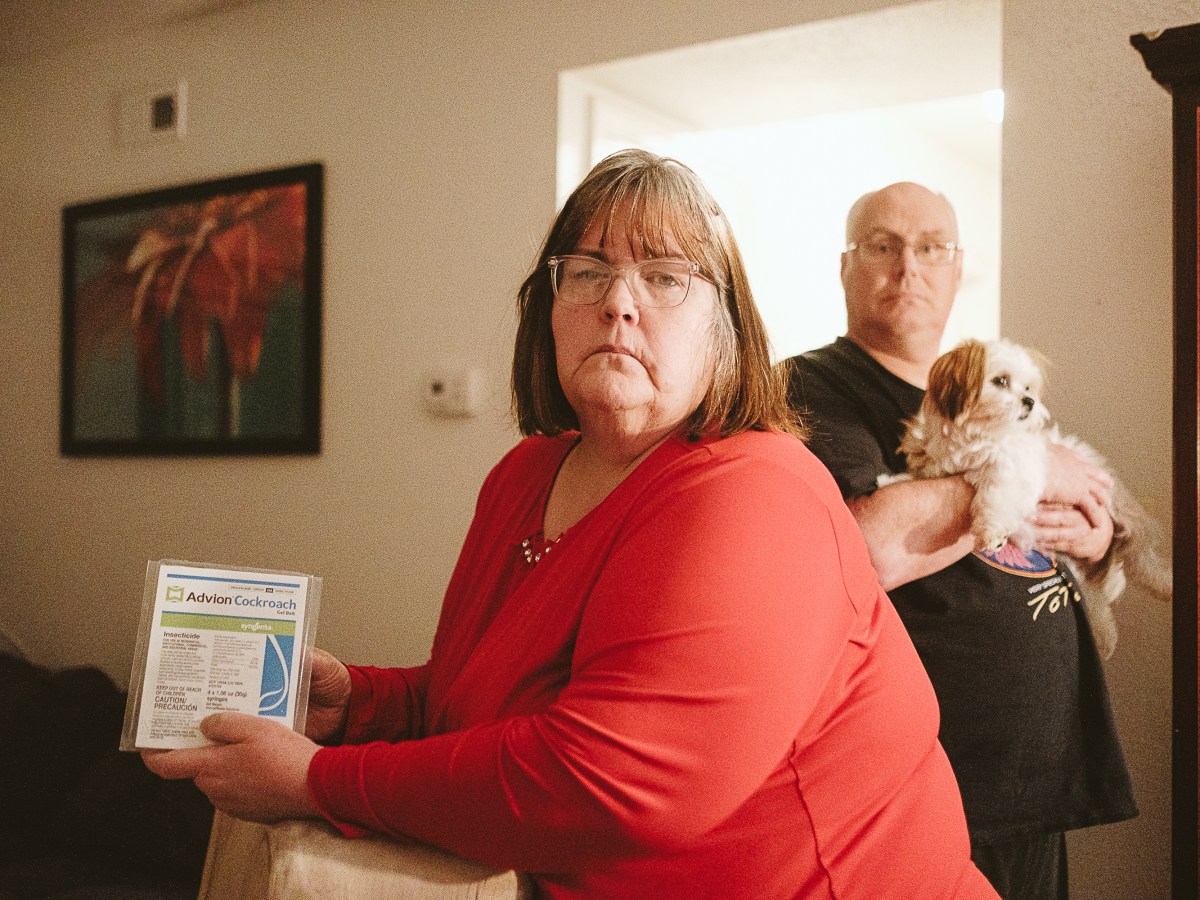

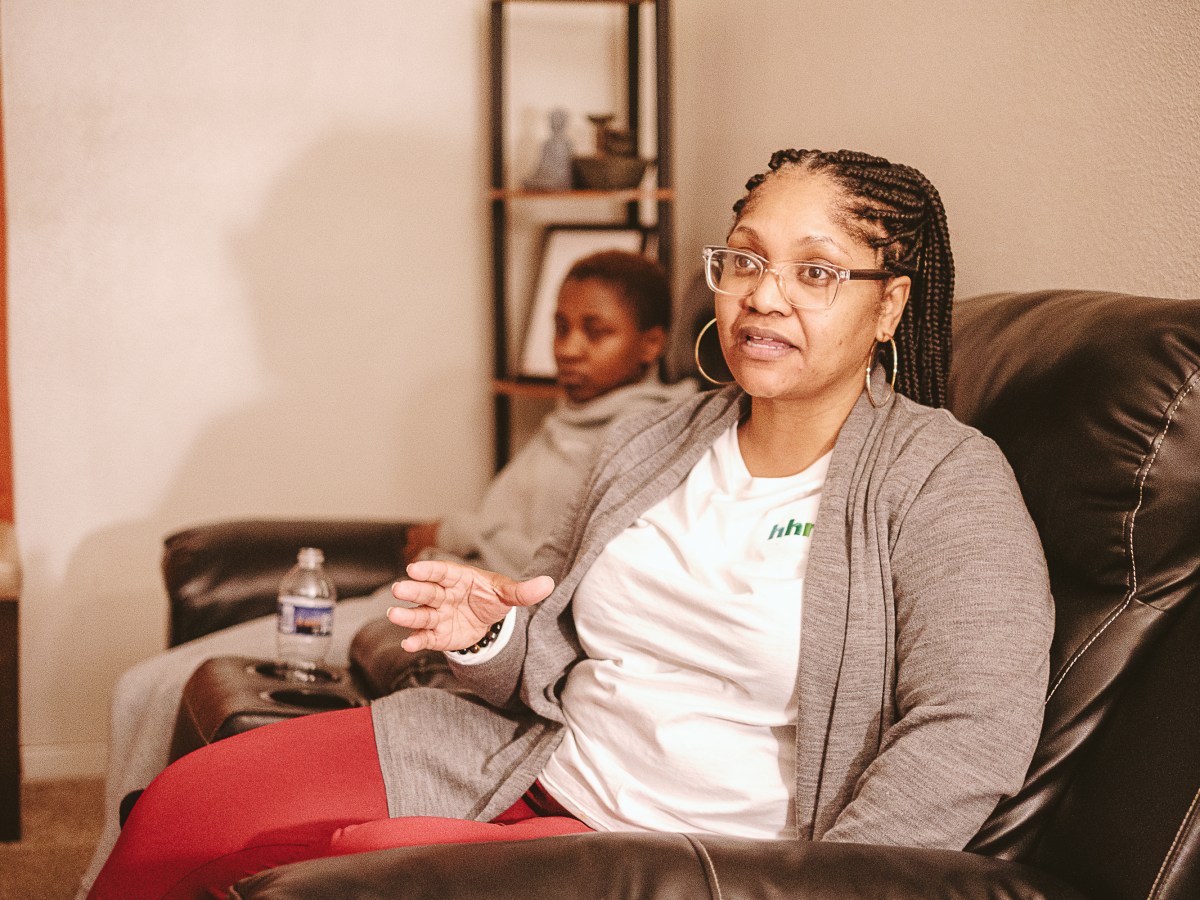
This series, reported over years of following tenants’ stories, is about what happens when renters in Virginia try to improve the conditions of their homes. It took reviewing images and records, hundreds of emails between residents of Park’s Edge, their landlords and advocates, court records and legislative efforts.
It was reported by Erin O’Hare with editing by Jessie Higgins, photography by Ézé Amos and O’Hare, with images and documents provided by residents of Park’s Edge, editing and design by Angilee Shah and Ashley Harper.
Follow the series over the week of June 1, 2026 by subscribing to Charlottesville Tomorrow’s free Beyond the Headlines newsletter.
Erin’s reporting is a testament to what can happen when journalists listen to their community, paving the way for change when other systems fail.
Investigative journalism is essential to a healthy democracy — it informs citizens, holds institutions accountable and catalyzes action. If you believe these stories deserve to be told, consider donating. Together, we can ensure that more voices are heard and that the stories that matter most do not go untold.
This article appears in No Way Out.