

It’s been three days since a judge ordered the city to toss out its new zoning law, which went into effect in February 2024, and revert to its old one.
The problem is, in order to institute the new zoning ordinance, the city had to repeal the old one. That leaves the city with no effective zoning ordinance, Charlottesville City Manager Sam Sanders said on Wednesday.
This zoning debacle has put developers in an unusual spot — without an ordinance, or a clear path forward for projects already in progress, many are left wondering what’s next for the projects they have invested time and money into.
For now, Neighborhood Development Services said that the city will continue to accept and process building permit applications that “do not involve zoning.” Any application that “involves zoning” will be held “in queue” temporarily while they “await further legal and procedural clarity.” Sanders previously told Charlottesville Tomorrow that city staff “are evaluating all available legal options to limit the fallout.”
It’s a particularly confounding situation for local affordable housing developers, who often rely on planning documents from the city to apply for competitive state and federal funding to help build low-income housing.
“We’re trying to figure out where to go from here,” John Sales, executive director of the Charlottesville Redevelopment and Housing Authority (CRHA), told Charlottesville Tomorrow Thursday afternoon. CRHA operates the city’s seven public housing communities.
CRHA has been working on redeveloping some of its older communities, and in the past few years been working with the city to create plans for two of them, Sixth Street and Westhaven.
Westhaven, located in the 10th and Page neighborhood, is the oldest public housing community in the city. It was built in 1965 after the city condemned and razed Vinegar Hill, a thriving majority Black and poor white community near downtown Charlottesville. Many of the families whose houses were razed were given housing at Westhaven, which has 120 units and hasn’t seen a major renovation since it was built.
Residents, alongside CRHA and city officials, have been working together on a redevelopment plan for Westhaven — the vision is for nicer homes, and more of them, Sales said.
“It’s missing a lot of things we consider today as necessities, such as air conditioning,” Sales said of Westhaven. “They have cinder block walls. It’s a really industrial-type of living space, and residents deserve better than that.”
The Sixth Street community, which was built in 1981, has many of those same issues, Sales said. Additionally, Sixth Street “is underutilized compared to the amount of land that it had,” Sales said. With the redevelopment, which is being led by the residents themselves, CRHA will be able to house 47 families there. Phase one of two is already in progress.
“The city of Charlottesville needs these units,” Sales said. “We have thousands of folks on our waitlist who need housing, and the only way we’re going to be able to serve those folks is if we’re building those units.”
But all of that could be in jeopardy now.
The new zoning ordinance — the one the judge ordered the city to toss out — allowed for more residential density throughout the city, something known as “upzoning.” It gave CRHA more flexibility in how many units it could build, and therefore how many families it can house, on a particular site.
It also gave the agency more flexibility in terms of the types of buildings it could construct: Residents have said they want mixed-use developments, with homes as well as retail space, something allowed in the now-voided code, but not generally allowed under the old one.
For both Westhaven and Sixth Street, plans for future construction were made under the now-void ordinance, Sales said. The agency is currently analyzing how going back to the old zoning rules – if that’s what needs to happen — would affect both projects.
But because it is unclear whether the city will revert to the old zoning ordinance, reenact the new one, or do something else entirely, it’s hard to plan, Sales said. It’s further complicated by the fact that right now, it’s unclear when any decision will be made.
CRHA has already spent hundreds of thousands of dollars on pre-development processes, such as engineer and architect fees, Sales said.
The future of the Westhaven project is particularly precarious in this situation.
CRHA has been working with the city for months on its plans for Westhaven, all under the voided ordinance. Under that ordinance, the agency was able to think about the project as a whole, instead of in phases, as it would have had to under the old zoning ordinance.
One of the documents it was working on was a development plan. Sales planned to use that development plan to apply for federal funding to help pay for the redevelopment. But now that everything is on hold, he’s not sure if he’ll be able to do that — the application is due in March 2026, not that far away in the grand scheme of things, he said.
“Not having the ability to have an approved development plan, without that letter from the city saying they approve the development plan, that’s definitely going to be a barrier” to getting that funding, Sales said.
Without the approval letter from the city, the agency’s application might not be able to compete with other projects for that money — the federal government likes to see that a project is already far along in the planning process before supporting it, Sales said.
Sales said CRHA officials are trying to figure out if they should apply in March anyway, or wait for the next cycle — which would delay the start of the redevelopment. Another option is to pivot the application to coincide with the old zoning ordinance — but since it’s unclear exactly what ordinance they’ll have to abide by, that’s not something the agency can pursue right now.
Like many people, Sales isn’t sure what’s next for the projects he and his staff have been working on.
But he’s sure of one thing: “There’s going to be an impact,” he said.
The outlook is a little more optimistic for local nonprofit housing developer Piedmont Housing Alliance (PHA), said Sunshine Mathon, the agency’s executive director. But the effects will be different depending on the type of project.
The big question marks surrounding the zoning ordinance will affect PHA’s rental projects very little, if at all, Mathon said.
The third phase of the Kindlewood (formerly Friendship Court) project will be unaffected, because it is largely compliant with both the old and new zoning ordinances. Construction on that project is over a year away, so there is time to reconcile any details with whatever zoning ordinance is enacted next, Mathon said.
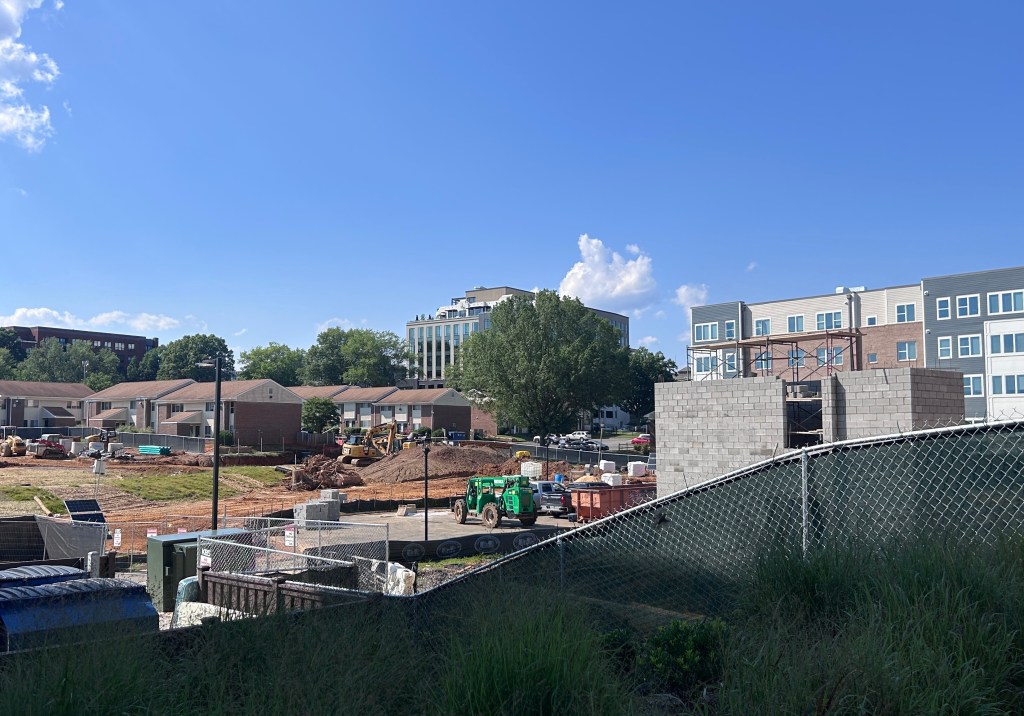
Two more projects, including its development at the Monticello Area Community Action Agency (MACAA) on Park Street, and the Park Street Christian Church, are also safe, Mathon said. Both of those developments are what is called a “planned unit development” (PUD), which have their own special zoning.
The 501 Cherry Avenue project in Fifeville is also unaffected by the zoning uncertainty, Mathon said. That project was planned under the old zoning ordinance, and required a rezoning specifically to meet the needs of that site and that project. City Council granted that rezoning before adopting the new ordinance, so it’s grandfathered in under the old rules.
“It isn’t catastrophic,” Mathon told Charlottesville Tomorrow Thursday afternoon. “But it’s not to say there isn’t work to do.”
Where PHA is already seeing challenges is with its Piedmont Community Land Trust (PCLT) program, which offers homeownership opportunities for low-income families.
PCLT has been looking at a number of sites that have single-family homes which, under the voided zoning ordinance, could be turned into housing for multiple families, like duplexes.
“Those sites, we’ve had to hit the pause button on,” Mathon said.
In one case, the organization has already walked away from a site as a result of the zoning situation.
“It already had layers of complexity, and with this additional layer, it wasn’t worth the time anymore,” he added.
All told, Mathon, like Sales, is just waiting for a clear path forward.
“I’m hoping it’s just a loss of time, and the rezoning will come back in — who knows exactly how long. And then we’ll pick it back up where we left it. We lose time, but I don’t think we lose opportunity,” Mathon said.