

Later this summer, residents of Southwood will be able to access affordable early childhood education without having to go too far. The Early Learning Center at Hickory Hope in the Albemarle County community opens its doors and begins serving the area starting August 1. The center will provide bilingual early childhood education and care for children between the ages of 3 and 5.
Suzanne Bowers, who became the executive director of the Monticello Area Community Action Agency (MACAA) in October 2025, said this is a years-long project that is finally coming to fruition.
The Center will provide early childhood education to students Monday through Friday from 7 a.m. to 5 p.m., except major holidays. They will also provide free meals from the local nonprofit New Hill Development Corporation via their Beacon School Bitez program.
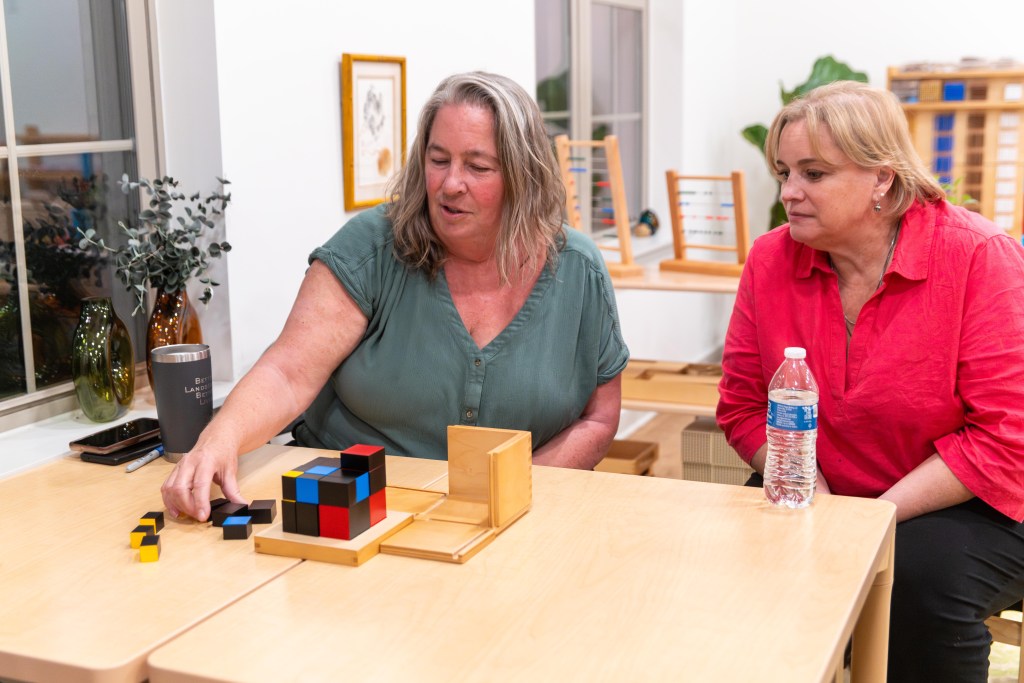
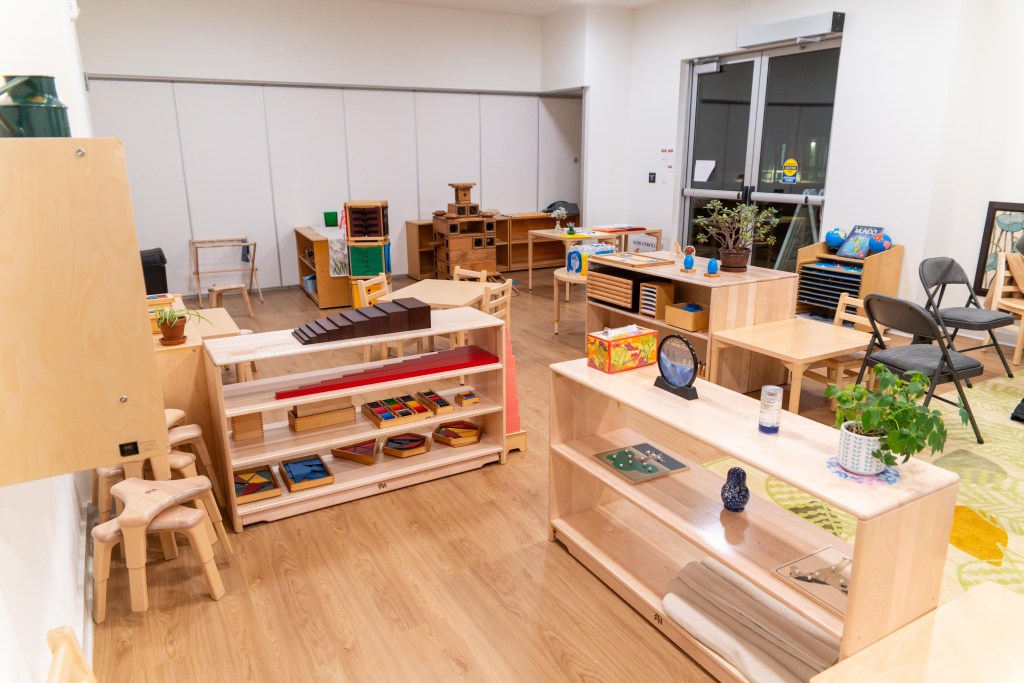
The Early Learning Center is the result of the tireless effort by MACAA, which rented the space in Southwood from the Piedmont Housing Alliance. With the guidance of the Montessori Science Program at the University of Virginia, they will provide students with an activities-based, hands-on education on a sliding scale, based on the families’ income. Classes will be provided in two languages: Spanish and English.
Bowers said operating on a sliding scale isn’t common in early education, nor is offering bilingual education. There are several early childhood education centers in the Charlottesville area that offer bilingual services, and at least one, the Westminster Child Care Center, offers sliding scale tuition. But Bowers said there isn’t one that does both.
“When you add in the bilingual component and to be doing it right here in the neighborhood, I think it’s so exciting to me,” Bowers said of the new Center.
MACAA is a nonprofit organization that has a mission to help people move out of poverty through education. They previously provided childcare services to Southwood residents with Head Start and Early Head Start programs. Those programs closed abruptly in 2024, leaving nearly 200 families without daycare. MACAA relinquished federal funding to run nine local programs because they were unable to successfully provide for the “children we are obligated to serve.” Their programs were found to have not met state and federal standards. Their board said then that they would try to build up programs again.
Under new leadership, MACAA is ready to offer these services again. Bowers hopes that the new leadership within MACAA will reassure the community that they won’t have the same problems again.
“With new management, and mostly new staff and board, different funding sources and financial model, and significant operational improvements, we look forward to being able to serve Southwood with a small-scale, high-quality program,” she wrote in an email.
She also said that funding for the Center has been provided in several ways that should create greater sustainability. They’ve gotten Community Services Block Grant funds, made at the federal level by the Department of Health and Human Services and then disbursed by the state with the purpose of alleviating poverty. These funds are helping them hire a director of childhood services. But they’ve also secured donations and partnerships,
“Community investment has played a vital role in our launch, with local partners contributing dedicated fundraising efforts and in‑kind donations that have fully outfitted our classrooms to meet rigorous Montessori standards, including all necessary specialized educational materials,” Bowers wrote.
MACAA’s most recent publicly available tax filings indicate they had over $3 million in revenue 2024, and over $1 million in 2025. You can view the filing on Pro Publica’s Nonprofit Explorer tool.
“We are giving parents the opportunity to go to work, or get a job, because their kids are in affordable care,” said Bowers. “This is the most important kind of foundation you could have to really create maximum benefit. And then, when you do that, then the families will all benefit. And these kids grow up to be active members in their communities, and they have that solid foundation.”
But the Early Childhood Learning Center is still searching for at least five teachers to hire, both full and part time, as well as substitute teachers, said Jean Peters, the director of educational programming at MACAA. They hope that Southwood residents who are interested in becoming early childhood educators will apply. Peters added that some residents have expressed interest, they haven’t started interviewing candidates yet.
“There is a significant shortage of early childhood educators, both locally and across the country,” said Peters. “This work is deeply rewarding, but also extremely demanding. It requires a high level of skill, commitment, and specialized training, not to mention a great deal of patience. We talk often about ‘growing our own’ teacher pipeline. Our goal is to cultivate educators from within the very communities we serve, creating strong connections between families, children, and the adults who guide them.”
Take action
Learn more about the Early Childhood Center at Hickory Hope.
Families in the Southwood community of Albemarle County have priority to enroll in the Spanish and English program. The Monticello Area Community Action Agency (MACCA) has information about the Center on their website, in English.
You can also visit the Early Childhood Center at Hickory Hope at 2990 Horizon Rd, Suite 100, in Charlottesville or call them at (434) 987-9721.
While they continue their search, Peters will step in as “guide,” what teachers are called in the Montessori program.
An early childhood educator in the state of Virginia must pass a background check, have a high school diploma and be certified in first aid and CPR. Those interested in becoming a guide for the Center will also have to attend a Montessori teacher preparation program at the Montessori Accreditation Council for Teacher Education, recognized by the Virginia Board of Education.
The community of Southwood has gone through some changes since 2007. That year, about 1,500 residents were at risk of losing their homes after the mobile park they lived in was put up for sale. Habitat for Humanity of Greater Charlottesville acquired the land and redeveloped it with the residents; construction broke ground in 2020 and continues today. In 2025, Southwood and other low-income housing projects faced challenges when federal funding for community projects was cut.
Now, Peters and Bowers hope that they find the teachers among Southwood’s residents.
“Nobody is better than others, getting to go to a better school because they have more money,” said Bowers. “This just kind of levels the playing field for everyone. And I think that’s just really important, and hopefully it’s something that everyone will feel and see the value of.”